How to Choose Payment Terms for Steel Tube Orders
Choosing payment terms for a steel tube order is a cash-flow and risk decision disguised as a commercial clause. The wrong structure can tie up capital before production starts, leave no leverage if dimensional or material…

Choosing payment terms for a steel tube order is a cash-flow and risk decision disguised as a commercial clause. The wrong structure can tie up capital before production starts, leave no leverage if dimensional or material nonconformities appear, or make an otherwise sound procurement expensive to unwind. The right structure aligns deposit, inspection gate, and final payment with the supplier’s actual production milestones.
Payment terms also interact with delivery risk. Incoterms 2020 rules define when cost and risk transfer; the payment clause defines when money moves [1]. For buyers ordering precision steel tubes — whether DIN 2391 hydraulic tube, ASTM A519 mechanical tube, or custom-shaped profiles — the practical question is not “which term is safest” but “which term keeps both parties honest at the stages that matter.”
<img src="https://www.tenjan.com/wp-content/uploads/2026/07/OM117bFN1GO1187T6072J0Q7F5gCjtZS.jpg" alt="Cold Rolled Pipe&Tube" style="max-width: 600px; height: auto; display: block; margin: 20px auto;" />
Start With the Order Economics, Not the Unit Price
Before choosing a term, separate the order into three cash phases.
- Pre-production phase: For standard OD/wall combinations, a mill may hold limited stock and begin scheduling once the order is confirmed. For custom steel grades, tight tolerances, unusual cross-sections, or low-volume trial batches, the supplier usually needs to order raw material early.
- Production and inspection phase: Cold drawing, cold rolling, heat treatment, straightening, and finishing take time. The buyer’s leverage is highest when payment is linked to documented inspection results rather than to a verbal promise of readiness.
- Shipping and documentation phase: Once goods leave the supplier’s facility or reach the port, the buyer needs original documents to clear customs. Payment triggers at this stage often protect the buyer only if the document set is complete.
A sensible approach is to ask the supplier: “What does your cash-out schedule look like for this order?” If the deposit request is much higher than the raw-material exposure, or the balance is due before independent inspection, the payment structure may be masking a financing problem rather than a production plan.
Match Payment Terms to Production Milestones
The most common workable structures for steel tube orders are advance payment plus balance, letter of credit, and documentary collection.
T/T milestone terms. A practical arrangement for custom steel tubes is 30% advance and 70% against scanned shipping documents or before release of the bill of lading. Some buyers negotiate 20/80 or 40/60 depending on material cost share and order value. The advance should be large enough to cover raw material and first-cut processing, but small enough that the buyer retains meaningful leverage at final inspection.
Letter of credit at sight. An irrevocable L/C at sight is useful for a first order with a new supplier. It transfers the payment risk to the buyer’s bank, but it also adds bank charges, document-handling time, and strict compliance requirements. A confirmed L/C is often recommended when the supplier is in a country where the buyer has limited recourse or when the order value is high enough to justify the confirmation fee [3].
Documentary collection (D/P or D/A). D/P at sight gives moderate protection because the bank releases documents only after payment. D/A is closer to open account and should be reserved for suppliers with an established performance record.
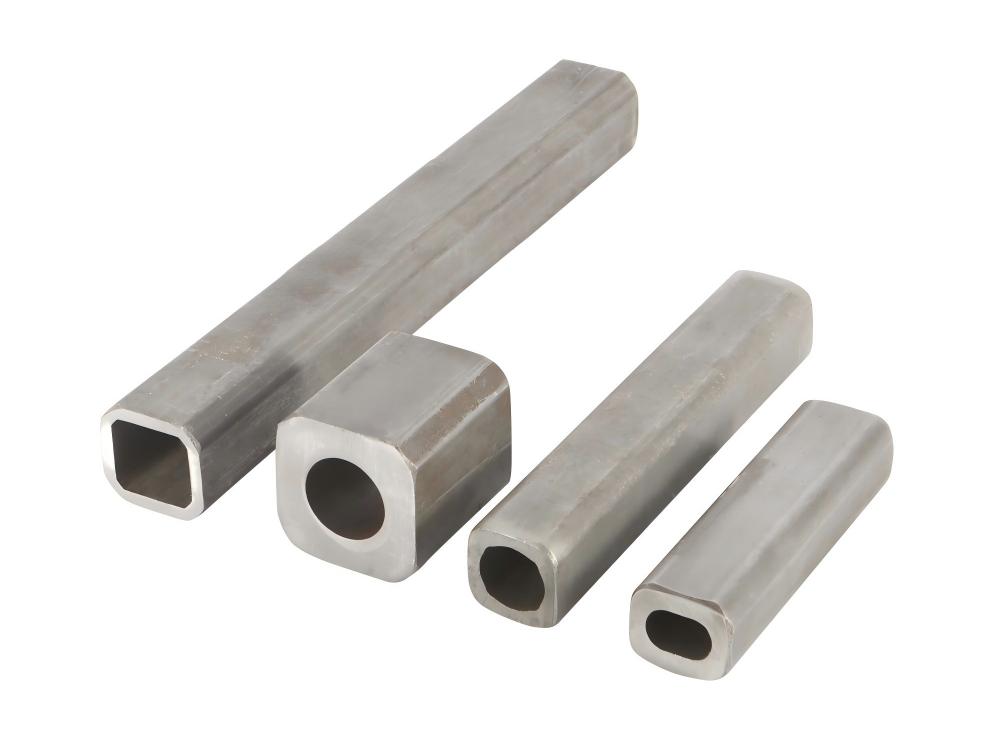
Payment milestones are easier to trust when the supplier can show which inspection gate matches each payment trigger.
(https://www.tenjan.com/steel-tube-manufacturing-process-precision-and-quality/) covers the production stages — cold drawing, heat treatment, straightening, and final inspection — that help buyers define those triggers.
Use Payment Terms to Protect Quality, Not Just Delivery
For precision tube orders, product quality is the real currency of the contract. The payment clause should not simply say “balance before shipment.” It should identify the document package that unlocks payment.
Request a clear list before signing:
- Mill test certificate or inspection certificate to EN 10204 Type 3.1 [2]
- Positive material identification (PMI) results, especially for alloy grades
- NDT results — ultrasonic or eddy current testing — suited to the tube’s surface and dimension requirements
- Dimensional inspection data for OD, wall thickness, length, straightness, ovality, and surface finish
- Traceability records linking heat numbers to finished tube bundles
Tie each payment release to a defined set of these records. If the balance is due before the inspection documents are available, the buyer loses the most practical tool for enforcing conformity. A common compromise is: deposit at order confirmation, second payment after the material passes in-process inspection, and the balance after the buyer reviews the final inspection package or after a third-party inspection report.
Compare the Main Payment Instruments
The table below summarizes how the common instruments behave in a steel tube context.
| Instrument | Buyer risk | Supplier risk | Best fit |
|---|---|---|---|
| Full advance T/T | Highest | Lowest | Only trusted suppliers, low-value spares, or established long-term accounts |
| T/T 30/70 with document trigger | Moderate | Moderate | Custom steel tubes and repeat orders with defined inspection gates |
| Irrevocable L/C at sight | Lower | Moderate | First order, high value, new supplier, or bank-mediated trade |
| Confirmed L/C | Low | Low to moderate | High-value orders where buyer needs assurance of both shipment and bank recourse |
| D/P at sight | Moderate | Moderate | Smaller orders where bank costs would be disproportionate |
| Open account | High | Low | Long-term strategic suppliers with proven delivery and complaint records |
Working through a live order? If you have a tube drawing and target destination, send the basics to Sunny@tenjan.com or WhatsApp +86 13401309791 and ask for a payment schedule tied to production milestones rather than a generic template.
Red Flags to Check Before Agreeing to Prepayment
A large prepayment request deserves the same rigor as a technical drawing review. Ask these questions early.
- Is the supplier’s capacity visible? A deposit should correspond to a scheduled production slot, not a promise. Ask for the planned drawing, heat number allocation, and inspection timeline.
- Is documentation part of the order? If the supplier resists third-party inspection or EN 10204 3.1 certification, treat the payment terms as one more warning sign.
- Is the contact direct? Payment discussions are also a test of the supplier’s commercial maturity. Vague answers about bank details, contact points, or document release should not be waived.
Before committing to advance payment, verify the supplier’s documentation and certification systems — not just the invoice.
(https://www.tenjan.com/how-to-verify-iso-certification-for-steel-tube-manufacturers/) covers the checks that help buyers separate audited quality systems from marketing claims.
A practical first-order strategy is to combine a modest deposit with a sight L/C or D/P, then move to milestone T/T as the supplier demonstrates on-time delivery and conforming inspection results across two or three orders.
Payment Terms and Incoterms Are Different Tools
Buyers sometimes conflate payment terms with Incoterms. They are distinct. Incoterms 2020 allocate transport cost and risk transfer, but they do not determine when the buyer pays [1]. For example, FOB means the seller delivers on board the vessel; it does not mean payment is due at that moment unless the contract says so.
This distinction matters for steel tube orders because the goods are often produced inland, trucked to a port, and shipped internationally. A well-designed contract can pair:
- EXW or FCA with full or high prepayment, because the buyer controls collection early.
- FOB or CFR with payment against shipping documents, because the seller’s control ends at the vessel or destination port.
- DAP or DDP with a larger balance due after delivery, where the seller retains delivery responsibility and the buyer wants to avoid overpaying before receipt.
The correct sequence is to fix the Incoterm first, then write the payment schedule around the point where control and risk actually change hands.
<img src="https://www.tenjan.com/wp-content/uploads/2026/07/E2VcE207UNN3u1ja5uHl96V68k7J4L29.jpg" alt="Hexagonal Steel Pipes&Tubes" style="max-width: 600px; height: auto; display: block; margin: 20px auto;" />
A Decision Sequence for Buyers
Use this sequence, not a template, to choose the right structure.
- Classify the order: standard repeat item, custom geometry, tight-tolerance precision tube, or first-time supplier.
- Estimate the supplier’s raw-material and production exposure. The advance should be close to that, not a fixed percentage.
- Define the inspection gate. What document package or third-party check unlocks each payment?
- Choose the instrument. T/T milestone, L/C, D/P, or open account — based on order value, country risk, and relationship stage.
- Align with the Incoterm. Make sure the payment trigger and delivery risk transfer point are logically connected.
- Write the document list into the contract. Payment terms without a document list are too vague to enforce.
For example, a 500-piece custom-shaped tube order might use 30% deposit to reserve the cold-drawn profile, 50% after dimensional and NDT reports are approved, and 20% after the bill of lading is issued. That sequence keeps each payment close to a verifiable event.
End CTA: Next Step
If you are evaluating payment terms for a steel tube order, send your tube specifications, order quantity, and target delivery window to Sunny@tenjan.com or WhatsApp +86 13401309791. Tenjan’s team can propose a milestone schedule tied to raw material, in-process inspection, and final document release — so the payment structure matches the way the tubes are actually made.
FAQ
What is the safest payment term for a first steel tube order?
For most first orders, a confirmed irrevocable letter of credit at sight is the safest buyer-side structure because payment is handled by banks and depends on complying documents. The next safest is often D/P at sight or a small T/T deposit with the balance against inspection documents and shipping documents.
Is T/T 30/70 standard for custom steel tube orders?
It is common, but there is no fixed standard. The appropriate split depends on how much raw material the supplier must purchase before production and how much leverage the buyer wants at final inspection. Some custom orders use 20/80, 30/70, or 40/60 structures.
Can small-batch steel tube orders use L/C?
They can, but bank fees and document-handling time may be disproportionate on very small orders. Buyers often shift to T/T with a controlled document trigger or D/P at sight once order values fall below the point where L/C costs make sense [3].
How do Incoterms affect payment terms?
Incoterms 2020 define delivery, risk transfer, and cost allocation, but they do not automatically set payment dates [1]. Payment terms are written separately in the sales contract and should be aligned with the chosen Incoterm.
Should payment be released before inspection documents?
Generally no for first orders or custom precision steel tubes. Releasing the full balance before the EN 10204 3.1 mill test certificate, PMI results, NDT reports, and dimensional records are available removes the buyer’s main quality lever [2].
What documents should be required before final payment?
At minimum: a commercial invoice, packing list, bill of lading or transport document, inspection certificate matching the ordered standard, PMI or NDT records if specified, and traceability documents connecting heat numbers to the shipment.
References
[1] International Chamber of Commerce, Incoterms 2020: ICC Rules for the Use of Domestic and International Trade Terms, ICC Publication No. 723E, Paris, France, 2019.
[2] EN 10204:2004, Metallic Products — Types of Inspection Documents, European Committee for Standardization, Brussels, Belgium, 2004.
[3] International Trade Administration, Trade Finance Guide: A Quick Reference for U.S. Exporters, U.S. Department of Commerce, Washington, DC, accessible at trade.gov.
If you’re interested, check out these related articles:
How to Choose a Steel Tube Supplier for Your Next Project
Cold Drawn vs Cold Rolled Steel Tubes
Seamless vs ERW Pipe: Which Is Right for Your Project?