Cold Drawn vs Cold Rolled Steel Tubes
Understand how the two precision processes affect tolerance, surface finish, mechanical properties and cost.
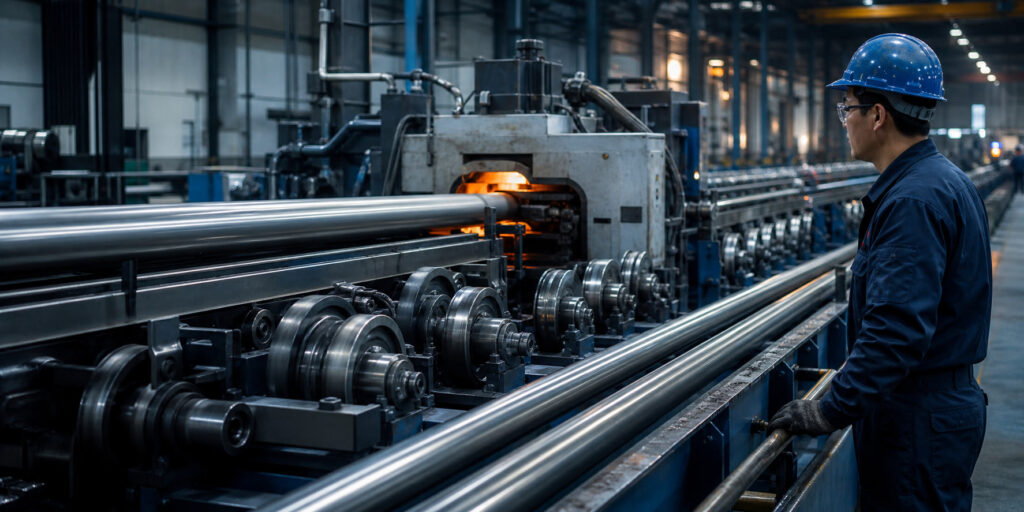
Cold drawing and cold rolling both improve the accuracy and finish of steel tubes, but they achieve those results through different deformation methods.
Cold drawing
The tube is pulled through a die, often with a mandrel controlling the internal diameter. This route is highly flexible for custom dimensions and profiles and can produce excellent concentricity.
Cold rolling
Cold rolling reduces the tube through repeated rolling passes. It is well suited to demanding wall-thickness consistency and smooth surfaces, especially in precision round tubing.
Choosing the process
The best route depends on size, profile, tolerance, mechanical performance and volume. Heat treatment after cold working may also be required to achieve the specified hardness and ductility.