Seamless vs ERW Pipe: Which Is Right for Your Project?
Seamless vs ERW pipe selection is less about which is better and more about which failure mode your application can tolerate.
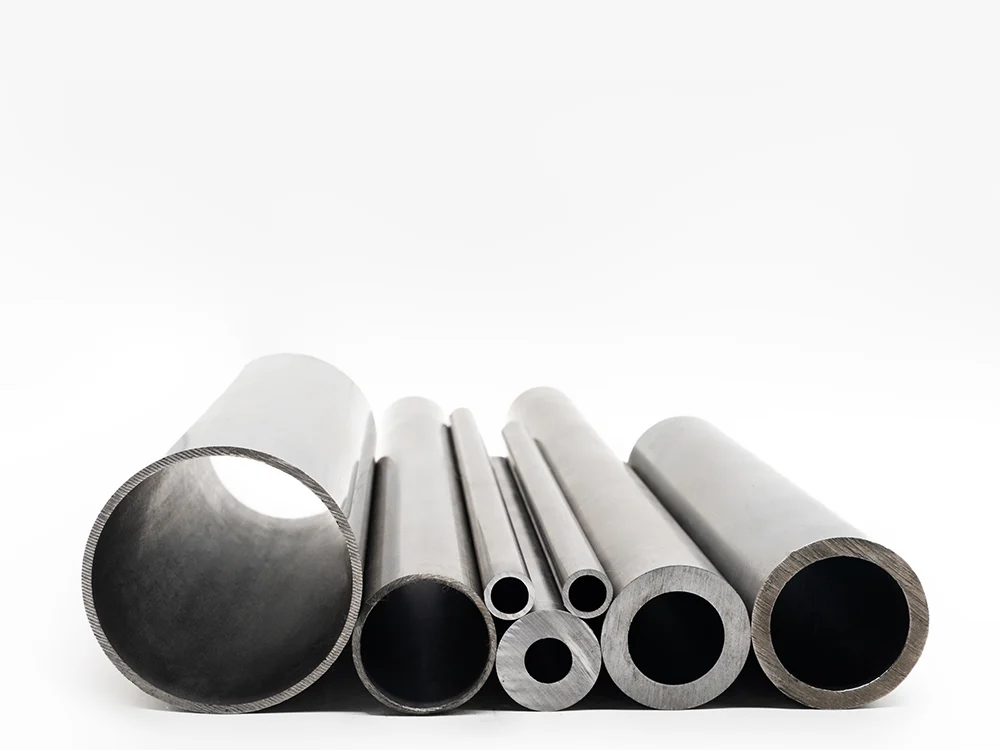
Seamless vs ERW pipe selection is less about which is better and more about which failure mode your application can tolerate. A seamless pipe carries no weld seam. An ERW pipe is formed by welding the edges of steel strip. That single difference drives pressure capacity, fatigue life, dimensional control, cost, and lead time. I have worked on precision steel pipe programs since 2004, and I have seen both routes specified well and poorly. A hydraulic line that cycles pressure every few seconds does not tolerate the same flaw a structural spacer does. A low-pressure fluid return does not need the cost of a pierced billet. The practical split is rarely complicated once you look at the operating conditions.
Manufacturing Routes for Seamless and ERW Pipe
Seamless pipe starts as a solid round billet. The billet is heated, pierced, and then rolled or extruded into a hollow shell. For precision applications, the shell is cold drawn or cold rolled through a die and over a mandrel. That step sets the outside diameter, inside diameter, wall thickness, and surface finish. The result is a pipe with no longitudinal weld and a continuous grain structure around the circumference.
ERW pipe starts as flat steel strip. The strip is roll formed into a round shape, and the edges are heated by electric resistance and pressed together to form a longitudinal weld. After welding, good mills remove the external and internal weld flash. The pipe is then sized, straightened, and often normalized or stress relieved. In cold drawn welded tube, the ERW tube is drawn through a die afterward, which improves dimensional accuracy and surface quality.
Both routes can produce precision tube. The difference is not good versus bad. The difference is where the weak point lies when something goes wrong. In seamless pipe, there is no weld line to open. In ERW pipe, the weld zone is the first place a careful inspector looks.
Pressure Integrity of Seamless and ERW Pipe
If a pipe carries internal pressure, hoop stress is the dominant stress. In a seamless pipe, that stress travels through a continuous grain structure. In an ERW pipe, it also crosses the weld and the heat-affected zone. Modern ERW pipe made from proper strip and a normalized weld seam can handle substantial pressure, but the weld remains a metallurgical discontinuity. That matters most when pressure cycles on and off.
A failure I look for in ERW pipe is fatigue cracking that starts at the weld toe or the inside weld flash line. In systems with pressure cycling, the crack grows from that stress concentration. The same applies to vibration and thermal cycling. Seamless pipe has no such stress concentration from a seam, so fatigue life is more predictable in high-cycle service.
For high-pressure hydraulics, boiler tubes, and other cyclic systems, I generally specify seamless when operating pressure exceeds roughly 3,000 psi or when failure consequences are severe. For low or moderate pressure lines, ERW and cold drawn welded tube are cost-effective without sacrificing service life. The deciding factor is not the pipe alone; it is the weld heat treatment, surface condition, and nondestructive testing. If your program operates above 3,000 psi or includes fatigue cycling, it is worth confirming weld normalization and NDT coverage before finalizing your BOM. Send your OD, wall, pressure, and cycle requirements to Sunny@tenjan.com for a review.
Dimensional Control and Wall Thickness
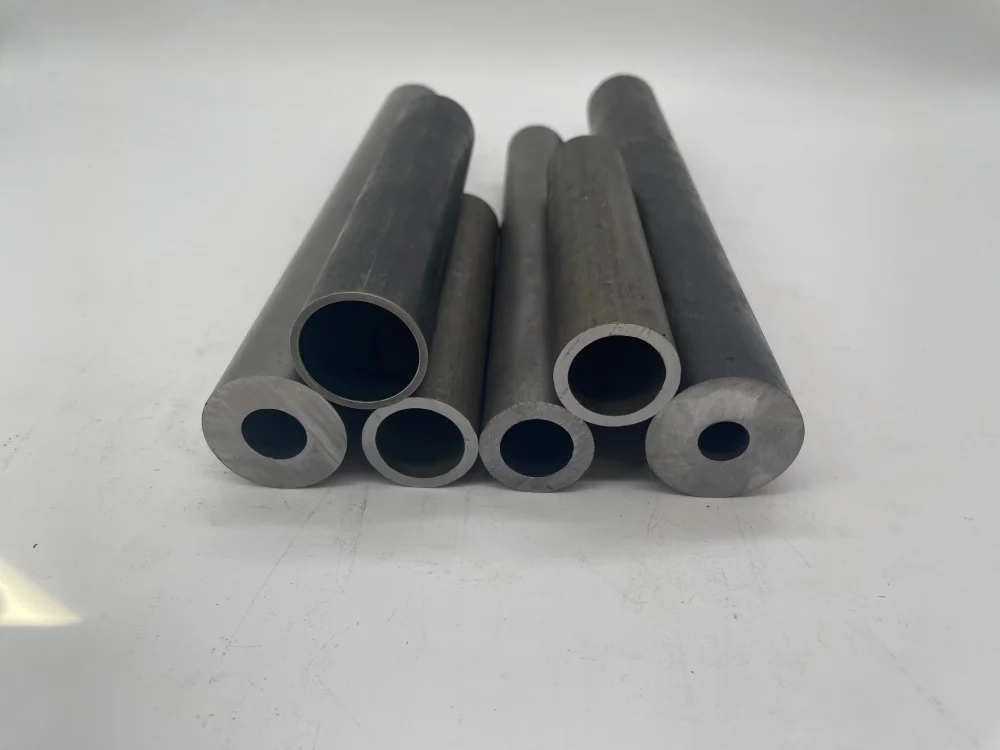
For precision tube, the manufacturing route is only part of the tolerance story. Cold drawing improves both seamless and welded tube. A cold drawn seamless tube and a cold drawn welded tube can hold nearly the same outside diameter and wall tolerance. At Tenjan, seamless pipe and tube are available from 10 to 108 mm OD with wall thickness from 1 to 20 mm and a wall tolerance of ±0.1 mm. Cold drawn welded tube is available from 20 to 108 mm OD with wall thickness from 1 to 6 mm and the same tolerance band.
The practical difference appears in wall thickness range and cross-section symmetry. Seamless pipe can reach heavier wall sections in small diameters because it is drawn from a hollow shell. ERW and cold drawn welded tube are limited by the available strip thickness and the welding process. For thick-wall hydraulic cylinders or high-pressure components, seamless is usually the only option. For thin-wall structural or fluid transport tube, ERW often gives a better surface finish and uses strip material more economically.
| Attribute | Seamless Pipe | ERW Pipe |
|---|---|---|
| Formation process | Pierced and drawn from solid billet | Roll formed and welded from steel strip |
| Weld seam | None | Longitudinal weld, often normalized |
| Typical OD and wall | 10-108 mm OD, 1-20 mm wall | 20-108 mm OD, 1-6 mm wall as cold drawn welded tube |
| Pressure and fatigue behavior | Predictable in high-cycle and high-pressure service | Suitable for moderate and low-cycle service when weld is tested |
| Cost position | Higher material and processing cost | Lower cost at volume |
Cost, Lead Time, and Inventory Realities
ERW pipe is generally less expensive to produce. Strip steel is cheaper to process than a pierced and drawn billet, and the welding line runs continuously. At production volumes, this cost gap can be significant. Seamless pipe carries more process steps: billet preparation, heating, piercing, elongation, and multiple cold drawing passes for precision grades. That adds time and cost, especially for small OD, thick wall, or small batch orders.
Lead time also behaves differently. Standard ERW sizes are often produced from stock strip and can be welded quickly. Seamless pipe in nonstandard alloys or heavy walls may require billet procurement and longer processing. For an OEM switching from an off-the-shelf ERW tube to a custom seamless specification, the lead time can extend by weeks, not days.
I have seen buyers overbuy seamless on low-pressure structural parts because they assumed it was always stronger. That decision added cost without adding service life. The reverse mistake is underbuying ERW on a pressure-cycling hydraulic line, which is harder to detect until fatigue cracks appear. A useful rule: if the load is static and the pressure is moderate, cold drawn welded tube usually meets the requirement. If the load cycles and failure is expensive, seamless is worth the premium.
Selection Criteria for Engineering Teams
The decision starts with four operating conditions: pressure, cycle frequency, temperature, and corrosion exposure. If the application runs above 3,000 psi, cycles frequently, or sits in a high-temperature boiler, seamless pipe is the safer choice. If the application operates at moderate pressure with low cycles, ERW or cold drawn welded tube will often satisfy the duty at a lower cost.
Standards matter as much as the manufacturing route. For mechanical and precision applications, cold drawn seamless tube is commonly supplied to EN 10305-1, DIN 2391, or ASTM A519. ERW and cold drawn welded tube are often specified to ASTM A500, EN 10297-1, or DIN 2394. The standard defines dimensional tolerances, mechanical properties, and testing, so do not assume the weld automatically disqualifies ERW. A normalized ERW tube with mill test certification can be perfectly serviceable.
The most expensive mistake in pipe selection is not the material cost; it is qualifying the wrong manufacturing route and discovering the mismatch during prototype testing or field failure. Before you finalize drawings, have the dimensions, pressure, and standard reviewed by someone who works with both routes daily. Send your part number, OD, wall thickness, pressure class, and quantity to Sunny@tenjan.com, or call +86 13401309791. We will confirm the right route, stock, and compliance package.
Common Questions About Seamless and ERW Pipe
Is ERW Pipe Safe for High Pressure Systems?
ERW pipe is safe for many high-pressure uses, but the limit is not a single number. I specify it for high pressure only when the weld has been normalized, the inside and outside weld flash have been removed, and the pipe has passed eddy current or ultrasonic testing. In cyclic pressure service above about 3,000 psi, I shift to seamless to remove the weld as a fatigue variable. For static high-pressure systems, a properly tested ERW pipe can work, but documentation matters more than the pipe label.
Why Does Seamless Pipe Cost More Than ERW?
The common answer is that seamless is stronger, but that is only part of it. Seamless pipe costs more because the process consumes more material and time. A solid billet must be heated, pierced, and drawn through several passes, while ERW starts from strip steel and moves through a continuous welding line. Small OD and thick wall seamless tube is especially expensive because it wastes more material and needs more drawing steps. The price difference therefore reflects processing difficulty, not just performance.
Can Cold Drawn Welded Tube Replace Seamless in Hydraulic Cylinders?
It depends on operating pressure, cycle count, and wall thickness. Under roughly 3,000 psi with moderate cycles, cold drawn welded tube often performs well because cold drawing refines dimensions and surface finish. Above that pressure or in heavy fatigue duty, seamless is the safer choice, especially for thick wall sections. I have used both successfully, but the decision should follow the cylinder’s pressure spike behavior and required safety factor. If you are unsure, share the worst-case pressure profile and we can confirm the appropriate route.
How Do You Verify ERW Weld Quality?
In precision pipe programs I have handled since 2004, we treat the ERW weld as a separate inspection point. The first check is mill test certification showing the heat, base material, and weld test results. We then confirm that the weld flash has been removed and that the pipe was normalized or stress relieved. For critical parts, PMI and NDT inspections look for weld line inclusions, lack of fusion, and hardness variation. A clean weld under microscopic examination is the best evidence. If your application sits at the boundary between ERW and seamless, send your OD, wall, pressure, and cycle count to Sunny@tenjan.com and we will confirm which route fits.
If you’re interested, check out these related articles:
Carbon Steel vs Alloy Steel Tubes
Custom-Shaped Steel Tubes: Design Considerations
How to Choose the Right Seamless Steel Tube
Heat Treated Steel Tube: What Engineers Need to Know