Welcome to Changzhou Tenjan Steel Tube Co., Ltd
Sunny@tenjan.com



In the field of machining, the choice between seamless steel tubes made of 10# steel or 20# steel often sparks discussions about "which is easier to machine." These two commonly used low-carbon steels exhibit subtle differences in machinability, and the selection directly impacts processing efficiency, surface quality, and tool life. Tenjan Steel Tube Co., Ltd., leveraging its profound understanding of material properties, not only supplies high-quality billets but also provides professional material selection guidance for machining.
Material Properties: The Underlying Logic Determining Machinability
The quality of machinability fundamentally depends on the material's hardness, strength, and plasticity. 10# steel has an average carbon content of about 0.10%, while 20# steel has about 0.20%. This difference leads to a divergence in their mechanical properties: 10# steel has lower strength and hardness but higher plasticity and toughness; 20# steel possesses slightly higher strength and hardness. These characteristics are directly reflected in the cutting process.

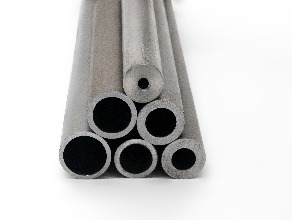
Seamless steel tube for machining
For seamless steel tubes, these inherent properties of the raw material are fully inherited. Through precise rolling and heat treatment processes, Tenjan Steel Tube Co., Ltd. ensures uniform metallographic structure and stable hardness in tubes of both materials, establishing a reliable foundation for predictable subsequent machining.
Machining Comparison: Not Simply a Matter of "Better" or "Worse"
In actual cutting operations, the two materials exhibit distinct characteristics, suitable for different processing needs:
10# Steel Seamless Steel Tubes: Being softer and more plastic, they require lower cutting forces and subject tools to less mechanical impact during machining. However, their high plasticity often leads to chips that are difficult to break, forming long, continuous chips that may entangle the workpiece or tool, affecting operational safety and automated production. Furthermore, the material tends to "adhere to the tool," posing a challenge to achieving a high-gloss surface finish.
20# Steel Seamless Steel Tubes: Their slightly higher strength and hardness result in increased cutting forces, but chip-breaking performance is typically better than that of 10# steel, making chips easier to control. They often hold an advantage in achieving a good surface finish, but simultaneously place slightly higher demands on tool wear resistance.
Therefore, there is no absolute answer to "which is easier to cut." If lower cutting force and power consumption are prioritized, 10# steel may seem "easier." If chip control and surface quality are paramount, 20# steel often performs more "consistently." The technical team at Tenjan Steel Tube recommends that selection should be based on a comprehensive judgment considering the specific part function, machining process (such as turning, milling, drilling), and surface quality requirements.
Tenjan's Advantage: Providing "Easy-to-Machine" Solutions
The core value of Tenjan Steel Tube Co., Ltd. lies in optimizing the inherent machinability of materials through advanced tube manufacturing processes. Whether for 10# or 20# seamless steel tubes, the company empowers customers' machining processes through the following means:
Strict Composition and Hardness Control: Ensures highly consistent material properties within the same batch of seamless steel tubes, eliminating frequent adjustments to machining parameters due to fluctuations.
Optimized Heat Treatment State: Processes like normalizing refine grains and homogenize the structure, effectively improving the material's cutting response, reducing the tendency for built-up edge, and enhancing surface machining quality.
Excellent Dimensional Accuracy and Straightness: High-precision tubes can significantly reduce machining allowances and avoid vibration caused by billet bending, thereby protecting tools and improving machining stability.
Conclusion
In summary, 10# and 20# seamless steel tubes have different emphases in machinability, and their selection is a technical decision balancing processing efficiency, surface quality, and overall cost. Beyond simple material comparison, choosing a supplier like Tenjan Steel Tube Co., Ltd., capable of providing seamless steel tubes with stable performance and machining-friendly characteristics, is more critical. They not only supply superior billets but also integrate materials science with machining practice, offering customers integrated solutions from material selection to processing, ultimately enabling efficient and high-quality part manufacturing.


Home Product Capabilities Case Studies Blogs About Get a Quote
Pipe & Tube Manufacturing Process Shapes & Profiles Pipes & Tubes Material Standard Steel Pipes & Tube Rebar Couplers Cold Drawn Steel Profiles & Bars
Oil & Petrochemical Industry Automotive & Motorcycle Components Mechanical Engineering Components Mining Construction Support Structures High-Pressure Boiler System Construction Machinery Geological Drilling Agricultural Machinery Parts Industrial Fluid Transfer Systems


© 2024 Changzhou Tenjan Steel Tube Co., Ltd All rights reserved. Privacy StatementTerms-ConditionsSitemap
