Insurance in Steel Tube Shipping: Why Coverage Matters
Every steel tube order has a hidden moment of truth: the container door opening at the destination port. You have spent weeks verifying tolerances, reviewing inspection documents, and coordinating lead times. Then a surveyor peels back…

Every steel tube order has a hidden moment of truth: the container door opening at the destination port. You have spent weeks verifying tolerances, reviewing inspection documents, and coordinating lead times. Then a surveyor peels back the protective paper and finds rust fretting, dents across a top bundle, or a pallet that shifted during the ocean leg. The tubes are there — but are they still precision tubes?
Insurance in steel tube shipping does not make the cargo stronger, but it converts an unpredictable loss into a recoverable claim. For OEM buyers and engineering procurement teams, this layer of protection is as practical as specifying the correct steel grade. It decides whether a rusted bundle becomes a manageable claim or an expensive write-off.
This guide walks through the real transit risks for precision steel tubes, how Incoterms assigns insurance responsibility, what Institute Cargo Clauses actually cover, and how to assemble a claim-ready shipment file.
Think about your last cross-border shipment: would you have been able to prove the tubes left the factory in good condition? That question, more than any policy form, often decides the claim.
Why Steel Tube Cargoes Carry Real Transit Risk
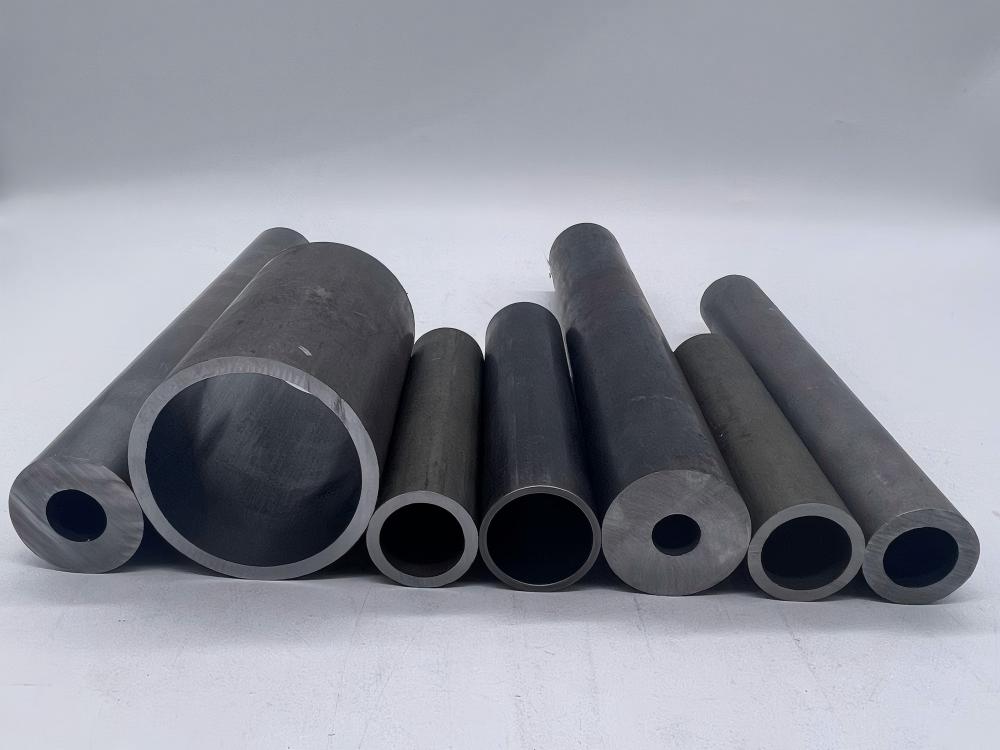
Precision steel tubes are demanding cargo. They are not simply heavy metal pipes; they are engineered profiles in which surface condition and dimensional accuracy determine whether the part fits, seals, or functions. A tube that leaves the factory with a controlled surface finish and arrives with corrosion pitting no longer meets the same specification.
The first major risk is corrosion. Seamless and cold-drawn steel tubes are ferrous, and unprotected surfaces react to moisture, salt-laden air, and container sweat. In a standard ocean container, temperature swings between day and night create condensation that drips onto cargo from the ceiling. If anti-corrosion packaging fails — torn VCI paper, missing end caps, broken seal — rust can appear before the ship docks.
Steel tube rust during ocean transit is often the difference between protected packaging and bare metal. <Steel Pipe Corrosion Protection Methods for Precision Tube> covers the anti-corrosion packaging and treatment controls that keep precision tube surfaces claim-free.
The second risk is mechanical damage. Bundled tubes can shift when strapping loosens, and a coil that moves inside a container can crush or dent neighboring bundles. Forklift tines, poor slinging at transshipment, and even rail shunting deliver impact energy far beyond what a tight tolerance can absorb. A dented or bent seamless tube can no longer meet dimensional accuracy requirements, and the part may be worthless for its intended assembly.
Bent profiles are among the most overlooked claims because the damage is often discovered weeks later at assembly. <Steel Tube Dimensional Accuracy: Why Fit Depends on It> covers why fit and function depend on protecting tube geometry from transport impact.
The third risk is theft and pilferage. Higher-value alloy grades such as chromium-molybdenum tubes are attractive targets, particularly at smaller transit nodes or on less-controlled trucking legs. All-risks cover can respond here, while narrower clauses often will not.
The table below compares common damage modes against Institute Cargo Clauses coverage levels.
| Damage mode | Typical cause | ICC(A) all-risk | ICC(C) major casualties |
|---|---|---|---|
| Rust or corrosion | Container sweat, rain ingress, seawater spray | Covered | Not covered unless tied to a vessel casualty |
| Dents, bent profiles | Improper slinging, load shift, rough trucking | Covered | Not covered |
| Loss overboard, fire, sinking | Vessel or road accident | Covered | Covered |
| Theft or pilferage | High-value alloy bundles | Covered | Not covered |
A buyer who insures steel tubes under ICC(C) “because it is cheaper” may discover after a rainy port call that the policy does not respond. That lesson usually arrives once.
How Incoterms Assigns Insurance Responsibility
Incoterms 2020 does more than define who pays freight; it determines when risk transfers from seller to buyer, and who must arrange insurance [1]. For steel tube imports, the choice of Incoterms often matters more than the insurance policy wording itself.
Under CIF (Cost, Insurance, and Freight), the seller arranges the ocean carriage and must obtain cargo insurance for the buyer at a minimum level — ICC(C) or similar clauses — at 110% of the contract value [1]. That sounds convenient for a buyer, but there is a catch: the minimum cover is narrow. CIF insurance will not cover ordinary rust from container sweat, theft, or rough handling unless a major casualty occurred. Many precision tube buyers accept CIF believing they are “fully insured” when they are only minimally covered.
Under CIP (Carriage and Insurance Paid To), the required minimum is more robust: ICC(A) or similar terms at 110% of the contract value [1]. This is a meaningful upgrade because ICC(A) is an all-risks cover. CIP is often the better choice for precision tubes moving in multimodal chains — container ship, rail, truck — where hand-offs multiply.
Under FOB and CFR, the risk transfers to the buyer when the goods are placed on board the vessel at the port of loading [1]. The buyer must arrange and pay for insurance. That gives the buyer full control over clause selection, but also shifts the administrative burden: no insurance policy, no recovery if the container is lost on the ocean leg.
Under EXW (Ex Works), the buyer carries nearly all transit risk from the seller’s premises onward. Buyers in international procurement sometimes use EXW to control costs, but if they do not also arrange adequate insurance and supervised loading, the exposure can be severe.
| Incoterms 2020 term | Risk transfer point | Insurance arrangement |
|---|---|---|
| CIF | On board at load port | Seller, minimum ICC(C) |
| CIP | Handed to first carrier | Seller, minimum ICC(A) |
| FOB / CFR | On board at load port | Buyer |
| EXW | Seller’s premises | Buyer |
| DAP / DDP | Named destination, before unloading | Seller (no obligation, but retains risk) |
“The seller arranged insurance” does not mean the buyer has nothing to check. For CIF orders, open the policy wording, confirm the insured party, and verify that the cover truly meets the relevant minimum [1].
What Institute Cargo Clauses Actually Cover
The phrase “all risks” sells well, but Institute Cargo Clauses (A) are not truly all risks; they are all-risks subject to stated exclusions [2]. Understanding those exclusions is where steel tube claims are won or lost.
ICC(A) covers physical loss or damage from any external cause, except exclusions. For precision tubes, that means rain ingress, container sweat, theft, rough handling, and most transit accidents fall within cover [2]. The exclusions matter: delay, inherent vice, insufficiency or unsuitability of packing, insolvency of the carrier, and willful misconduct are not covered [2].
The inherent vice exclusion is the most important for steel tube buyers. If tubes rust during shipping because their anti-corrosion treatment was already inadequate at dispatch, the underwriter may characterize the loss as inherent vice — the cargo damaging itself — rather than an insured external peril. If seawater enters through a hole in the container, that is an external peril and ICC(A) responds. The distinction often turns on pre-shipment condition evidence: coating quality, packaging standard, and dispatch photographs.
The Marine Insurance Act 1906 underpins many practical claim principles. The assured must have an insurable interest at the time of the loss, and the loss must be proximately caused by an insured peril [3]. If a container leaks rain and tubes rust, the proximate cause is ingress of moisture — generally covered under ICC(A) when material facts were properly disclosed [2][3]. If tubes rust slowly because they were stored uncovered for weeks before loading and then shipped without full corrosion protection, the proximate cause may be inherent vice or insufficient packing, which underwriters will contest [2].
For precision steel tube buyers, ICC(A) is the sensible baseline. ICC(B) and ICC(C) can reduce premium, but they exclude theft, pilferage, rain, freshwater, and container sweat unless expressly added, and in the case of ICC(C), even water ingress requires a major casualty. The premium savings are modest compared with the value at stake in a single custom profile order.
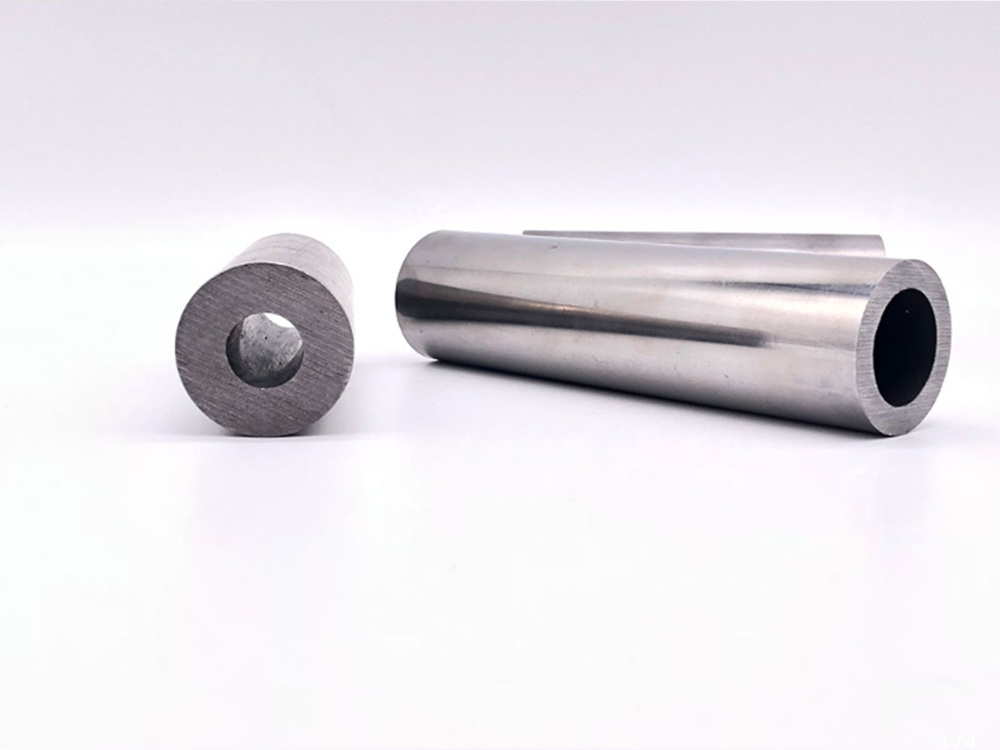
Planning a steel tube shipment? Before you book the container, map the trade terms, clause selection, and packaging against the destination route and climate. For help preparing a claim-ready export file — including protective packaging matched to your port and sealed-bundle condition records — email Sunny@tenjan.com or send a direct inquiry for tailored guidance.
Assembling a Claim-Ready Shipment File
The best steel tube insurance is not just the policy; it is the file of evidence that makes the policy respond. When damage appears at discharge, the side with better documentation generally wins the argument.
Start with the insurance certificate. Confirm the assured name matches the party carrying the risk, the voyage and vessel or conveyance are correct, and the clause set and percentage of cover are explicitly stated. A certificate that does not match the commercial invoice or bill of lading will invite delay.
Next, understand the bill of lading. A clean bill of lading states the cargo was received in apparent good order and condition. A claused bill — for example, a notation of wet bundles or damaged strapping at loading — is powerful evidence that damage may predate the insured transit and shifts the burden of proof onto the party claiming otherwise.
Add the commercial documents: commercial invoice, packing list, and the pre-shipment inspection record. For precision steel tubes, an EN 10204 3.1 inspection certificate is particularly useful because it documents that the material, dimensions, and test results conformed to the specification at dispatch [4]. This is exactly the kind of evidence that separates inherent vice from transit damage.
After arrival, the claim file needs an independent discharge survey report and dated photographs showing the condition of the packaging before it is disturbed. Many policies require prompt notification for concealed damage; if your delivery receipt is signed “clean” but rust appears after unpacking, photographic evidence and immediate written notice to the carrier are critical. Report any visible damage at the moment of delivery; do not let a trucker leave with a clean signature and a vague promise.
A claim-ready steel tube shipment therefore combines four layers: correct Incoterms and clause choice, protective packaging, pre-shipment condition evidence, and an immediate post-arrival inspection discipline.
Practical Risk-Reduction Checklist for Steel Tube Buyers
A few operational decisions reduce the probability of dispute far more than the cleverest claim handling later. The checklist below follows the shipment life cycle.
| Stage | Action |
|---|---|
| Before loading | Confirm Incoterms, select ICC(A) for high-value precision profiles, verify packaging for ocean and tropical cargo, photograph bundles with seal and tag numbers |
| At dispatch | Obtain clean bill of lading, insurance certificate, EN 10204 3.1 certificate, and condition report; retain manufacturer’s dispatch photos |
| During transit | Track the shipment, check container seal numbers at transshipment where possible |
| After arrival | Inspect within the policy window, photograph before and after unpacking, note damage on the delivery receipt, appoint a surveyor before moving the cargo |
Bolt these practices onto a lead-time plan, and insurance shifts from “who pays the loss” into “who prevents the next one.” The buyer who controls loading, materials, and inspection timing also controls the evidence.
Rushed shipping schedules often leave no inspection window at discharge. <Managing Custom Steel Tube Lead Times for OEM Buyers> covers how buyers can structure lead times to protect both schedule and cargo condition.
Need Steel Tubes That Arrive Insurable and Claim-Ready?
Tenjan Steel Tube has provided vertically integrated precision steel tubing since 2004, with ISO-certified quality control and PMI/NDT inspection support across seamless, cold-drawn, and custom-shaped profiles. Every export order follows full process control from raw material to finished product, including EN 10204 3.1 traceability and protective packaging matched to the destination.
Tell us your destination port and Incoterms, and we will help you align packaging, documentation, and carriage before the container door closes.
- Email:
Sunny@tenjan.com - Tel: +86 51988789990
- Phone/WhatsApp: +86 13401309791
Frequently Asked Questions
Is insurance mandatory for steel tube shipments?
Cargo insurance is not generally a legal requirement in maritime trade, but it is commercially essential whenever you carry the risk of loss or damage. Certain contracts of sale, letters of credit, or tender terms may require evidence of insurance, and CIF/CIP sales oblige the seller to arrange cover [1].
What minimum insurance does CIF require?
Under Incoterms 2020, CIF requires the seller to obtain insurance covering at least ICC(C) or similar named-perils clauses for a minimum of 110% of the contract value [1]. That minimum is narrow: it will not normally cover rust from container sweat, theft, or rain.
Will insurance cover rust discovered after arrival?
If rust resulted from external moisture ingress, such as rain or seawater entering a container, ICC(A) all-risks cover will generally respond, provided the underwriter cannot establish inherent vice or insufficient packing [2]. Under CIF minimum ICC(C), rust is often outside cover.
What documentation do I need to file a steel tube damage claim?
The core pack includes the insurance certificate, original bill of lading, commercial invoice, packing list, pre-shipment condition records, and an independent discharge survey report. For precision tubes, an EN 10204 3.1 certificate strengthens the claim by proving conformity at dispatch [4].
How can I reduce insurance disputes before shipment?
Choose the right Incoterms and upgrade to ICC(A) for high-value profiles, verify protective packaging against the destination climate, photograph bundles before loading with seal and tag numbers, and record any visible damage immediately at delivery. Strong pre-shipment documentation turns most “rust arguments” into straightforward external-peril claims.
References
[1] International Chamber of Commerce. Incoterms 2020. ICC Publication No. 723E. Paris: ICC, 2019.
[2] Lloyd’s Market Association and International Underwriting Association of London. Institute Cargo Clauses (A), (B), and (C). London: LMA/IUA, 2009.
[3] United Kingdom. Marine Insurance Act 1906. 6 Edw. 7 c. 41.
[4] European Committee for Standardization. EN 10204: Metallic Products — Types of Inspection Documents. Brussels: CEN.
If you’re interested, check out these related articles:
ASTM A106 vs A53 Pipe: Choosing by Pressure and Temperature
DIN 2448 Seamless Steel Pipe: Sizing, Weights and Ordering
How Digital Traceability Tightens Steel Tube Quality Control
Heat Treated Steel Tube: What Engineers Need to Know