DIN 2448 Seamless Steel Pipe: Sizing, Weights and Ordering
DIN 2448 is the dimension sheet that refuses to retire. A drawing says "seamless steel pipe to DIN 2448" and procurement is left to decide which...
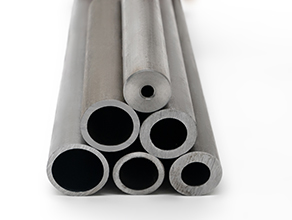
DIN 2448 is the dimension sheet that refuses to retire. A drawing says “seamless steel pipe to DIN 2448” and procurement is left to decide which material, which delivery condition, and which tolerances actually apply. The DIN 2448 seamless steel pipe standard defines outside diameter, wall thickness, and calculated mass per unit length, but it does not give a chemical composition, a pressure rating, or a test protocol. That mismatch still creates avoidable quoting loops. This article explains what DIN 2448 controls, how to read its dimension tables, and how to move from an old drawing callout to a clean purchase order.
What Does DIN 2448 Actually Define?
DIN 2448:1981 is a dimensional standard for seamless steel pipes. It lists outside diameters, wall thicknesses, and calculated mass per unit length, and it stops there. The tables begin at 10.2 mm outside diameter and extend to 711.0 mm, although the practical hot finished and cold drawn availability in any region is far narrower. The wall thickness series runs in fixed steps rather than being generated from arbitrary customer values.
The more important point for a buyer is what DIN 2448 does not cover. It gives no material grade, no tensile requirements, no hydrostatic test pressure, no surface condition, and no heat treatment class. In standards language, it is a dimension spec, not a technical delivery condition. A pipe with the same DIN 2448 size can be soft annealed St35 for bending or quenched and tempered 42CrMo4 for a hydraulic cylinder, and those two products have little in common beyond the diameter and wall. That distinction matters because drawings often carry only this standard reference and leave the rest to assumptions.
DIN 2448 now operates in the shadow of DIN EN 10220, which merges seamless and welded tube dimensions under European rules. The older dimension references still work for repair work, but new projects should treat DIN 2448 as a lookup source and pair it with a current material and delivery standard.
How Do You Read DIN 2448 Dimension Tables?
Before pricing or ordering, the useful move is to convert each line item into three fields: outside diameter, wall thickness, and mass per meter. DIN 2448 arranges the wall series under each outside diameter. Not every wall thickness sits under every diameter. The table lists only preferred combinations, which means a drawing with an unusual pairing can become a special mill run or a forced substitution.
How Do You Calculate Mass Per Meter?
Mass per meter starts from a fixed steel density of 7.85 kg/dm³. The practical formula is:
Mass per meter in kg/m = 0.02466 × t × (D minus t)
D is outside diameter in millimeters and t is wall thickness in millimeters. The 0.02466 constant converts geometry and density into a single multiplier.
| Outside diameter (mm) | Wall thickness (mm) | Calculated mass per meter (kg/m) |
|---|---|---|
| 33.7 | 3.2 | 2.41 |
| 42.4 | 3.2 | 3.09 |
| 48.3 | 3.6 | 3.97 |
| 60.3 | 3.6 | 5.03 |
| 76.1 | 4.0 | 7.11 |
These are calculated values, not copied from the standard. They show how quickly mass rises when the wall increases.
When Should a Nonstandard Wall Thickness Be Avoided?
If a designer selects an outside diameter and wall thickness that sit outside the preferred DIN 2448 table, two risks appear. First, a current mill may need a special cold drawing or hot finishing route with a minimum batch. Second, downstream parts may have been designed around stock dimensions that no longer match. I have watched a buyer reject a quote over an 8% weight difference that came from substituting a 3.6 mm wall for a 3.2 mm wall in a batch of structural sleeves. The cost moved less than the freight charge, but the drawing tolerance did not permit the swap. That is why the exact wall series matters before quoting.
Why Does DIN 2448 Still Appear on Legacy Drawings?
Older plants and equipment files remain in circulation. Drawings are copied from project to project and from repair scope to refurbishment scope. If the original line was sized to a DIN 2448 wall thickness, the text stays. This does not mean the designer still prefers a withdrawn dimensional standard; it means the drawing has not been updated to a current equivalent.
The risk is not the standard itself. The risk is the missing companion information. A typical callout may read “seamless steel pipe DIN 2448, 48.3 x 3.6” and stop. Without a material and technical delivery standard, the buyer does not know whether the pipe is intended for a handrail, a hydraulic line, or a pressure part. In drawing conversions I have handled, the most common delay is a legacy wall thickness that matches the old table but falls outside the current preferred stock range. The correction usually requires moving to the next European standard size and adjusting one bracket or nozzle, which is simpler before welding than after.
If your job carries a legacy DIN 2448 callout with an unusual wall, the financial risk appears at the first RFQ, not at installation. It is worth confirming whether that exact combination still has a current equivalent before the BOM is fixed. Send your drawing and estimated annual quantity to Sunny@tenjan.com.
What Should You Confirm Before Ordering DIN 2448 Pipe?
By the time a DIN 2448 dimension reaches a purchase order, four fields need to be explicit:
- Current dimensional standard and size. Confirm the outside diameter, wall thickness, and length, then use DIN EN 10220 for current dimensional alignment.
- Material and delivery standard. Attach EN 10216, EN 10297-1, DIN 17175, or another technical delivery condition that carries the grade and mechanical requirements.
- Test and inspection scope. Request EN 10204 3.1 or 3.2 certification, plus PMI or NDT when the application justifies it.
- Delivery condition. Specify cold drawn, cold finished, annealed, normalized, quenched and tempered, or stress relieved.
Leaving any one of these fields blank turns the quote into an assumption. A dimensional standard like DIN 2448 will not populate them for you. Buyers who send a full dataset get a line-by-line proposal; buyers who send only the standard trade one ambiguity for another.
For precision sizes from 10 mm to 108 mm outside diameter and wall thicknesses from 1 mm to 20 mm, cold drawn seamless pipe is available with a ±0.1 mm wall tolerance. That range covers many mechanical DIN 2448 callouts. Larger pressure sizes require a hot finished route or a current EN pressure standard.
Most sourcing delays around DIN 2448 come down to unresolved wall series and missing delivery conditions. The practical step is to convert each callout into three explicit fields: outside diameter, wall thickness, and current material standard. Send the marked drawing, required grade, and annual quantity to Sunny@tenjan.com or call +86 13401309791, and we will return a line-by-line proposal showing which DIN 2448 dimensions still have a current supply path.
What Questions Do Buyers Ask About DIN 2448 Seamless Steel Pipe?
Is DIN 2448 still an active standard?
No. DIN 2448 was the historical dimensional standard for seamless steel pipes and has been replaced in European work by DIN EN 10220. The old designation remains on drawings because the dimensions stay useful, but it should not be the controlling reference on a new purchase order. If a drawing lists only DIN 2448, convert the size and attach the current material and delivery standard.
Does DIN 2448 tell me the material grade?
It is tempting to treat DIN 2448 as a full pipe identity, but it is not. The standard covers dimensions and mass per unit length only. Material grade, mechanical properties, and heat treatment arrive through a companion technical delivery standard such as EN 10216, EN 10297-1, or DIN 2391. A DIN 2448 size can be ordered in St35, P235GH, or 42CrMo4, and those products are not interchangeable merely because the diameter and wall match.
How do I convert a DIN 2448 size to a current standard?
The cleanest path depends on whether the current dimensional table still contains the same outside diameter and wall thickness. If it does, keep the size and use DIN EN 10220 as the dimensional reference. Then attach the correct delivery standard: EN 10216 for pressure service, EN 10297-1 for mechanical use, or DIN 2391 for precision cold drawn tube. If the wall is no longer preferred, move to the nearest stock size before the design is locked.
Why does the same outside diameter appear with several wall thicknesses?
In drawing conversions I have worked on, a 60.3 mm outside diameter shows up as a light structural sleeve in one branch and a hydraulic cylinder body in another. That is the point of the standard. DIN 2448 acts as a size menu for seamless pipe, with the wall thickness sequence matched to different service classes while the outside diameter stays constant. Share your operating pressure, medium, and quantity, and we will confirm which wall and material combination fits the duty.
If you’re interested, check out these related articles:
Carbon Steel vs Alloy Steel Tubes
Understanding ASTM, EN, DIN and JIS Tube Standards
How to Choose the Right Seamless Steel Tube
Heat Treated Steel Tube: What Engineers Need to Know
Cold Drawn vs Cold Rolled Steel Tubes