Steel Pipe Corrosion Protection Methods for Precision Tube
Steel pipe corrosion protection methods rarely fail because of chemistry alone. Most early failures trace back to a mismatch between the chosen...
Steel pipe corrosion protection methods rarely fail because of chemistry alone. Most early failures trace back to a mismatch between the chosen coating, the service environment, and surface preparation. As a precision steel pipe engineer, I’ve seen identical epoxy systems perform for twenty years in dry indoor service and peel within two seasons on a humid coastal site. The difference was not the coating; it was the specification decisions around it. The sections below move from corrosion mechanisms to coating selection and final specification.
How Does Steel Pipe Corrosion Start?
Corrosion on steel pipe is an electrochemical process. The steel surface acts as an anode in some areas and a cathode in others, and moisture plus oxygen forms the electrolyte that moves ions between them. For carbon steel, the difference can come from mill scale, a scratch, a weld zone, or just a concentration difference in the water film. The result is iron oxide: rust.
What matters for specification is that corrosion starts at local discontinuities. A pipe that looks uniform to the eye has enough variation at the microstructure level to create small galvanic cells. Once pitting begins, the local pH drops and the pit grows faster than general corrosion would suggest. That is why a barrier coating with a single pinhole can produce a concentrated failure instead of an evenly distributed rust layer.
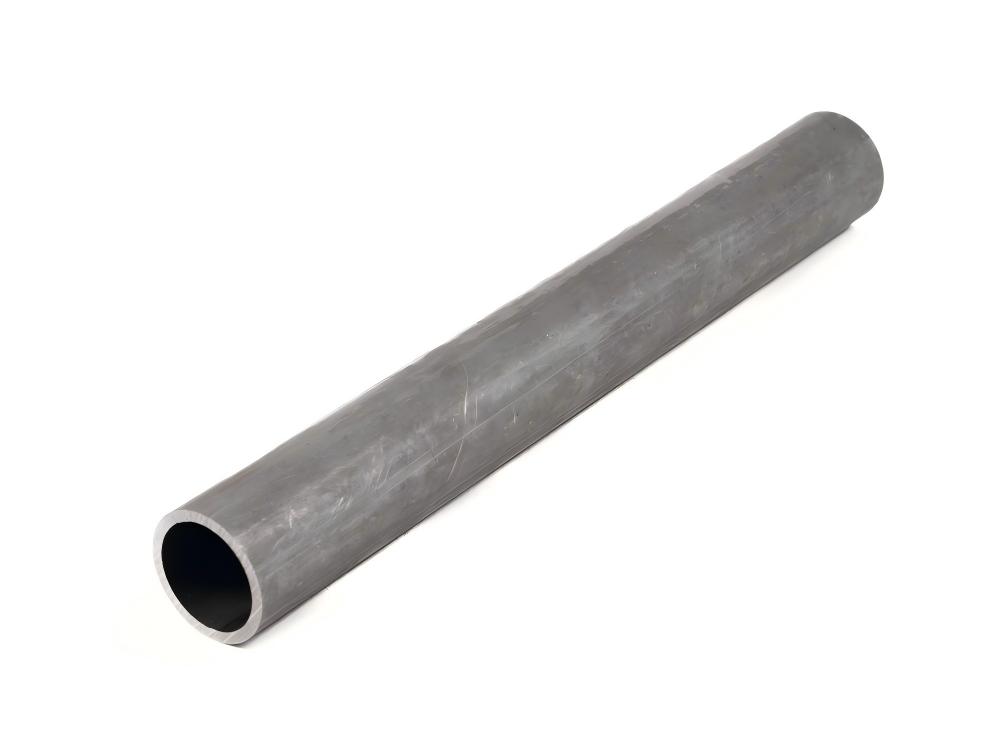
For precision steel tube, the logic is the same, but the tolerances tighten the problem. Cold-drawn tube with an outside diameter of 10 to 108 mm and wall thickness from 1 to 20 mm has little cross-sectional loss available before dimensional limits are exceeded. Pitting depth measured in tenths of a millimeter can push a hydraulic cylinder tube out of round or below wall minimum. Corrosion protection is not cosmetic; it is part of the mechanical design.
Which Corrosion Protection Methods Suit Precision Steel Tube?
The method should match the service condition, not the brochure. I group practical methods into four categories: barrier coatings, sacrificial coatings, electrochemical protection, and material upgrade.
| Method | Typical protection | Good fit | Watch for |
|---|---|---|---|
| Hot-dip galvanizing | Zinc layer, roughly 50 to 85 microns | Outdoor structural pipe, guardrail, drainage | Adds thickness; closed sections need venting |
| Epoxy and polyurethane coatings | Barrier film, 150 to 400 microns | Buried lines, process pipe, hydraulic tube exteriors | Surface preparation controls adhesion |
| Internal epoxy or cement lining | Isolates fluid from steel | Water pipe, mild chemical service | Film thickness control inside small bores |
| Cathodic protection | Impressed current or sacrificial anodes | Buried or submerged pipelines | Requires electrical continuity and monitoring |
| Corrosion-resistant alloy or weathering steel | Material properties rather than film | Atmospheric pipe, some process applications | Higher initial cost; alloy affects machining |
Galvanizing is the workhorse for structural carbon steel. It is forgiving in handling and cathodically protects scratched areas for some distance. But galvanized precision tube can be a problem. The zinc layer adds thickness to a product that is already held to a tight tolerance, and the galvanizing bath can introduce distortion in thin-wall or asymmetrical sections.
Liquid epoxy and polyurethane systems are the most controllable for precision tube. A well-specified coating can protect an exterior surface without changing the machined bore. The key is what happens before painting.
What Is the Difference Between Barrier and Sacrificial Protection?
A barrier coating works by keeping water and oxygen away from the steel. Epoxy and polyurethane are the common examples. Their weakness is local damage: a scratch exposes the steel and corrosion begins underneath if the film is not maintained. A sacrificial coating, by contrast, corrodes in preference to the steel. Zinc galvanizing is the classic case. A scratch through the zinc still leaves nearby zinc available to protect the exposed steel. The tradeoff is thickness and appearance. For close-tolerance tube, barrier films are often easier to manage because they can be applied at lower and more uniform film builds.
Why Does Dimensional Tolerance Matter on Precision Tube?
A cold-drawn tube with a tolerance of plus or minus 0.1 mm leaves limited room for coating. If the final assembly relies on a machined outside diameter or a sliding fit, an extra 80 microns of zinc plus passivation can consume most of that window. Designers sometimes forget that the corrosion protection is a layer after final machining, not just a surface treatment. I ask our customers to state whether the coating can be present on the sealing or bearing surface. If not, we mask or machine after coating, and that decision must be made before the drawing is released.
What Surface Preparation Gives Coatings the Best Chance?
The most expensive coating fails quickly if the surface underneath is not prepared. I put more attention on this step than on the choice of resin. For liquid coatings, the steel should be abrasive blast cleaned to at least Sa 2.5 per ISO 8501-1, which means the surface is free of visible oil, grease, dirt, and most mill scale, with only light shadows remaining. In the United States, the equivalent benchmark is SSPC-SP10 near-white metal. For galvanizing, the work goes through degreasing, acid pickling, and fluxing before the zinc bath, so the surface is prepared chemically.
Abrasive blasting does two jobs. It removes contamination, and it creates an anchor profile. Most coating data sheets specify a profile in the range of 25 to 75 microns depending on the dry film thickness. Too smooth a surface loses mechanical adhesion. Too deep a profile can leave peaks above the specified film thickness, which produces pinpoint rust. For cold-drawn tube, the as-drawn surface is smooth and can be more difficult to anchor than hot-rolled material. We often switch to a light grit blast rather than shot blasting to keep dimensional impact low.
How Clean Is Clean Enough Before Coating?
The short answer for epoxy and polyurethane is near-white metal. Mill scale is the enemy. It may look solid in the warehouse, but it is electrochemically noble to carbon steel and creates a corrosion cell at any break. I have seen tubes pass a coating adhesion pull test after power tool cleaning, then fail in salt spray because the mill scale remained under the film. Chemical phosphating is a useful alternate for cold-drawn tubes that cannot tolerate heavy blasting, but it must be matched to the primer chemistry.
What About Internal Surfaces?
Internal corrosion is harder to inspect and harder to coat. Small-bore precision tube below about 20 mm inside diameter is not practical to blast or spray uniformly. For those products, I prefer to keep the fluid noncorrosive, select a corrosion-resistant alloy, or use a chemical passivation treatment rather than force a lining where film control is unreliable. For larger bores, internal epoxy lining works when the pipe can be rotated during application and curing. The question to ask is not whether a lining can be applied, but whether its minimum thickness can be verified at the midpoint.
If your program involves internal corrosion, it is worth confirming the minimum dry film thickness that can be inspected before the part is closed. Share your inside diameter and fluid chemistry with us at Sunny@tenjan.com, and we will run the feasibility check.
Why Do Coating Systems Fail Early in the Field?
Early failures usually have one of three causes: wrong system for the environment, incomplete surface preparation, or damage before the film reaches full cure. Temperature and humidity are the two field variables that get underestimated. Epoxy behaves differently at 5 degrees Celsius than at 25 degrees Celsius. Some solvent-borne systems need a minimum substrate temperature to crosslink. If the pipe is brought into a warm shop after a cold night, condensation can form on the surface before the blaster even starts.
Another failure I see is edge retention on welds and machined grooves. Liquid coatings pull away from sharp edges because surface tension reduces the wet film thickness at the corner. A tube with a sharp thread root or a laser-cut bracket can have 30 to 50 percent less film at those points. The fix is chamfering, radius edges, or stripe-coating before the full coat. A specification that ignores edges is asking for rust in exactly the places stresses are highest.
The third failure mode is mechanical handling. A fully cured coating can survive design temperatures, but a pipe that is lifted with bare chains a day after painting has not cured enough. I have watched a forklift leave a scratch that corroded before the pipe was installed. Protection methods are only as strong as the handling procedure that follows.
What Should You Specify Before Ordering Corrosion Protected Pipe?
Most of the pain in sourcing comes from assumptions. The buyer assumes the coating works in the same way on a close-tolerance tube as on structural steel. The manufacturer assumes the buyer accepts standard film thickness. Both discover the mismatch after the parts are due.
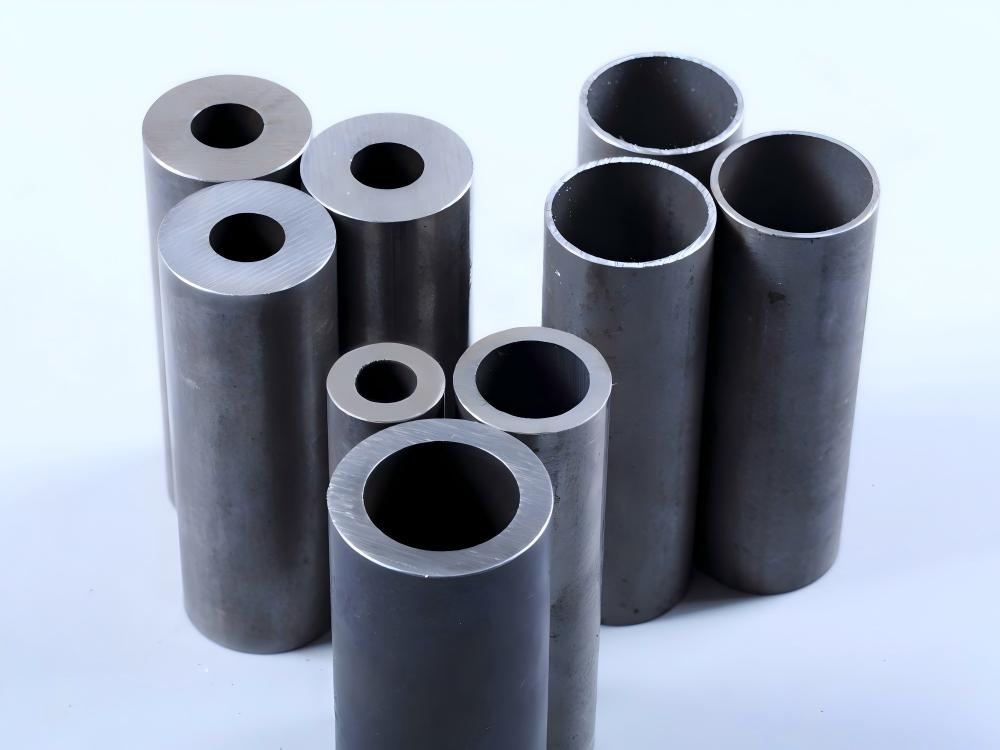
The workable sequence is to define four things before release: service environment, required corrosion resistance in years, dimensional allowance after coating, and inspection standard. If you can state those four, a coating system can be matched to the part without overpaying. At Tenjan Steel Tube, we manufacture cold-drawn and cold-rolled precision tube in OD 10 to 108 mm and wall thickness 1 to 20 mm, and we coordinate protection as part of the mill process rather than as an afterthought.
Send your part number, wall thickness, and the worst-case service exposure to Sunny@tenjan.com, or call +86 51988789990. We will return the compatible protection methods with the dimensional impact for your tolerance window.
What Else Do Engineers Ask About Steel Pipe Corrosion Protection?
Does galvanizing affect precision tube dimensions?
The mistake is assuming the coating can simply be added to the finished size. Hot-dip galvanizing adds zinc thickness commonly in the range of 50 to 85 microns per surface, and the total diameter increase can be double that figure because both sides are coated. For a cold-drawn tube held to plus or minus 0.1 mm, this matters. If the drawn part must be galvanized, we discuss allowance at the drawing stage. The alternative is to use a zinc-rich primer or a thinner barrier coating where dimensional control is tighter.
Which is better for buried pipe: epoxy or galvanizing?
It depends on the soil and the temperature. Galvanizing works well in mildly corrosive soils and gives sacrificial protection at scratches, but acid or alkali conditions shorten its life. Epoxy with proper surface preparation gives a strong barrier and is often selected for buried lines with higher operating temperatures. If the soil resistivity is low or the pipe is part of a larger network, cathodic protection may need to be added regardless of coating choice. There is no single best coating; there is a best combination for the measured ground condition.
Can corrosion protection be applied after fabrication?
Yes, and it can work, but the best results come when the protection method is planned before fabrication. Welding after coating always destroys the local protection. Drilling holes, adding brackets, or machining a thread later can create unprotected cut edges. If post-fabrication coating is unavoidable, the areas should be lightly blasted and stripe-coated with the same system. Full re-blasting may not be possible if the part has tight tolerances or assembled seals.
What information do you need to quote corrosion-protected steel pipe?
The part most buyers overlook is the service environment. We need the outside diameter, wall thickness, length, steel grade, and a one-line description of the worst-case exposure, such as outdoor coastal with occasional chloride spray. We also need to know whether the coating can cover the full surface or whether bearing and sealing areas must remain bare. Send the drawing to Sunny@tenjan.com and we will confirm which protection method keeps the dimensions inside the tolerance.
If you’re interested, check out these related articles:
Carbon Steel vs Alloy Steel Tubes
Cold Drawn vs Cold Rolled Steel Tubes
Custom-Shaped Steel Tubes: Design Considerations
Precision Tube Quality Inspection Checklist