Steel Supply Chain Digitalization: What Engineers Should Know
When a steel tube order slips, the most expensive sentence in procurement is usually "we'll check and get back to you." Digitalization is changing exactly that sentence. A digital supply chain cannot make a cold-drawing line…
When a steel tube order slips, the most expensive sentence in procurement is usually “we’ll check and get back to you.” Digitalization is changing exactly that sentence. A digital supply chain cannot make a cold-drawing line run faster than physics allows, but it can tell you — before the PO is signed — whether a tolerance is feasible, which heat number your batch belongs to, and when the truck will actually reach the port.
For engineers and OEM buyers, the useful question is not whether digitalization matters, but where it changes daily work first. The answer is less dramatic than science-fiction factories. It starts with unglamorous fundamentals: structured records, traceable certificates, and quotes that reflect process reality.
1. Digitalization Starts With Records, Not Dashboards
Walk through any precision tube mill and the most valuable digital asset is not a screen on the wall. It is the data behind the mill test certificate. For decades, a heat’s chemistry, the drawing pass schedule, the heat-treatment cycle, and the ultrasonic or eddy-current results lived on paper, then became a scanned PDF. A scanned PDF is searchable by a human squinting at it; a structured record is queryable by a machine.
That distinction matters because international trade already runs on inspection documents. EN 10204 3.1 certificates and 3.2 declarations are the backbone of steel tube traceability [1]. When those records are stored as structured data fields — heat number, grade, OD, wall thickness, test results — a buyer can compare three batches across a year in seconds instead of reopening three email threads. ISO 9001:2015 pushes in the same direction: clause 7.5 requires documented information to be controlled and available, which is far easier to prove with versioned digital records than with a filing cabinet [2].
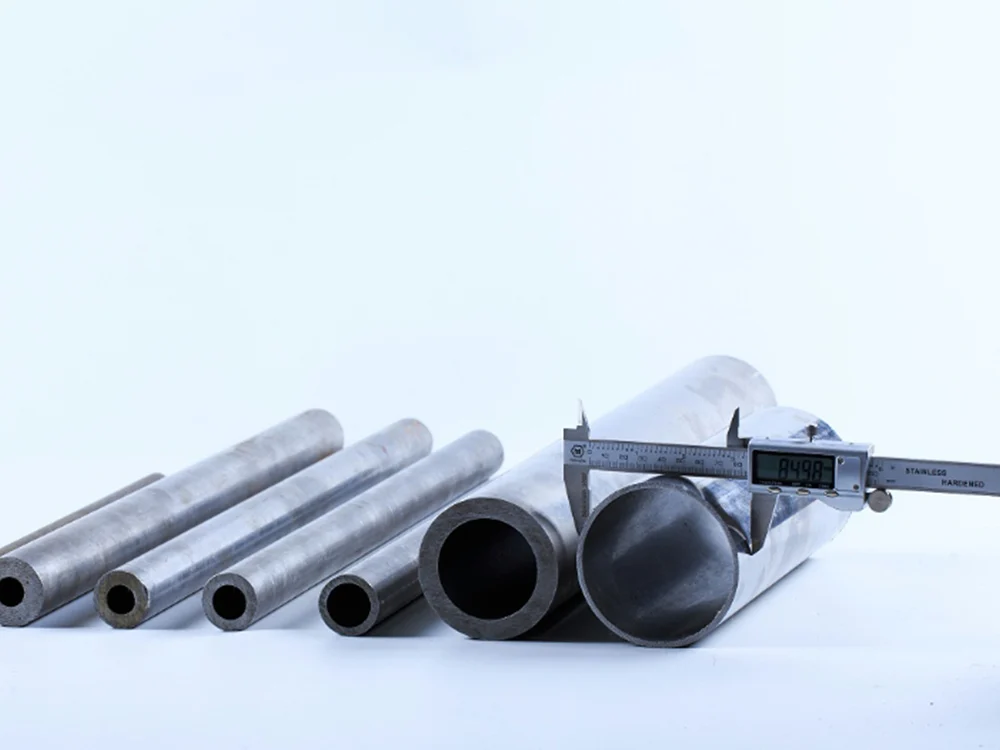
| Record attribute | Paper-era workflow | Digital workflow |
|---|---|---|
| Heat chemistry | Scanned MTR, manual re-keying | Structured fields, batch comparison |
| NDT and PMI results | Photo attachments or paper tags | Queryable entries tied to heat number |
| Specification changes | Emailed revisions, version confusion | Version-controlled document trail |
| Delivery status | Phone and email chasing | Real-time status with document links |
| Audit preparation | Days of archive digging | Filtered export in hours |
None of this is glamorous, and that is the point. The digital steel chain starts as a paperwork upgrade before it becomes anything like artificial intelligence.
2. Traceability Moves From Document to Data Stream
Digitalization’s clearest win in steel tubes is traceability. In a traditional chain, material identity travels in paperwork that follows the shipment. In a digital chain, the identity travels with the data record that stays attached to the lot. Each heat links to its chemistry, its cold-drawing parameters, its heat-treatment curve, and its inspection results — PMI verifies the alloy, eddy current scans the surface, and ultrasonic testing checks the wall.
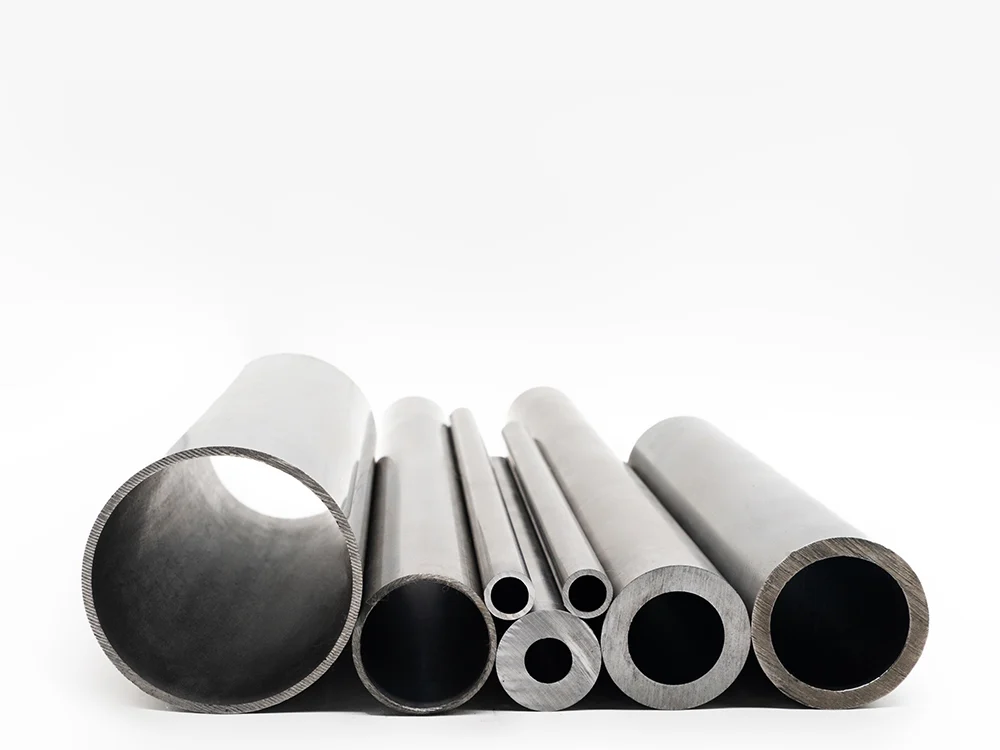
For complex OEM programs — automotive steering systems, hydraulic cylinders, high-pressure boiler tubing — traceability is not a marketing word. It is the reason a recall can be narrowed to one lot instead of one year’s production. Digital records also make audits faster: instead of asking a supplier to “send the certificates again,” an engineer can filter by heat number and read the same revision the mill’s QC team sees. Industry bodies increasingly describe digitalization as one of steel’s long-term structural shifts, not a single software purchase [3].
Digital traceability only helps when the production data feeding it is trustworthy. Steel Tube Manufacturing Process: Precision and Quality covers how each step — from raw material to cold drawing and finishing — becomes a verifiable data point buyers can audit.
3. AI-Assisted Quoting: Reality Check Before the Promise
Custom shaped tube RFQs are where optimism and physics collide. A buyer asks for a hexagonal profile with ultra-tight corner radii, or a ±0.05 mm wall tolerance on an alloy that fights the drawing die. A traditional quote process sometimes says “yes, no problem” and discovers the problem later. A digital quoting workflow changes that by checking the request against process capability before the promise is made.
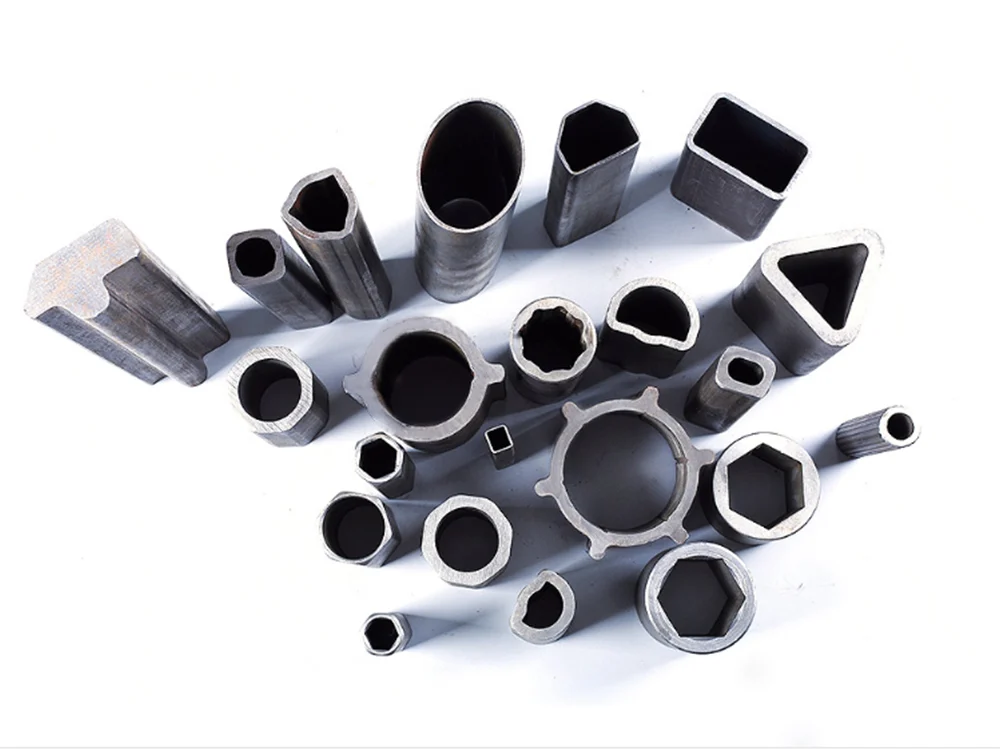
This is not AI writing poetry; it is practical rule-based screening. A configurator can compare the requested OD-to-wall ratio against known drawability limits, flag a tolerance that needs an extra finishing pass, or suggest a different alloy when the specified grade would make the shape uneconomical to draw. The value is a faster, more honest quote — one that includes the secondary operations the part actually needs.
The best digital screening still behaves like a good engineer: it asks about the application, not just the dimensions. A hydraulic tube and a furniture tube can share the same OD and differ completely in inspection cost. When the system captures end-use at RFQ time, the quote reflects the right test plan instead of the cheapest assumption.
AI-assisted quoting only works if the supplier’s data and process limits are real. How to Choose a Steel Tube Supplier for Your Next Project covers the checks that separate a configured quote from a hopeful one.
Mid-article checkpoint: If your next RFQ mixes standard precision tubes with custom profiles, send the drawing, target tolerances, and material grade to Sunny@tenjan.com. A digital feasibility screening can confirm which specs are realistic — and which ones will quietly inflate cost or lead time — before you commit to a delivery date.
4. Predictive Logistics: The End of “We’ll Check and Get Back to You”
Delivery status is the part of the steel chain that frustrates buyers most, because it historically lives in someone else’s inbox. Digitalization changes the question from “where is my order?” to a live view: production milestone, inspection release, packaging, port filing, vessel, customs clearance. Supply chain security standards such as ISO 28000 give organizations a structured way to formalize visibility and security requirements across partners [4].
Forecasting gets the same treatment. When a mill’s digital records show consistent order patterns — a recurring OEM bracket every quarter, a seasonal machinery build — buyers can lock capacity earlier and avoid the premium of hurry-up production. A supplier that publishes a 99.2% on-time delivery record is at least exposing that history to scrutiny instead of asking buyers to take the number on faith.
None of this eliminates port congestion or a customs hold. Digitalization’s honest promise is earlier warning and clearer options. Learning about a two-week vessel delay on day one lets a buyer air-freight a partial lot or adjust the line schedule; learning about it on day twenty leaves no options at all.
Predictive logistics is easier to trust when lead times are controlled upstream. Managing Custom Steel Tube Lead Times for OEM Buyers covers where custom tube schedules are won or lost — and which order details prevent surprises later.
5. What Digitalization Still Cannot Replace
It is tempting to imagine a fully automated steel chain, and tempting marketing imagines it often. But a dashboard is like a truck’s instrument panel: useful for speed and fuel, useless for actually steering around a pothole. The potholes in steel procurement are material mix-ups, misunderstood end-use, and over-optimistic interpretations.
Digital tools do not verify alloy identity — PMI does. They do not find a fine surface crack — eddy current does. They do not smell a drawing that is dimensionally valid but functionally wrong for the application. That last one is still a human skill.
A real example: a buyer once specified a technically correct alloy for the stated OD and pressure, and a digital screening approved it. A short engineering conversation revealed the tube would sit in a salt-spray environment. The grade was valid but the wrong choice; the fix shifted the specification before tooling, not after warranty claims. That pattern repeats constantly: systems optimize what they can measure, and application context is notoriously hard to measure.
So the practical position for engineers is not to resist digitalization or to worship it. It is to treat digital tools as force multipliers for the judgments that still belong to people. The most capable steel supply chains of the next decade will be the ones where data moves fast and the humans reading it ask sharper questions — starting with this one: which failure mode is my system not measuring yet?
Need a Quote With a Digital Trail? Send Tenjan Your Specs
Tenjan Steel Tube has manufactured precision seamless tubes, cold-drawn profiles, and custom-shaped tubes since 2004, with full process control from raw material to finished product. Our QC records connect every batch to its inspection data — EN 10204 3.1 certificates, PMI checks, and NDT results included.
If your project involves precision tubing, send the following for a fast, structured quotation:
- Outer diameter, wall thickness, and length — or the full drawing for shaped profiles
- Steel grade, or the application’s mechanical requirements
- Required standard: ASTM, EN, DIN, JIS, or GB/T
- Order quantity and target delivery date
- Special processing: cold drawing, annealing, stress relief, or surface finish
Email: Sunny@tenjan.com
Tel: +86 519 8878 9990
Phone / WhatsApp: +86 134 0130 9791
We screen the specification against the right process and return a feasibility-checked quote with the same traceability we demand for the tubes themselves.
FAQ
What does digitalization actually change for steel tube buyers?
Digitalization changes the speed and auditability of information exchange: quotes are screened against process limits, mill test records become queryable data, and shipment status becomes visible before failure. It does not change metallurgy — the tube still must be drawn, inspected, and tested with the same rigor.
Does digital traceability replace the EN 10204 3.1 certificate?
No. It upgrades the certificate from a scanned paper file to a controlled data record. The standard and its inspection-document requirements [1] remain the foundation; digitalization makes them faster to retrieve, harder to falsify, and easier to audit across multiple lots.
Can AI quoting handle custom shaped tube RFQs?
Partially. Rule-based digital screening is effective for feasibility checks on dimensions, tolerances, and material-process fit. Complex geometry still needs an engineer to review corner-radius limits, workholding, and the sequence of drawing passes before a reliable price and lead time can be committed.
Will digital platforms make steel tubes cheaper?
Not directly. Steel price is driven by billet cost, energy, alloying elements, and process difficulty. Digitalization removes waste — rework, expediting fees, and document chasing — which can lower total cost of ownership and make price comparisons more legitimate.
Is a fully digital steel supply chain realistic?
Incrementally, yes; uniformly, no. Large mills and certified precision tube makers are digitizing inspection and traceability records first. Smaller workshops and intermediaries will follow more slowly, so buyers should ask a specific question: “Can you show me the data record, not just the PDF?”
References
[1] EN 10204:2004, Metallic products — Types of inspection documents, European Committee for Standardization (CEN), Brussels.
[2] ISO 9001:2015, Quality management systems — Requirements, clause 7.5, Documented information, International Organization for Standardization, Geneva.
[3] World Steel Association, Digitalization and the steel industry, worldsteel.org.
[4] ISO 28000:2022, Security and resilience — Security management systems for the supply chain — Requirements, International Organization for Standardization, Geneva.
If you’re interested, check out these related articles:
DIN 1629 Steel Pipe: Grades, Dimensions, and Sourcing
Managing Custom Steel Tube Lead Times for OEM Buyers
Heat Treated Steel Tube: What Engineers Need to Know
DIN2391 ST52 Tube: Tolerances, Grades and Sourcing Checks
ASTM A106 vs A53 Pipe: Choosing by Pressure and Temperature