Shaped Steel Tubes in Architecture: Design, Engineering, and the Road Ahead
I once watched a facade mock-up fail not because the steel was weak, but because the eye followed a kink in the profile all the way across the elevation. That is the quiet power of shaped…
I once watched a facade mock-up fail not because the steel was weak, but because the eye followed a kink in the profile all the way across the elevation. That is the quiet power of shaped steel tubes in architecture: they are structural, but they are also visual punctuation. For decades, custom profiles were the parts you never saw—the hidden splices, the glazing channels, the brackets buried inside a wall. The next era is different. Shaped steel tubes are moving into the open.
From Hidden Member to Visible Design Language
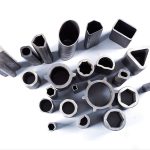
Architecturally exposed steel has always carried a double burden. The section must hold the load, but it also has to look intentional. Round tubes are easy to specify and easy to read. Rectangular hollow sections offer clean corners and predictable connections. The shift now is toward something less generic: oval mullions, D-shaped edge members, hexagonal balusters, triangular fins, and closed profiles developed for a single building.
This is not free-form for its own sake. A shaped tube gives an architect more than a different silhouette. It can align the section’s strong axis with the real bending direction, reduce the visual mass of a connection, or help water drain from an exposed ledge. If the manufacturing logic is invisible, none of that matters. If it is respected, the profile can become the detail that carries the entire architectural idea.
A useful early step is to ask which part of the tube is seen and which part is touched. The seen surface demands consistent finish and a clean corner radius. The touched surface may need a fastener-friendly flat, a drainage slope, or a return edge for a gasket. Once those are fixed, the shape can be checked against production limits instead of being treated as a rendering exercise.
One practical note before we go further: if you are already carrying a sketch for an elliptical handrail, a tapered fin, or a custom glazing channel, the fastest way to test feasibility is to send a rough dimension set and receive a manufacturing review. You can reach the engineering team at Sunny@tenjan.com or +86 13401309791.
The Design Drivers: Parametric Tools, Tighter Tolerances, and Exposed Steel
Parametric design tools have made irregular geometry easy to generate. The tension is that architecture tolerances and mill tolerances are not the same conversation. A facade model can place a curved mullion with infinite precision; the physical tube arrives with a tolerance band, a corner radius, and a material certificate. That is where standards such as EN 10210-2 and EN 10219-2 become a shared language between the design team and the supplier [1][2].
The most productive new design workflows treat shaped steel tubes as resolved modules, not as raw lengths that someone will make fit later. A modular approach works because the tube geometry is locked early. The profile is drawn once, the connection is detailed once, and the repetition keeps cost and lead time under control. This is how a complex diagrid, canopy, or series of facade fins moves from concept to repeatable shop drawing without a surprise at every node.
Custom profiles look best when the design team understands how a tube is formed, not just how it renders. <Custom-Shaped Steel Tubes: Design Considerations> covers the dimensional and wall-thickness choices that make a shaped tube practical instead of expensive.
A shaped tube is not simply a round tube that has been persuaded into a different outline. The forming process changes wall thickness distribution, residual stress, and the way the section behaves at the corners. Designers who know this can use it. For example, a slightly asymmetric section may be the easiest way to keep water from pooling on an exposed ledge, while also placing more material where the bending moment is highest. That kind of decision is much harder to make if the profile is treated as an afterthought.
The Engineering Shift: Cold Drawing, Predictable Behavior, and Smarter Sections
Cold drawing is one of the main reasons custom shaped tubes are becoming architecturally viable. The process pulls a tube through a die to improve dimensional accuracy, surface finish, and mechanical consistency. For precision applications, EN 10305-5 provides technical delivery conditions for welded cold-sized square and rectangular tubes, and related precision product standards support dimensional control in thin-walled sections [4].
Under the Eurocode design approach, member capacity depends on actual section properties, buckling behavior, and the connection detailing [3]. A shaped tube affects all three. It may have a higher radius of gyration about one axis, a different torsional response than a standard hollow section, and a more demanding connection at the end. None of this is a reason to avoid custom profiles; it is a reason to bring the structural engineer and the tube manufacturer into the same conversation early.
Getting an unusual section through production usually comes down to how well it respects cold-drawing rules. <Special Shaped Steel Tube: Design and Cold Drawing Rules> covers the forming limits and correction steps that keep complex geometries stable.
One of the smarter shifts in recent years is the move toward near-net shapes. Instead of machining a custom shape from a large round or rectangular tube, the mill profile is drawn as close as possible to the final geometry. That reduces waste, shortens downstream processing, and leaves more consistent mechanical properties in the final component. The question for architects is not “can this shape be made?” but “what shape satisfies the load path with the least material and the fewest process steps?”
If you have a section in mind that is not in the catalogue, a simple section drawing is enough for a first manufacturability review. Send it with your load case to Sunny@tenjan.com or WhatsApp +86 13401309791, and the engineering team can check critical radii, wall consistency, and whether the shape should be cold drawn or welded-and-sized.
Digital Traceability, Circular Economy, and the Whole-Life View
The future of shaped steel tubes in architecture is not only dimensional. It is informational. A building is increasingly judged by what can be known about the material inside it. A 3.1 certificate under EN 10204 gives the inspection document trail that lets an architect, contractor, or owner confirm the heat, the material grade, and the test results [5]. For exposed steel with a 30-year design life, that traceability is becoming as important as the paint system.
The circular-economy conversation is changing the brief. Steel is already highly recyclable, but the industry is pushing further: design for disassembly, material passports, and better understanding of life-cycle impacts [6]. Shaped tubes can support that agenda when they are specified as durable components rather than disposable formwork. A custom profile that can be unbolted, inspected, and reused at the end of a building’s first life has a different kind of value from a welded-in-place detail that must be cut out.
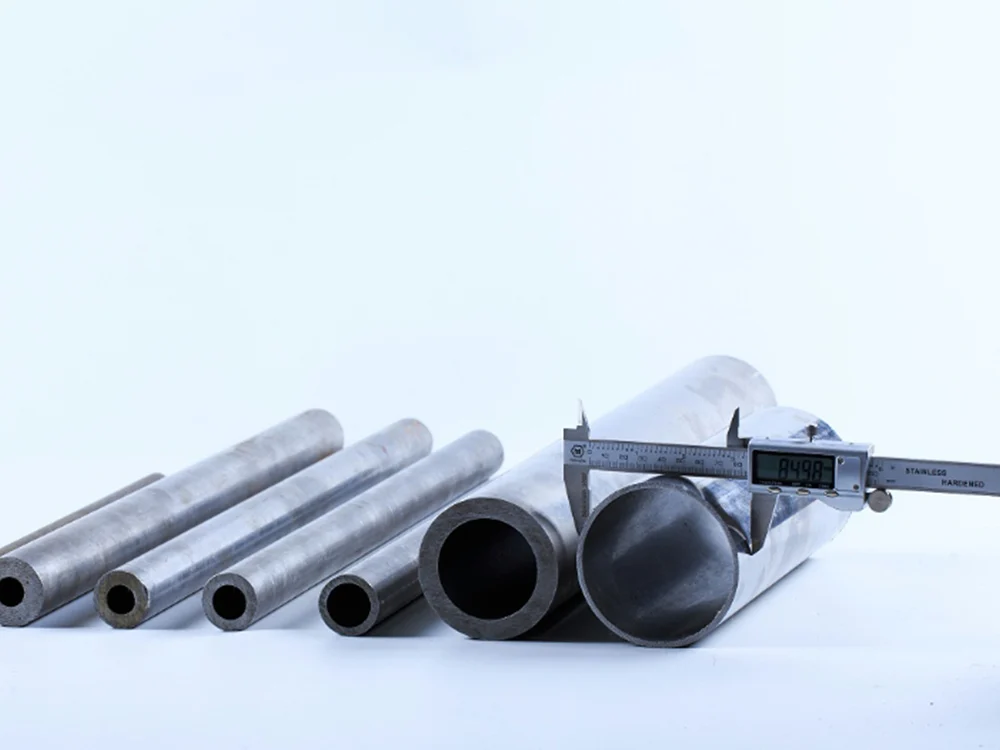
At the same time, digital traceability is tightening the supply chain. Mill certificates, heat numbers, and test results can increasingly be linked to a drawing or a Building Information Model. The engineer is no longer asking for “a steel tube”; the engineer is asking for a specific profile, a specific tolerance, and a specific evidence package. That is a good development. It rewards suppliers who control the process from raw material to finished profile, and it makes the final building easier to maintain, certify, and eventually reuse.
The Road Ahead: Seven Changes to Watch
| Trend | What It Changes in Design | Engineering Consideration |
|---|---|---|
| Parametric and generative design | More custom section geometry at concept stage | Profile must be checked against forming limits early |
| High-strength and thin-wall sections | Lighter visible members and finer details | Stability, local buckling, and connection behavior require care |
| Digital material passports | Whole-life data becomes part of the specification | Traceability, heat numbers, and test records must be retrievable |
| Modular and prefabricated assemblies | Shaped tubes arrive as parts of tested modules | Tolerances and interfaces become design-critical |
| Design for disassembly | Bolted, reversible connections preferred | Surface protection and inspection access matter more |
| Architectural coatings and finishes | Exposed steel must stay legible over time | Surface preparation and coating compatibility are specified early |
| Custom precision profiles | More near-net shapes, less machining waste | Wall distribution, corner radius, and straightness are key |
None of these trends is a single breakthrough. The interesting part is that they reinforce one another. Parametric geometry pushes toward custom shapes. Custom shapes push toward tighter process control. Tighter process control makes traceability easier. Traceability supports longer building life and more responsible material use.
Choosing the Right Profile Without Over-Designing It
A common mistake is to specify a custom profile where a small change to the load path would let a standard section do the job. That is not about being conservative; it is about spending complexity where it is visible or where it genuinely improves the detail. A pragmatic selection process looks like this:
| Profile Type | Common Architectural Use | Practical Note |
|---|---|---|
| Oval or elliptical tube | Mullions, handrails, edge members | Check orientation-dependent bending and end connection |
| D-shape or flat-back profile | Glazing channels, trim, door edges | Useful for drainage, sealing, and a clean interior face |
| Hexagonal tube | Balusters, screens, furniture components | Provides a distinctive rhythm without extreme forming risk |
| Rectangular or square hollow section | Fins, frames, cladding supports | Widely available, but corner radius must suit the detail |
| Fully custom closed profile | Iconic facade elements, canopies, art structures | Go near-net only after die and wall-thickness feasibility is clear |
Architectural selection often ends up balancing visual intent against supply-chain reliability. <Steel Tubes for Construction Applications: Selection Guide> covers the key material, tolerance, and delivery questions for construction projects.
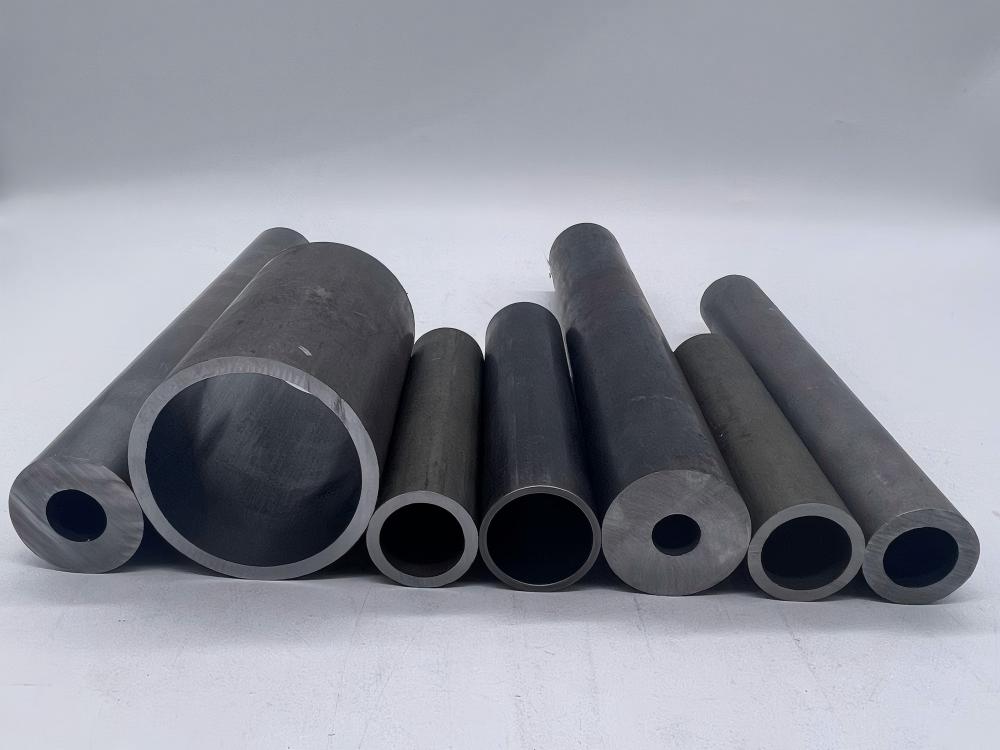
For component-scale architectural metalwork, the working range often sits in the precision tube territory rather than massive structural hollow sections. Tenjan’s production range, for example, includes cold-drawn and cold-rolled special-shaped tubes in outer diameters from 10–108 mm and wall thicknesses from 1–20 mm, with precision tolerance options that suit exposed details, assembly interfaces, and repetitive manufactured components. That kind of dimensional control is especially useful when a shaped tube must seat into a machined bracket or align across a series of facade modules.
Get Engineering Support for Your Shaped Steel Tube Design
The most useful inquiry starts with a drawing, not just a description. A clear list helps the manufacturing review move quickly:
- Section sketch or CAD profile, including the “critical” face or edge
- Required material grade and standard, such as EN 10305-5, EN 10210-2, or an equivalent
- Outer dimension, wall thickness, and tolerance expectations
- Surface finish, coating, cutting, or end-finishing needs
- Target quantity, required delivery date, and any testing or inspection requirements
Send the details to Sunny@tenjan.com, call or WhatsApp +86 13401309791, or phone +86 51988789990. For a complex profile, including the bending direction or connection detail helps the engineering team recommend a shape that is genuinely manufacturable rather than merely drawable.
Frequently Asked Questions
Are shaped steel tubes only for large-scale architectural icons, or can they be used in everyday buildings?
They are useful at both scales. Large projects get the headlines, but shaped tubes also appear in handrails, balustrades, glazing channels, furniture components, canopies, entrance details, and modular facade systems. The same precision profile that works in an iconic screen can often improve a repetitive everyday detail by removing adapters and reducing visible connection clutter.
What standards should I reference when specifying shaped steel tubes?
The relevant standard depends on the production route and the application. For structural hollow sections, EN 10210-2 and EN 10219-2 are common references for hot-finished and cold-formed welded sections. For precision square or rectangular tubes, EN 10305-5 may apply. Structural design is typically checked against Eurocode 3, EN 1993-1-1. The supplier should confirm which standard matches the forming route and the required tolerance class before the order is locked.
Can shaped steel tubes be provided with full traceability?
Yes. A 3.1 inspection certificate under EN 10204 can link the delivered tube to the cast or heat, the material grade, the dimensions, and the test results. For exposed architectural work, requesting 3.1 traceability is often simpler than it sounds and helps confirm that the tube delivered is the same grade and heat specified in the drawing.
How do I avoid turning a custom shape into a costly one?
The main cost is usually not the shape itself; it is discovering the shape too late. If the profile is developed after the connection details are fixed, the project may face redesign loops, special tooling, or a profile that must be machined from a larger section. Locking the section early, using a symmetrical or near-net shape where possible, and checking wall thickness against forming limits all help keep a custom profile manufacturable.
What is the difference between structural hollow sections and precision shaped tubes?
Structural hollow sections are typically supplied to construction standards and used where load capacity and standard connection details dominate. Precision shaped tubes are produced to tighter dimensional tolerances for applications where fit, finish, and repeatability matter, such as exposed mullions, furniture, glazing channels, or machine-assembled facade components. The boundary is not absolute; the correct standard depends on how the tube is made, inspected, and used.
References
[1] European Committee for Standardization, EN 10210-2:2019, Hot finished structural hollow sections of non-alloy and fine grain steels — Part 2: Tolerances, dimensions and sectional properties, CEN, Brussels, 2019.
[2] European Committee for Standardization, EN 10219-2:2019, Cold formed welded structural hollow sections of non-alloy and fine grain steels — Part 2: Tolerances, dimensions and sectional properties, CEN, Brussels, 2019.
[3] European Committee for Standardization, EN 1993-1-1:2005, Eurocode 3: Design of steel structures — Part 1-1: General rules and rules for buildings, CEN, Brussels, 2005.
[4] European Committee for Standardization, EN 10305-5:2016, Steel tubes for precision applications — Technical delivery conditions — Part 5: Welded cold sized square and rectangular tubes, CEN, Brussels, 2016.
[5] European Committee for Standardization, EN 10204:2004, Metallic products — Types of inspection documents, CEN, Brussels, 2004.
[6] World Steel Association, Steel in the circular economy: a life cycle perspective, World Steel Association, Brussels, 2021.
If you’re interested, check out these related articles:
Carbon Steel vs Alloy Steel Tubes
Custom-Shaped Steel Tubes: Design Considerations
Cold Drawn vs Cold Rolled Steel Tubes