Steel Tube Trends in Aerospace: Alloys, Precision, and Supply
Steel tube trends in aerospace are shifting from simple material substitution toward three practical demands: lighter but damage-tolerant structures, tighter part-level traceability, and precision shapes that reduce assembly steps. The engines are not the only place…
Steel tube trends in aerospace are shifting from simple material substitution toward three practical demands: lighter but damage-tolerant structures, tighter part-level traceability, and precision shapes that reduce assembly steps. The engines are not the only place where tube choices matter; landing gear, hydraulic lines, instrumentation supports, and structural pins all inherit the same engineering logic. A grade or tolerance that works in industrial machinery may be irrelevant or unacceptable once a part must survive vibration, pressure cycles, and audit-driven qualification. This article traces the application trends changing how aerospace designers, buyers, and sourcing engineers should evaluate steel tube requirements.
Why Aerospace Steel Tube Requirements Keep Moving Up
Aerospace tube specifications begin with the same dimensions and chemistry as industrial precision tube, but the qualification logic is different. The tube is not simply a fluid carrier; it is a structural element that sees repeated stress, pressure pulses, temperature swings, and inspection scrutiny over a long service life. As aircraft designers reduce weight, tube walls become thinner while the part must still retain fatigue resistance and dimensional stability. That combination forces suppliers to control wall eccentricity, surface condition, and heat treatment more tightly than a standard mechanical tube specification demands.
The commercial tradeoff is equally direct. Each added requirement, such as lot-specific testing, restricted raw material sources, or more extensive non-destructive testing, reduces the number of suppliers who can meet the order and increases documentation time. Buyers who understand that tradeoff can separate necessary aerospace-specific checks from cosmetic additions that do not reduce flight risk.
Where Aerospace Steel Tubes Are Used Across the Aircraft
Aerospace steel tube applications split into three broad families: fluid-conveyance lines, structural and mechanical components, and precision hardware. Fluid lines, including hydraulic and fuel system tubing, need internal cleanliness, consistent inside diameter, pressure integrity, and resistance to vibration fatigue. Structural components, such as landing gear parts, control linkages, engine mounts, and support struts, need high strength, toughness after heat treatment, and reliable dimensional fit. Precision hardware includes bushings, spacers, pins, and actuator parts that use cold-drawn or cold-rolled tube because their final dimensions and surface quality reduce downstream machining.
Each family creates a different inspection emphasis. A hydraulic line may be rejected for a surface discontinuity that would be acceptable in a lower-risk structural tube. The table below connects common aerospace tube uses to the requirement that usually drives acceptance.
| Application area | Main steel tube requirement | What buyers should verify |
|---|---|---|
| Hydraulic and fuel system lines | Pressure integrity, clean internal surface, consistent ID | Pressure testing, cleanliness, dimensional consistency |
| Landing gear and structural fittings | High strength and toughness after heat treatment | Material traceability, hardness/tensile results, NDT for discontinuities |
| Engine and support components | Elevated-temperature strength, wall consistency, weldability | Alloy grade, heat treatment route, wall-thickness variation |
| Flight control linkages and actuator parts | Dimensional stability, straightness, surface finish | Dimensional reports, roundness/straightness checks, surface inspection |
| Cabin and cargo structural tubes | Load-carrying capacity, formability, corrosion protection | Shape tolerances, weldability, coating or passivation suitability |
Alloy and Material Trends Shaping New Tube Specifications
Aerospace tube buyers have moved from broad carbon steel grades toward controlled low-alloy grades such as 4130 and 4140, especially where strength to weight and heat treatment response matter. The trend is not simply toward higher strength. A stronger alloy can be more sensitive to processing history, more difficult to form, and more expensive to weld or machine if the specification does not match the actual service condition. The preferred direction is cleaner steel with controlled residual elements, combined with a process route that can be repeated across batches.
Cold-drawn seamless tube from a starting specification such as ASTM A519, EN 10305-1, DIN 2391, or JIS G3445 often becomes the baseline. Aerospace-specific programs then add restrictions on melt practice, inclusion content, surface seams, and permissible repair processes. Those added restrictions matter because a material certificate alone proves the reported results, not that the tube will survive the fatigue spectrum of the application.
Material selection in aerospace is rarely about picking the strongest grade; it is about matching proof strength, fatigue response, and heat treatment behavior to the part’s failure mode. <Carbon Steel vs Alloy Steel Tube: Which Material Works> covers how alloy choice changes mechanical performance and the conditions that justify the extra cost.
Precision, Tolerances, and the Shift to Shape-Optimized Tubes
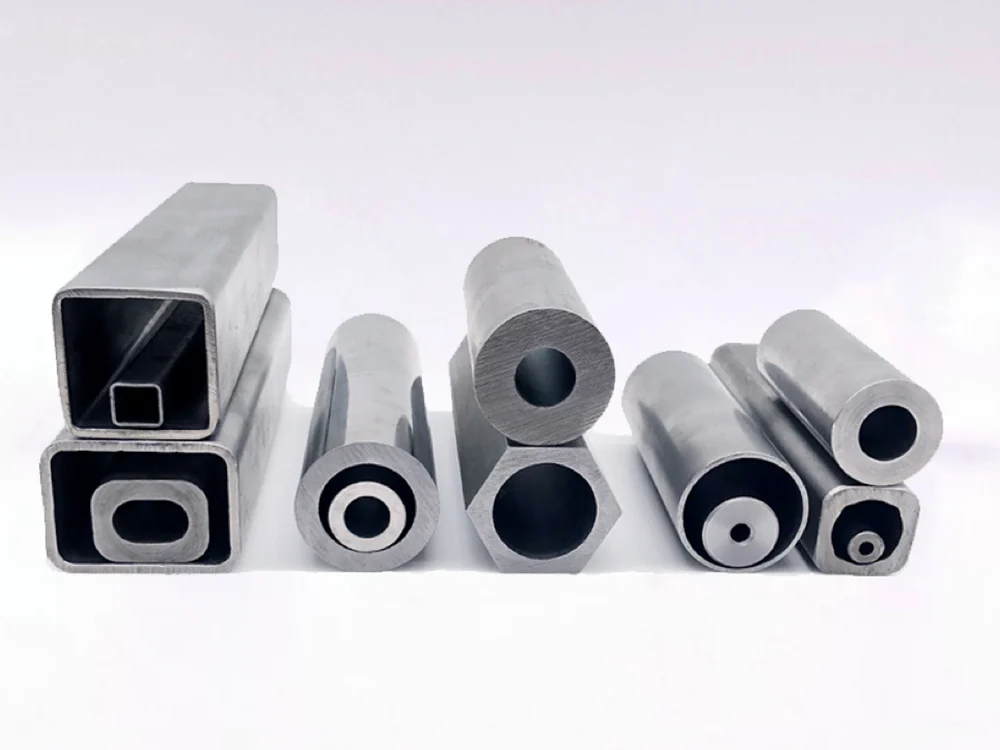
Precision is not only about holding a tight outside diameter. In aerospace tube applications, the interaction among roundness, straightness, wall-thickness variation, and surface finish determines how the part fits, seals, and carries load. A cold-drawn tube can have a small average diameter error but still create an assembly problem if eccentric wall reduces strength on one side. That is why aerospace buyers increasingly specify full dimensional reporting over a single nominal tolerance.
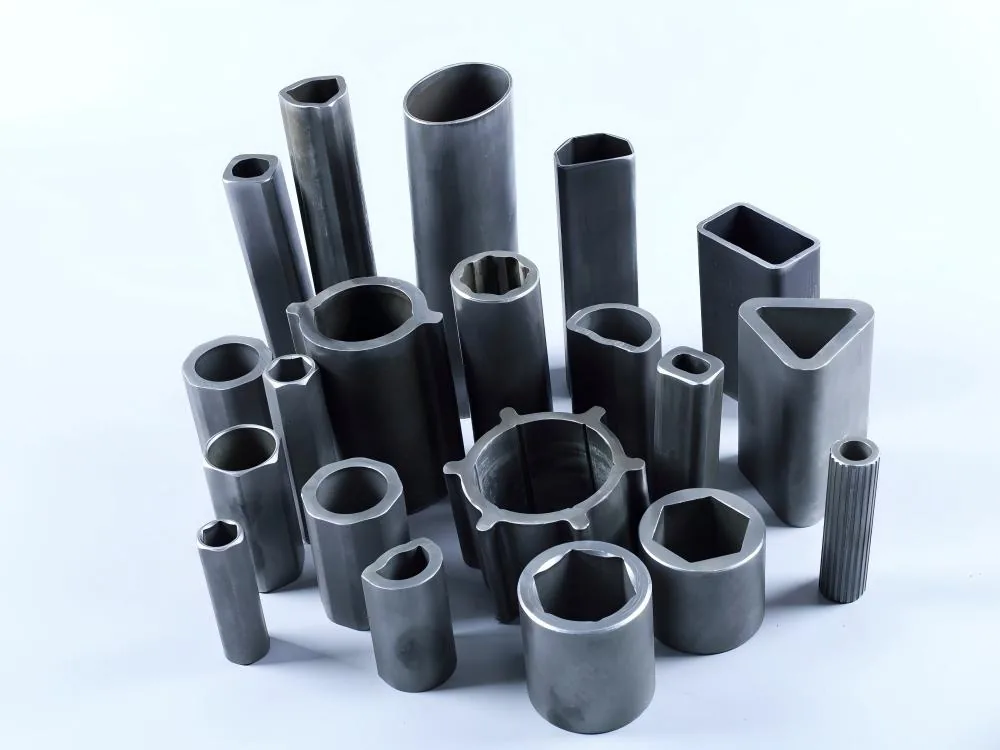
Special-shaped tubes are part of the same trend. When a custom profile can combine a mounting surface, a guide channel, or a load-bearing flange into one section, the assembly may need fewer separate parts and less welding or machining. The tradeoff is design cost. A complex profile requires die/tooling investment, clear corner-radius and draft decisions, and a candid review of whether the volume justifies the near-net shape.
A tube can have the right chemistry and still fail an assembly fit when diameter, wall uniformity, or straightness drift outside tolerance. <Steel Tube Dimensional Accuracy: Why Fit Depends on It> covers how dimensional control becomes a process-wide issue, not a final inspection check.
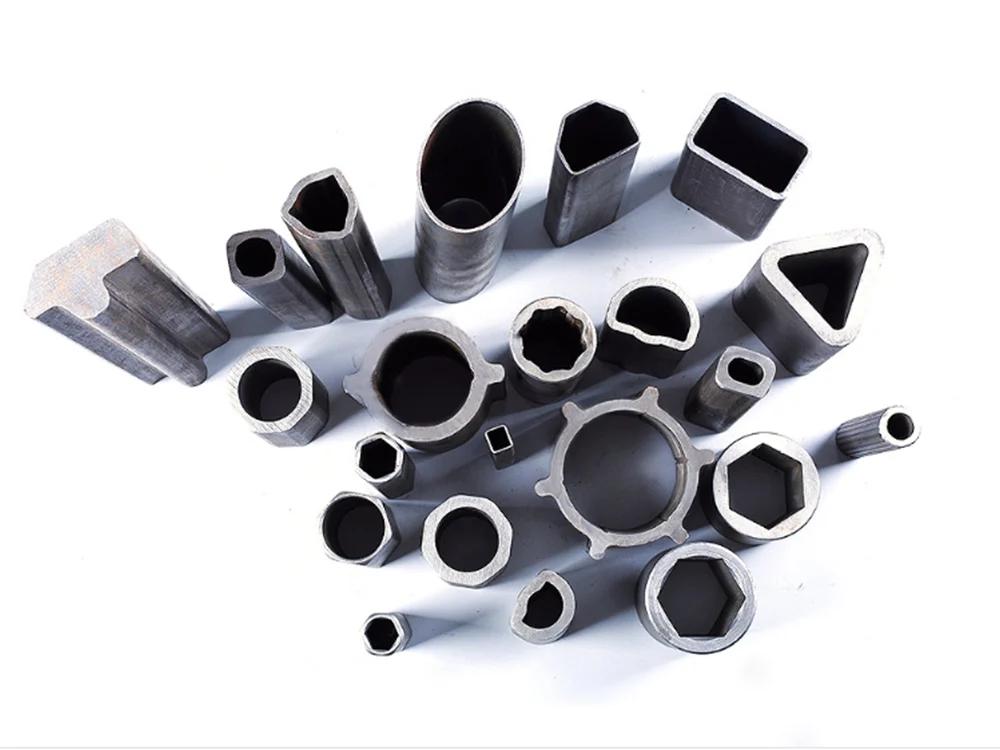
Designers should ask for the same profile tolerance thinking used for machined parts. The drawing should name the acceptance datum, the wall-thickness check points, the allowable straightness per unit length, and the surface flaw limit. Otherwise, a supplier can offer a tube that meets the nominal profile but still fails when the mating component imposes a different fit condition.
Quality Signals That Matter for Aerospace Tube Sourcing
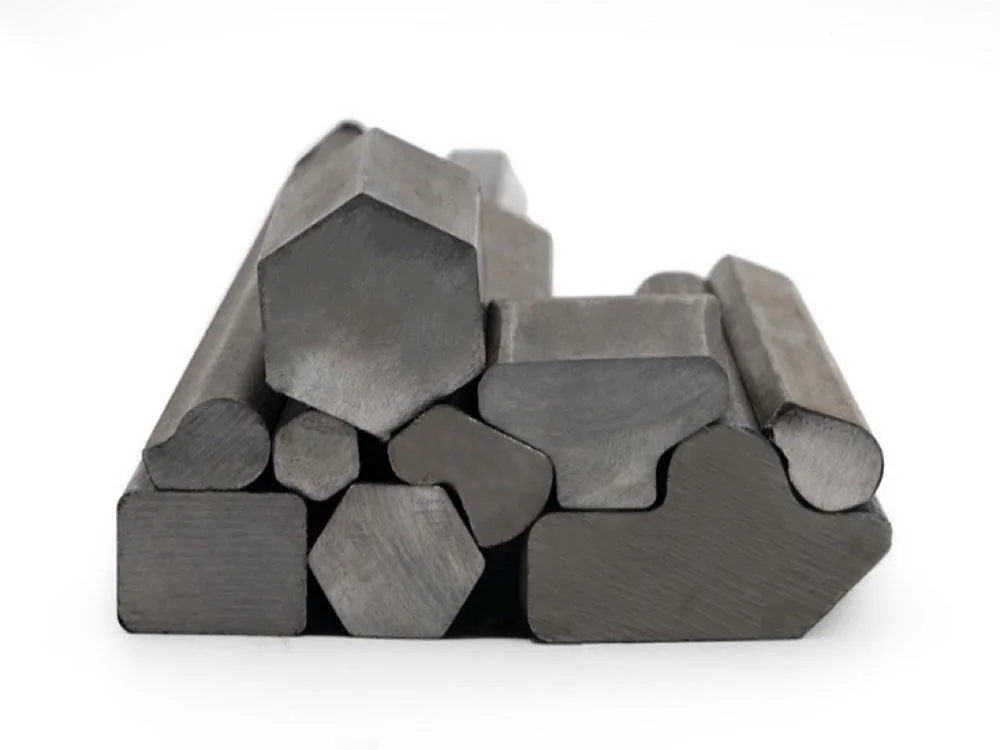
Aerospace sourcing usually adds verification because the cost of a missed defect is not limited to replacement; it includes teardown, delay, and certification review. The strongest supplier controls the process route before inspecting the finished tube. That means raw material identification, cold drawing reduction, heat treatment, straightening, and surface preparation are recorded as a connected set of production steps rather than as isolated tests.
Positive material identification and non-destructive testing are useful, but they have boundaries. PMI checks the chemical identity at the tested location and cannot replace a full melt certificate. Ultrasonic and eddy current testing can detect many discontinuities but cannot by themselves establish fatigue life or fitness for a new design. The table below separates what a quality signal supports from what it does not prove.
| Quality signal | What it can support | What it does not prove |
|---|---|---|
| Positive material identification | Confirms alloy grade at tested locations | Does not replace complete melt or batch chemistry records |
| Ultrasonic or eddy current testing | Detects many longitudinal and transverse discontinuities | Does not establish fatigue performance in a new application |
| Dimensional inspection reports | Verify measured geometry and tolerance compliance | Do not guarantee fit unless mating part tolerances are combined |
| Heat treatment records | Show process route and temperature | Do not prove microstructural uniformity without supporting tests |
| Material certificates and traceability | Link the tube to its heat or melt and reported results | Do not replace application-specific qualification |
Heat treatment is one of the areas where wording must be precise. Quenching and tempering, normalization, and stress relief change different properties, and a certificate that lists furnace temperature without the full heat-treat route tells only part of the story. Buyers should request the actual process order, not only the final hardness or tensile value.
Heat treatment changes both microstructure and residual stress, so an aerospace buyer must check the process route before trusting a hardness or strength certificate. <Steel Pipe Heat Treatment: Key Processes and Applications> covers how key heat treatment stages affect final mechanical behavior.
Aerospace Steel Tube Procurement Indicators to Watch in 2026
Several changes are moving from isolated projects into routine aerospace tube sourcing. First, buyers are asking for more complete data packages that connect raw material, production steps, inspection results, and final dimensions. Second, precision special shapes are appearing in smaller development batches before full production, which requires suppliers who can quote tooling and process feasibility without treating every request as a mass-production order. Third, supply chain resilience has become a qualification topic, so sourcing teams are evaluating whether a supplier can hold buffer capacity and still maintain the same process controls.
The table below lists indicators that are useful to monitor. The point is not to chase every short-term change. A one-batch request can be noise; a repeated shift in the same direction is a better signal of where aerospace tube demand is moving.
| Indicator to watch | Useful signal | Movement to ignore |
|---|---|---|
| Low-alloy precision tube lead times | Sustained extension beyond normal scheduling windows | One-week spot quote volatility |
| Requests for special profiles instead of round stock | Repeat demand for near-net cross sections | A single unique one-off shape |
| Documentation depth on tube orders | Consistent shift to full data packages and digital traceability | Isolated buyer curiosity or a template request |
| NDT coverage and record retention | Repeat orders specifying full coverage and retrievable records | Equipment supplier marketing claims |
| Dual-source or resilience clauses | Executable qualification and buffer-capacity requirements | Broad trade commentary without contract terms |
For engineering teams, the next move is to review whether the tube specification still reflects the actual service condition. A legacy drawing may carry an older tolerance or a material grade left over from a previous program. If the part has changed, the tube requirement should change with it. The goal is not to remove all requirements; it is to make each one traceable to a failure mode, an assembly need, or a qualification obligation.
Moving from Trend Review to a Manufacturable Tube Quote
Before a new aerospace tube order enters supplier comparison, send the working parameters that matter: alloy or specification target, OD and wall tolerance, profile geometry and corner radii, required heat treatment, NDT and documentation requirements, and expected production volume. This makes it possible to separate a genuine manufacturable proposal from a generic material quotation. Contact Tenjan at Sunny@tenjan.com, tel +86 51988789990, or WhatsApp +86 13401309791 to review feasibility without treating one parameter as the whole specification.
FAQ
Why are seamless steel tubes preferred for aerospace fluid systems?
Seamless tubes avoid the weld seam that can create a localized discontinuity in a vibrating pressure line. That improves confidence in pressure retention and fatigue behavior when the tube is formed or bent. Welded precision tube can still be used in lower-risk applications when the weld is controlled and inspected, but aerospace fluid systems usually favor seamless because the risk associated with a seam failure is high.
Which steel grades appear most often in aerospace steel tube specifications?
Low-alloy chromium-molybdenum grades such as 4130 and 4140 are common because they respond predictably to heat treatment and provide a useful balance of strength, toughness, and weldability. Carbon steel tube still appears in supporting components where loading is lower and cost matters. The grade choice should follow the service temperature, stress state, and required damage tolerance rather than a simple strength ranking.
Do special-shaped steel tubes actually help in aircraft structures?
They can when the profile reduces assembly steps or improves load distribution. A shaped section may replace a machined bracket or combine a guide feature with a structural wall. The condition is manufacturability: the designer must define corner radii, wall variation, and straightness clearly enough for the cold drawing process. Without that detail, the theoretical weight saving can disappear in extra machining and inspection.
What quality records should buyers request for aerospace steel tubes?
At minimum, request the material certificate connecting the tube to its melt or heat, dimensional inspection records, specified NDT results, and the actual heat treatment route. For parts with qualification obligations, add the raw material source control and any process change approvals. A single hardness or tensile report is not enough because it does not show how the result was created.
Are welded precision steel tubes acceptable in aerospace applications?
Some welded tubes can be acceptable in lower-risk structural or conduit applications when the weld is produced, heat treated, and inspected under controlled conditions. The key is to compare the weld’s fatigue and pressure capability against the part’s actual loading. If the application is a high-pressure hydraulic line or a heavily cycled structural member, seamless often remains the safer default unless the welded product has a qualification record for that use.
If you’re interested, check out these related articles:
Carbon Steel vs Alloy Steel Tubes
DIN 2448 Seamless Steel Pipe: Sizing, Weights and Ordering
Thin Wall Steel Tubing: When It Works and When It Fails