How Steel Tube Suppliers Adapt to Changing Customer Demand
Customer demand in the steel tube industry rarely changes in one clean step. A buyer may ask for a thinner wall on Monday, a shorter lead time on Wednesday, and a fuller inspection package on Friday,…

Customer demand in the steel tube industry rarely changes in one clean step. A buyer may ask for a thinner wall on Monday, a shorter lead time on Wednesday, and a fuller inspection package on Friday, while the underlying application has barely moved. The useful response is not to accept every request as a new specification. It is to separate a real change in function, volume, or evidence from temporary urgency, then translate it into tube parameters, order policy, and a delivery plan that production can hold. That discipline matters more as buyers push for lighter parts, tighter fits, smaller batches, and more traceable supply.
Why Steel Tube Demand Changes Are Hard to Read
Demand reaches a tube supplier through several voices at once. Purchasing talks about a late shipment. Engineering asks for a wall reduction. Quality asks for an extra test. Each request sounds urgent, but they do not belong to the same category. A change in delivery date is an order event. A change in fit is a specification event. A change in inspection is a release event. Mixing them together is how a simple expedite turns into a full drawing review, or a real design change gets treated as a scheduling problem.
The coupling inside a steel tube makes this harder. Outer diameter, wall thickness, tolerance, straightness, ovality, surface condition, and mechanical properties interact. A small wall reduction changes section stiffness, buckling risk, drawing load, and the way the tube behaves in the customer’s fixture. A tighter ovality limit may change the straightening step, the inspection gauge, and the amount of scrap. A new heat treatment condition may solve a strength problem while creating a straightness or surface problem. The customer sees one changed number. The mill sees a chain of process decisions.
A useful test is to ask whether the request changes the function of the tube, the evidence package, or only the timing of a known order. A single urgent request is an order event until evidence says otherwise. A request that appears in several orders, arrives with a drawing revision, or changes a performance requirement is more likely to be structural. The same logic applies to a new size that one customer tests once and another customer starts quoting every month. Repetition is not proof, but it is a signal worth investigating before capacity or tooling is committed.
The Three Demand Layers That Need Different Responses
A three-layer demand review separates volume and mix, tube specification, and release evidence. Delivery sits across all three because every layer can consume lead time. The review is not a bureaucratic label. It is a way to stop a purchasing message from being answered with an engineering change, or a drawing change from being answered with a promise that production has not checked.
| Demand layer | What the customer may say | First evidence to request | Response that fits | Failure when mixed with another layer |
|---|---|---|---|---|
| Volume and mix | “We need more of this size next quarter” | Monthly releases, annual forecast, size family, order frequency | Reserve capacity for repeatable sizes, quote custom sizes by batch, review mix monthly | A one-off spike buys tooling that never pays back |
| Geometry and tolerance | “Make it fit better” | Drawing revision, mating part, critical dimension, measurement method | Check process capability, gauge, straightness, ovality, and acceptance method | A tolerance is promised before the measurement basis is agreed |
| Material and mechanical properties | “Make it stronger or lighter” | Grade, heat treatment condition, load case, test requirement | Review chemistry, heat treatment, section properties, and test direction | A grade name is changed without checking the actual failure mode |
| Documentation and release | “We need more traceability” | Certificate type, PMI or NDT requirement, batch identity, approval authority | Define the record, the lot, the test, and who releases the tube | A folder of certificates is treated as proof of fitness for every use |
| Delivery and order pattern | “We need it faster” | Drawing status, tooling status, raw material, trial, inspection, packing | Build a gate schedule and state what is fixed, what is open, and what triggers a change | A date is quoted from the order date instead of from the release date |
Volume changes are often the easiest to misread. A customer who doubles one order may be covering a short-term stockout. A customer who adds two sizes every quarter may be changing the product mix. The first case calls for a delivery answer. The second calls for a capacity and tooling review. A supplier that treats both as a capacity problem will hold inventory it cannot use. A supplier that treats both as a scheduling problem will miss a real shift in demand.
Geometry and tolerance need a process answer, not a wish. Tolerance is a claim about what the mill can hold repeatedly, with a defined measurement method, on a defined gauge, at a defined location. A drawing can specify a number, but the first batch decides whether that number is practical. The buyer should ask where the critical fit occurs, how the tube is measured, and what happens at the assembly line when a tube sits at the edge of the tolerance band. The supplier should answer with capability evidence, not with a restatement of the drawing.
Material and mechanical properties need an application answer. A grade name alone does not settle a strength problem. The same nominal grade can behave differently after different heat treatment, drawing reductions, or testing directions. A request for higher strength may be solved by a grade change, a heat treatment change, a wall change, or a shape change. Each route has a different effect on weldability, machinability, fatigue, and cost.
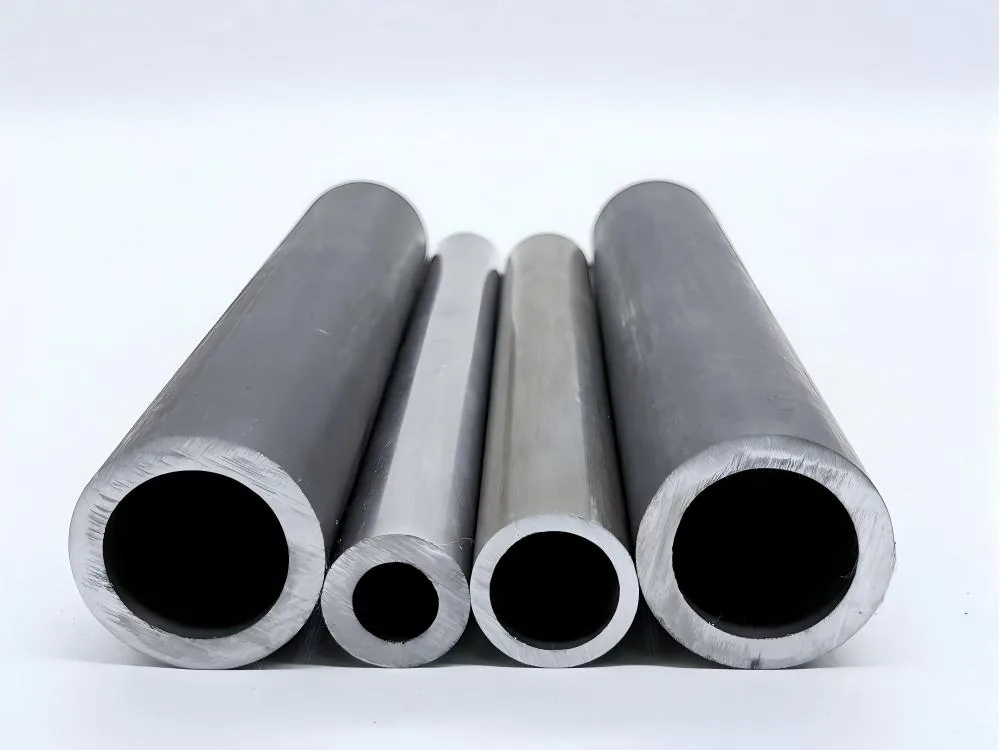
Documentation is where many otherwise sound orders become slow. A mill certificate, a PMI report, and an NDT record do not prove the same thing. A certificate identifies the heat and the reported test results. PMI confirms the alloy identity at the point checked. NDT supports a statement about a defined discontinuity under a defined method. A buyer who asks for “full traceability” without naming the decision it supports may pay for records that do not answer the question. A supplier who sends a larger pack without a release map may create more reading work without reducing risk.
Delivery deserves its own gate schedule. A custom tube order rarely fails at the drawing stage. It fails when the promised date ignores tooling, trial, and inspection time. Raw material may be available, but the drawing may still be under review. The drawing may be released, but the tooling may not be proven. The tooling may be ready, but the first article may reveal a straightness or surface issue. A useful delivery answer separates these gates instead of compressing them into one date.
A custom tube order rarely fails at the drawing stage. It fails when the promised date ignores tooling, trial, and inspection time. <Managing Custom Steel Tube Lead Times for OEM Buyers> covers how OEM buyers can plan around those lead-time gates.
How to Translate Vague Customer Language into Tube Specifications
Customer language is compressed because the customer is describing a problem, not a tube. “Lighter” may mean a thinner wall, a higher-strength grade, a different shape, or a change in the surrounding structure. “Stronger” may mean yield strength, fatigue life, hardness, or resistance to a specific load case. “Better corrosion resistance” may point to a coating, a different alloy, a smoother surface, or a change in the environment. The supplier’s job is to expand the phrase into a testable request before quoting.
| Customer phrase | What it may really mean | Specification action | Question that closes the gap |
|---|---|---|---|
| “Make it lighter” | Lower mass at the same stiffness or strength | Check load case, deflection limit, wall, grade, shape, and buckling risk | Which load case and deflection limit must the part meet? |
| “Tighter fit” | Better assembly with less rework | Define OD, wall, ovality, straightness, surface, gauge, and measurement location | What is the mating part and how is it assembled? |
| “Stronger” | Higher yield, tensile, hardness, or fatigue resistance | Confirm grade, heat treatment, test direction, and the failure mode being avoided | Is the problem static strength, fatigue, wear, or deformation? |
| “More corrosion resistance” | Longer life in a defined environment | Define exposure, coating or alloy route, surface condition, and acceptance test | What is the environment and what life is expected? |
| “Smaller batches, more shapes” | A change in mix and changeover frequency | Check profile, tooling, minimum run, annual quantity, and repeat pattern | What is the annual quantity and how often will the shape change? |
A lighter tube is a good example of why the first question is not “what wall thickness?” The first question is “what load case and deflection limit must the part meet?” A thinner wall can reduce mass, but it also reduces section stiffness and can increase ovality or buckling risk. A higher-strength grade may recover some strength, but it can change weldability and machining behavior. A shaped profile may put material where it is needed, but it may require new tooling and a longer first article. The correct answer may be a combination, and the wrong answer may be a single number copied from a competitor’s drawing.
A tighter fit is similar. The drawing may show an outer diameter tolerance, but the assembly may be controlled by ovality, straightness, surface finish, or the way the tube is clamped. If the tolerance is stated without a measurement location, the first batch becomes an argument. A useful RFQ names the critical dimension, the gauge, the measurement location, the sampling plan, and the acceptance rule. The standard family, such as ASTM A519, EN 10305-1, JIS G3445, or DIN 2391, frames the default requirements, but it does not replace the application review.
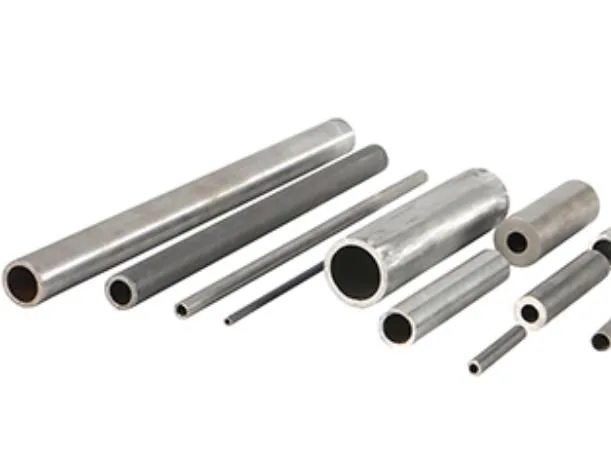
A precision tube is only as precise as the measurement basis behind it, and a standard label alone does not settle the drawing. <How EN10305 Steel Tube Standard Affects Precision Tube Procurement> covers how that standard shapes procurement checks for precision tube.
Corrosion requests need the same discipline. “Better corrosion resistance” without an environment is not a specification. The buyer should describe the exposure, the expected life, the cleaning regime, the coating or alloy route under consideration, and the test that will be used to accept the part. A coating that performs well in one atmosphere may fail in another. A smoother surface may help in one application and add cost without benefit in another. The supplier should not choose a coating from a one-word request.
Smaller batches and more shapes are a demand pattern, not a single order. The buyer should give the annual quantity, the number of changeovers, the profile family, and the repeat pattern. The supplier should check tooling, setup, inspection, and raw material minimums. A shape that is technically possible can still be a poor order if the annual volume does not cover the setup and tooling. The answer may be a standard hollow that is machined or formed closer to the final shape, rather than a new custom profile.
Where Flexibility Costs More Than It Returns
Flexibility is a capability, not a promise. Every added size, profile, tolerance band, or inspection step consumes something: changeover time, tooling, engineering review, operator attention, gauge time, or inventory. The question is not whether a supplier can be flexible. The question is which flexibility the customer is willing to pay for and which flexibility the process can repeat.
| Flexibility tactic | Benefit | Hidden cost | Use when | Stop when |
|---|---|---|---|---|
| Wide size range | More applications served from one supplier | More setups, lower line utilization, higher small-batch cost | Demand is genuinely mixed and repeat orders exist | The range grows faster than repeat volume |
| Custom profiles | Material placed near the final shape | Tooling, drawing trials, straightening, and inspection burden | Annual volume and design life justify the tool | The profile is a one-off with no repeat path |
| Buffer inventory | Faster response to repeat orders | Cash, storage, obsolescence, and quality risk over time | The size is stable and the release pattern is predictable | The buffer hides forecast errors instead of absorbing them |
| Fast quoting | Shorter customer response time | Quotes issued before drawing or capability review | The request is a repeat of a known design | The quote becomes a commitment the process has not checked |
| Custom inspection | Evidence matched to a specific failure mode | Extra test time, sampling cost, and release administration | The risk is defined and the test can detect it | The test adds paperwork without changing the decision |
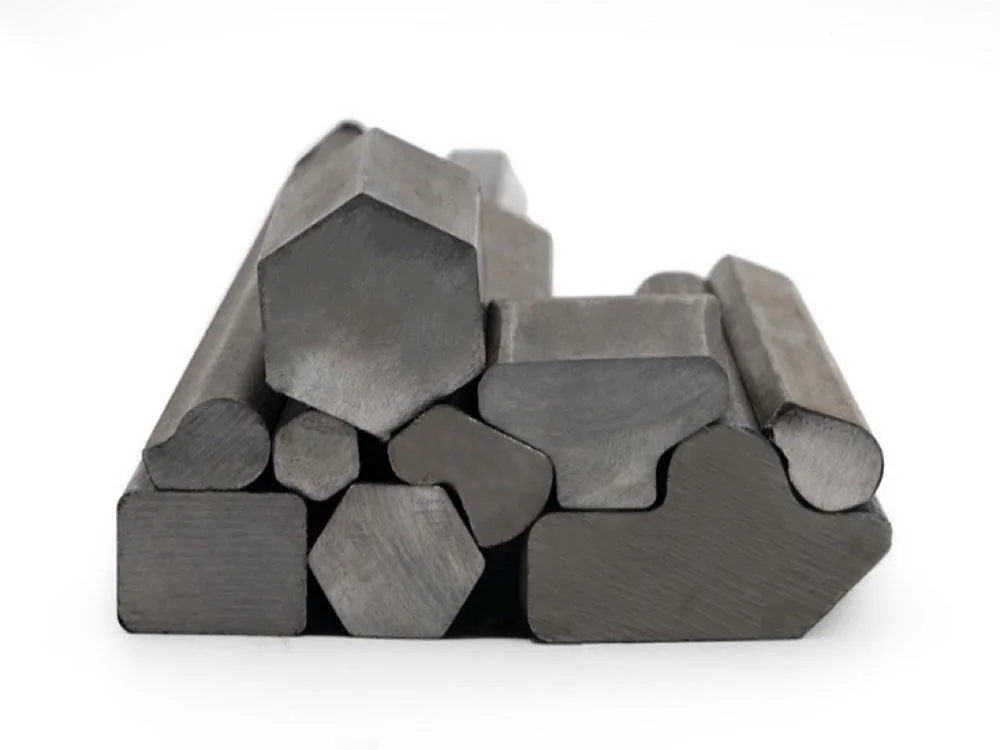
Custom profiles are where the cost is easiest to underestimate. A new shape can reduce machining, improve stiffness, or solve an assembly problem. It can also require a die, a mandrel, a drawing trial, a straightening adjustment, and a new inspection plan. The first article may pass, while the third production lot reveals a wear pattern on the tool. A supplier that quotes the shape as if it were a standard round tube is not being flexible. It is delaying the cost until the customer has no alternative.
Buffer inventory has a similar limit. A buffer of repeatable standard sizes can shorten delivery and smooth demand. A buffer of custom sizes can become cash tied up in a shape that the customer changes after the next design review. The useful policy separates stable repeat sizes from custom or declining sizes. The stable group can carry a planned buffer. The custom group should be quoted by batch, with a clear change trigger.
Documentation flexibility also has a cost. A customer may ask for a larger inspection pack, additional PMI, or a different release sequence. That can be useful when it matches a real failure mode. It can be wasteful when it repeats the same evidence in a different format. The buyer should name the decision the record supports. The supplier should state what the record covers and what it does not.
Traceability is most useful when it links a finished tube to the heat, process route, and test record that produced it, not when it is a folder of unconnected certificates. <How Digital Traceability Tightens Steel Tube Quality Control> covers how digital records support that link.
A Practical Demand Review for Steel Tube Buyers and Suppliers
A monthly or quarterly demand review is enough for many tube programs. The purpose is not to predict every order. It is to catch a change in pattern before it becomes a tooling commitment, a missed delivery, or a quality dispute. The same review works for a buyer and a supplier, although each side owns different evidence.
-
Collect actual releases, not forecasts alone. Compare the last three months of releases with the forecast and note where the gap is concentrated. A forecast that is always high is not a capacity signal. A release pattern that keeps adding the same new size is.
-
Classify each change with the three-layer review. Is this volume and mix, specification, or release evidence? If the request crosses layers, split it. A new size with a new inspection requirement is not one change.
-
Check whether the change is repeated or structural. Look for a drawing revision, a new application, a performance requirement, or the same request from more than one customer. A single expedite remains an order event until the evidence changes.
-
Verify process capability and measurement before promising a tolerance. The supplier should name the gauge, the measurement location, the sampling plan, and the action taken when a tube sits near the limit. The buyer should confirm that the measurement matches the assembly need.
-
Quote with assumptions, exclusions, and change triggers. A useful quote states the drawing revision, material condition, inspection scope, packing, delivery basis, and what happens if the annual quantity or drawing changes. A price without those conditions is only a starting point.
-
Review the first article and the first production batch. The first article confirms the drawing. The first batch confirms the process. A supplier that only reviews the first article may miss a tool wear or heat treatment variation that appears later.
Demand often shifts by application rather than by product category. A boiler or heat exchanger program may tighten temperature and testing requirements. A hydraulic program may push for cleaner surfaces and tighter dimensional control. A construction or machinery program may push for a different profile, a lower mass, or a faster replacement cycle. The tube family may look familiar, but the acceptance criteria move with the application.
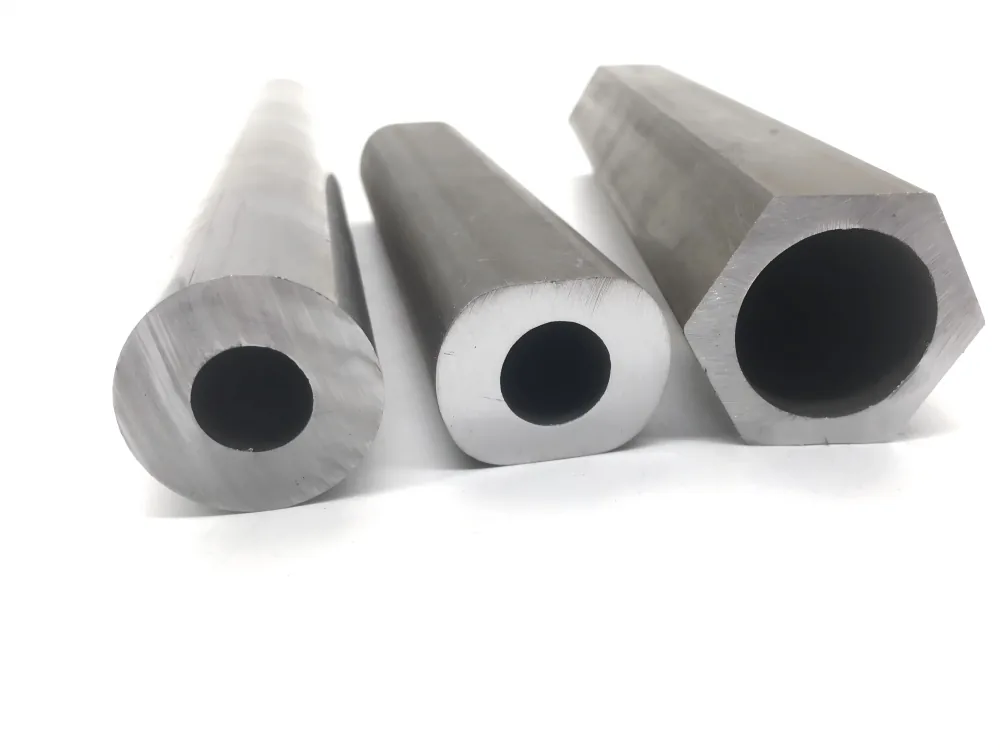
For buyers, the practical check is to write the application, the drawing revision, the annual quantity, the critical dimension, the measurement method, the test schedule, and the delivery window into one request. For suppliers, the practical check is to confirm which of those items is fixed, which is open, and which one triggers a new quote. That single page prevents more disputes than a longer catalogue.
What to Recheck in 2026 as Demand Shifts
The useful annual review is not a market forecast. It is a set of checks that keep old assumptions from surviving into a new demand pattern.
Recheck customer releases against the forecast. A rise in enquiries or search interest for a tube type is not the same as confirmed orders. Look for repeated releases, new drawings, and changes in the size mix. If the enquiries are not turning into releases, do not add capacity or inventory on the strength of interest alone.
Recheck drawing revisions and standard editions. A customer may update a drawing without changing the part number. A standard edition may change a test or tolerance requirement without changing the grade name. The internal acceptance criteria should be checked against the current drawing and the agreed standard, not against the version used at the last audit.
Recheck what each inspection record proves. A mill certificate, a PMI report, and an NDT record answer different questions. A certificate identifies the heat and reported results. PMI confirms alloy identity at the point checked. NDT supports a defined method and acceptance level. The review should confirm that the record matches the failure mode the customer is trying to control, not just that the file is complete.
Recheck lead-time assumptions at each gate. Raw material, drawing release, tooling, trial, production, heat treatment, testing, and packing do not move at the same speed. A shorter total lead time may come from holding a standard size, not from compressing every custom step. A longer lead time may come from a test that was added late, not from the mill’s production line.
Recheck inventory policy against the demand pattern. Stable repeat sizes can justify a buffer. Custom or declining sizes should be reviewed for obsolescence. The buffer should absorb normal variation, not hide a forecast that has stopped matching releases.
Recheck supplier capacity and change notification, not only price. A supplier that can produce the tube but cannot signal a capacity constraint early is a delivery risk. A supplier that can explain which change triggers a new review is easier to plan around. The same applies to the buyer’s own drawing and release process. A late drawing change is still a change, even when it arrives after the order.
Talk Through the Change Before It Becomes a Change Order
Before you send a custom steel tube enquiry, write down the application, drawing revision, annual quantity, required standard, critical dimension and measurement method, test schedule, and delivery window. Those items let a supplier separate a standard tube from a custom one and quote against a real process rather than a guess. Tenjan reviews each request against material, cold drawing, heat treatment, inspection, and packing constraints, then confirms what is fixed and what remains open. Send the details to Sunny@tenjan.com or call +86 13401309791 to arrange that review.
FAQ
How can a buyer tell a real specification change from an urgent order?
A real specification change usually brings a drawing revision, a new performance requirement, or a repeated request across orders. An urgent order changes timing, not the tube. Ask what function changed, which dimension or test carries that change, and whether the same request has appeared before. If the answer is only “we need it sooner,” treat it as a delivery issue until the drawing or acceptance criteria change.
What should a custom steel tube RFQ include?
Include the application, drawing revision, annual quantity, size family, material or grade, heat treatment condition, critical dimensions, measurement method, inspection or test schedule, packing, delivery window, and any approved supplier or standard requirement. Also state what the tube must fit and what failure mode the buyer is trying to avoid. These details let the supplier quote the process, not just the outside diameter.
Why does tighter tolerance raise the cost of a steel tube?
Tighter tolerance reduces the process window. The mill may need slower drawing, more careful straightening, additional gauging, higher inspection frequency, and more scrap at the edges of the band. The cost is not only the metal removed. It is the time and attention needed to hold the band repeatedly. A tolerance that is tighter than the assembly needs adds cost without reducing the real risk.
How should a supplier handle small batch demand?
Separate repeatable small batches from one-off custom work. Repeatable sizes can use a planned buffer or grouped production runs. One-off profiles need a tooling and setup review, a clear minimum quantity, and a quote that states the assumptions. Grouping similar sizes and profiles can reduce changeover cost, but the supplier should not hide a custom setup inside a standard price.
Does more traceability always mean better quality?
No. Traceability proves that a record is linked to a lot, heat, process route, or test. It does not prove that the tube suits every application. A certificate, PMI report, and NDT record each support a different claim. More records can improve control when they match a real failure mode. They can also add cost and reading work when they do not change the release decision.
If you’re interested, check out these related articles:
How EN10305 Steel Tube Standard Affects Precision Tube Procurement
Steel Pipe Heat Treatment: Key Processes and Applications
Selecting Steel Pipes for Drilling Equipment: Core Factors
Thin Wall Steel Tubing: When It Works and When It Fails
Steel Tubes for Construction Applications: Selection Guide