Steel Tubes for Construction Applications: Selection Guide
Every construction project starts with a pile of steel, but the difference between a structure that performs and one that causes daily headaches often...
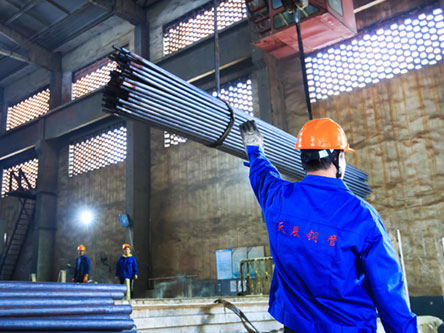
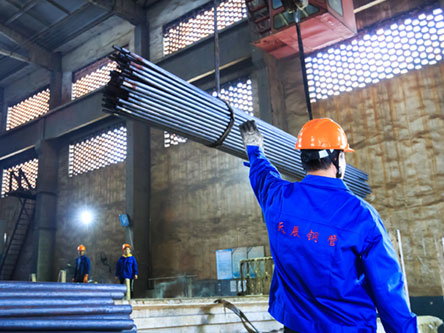
Every construction project starts with a pile of steel, but the difference between a structure that performs and one that causes daily headaches often comes down to the tubes chosen for the frame, bracing, and mechanical systems. Steel tubes for construction applications serve as columns, trusses, crane masts, scaffold poles, and embedded sleeve pipes, yet selecting the right tube is rarely as simple as pulling a standard grade from a catalog. Over two decades on the manufacturing floor, I’ve seen how a supplier’s ability to cold-draw a custom profile or hold a tight wall tolerance can rescue a project from costly rework. This article distills that experience into a practical selection path for procurement engineers and technical buyers who need tubes that work, not just tubes that meet the spec sheet.
Matching Steel Tubes to Construction Load Requirements
The first decision isn’t about grade, it’s about function. A column in a high-rise bears pure compression; a lateral bracing member sees tension and bending; a scaffold pole handles transient point loads. Each demands a different set of mechanical properties. For primary structural members, yield strength and the radius of gyration are the numbers that matter. For sleeves and formwork, dimensional consistency and straightness might dominate.
In most specifications, structural hollow sections fall into EN 10210 (hot-finished) or EN 10219 (cold-formed) categories in Europe, and ASTM A500 or A1085 in North America. Hot-finished tubes benefit from a normalized grain structure with uniform stress distribution and typically show better toughness at low temperatures. Cold-formed tubes cost less per ton but carry residual forming stresses that can affect buckling behavior under heavy axial loads. It’s not that one is bad and the other good, it’s that they fit different risk profiles. I recall a project where a contractor swapped cold-formed CHS for hot-finished in a high-seismic zone; after independent FEM analysis confirmed greater deformation potential, they reverted to the specified EN 10210 material. The change probably saved them months of regulatory back-and-forth.
For load-bearing applications, two grades cover the majority of global demand: S355JR (which we also supply as Q355B in China) and ASTM A500 Grade B. S355JR delivers 355 MPa minimum yield in wall thicknesses up to 16 mm, while ASTM A500 Grade B yields 290 MPa. When the design calls for higher strength, we routinely draw S355JR into custom-wall tubes with mechanical properties verified mid-length, not just at the ends.
Navigating Global Standards for Construction Steel Tubing
Once the load path is defined, the next hurdle is aligning a tube’s certification with the project’s jurisdictional standards. It’s a common frustration: an EN standard tube might not automatically carry an ASTM stamp, even if its chemistry and mechanicals exceed the requirement. I’ve seen procurement managers stuck at customs because the mill certificate showed the wrong reference code, nothing wrong with the steel.
The four workhorses for structural construction are:
| Standard | Scope | Typical Grades |
|---|---|---|
| EN 10210-1 | Hot-finished structural hollow sections | S235JRH, S355J2H |
| EN 10219-1 | Cold-formed welded structural hollow sections | S235JRH, S355J2H |
| ASTM A500 | Cold-formed welded and seamless carbon steel structural tubing | Grade A, B, C, D |
| JIS G3466 | Carbon steel square and rectangular tubes for general structure | STKR400, STKR490 |
In addition, Chinese standard Q355B tubes are increasingly accepted on international projects when paired with a recognized third-party inspection. The key is verifying that the material test certificates include not only the mill’s traceability data but also independent verification of the Charpy impact test, tensile properties, and chemical composition. When a project requires compliance with multiple standards, we often provide dual-certified tubes that meet both EN and ASTM requirements, reducing the documentation overhead.
If your project spans regions with different design codes, it’s worth confirming that the tube’s ductility and impact test values match the code’s expected fracture toughness. A tube that meets ASTM A500 Grade B may be borderline on the low-temperature toughness required by some EN 1993-1-10 checks. Reach out at Sunny@tenjan.com with your maximum design stress and expected minimum service temperature, and we can review whether a substitution is engineering-safe, not just certificate-compliant.
Hollow Sections Versus Solid Sections: Shape and Weight Advantages
Construction projects gravitate toward tubular sections for a reason: compared to an open I-beam of the same mass, a hollow section provides superior torsional rigidity and biaxial bending strength. A square or circular tube distributes material farther from the neutral axis, improving the section modulus without adding weight. For columns, a circular hollow section (CHS) offers the most efficient buckling resistance because it resists axisymmetric and torsional modes equally.
Rectangular hollow sections (RHS) dominate beam and truss applications because they connect more easily to gusset plates. However, the flat sides of an RHS can be more susceptible to local buckling under concentrated bearing loads. Adding longitudinal stiffeners is one fix, but it is often more cost-effective to move up one wall class, say from 6 mm to 8 mm, than to engineer a complex stiffener pattern. We’ve produced RHS in sizes up to 108 mm with wall thicknesses to 20 mm, which covers the needs of most medium-span structural frames.
A recurring question from architects is whether an oval or special-shaped tube can replace a standard round section for visual effect while maintaining structural integrity. The short answer is yes, if the cross-section’s moment of inertia values are recalculated for the specific profile and the tube is manufactured with uniform wall thickness. Our cold-drawing process for special-shaped carbon steel tubes lets us hold the wall variation to ±0.1 mm, so the engineering calculation and the physical part actually match.
Precision Cold-Drawn Tubes for Specialized Construction Applications
Standard hollow sections cover 80% of a building’s steel tonnage. The remaining 20% are where precision matters most: anchor sleeves, post-tensioning ducts, architectural exposed columns that reject visible weld seams, and mechanical linkages in moveable roof systems. These applications demand tighter tolerances, better surface finish, and often a specific heat-treated condition that off-the-shelf structural sections cannot deliver.
Our cold-drawn welded tubes start as ERW feedstock and then pass through a series of drawing dies that reduce the outer diameter, improve the surface finish, and align the weld zone structure with the parent metal. The result is a tube that visually and dimensionally resembles a seamless product at a lower cost. For a recent stadium canopy project, we supplied oval cold-drawn profiles that served as both tension elements and architectural features. The drawing process eliminated the weld line prominence that would have shown through the final paint.
When specifying a precision tube for construction, the three parameters to pin down early are OD tolerance, straightness, and surface roughness. Cold-drawn tubes typically achieve an OD tolerance better than negative-zero with a positive allowance of a few tenths of a millimeter, and straightness of 0.5 mm per meter. This level of control becomes critical in telescoping assemblies, where a sleeve tube must slide freely over an inner member without jamming yet not so loosely that it develops eccentric loading. I always recommend requesting a sample lot for assembly trials before releasing a bulk order. The cost of a 10-piece sample is nothing compared to discovering a fit problem at the site.
How to Qualify a Steel Tube Supplier for Your Project
The structural engineering is only as good as the tube that lands on site. Beyond price per ton, evaluating a supplier involves digging into their process control, not just their sales deck. Three indicators have proven reliable in my experience.
First, ask how they verify wall thickness consistency. A manufacturer that only checks two points on a tube’s circumference is effectively guessing about the rest. We perform full-wall UT scanning on structural tubes destined for critical applications, plus laser OD gauging at the draw bench for precision cold-drawn orders. If the supplier cannot show you a real-time quality record from the line, the traceability isn’t there.
Second, check their heat treatment and stress-relieving capabilities. Construction tubes that will be welded on site benefit from a tube with low residual stress, because transverse shrinkage forces can open microscopic cracks in a highly stressed cold-formed product. Our normalized tubes pass through a controlled furnace cycle that restores a uniform grain structure, improving both weldability and fatigue life. It’s an extra step that adds a few days to the schedule but saves far more in downstream welding concerns.
Third, confirm the supplier’s export packaging and logistics. Tubes that arrive with mechanical damage or surface corrosion are effectively scrap unless the contractor can perform on-site reconditioning. We bundle structural tubes with end caps and wrap them in water-resistant material for maritime shipping, and we offer mill-spec preservative coatings for long-term storage. A supplier that cannot show you a packaging protocol before the order is placed will probably let a lot go out on a rainy day.
Securing the Right Tube for Your Next Build
Construction tubes are rarely a commodity purchase. The wrong wall thickness, an inaccurate yield strength, or a missing impact test can delay a project, invalidate a certification, or worse, show up as a structural deficiency years later. At Tenjan, we’ve helped contractors resolve specification gaps by cold-drawing custom shapes and holding tolerances that mass-production hollow sections cannot reliably achieve. Every tube we ship includes a digitally tracked mill test report with the full chemical and mechanical data for that specific heat number.
Before you finalize your bill of materials, share your project’s governing standards, required OD and wall combinations, and any special delivery timeline. We will confirm feasibility, quote a lead time, and, if needed, send pre-production samples for your engineer’s approval. Email Sunny@tenjan.com or call +86 13401309791. For real-time inquiries, you can also reach us on WhatsApp at the same number.
Common Questions From Structural Buyers
Are EN 10210 and EN 10219 hollow sections interchangeable for the same design?
Not automatically. EN 10210 covers hot-finished sections with lower residual stresses and guaranteed impact properties at specified temperatures, while EN 10219 covers cold-formed sections where the forming process introduces residual stresses that can reduce the buckling capacity. If the design calculation assumes the more favorable buckling curve for hot-finished sections, you cannot substitute cold-formed tubes without recalculating. In practice, I’ve substituted EN 10210 tubes into an EN 10219 conformance when the project engineer confirmed in writing that the higher toughness was acceptable and did not create a matching problem with end connectors.
How much wall thickness variation is acceptable in a structural tube?
The short answer is plus or minus 10% for non-critical structural applications under ASTM A500, but many project specifications tighten this to plus or minus 5% for primary load-bearing members. For cold-drawn tubes, we can hold the tolerance to plus or minus 0.1 mm regardless of nominal wall, which is far tighter than standard structural specs. The practical concern is that a thin spot at a bolted connection can lead to localized yielding, so I recommend verifying the wall thickness at both ends and at mid-length, and rejecting any lot where the minimum thickness falls below the design value. We laser-gauge every meter of our precision tube runs precisely to avoid this risk.
Should I specify a galvanized or painted finish for outdoor structural tubes?
Hot-dip galvanizing to EN ISO 1461 is the default choice for exterior steel exposed to weather, offering decades of protection with minimal maintenance. For architectural applications where aesthetics rule, a factory primer and topcoat system may be preferred. But the real question is whether the tube can be galvanized without distortion. Thin-walled, cold-formed sections can warp if dipped too quickly; hot-finished tubes are more forgiving. We offer a normalized stress-relief treatment before galvanizing for any tube under 3 mm wall thickness to reduce warp tendency. If you have an irregular cross-section or an oval tube, it’s even more critical, because the thermal stresses during dipping are uneven. Share your surface protection requirements and geometry, and we’ll tell you whether dipping or painting is the safer move.