Steel Tubes in High-Speed Rail: Applications and Standards
Steel tubes in high-speed rail do two jobs that rarely appear in the same sentence: they hold things up, and they keep things moving. The visible work is structural, in catenary supports, platform canopies, tunnel service…
Steel tubes in high-speed rail do two jobs that rarely appear in the same sentence: they hold things up, and they keep things moving. The visible work is structural, in catenary supports, platform canopies, tunnel service brackets and equipment frames. The invisible work sits inside the train, where brake lines, air suspension piping and hydraulic circuits depend on cold-drawn tube that holds its diameter and wall thickness within a fraction of a millimetre. The reliability problems that matter most tend to come from the second group, and they usually begin with a purchase specification that named a grade but never named a delivery condition. This article follows both jobs and sets out what to specify, check and document.
Where Steel Tubes Carry Load in a High-Speed Rail System
Structural tube in a rail corridor is selected for stiffness, weldability and coating life rather than for bore finish. Catenary masts and cantilever brackets carry a tensioned contact wire and its dynamic loads. Platform canopies and screen door frames carry wind and crowd loads. Tunnel brackets carry cable trays and drainage lines. In each position the tube is a hollow section working in bending or compression, and the engineering questions are section properties, connection detail and corrosion protection.
The loading is less static than it looks. A passing train pushes a pressure pulse ahead of itself and drags a wake behind, so a lineside bracket or canopy panel sees a repeated load every time a unit goes by. Over a service life measured in decades, that repetition is what turns a coating scratch into a fatigue initiation site. Structural tube for these positions is usually specified to a structural hollow section standard, either hot finished or cold formed, with a declared steel grade and a coating system matched to the local climate. Coastal corridors, and tunnels where water finds its way into the drainage channel, are the two places where coating specification earns more attention than section size.
The check that catches most structural problems is not sophisticated. Measure the section at three points along the length, confirm the grade on the inspection document, and confirm dry film thickness against the coating specification. What those checks will not tell you is how the section behaves under repeated aerodynamic pulses. That is a design question for the structural engineer, and no mill certificate answers it.
Brake, Air and Hydraulic Lines Run on Precision Tube
The tube inside a train is at its best when nobody thinks about it. Pneumatic brake control lines, air suspension piping, door actuators, pantograph raise and lower circuits, sanding lines and HVAC drains all rely on tube that carries pressure, bends to a route drawn around equipment, and stays clean inside. A blocked orifice from drawing lubricant residue will stop a valve as effectively as a burst line, and it produces a far more confusing fault report.
Welded or seamless is the first fork in the road. A longitudinal weld is a continuous feature running the whole length of the tube, and a well-made ERW tube with eddy current verification performs well in many duties. Seamless removes that weld as a potential leak path and as a fatigue feature, which is why high-cycle pressure circuits tend to default to it. Cold-drawn seamless tube for hydraulic and pneumatic power systems has its own European specification, EN 10305-4 [1], which is a more precise purchase reference than a general mechanical tubing standard when the circuit carries pressure.
The choice between a welded and a seamless tube shifts with pressure duty and with how much weld verification the application can absorb. <Seamless vs ERW Pipe: Which Is Right for Your Project?> covers how the two constructions differ in cost, weld risk and inspection needs.
Internal cleanliness deserves its own line in the specification. Drawing lubricant, mill scale and cutting debris are all normal at some stage of production, and all of them have to be removed before the tube goes near a proportional valve. State the cleaning method and a residue limit, or state the downstream component that the limit is protecting. A phrase like “clean inside” gives the mill nothing to work with.
Pressure verification follows the same principle. Decide whether the requirement is a hydrostatic proof test on every tube, a batch sample, or a non-destructive test on the body, and write it in those terms. The test method, the hold time and the acceptance criterion belong in the purchase order, not in a conversation after the first delivery.
Why Diameter and Wall Tolerance Decide Whether a Line Fits
A tube that arrives oversized is a fitting problem, and a tube that arrives undersized is a leak problem. On a 10 mm line, a heavy outside diameter of a tenth of a millimetre is one percent, which is enough to stop a ferrule seating fully. A light diameter lets the ferrule bottom out on the nut before it grips the tube, and the joint passes a bench test before failing on the vehicle.
Wall thickness carries a second set of consequences. It sets burst pressure, it sets how many threads survive when a port is tapped into the tube end, and it sets how much material is left after bending. Bending thins the extrados, so a tube supplied at the low end of the wall tolerance can finish a tight bend below the design minimum even though it arrived inside specification. Ovality after bending affects seal compression, and straightness decides whether an automated bender can feed the tube at all.
Fit problems usually surface at the fitting, but they are decided at the mill, where the outside diameter and wall tolerances were fixed. <Steel Tube Dimensional Accuracy: Why Fit Depends on It> covers how dimensional accuracy translates into assembly fit.
This is where cold drawing does its quiet work. Changzhou Tenjan Steel Tube Co., Ltd cold-draws precision tube from 10 mm to 108 mm outside diameter with wall thickness from 1 mm to 20 mm, holding wall tolerance to roughly ±0.1 mm. That window is close to what a brake or air line drawing is actually asking for when it uses the word “precision” without defining it.
Verification is straightforward if it is planned. Measure outside diameter at three positions along a sample, measure wall at four quadrants with a micrometer or ultrasonic gauge, and check straightness on a surface plate. Then confirm on the inspection document which tolerance class was applied, because a nominal size with no stated class leaves the mill to apply its own default.
Fatigue, Vibration and Pressure Duty in High-Speed Service
A fluid line on a train lives a harder life than the same line on a test bench. Brake pressure cycles on and off thousands of times, vibration arrives through every clip and bracket, and the tube expands and contracts with the temperature of the equipment bay around it. Failure almost never starts in the middle of a straight run. It starts at a stress concentration: the shoulder of a fitting, the root of a thread, the inside of a bend, or a corrosion pit under a damaged coating.
Residual stress from cold drawing belongs in that picture. It raises strength, which is useful, and it also leaves the tube wanting to move when material is removed later during machining. That is why the delivery condition matters as much as the grade. EN 10305-1 sets out the delivery conditions for seamless cold-drawn precision tube [2], and four of them come up regularly in rail work.
| Delivery condition | What changes | Where it fits | Where it does not |
|---|---|---|---|
| +C, cold drawn with no final heat treatment | Highest strength from work hardening, lowest ductility | Straight runs, low forming demand | Tight bends and flaring |
| +LC, soft annealed | Maximum formability, lowest strength | Bend-heavy and flare-heavy parts at modest pressure | Circuits running near the design limit |
| +SR, stress relieved after final drawing | Reduced residual stress, dimensions stable after machining | Machined fittings and close-tolerance assemblies | Positions where cold-work strength is the design basis |
| +N, normalized | Uniform microstructure, predictable properties, good toughness | Welded assemblies and pressure parts | Where extra work-hardened strength is being counted on |
Two practical points sit under that table. First, a certificate that names a grade but not a delivery condition tells you almost nothing about how the tube will behave in a bending cell. Second, corrosion protection on brake and air lines is not decoration. Abrasion at a clip removes coating, moisture collects, a pit forms, and the pit becomes the initiation site for the fatigue crack described above. Coating choice should follow the routing, not the purchasing department’s standard list.
Which Standards Govern Steel Tube in Rail Applications
There is no single rail tube standard, and searching for one wastes time. Buyers combine an application standard, a material standard and an inspection document standard, then add project-specific requirements on top. The table below covers the specifications that appear most often on drawings for rolling stock and lineside equipment.
| Standard | Scope | Typical rail use |
|---|---|---|
| EN 10305-1 | Seamless cold-drawn precision tube, with delivery conditions and tolerance classes [2] | Hydraulic and pneumatic lines, machined mechanical parts |
| EN 10305-2 | Welded cold-drawn precision tube | Lower-pressure fluid lines and general mechanical duty |
| EN 10305-4 | Seamless cold-drawn tube for hydraulic and pneumatic power systems [1] | Brake control, air suspension, actuator circuits |
| EN 10297-1 | Seamless tube for mechanical and general engineering purposes | General mechanical components and equipment frames |
| ASTM A519 | Seamless carbon and alloy steel mechanical tubing | North American projects, grades from the 1010 to 4140 family |
| JIS G3445 | Carbon steel tube for machine structural purposes, STKM grades | Japanese-standard rolling stock and machinery components |
DIN 2391 still appears on older drawings and in supplier catalogues, even though it has been superseded at European level by the EN 10305 series. That matters at the point of order: a drawing that says DIN 2391 without an edition, a grade and a delivery condition leaves the mill to interpret, and interpretations differ. Ask which edition governs, and put the answer in the purchase order. In the Chinese system, GB/T 3639 covers cold-drawn precision seamless tube and often sits alongside the European specification on a dual-standard drawing.
Precision tube procurement turns on which edition and which delivery condition the drawing actually invokes. <How EN10305 Steel Tube Standard Affects Precision Tube Procurement> covers how the EN 10305 structure changes what a purchase order should state.
The STKM grades under JIS G3445 are a good illustration of why grade names travel badly. STKM11A and STKM13A sit in the same standard and the same family, and they are not interchangeable in a formed part. When a drawing crosses from a Japanese-standard design to a European mill, the grade has to be mapped deliberately, with the mechanical requirements re-checked rather than the letters translated.
What to Put in an RFQ for Rail-Bound Tubing
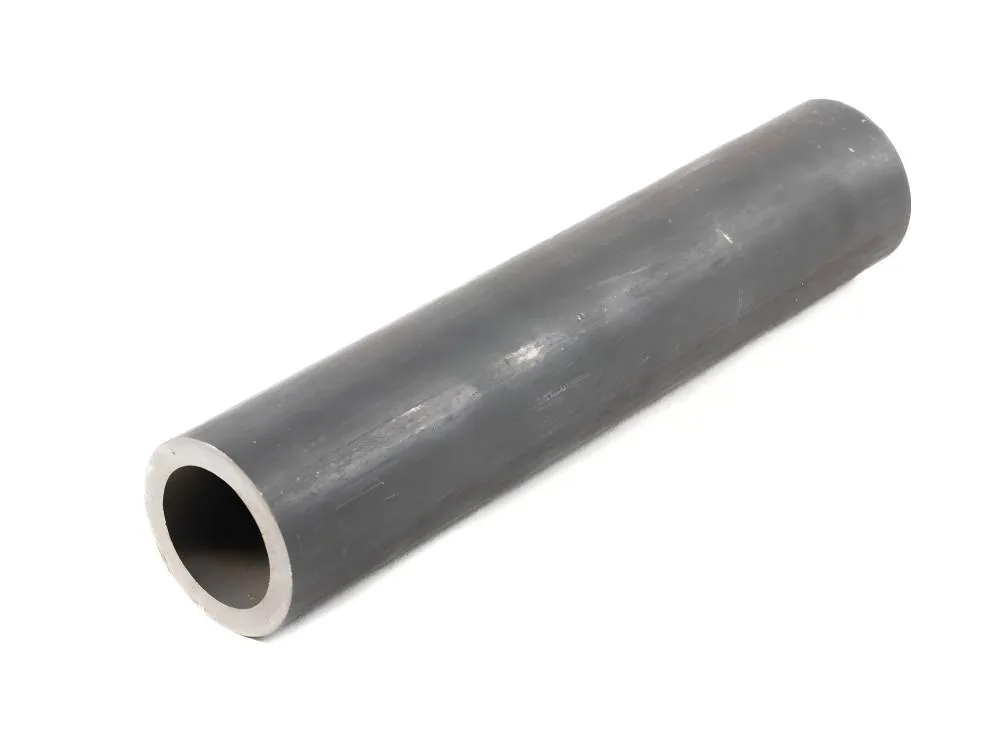
Most tubing disputes are settled by the paperwork before the first tube is drawn. The table below lists the fields that do the most work.
| RFQ field | What to state | What it prevents |
|---|---|---|
| Service medium and duty | Air, hydraulic fluid, water or structural use, with pressure range and cycle count | Selecting a tube on grade alone |
| Standard, grade and delivery condition | Standard and edition, steel grade, and the condition such as +C, +LC, +SR or +N | A formable tube arriving hard, or a hard tube arriving soft |
| Size and tolerance basis | Outside diameter, wall, and the tolerance class or standard table used | A default tolerance being applied to a drawing that assumed another |
| Geometry limits | Ovality, concentricity, straightness and cut length | Bends and fittings that will not assemble on the line |
| Cleanliness, testing and documents | Residue limit, test method, eddy current or ultrasonic coverage, inspection document type | Blocked orifices, undisclosed seams and certificates that cannot be tied to the bundle |
| Packing, marking and traceability | End caps, bundle marking, coating protection, heat number visibility | Transit damage and mixed bundles arriving at the station |
The inspection document deserves a note of its own. EN 10204 defines the types of inspection documents used for metallic products [3], and the 3.1 certificate is issued by the manufacturer’s inspection department, independent of the production departments, with results from the material actually supplied. A 3.2 certificate adds a signatory designated by the purchaser. Neither replaces a measurement. What a 3.1 certificate proves is that the mill declared these results for this heat; it does not prove that the tube in your rack matches the drawing, and it certainly does not prove that the delivery condition suits your bending process.
So build a first-article check into the order. Match the heat number on the document to the marking on the bundle, measure a sample, run a trial bend and flare in the condition you will actually use, and pressure test where the circuit calls for it. Keep the sample results. When the second delivery behaves differently from the first, that record is the only thing that will tell you whether the tube changed or the process did.
Send the Application, Not Just the Grade
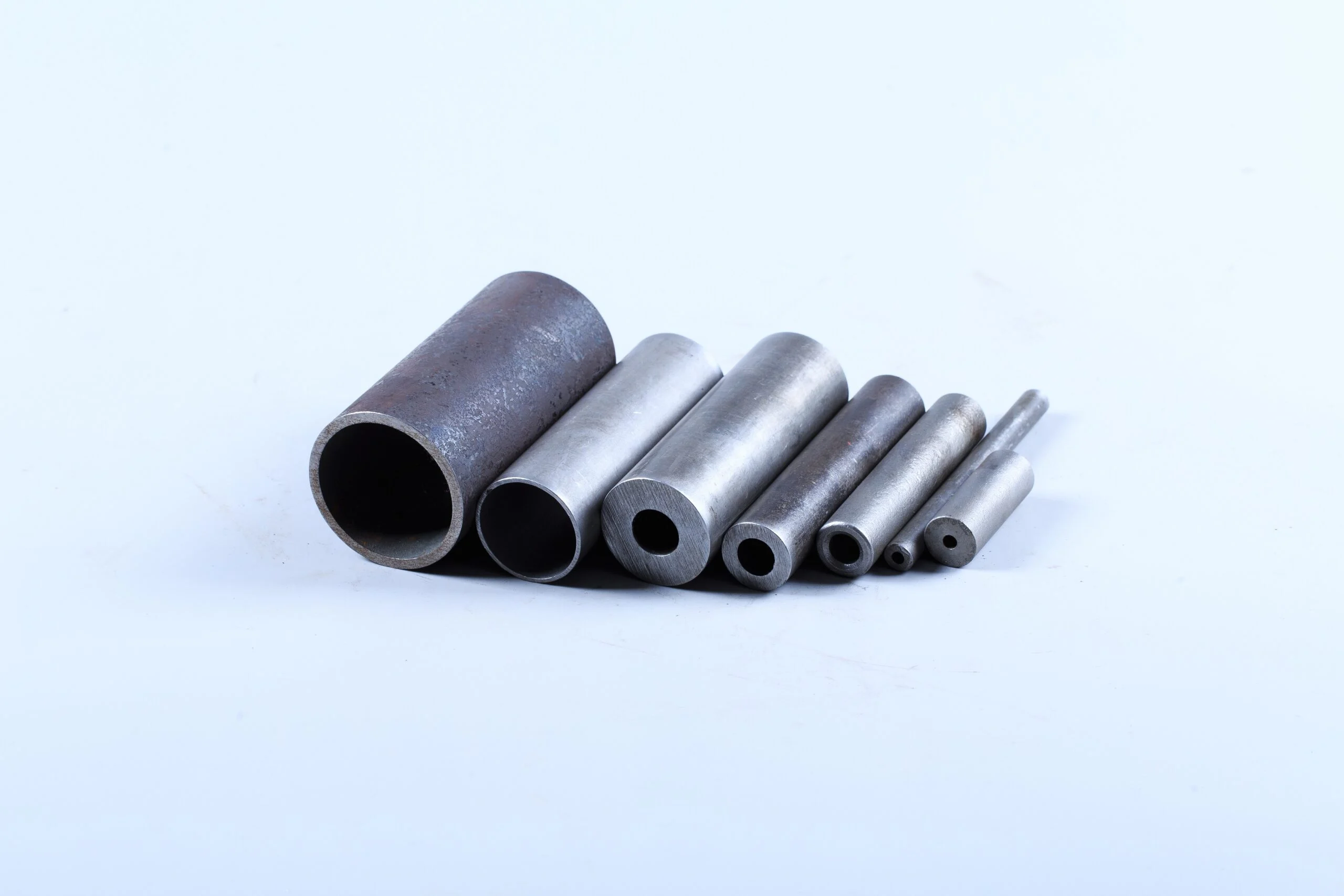
The fastest way to get a usable quotation for rail tubing is to describe the duty rather than the product. Tell us the medium and the pressure it sees, the cycle count if the circuit pulses, the standard and grade your drawing invokes, the delivery condition you intend, the outside diameter and wall with the tolerance basis, the bend and fitting geometry, and the inspection document your customer requires. With those in hand, a mill can tell you whether the tube you asked for suits the route you drew, and whether the tolerance class you inherited from an older drawing is still the right one.
That conversation is worth having before the purchase order, not after the first bend wrinkles. Changzhou Tenjan Steel Tube Co., Ltd supplies cold-drawn and seamless precision tube from 10 mm to 108 mm outside diameter, with wall from 1 mm to 20 mm and a ±0.1 mm wall tolerance, against ASTM, EN, DIN and JIS specifications, and reviews manufacturability questions against the actual application. Write to Sunny@tenjan.com, call +86 51988789990, or message +86 13401309791 on WhatsApp with the line list, and we will come back with the dimensions, the delivery condition and the documentation your project needs, without asking you to treat a grade name as the whole specification.
FAQ
Which steel tube grades are used in high-speed rail systems?
There is no single rail grade. Fluid-power lines commonly use E235 or E355 under EN 10305-1, or STKM grades under JIS G3445 where the rolling stock design follows Japanese practice. North American specifications often call for ASTM A519 grades such as 1010, 1020 or 4130. Structural positions use hollow sections rather than precision tube. The grade alone rarely explains performance, because a 4130 tube in the hard condition and the same tube in a stress-relieved condition behave quite differently in a bending cell.
Do rail applications need seamless tube rather than welded tube?
Not automatically. Welded tube with verified weld quality serves many lineside and lower-pressure duties, and it is usually the cheaper route. Seamless removes the longitudinal weld as a potential leak path and as a fatigue feature, so it tends to be the default for brake, air suspension and hydraulic circuits under high-cycle pressure. Let the duty cycle and the consequence of a leak drive the decision rather than a general preference, and if welded tube is proposed, ask for the weld verification method in writing.
What tolerance should I specify for rail hydraulic tube?
Specify the tolerance basis, not only a number. EN 10305-1 groups outside diameter and wall tolerances by size range, and the class you accept changes both the price and the process route. After that, add the limits that actually drive assembly: ovality, concentricity, straightness and cut length. If a drawing was made at nominal size with no tolerance class stated, the mill will apply its own default, which may not match the fitting you have already chosen. Confirm the class in writing and require it on the inspection document.
How do I verify tube quality before it reaches the line?
Three checks catch most problems. Match the heat number on the inspection document to the marking on the bundle, measure outside diameter and wall at several points along a sample tube, and run a trial bend and flare in the delivery condition you will actually use. Add a pressure test where the circuit demands it, and an internal cleanliness check where valves sit downstream. A certificate proves what the mill declared for that heat; the measurement and the trial bend are what tell you whether this batch behaves like the last one.
References
[1] EN 10305-4:2016, “Steel tubes for precision applications — Technical delivery conditions — Part 4: Seamless cold drawn tubes for hydraulic and pneumatic power systems,” CEN, Brussels, 2016.
[2] EN 10305-1:2016, “Steel tubes for precision applications — Technical delivery conditions — Part 1: Seamless cold drawn tubes,” CEN, Brussels, 2016.
[3] EN 10204:2004, “Metallic products — Types of inspection documents,” CEN, Brussels, 2004.
If you’re interested, check out these related articles:
Thin Wall Steel Tubing: When It Works and When It Fails
Carbon Steel vs Alloy Steel Tube: Which Material Works
Special Shaped Steel Tube: Design and Cold Drawing Rules
Steel Pipe Heat Treatment: Key Processes and Applications