Steel Tube Coatings: Corrosion Trends Engineers Should Track
Steel tube coatings usually fail at the cut end, the thread or the weld long before they fail in the middle of a length. That single fact explains why the coating trends worth tracking are not…

Steel tube coatings usually fail at the cut end, the thread or the weld long before they fail in the middle of a length. That single fact explains why the coating trends worth tracking are not new brand names. They are better answers to three questions: what the tube will be exposed to, how it will be cut and joined, and what evidence the supplier can show for that specific exposure. Corrosion resistance belongs to a system of substrate, preparation and coating, not to a product data sheet. What follows separates the claims that survive a technical review from the numbers that only look precise.
Which corrosion category does your tube actually sit in
Coating selection starts with the environment, not the coating catalogue. ISO 9223 classifies atmospheric corrosivity from C1 to CX using time of wetness, sulphur dioxide deposition and airborne chloride deposition [1]. ISO 12944-2 uses the same categories to select protective paint systems and adds immersion categories Im1 to Im4 for surfaces that stay under water or in soil [2]. ISO 12944-1 defines the durability ranges that systems are usually specified against: low up to 7 years, medium 7 to 15 years, high 15 to 25 years, and very high above 25 years [3]. Those ranges are design targets tied to maintenance assumptions, not promises.
The common mistake is to classify the site rather than the tube. A length sitting on a coastal yard for eight weeks before installation meets a different environment from the same length installed inside a machine frame. Both matter, because they drive two different decisions: temporary protection for transport and storage, and permanent protection for service.
| Corrosivity category | Typical tube exposure | What the coating has to survive |
|---|---|---|
| C2 | Heated interiors, low humidity, rural inland | Condensation cycles and handling damage, little chloride |
| C3 | Urban and industrial atmospheres with moderate sulphur dioxide | Repeated wetting, some chloride, pollution deposits |
| C4 | Coastal sites and chemical plants | Chloride deposition and longer time of wetness |
| C5 | Heavy industrial and salt-laden coastal areas | High chloride and acid deposits, fast undercutting at defects |
| CX | Offshore and tropical extremes | Near-permanent wetting with high chloride load |
| Im2 | Buried or submerged without cathodic protection | Continuous electrolyte contact and stray currents |
If nobody can state the chloride deposition, the time of wetness and the maximum surface temperature, the category is a guess wearing a standard’s name. Record those three inputs before any coating system is compared. Wall temperature changes the shortlist as well: on surfaces running above roughly 60 °C, the supplier’s declared service temperature matters more than the corrosivity category, and some organic systems drop out of the discussion entirely.
How barrier, sacrificial and inhibition protection differ on a tube
Three mechanisms do the work, and most coating systems combine them.
A barrier coating, typically epoxy, polyurethane or a polyolefin layer, keeps water and oxygen away from the steel. Its weak points are defects: pinholes, scratches, thin films over weld flash, and edges where the film pulls back during curing. ISO 12944-5 lists the generic paint types, including zinc-rich primers, that systems are assembled from, which lets a specification name a system instead of a brand [4].
Sacrificial protection uses a less noble metal, usually zinc, that corrodes first and holds the steel at a potential where it does not corrode. Galvanizing, zinc flake coatings and zinc-rich primers all depend on electrical contact between zinc and steel, plus enough zinc thickness to outlast the design life. Zinc also needs a reasonably open environment to build a stable corrosion product layer. Where the surface stays wet, or sits in acidic condensate, zinc is consumed quickly and the protection budget shrinks.
Inhibition and passivation work on surface chemistry rather than thickness. A passivation film on galvanized tube, or an inhibitor dosed into a hydraulic bore before shipment, buys weeks or months of protection. It is a transport measure, not a service-life strategy.
Tube geometry changes how these mechanisms behave. On a flat plate a scratch is a small area. On a tube the same scratch often sits at a sawn end where the full wall thickness is exposed, or on a thread where metal has been removed after coating. Galvanic protection reaches only a short distance across an exposed edge, and none at all if the coating was stripped and never repaired. That is why a repair procedure belongs in the coating specification, not in a maintenance manual written two years later.
A coating decision only works when the outer surface and the bore are protected by methods that do not fight each other. <Steel Pipe Corrosion Protection Methods for Precision Tube> covers the corrosion protection methods applied to precision tube, which is a useful comparison point when a single coating is expected to handle both surfaces.
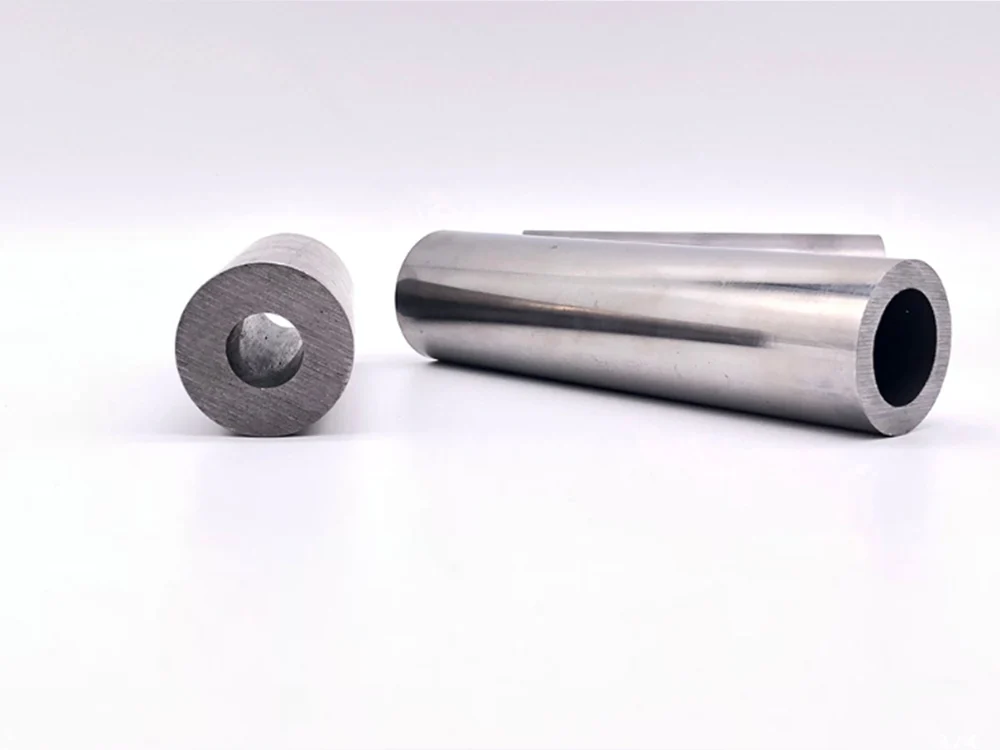
Alloy tube adds one more variable. A coating qualified on a plain carbon substrate is not automatically qualified on a chrome-molybdenum grade, because adhesion depends on the oxide that forms during heat treatment and on how completely it was removed.
Which coating trends are actually moving this year
Five movements come up repeatedly in coating discussions with tube buyers. Each arrives with a document that supports less than the sales conversation suggests, and the gap between the two is where specification errors start.
| Trend | What is actually changing | What the document supports | What it does not prove |
|---|---|---|---|
| Zinc flake coatings on threaded parts | Replacing electroplated zinc where thin films and hydrogen risk are concerns | ISO 10683 defines non-electrolytically applied zinc flake coating systems for fasteners [5] | That the same coating meets a tube specification without its own thickness, adhesion and torque requirements |
| Thermal spray aluminium or zinc | Used where paint cannot hold, including immersion and higher-temperature zones | ISO 2063-1 sets design and quality requirements for thermally sprayed zinc and aluminium protection systems [6] | Coverage inside bores or shielded areas, since spray is line of sight, or sealing of an unsealed porous layer |
| Fusion-bonded epoxy and three-layer polyolefin | Plant-applied systems for buried and submerged line pipe | ISO 21809-2 covers fusion-bonded epoxy external coatings for pipeline service [7] | Transfer to a mill-applied coating on a mechanical tube, or field joints, which still need their own system |
| Chromium-free passivation | Hexavalent chromium passivators being replaced in surface treatment | End-of-life vehicle rules cap hexavalent chromium at 0.1 percent by weight per homogeneous material [8], and chromium trioxide uses in surface treatment fall under REACH authorisation [9] | How many handling and storage cycles the replacement film survives before white rust appears |
| Lower-solvent formulations | Suppliers offering waterborne or higher-solids versions of existing systems | Formulation data, usually a technical data sheet | That the new version sits in a qualified system list for the same corrosivity category |
Sometimes the stronger move is in the steel rather than the coating. Corrosion-resistant grades such as 09CrCuSb are selected for air preheater tubes where sulphuric acid dew point corrosion sets the service life, and weathering grades reduce the demand on a barrier coating in exposed structural work. Grade and coating should be compared on the same exposure data, not on separate sales sheets.
For any trend claim, ask three things in writing: the standard the system is qualified to, the surface preparation condition assumed in that qualification, and the test report scope, including how specimen edges were treated and which failure criterion was used. A supplier who answers those three has a technical position. A supplier who answers with a brand name has a brochure.
Why salt spray hours do not predict service life
Neutral salt spray per ISO 9227 runs a continuous fog at controlled pH and temperature [10]. ASTM B117 is an operating practice for the apparatus and deliberately sets no acceptance criteria, so any pass or fail line comes from the buyer’s own document [11]. Both methods are useful for batch consistency and for ranking formulations under one fixed condition. Neither reproduces wet and dry cycling, chloride deposition, ultraviolet exposure or temperature swings, and the dominant failure mode in continuous fog is often blistering rather than the edge undercutting seen in service.
The figure that ends up in purchase orders, “1,000 hours salt spray”, is therefore a comparative number. Two systems tested by the same method and judged against the same criterion can be ranked against each other. A single figure cannot be converted into years, and no multiplication factor makes that conversion reliable.
| Test or record | What a pass establishes | What it does not establish |
|---|---|---|
| Neutral salt spray per ISO 9227 | Consistency of a batch under one fixed condition | Field life, or behaviour under cyclic wetting |
| Cyclic corrosion test by a project or OEM method | Behaviour under repeated wet and dry stages closer to service | A ranking that transfers across different climates |
| Coating thickness survey | Film thickness inside the specified range | Adhesion, or continuity at edges and threads |
| Pull-off adhesion test | Bond strength at the tested spot | Adhesion along the whole length, especially at cut ends |
| Coating certificate or mill test record | Batch traceability and declared properties | That the substrate preparation matched the original qualification |
Ask for the report rather than the summary line, and check four items: the method standard, the specimen preparation including whether edges were sealed, the evaluation standard for rust and blistering such as the rust degree defined in ISO 4628-3 [12], and who actually ran the test.
A coating that survives a thousand hours of salt fog and then three weeks in a wet container has told you something about your warehouse, not your corrosion engineering.
The surface preparation checks that decide whether the coating holds
Adhesion starts before the first coat. Oil, salt, mill scale and loose rust create a weak boundary layer, and water arriving at that layer produces the blister that appears six months into service. Blast cleanliness is normally specified as Sa 2½ under ISO 8501-1, judged against comparator photographs rather than by eye alone [13].
Soluble salts are the quieter problem. ISO 8502-9 describes the field conductometric method for water-soluble salts, usually run on a Bresle extraction from a defined area [14]. The acceptance limit itself belongs to the project specification, not to the test standard, so a number such as a maximum chloride level in milligrams per square metre has to be written into the order before it can be enforced.
Chemical cleaning carries more of the load on tube than on plate, because blasting the inside of a long length is impractical. That puts the rinse steps under scrutiny, since residue left inside a bore will sit directly under the coating.
Acid cleaning leaves its own residue profile, and a coating applied over a poorly rinsed bore fails from beneath. <Why Steel Pipe Pickling Process Needs 6 Strict Controls> covers the pickling controls that determine what the coating actually bonds to.
Roughness is a coating variable as much as a sealing variable. A profile that is too fine gives the film nothing to key into, while one that is too coarse leaves peaks protruding through the film, and those peaks become the first rust spots.
Surface finish and coating adhesion are decided by the same parameters, which is why the bore condition matters when a coated tube also carries a seal. <How to Control Steel Pipe Polishing Process and Surface Ra> covers how polishing parameters are controlled to hold a specified Ra value.
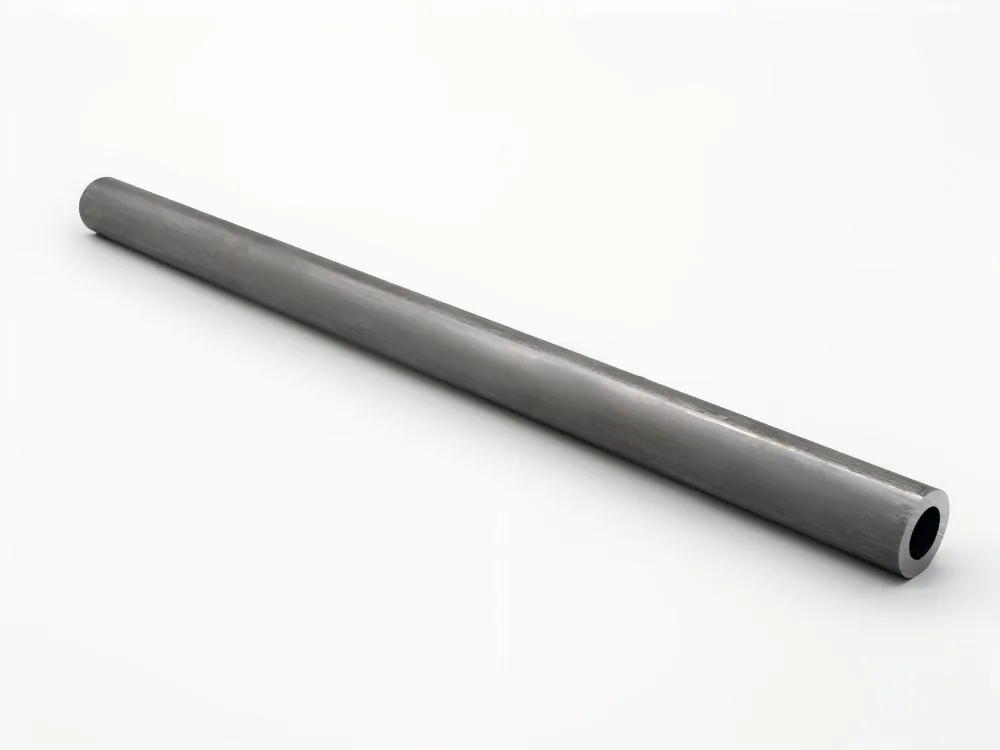
Cold-drawn tube reaches the coating line with a defined starting condition, and controlling that condition at the mill is easier than repairing it at the coater. Tenjan supplies cold-drawn and cold-rolled tube from 10 to 108 mm outside diameter, with wall thickness from 1 to 20 mm held to a ±0.1 mm tolerance, and issues PMI and NDT records with the material so the substrate is a known quantity rather than an assumption.
Three records close out this stage: the blast or chemical cleaning grade signed at a hold point, the salt reading in milligrams per square metre, and the dew point margin at the time of coating. Surface temperature a few degrees above dew point is the usual rule, and a coater who cannot show that record has no defence when adhesion fails.
Where tube geometry and heat treatment limit the coating
Hot-dip galvanizing is the clearest example of geometry limiting a process. The bath runs near 450 °C, and a hollow section has to be vented so air escapes and zinc drains. Sealed lengths trap zinc, thin walls can distort, and internal galvanizing needs both ends open. ISO 1461 sets minimum coating thickness for fabricated articles, with an average of 85 µm required on steel 6 mm and thicker [15]. At a zinc density of 7.14 g/cm³, that thickness equals roughly 607 g/m² of zinc, which is the arithmetic behind every coating-mass figure quoted in a mill certificate. EN 10240 governs hot-dip galvanizing of steel tube in automatic plants, and it is the more relevant reference when the order is tube rather than fabricated steelwork [16].
Storage is where galvanized tube loses arguments it should win. Wet stacking and condensation between layers prevent carbon dioxide from reaching the surface, the protective zinc carbonate layer cannot form, and white rust appears. Passivation helps, dry ventilated storage helps more.
Welded tube brings its own profile. Weld flash and the heat-affected zone respond differently to cleaning and to molten zinc, and sharp edges hold a thinner film than the flat wall, so edge thickness is worth measuring rather than assuming.
Heat treatment sequence decides which coatings remain possible. Zinc melts at about 419 °C and organic barriers degrade well below that, so annealing, normalizing or stress relief has to happen before coating, never after. Boiler tube such as DIN 17175 operates at wall temperatures where an organic barrier is not an option, which leaves thermal spray aluminium or a bare surface with an oxidation allowance as the realistic choices.
Two further limits are easy to overlook. Threads and cut ends lose their coating by definition when metal is removed, so a repair material and an acceptance criterion belong in the specification. High-strength alloy tube is also exposed to hydrogen during acid pickling and electroplating; ISO 4042 requires relief baking for electroplated fasteners at higher strength levels, but tube sits outside its scope, so the baking requirement and any hydrogen check have to be written into the tube order explicitly [17].
What to write into the specification and monitor after delivery
A coating specification that survives a technical review answers the same six questions every time.
| Specification field | What to require | Failure it prevents |
|---|---|---|
| Exposure data | Corrosivity category with the inputs used, maximum surface temperature, whether the bore is wetted | A system chosen for the wrong environment |
| Substrate condition | Tube grade, delivery condition, surface finish, internal cleanliness | A system qualified for blasted steel applied to a pickled surface |
| Preparation and salt limit | Cleaning grade, roughness range, maximum water-soluble salt in mg/m² | Blistering from a hidden contamination layer |
| Coating system | Each layer with generic type, dry film thickness range, and the standard it is qualified to | Brand-only specifications that cannot be audited |
| Repair and field work | Procedure for cut ends, threads and weld damage, with acceptance criteria | Uncoated edges entering service |
| Records | Coating batch, thickness readings, adhesion results, preparation records | A release decision nobody can reconstruct |
Incoming inspection then becomes a short, repeatable routine: thickness readings on several points per length, an adhesion spot check on a sample, a visual pass on edges and threads, and a storage check on how the pallets are stacked and ventilated. Two things can be dropped from the checklist without loss. The coating brand proves nothing on its own, and a single salt spray figure tells you less than the preparation record sitting next to it.
Send the exposure data before you choose the coating
The fastest way to narrow a coating choice is to send the exposure and the downstream operations together, because the two constrain each other. Give us the tube size, grade and delivery condition, the corrosivity inputs you are working from, whether the bore is wetted, the cutting, threading and welding steps that follow, and the service life you are targeting. Changzhou Tenjan Steel Tube Co.,Ltd reviews that combination against the substrate and the process route, then replies with a tube specification the coating can actually be qualified against. Email Sunny@tenjan.com, call +86 51988789990, or message +86 13401309791 on phone or WhatsApp.
FAQ
How long will a coated steel tube last in service?
There is no single figure, and any supplier who gives one without your exposure data is guessing. The defensible answer runs through durability ranges tied to a corrosion category: a system specified for high durability is expected to reach 15 to 25 years in the environment it was selected for, and very high durability sits above 25 years, with maintenance assumed [3]. Change the chloride load, the wall temperature or the handling damage and the same system lands in a different band. Ask for the category, the system and the inspection interval behind the claim.
Is hot-dip galvanizing better than paint for steel tube?
It depends on where the tube goes and what happens to it afterwards. Galvanizing provides sacrificial protection that keeps working at scratches and cut ends, which suits outdoor structures and buried work, and ISO 1461 sets the coating thickness minimums for fabricated articles [15]. Paint offers a wider choice of colour and chemical resistance and is easier to repair on site. Neither survives sustained acidic condensate or a wall temperature above the coating’s service limit. Decide from the exposure data first, then compare the two on repair cost and required service life.
Does a higher salt spray hour rating mean a better coating?
Not on its own. A salt spray result compares systems tested by the same method and judged by the same criterion, and ASTM B117 does not even define the pass line [11]. Two suppliers quoting 1,000 hours against different evaluation standards, or with different edge preparation on the specimen, are not reporting the same result. Treat the hours as one input and ask for the method, the specimen preparation, the evaluation standard and the test laboratory.
Can coated tube be cut, welded or threaded on site without recoating?
It can be cut and threaded, but the exposed metal needs a defined repair, otherwise the cut end becomes the starting point for corrosion. A zinc-rich repair material applied to a properly cleaned edge restores sacrificial protection locally, and welded joints need the weld and its heat-affected zone treated as a separate coating area. Write the repair method, the material and the acceptance criteria into the order so the site team is not improvising a system the original qualification never covered.
References
[1] ISO 9223:2012, “Corrosion of metals and alloys — Corrosivity of atmospheres — Classification, determination and estimation,” International Organization for Standardization, Geneva, 2012.
[2] ISO 12944-2:2017, “Paints and varnishes — Corrosion protection of steel structures by protective paint systems — Part 2: Classification of environments,” International Organization for Standardization, Geneva, 2017.
[3] ISO 12944-1:2017, “Paints and varnishes — Corrosion protection of steel structures by protective paint systems — Part 1: General introduction,” International Organization for Standardization, Geneva, 2017.
[4] ISO 12944-5:2019, “Paints and varnishes — Corrosion protection of steel structures by protective paint systems — Part 5: Protective paint systems,” International Organization for Standardization, Geneva, 2019.
[5] ISO 10683:2018, “Fasteners — Non-electrolytically applied zinc flake coating systems,” International Organization for Standardization, Geneva, 2018.
[6] ISO 2063-1:2019, “Thermal spraying — Zinc, aluminium and their alloys — Part 1: Design considerations and quality requirements for corrosion protection systems,” International Organization for Standardization, Geneva, 2019.
[7] ISO 21809-2:2017, “Petroleum and natural gas industries — External coatings for buried or submerged pipelines used in pipeline transportation systems — Part 2: Fusion-bonded epoxy coatings,” International Organization for Standardization, Geneva, 2017.
[8] Directive 2000/53/EC of the European Parliament and of the Council of 18 September 2000 on end-of life vehicles, Official Journal of the European Communities, L 269, 2000.
[9] Regulation (EC) No 1907/2006 of the European Parliament and of the Council concerning the Registration, Evaluation, Authorisation and Restriction of Chemicals (REACH), Official Journal of the European Union, L 396, 2006.
[10] ISO 9227:2022, “Corrosion tests in artificial atmospheres — Salt spray tests,” International Organization for Standardization, Geneva, 2022.
[11] ASTM B117-19, “Standard Practice for Operating Salt Spray (Fog) Apparatus,” ASTM International, West Conshohocken, PA, 2019.
[12] ISO 4628-3:2016, “Paints and varnishes — Evaluation of degradation of coatings — Designation of quantity and size of defects, and of intensity of uniform changes in appearance — Part 3: Assessment of degree of rusting,” International Organization for Standardization, Geneva, 2016.
[13] ISO 8501-1:2007, “Preparation of steel substrates before application of paints and related products — Visual assessment of surface cleanliness — Part 1: Rust grades and preparation grades of uncoated steel substrates and of steel substrates after overall removal of previous coatings,” International Organization for Standardization, Geneva, 2007.
[14] ISO 8502-9:2020, “Preparation of steel substrates before application of paints and related products — Tests for the assessment of surface cleanliness — Part 9: Field method for the conductometric determination of water-soluble salts,” International Organization for Standardization, Geneva, 2020.
[15] ISO 1461:2022, “Hot dip galvanized coatings on fabricated iron and steel articles — Specifications and test methods,” International Organization for Standardization, Geneva, 2022.
[16] EN 10240:1997, “Internal and/or external protective coatings for steel tubes — Specification for hot dip galvanized coatings applied in automatic plants,” European Committee for Standardization, Brussels, 1997.
[17] ISO 4042:2018, “Fasteners — Electroplated coating systems,” International Organization for Standardization, Geneva, 2018.
If you’re interested, check out these related articles:
DIN 1629 Steel Pipe: Grades, Dimensions, and Sourcing
Steel Tube Manufacturing Process: Precision and Quality
How EN10305 Steel Tube Standard Affects Precision Tube Procurement