Special Shaped Steel Tube: Design and Cold Drawing Rules
Ask a designer to sketch a special shaped steel tube and you will usually get a profile drawn for function, not for how the cold drawing die will behave.
Ask a designer to sketch a special shaped steel tube and you will usually get a profile drawn for function, not for how the cold drawing die will behave. That gap is where lead time and tooling cost hide. A special shaped steel tube design is less about picking a catalog shape and more about controlling corner radius, wall thickness distribution, and the number of drawing passes. Most published material stops at the definition and a list of standard profiles. The decisions that matter for a real order happen later: can the special shaped steel tube be drawn cleanly, can it hold ±0.1 mm, and can the mill keep corner fill consistent.
What Counts as a Special Shaped Steel Tube?
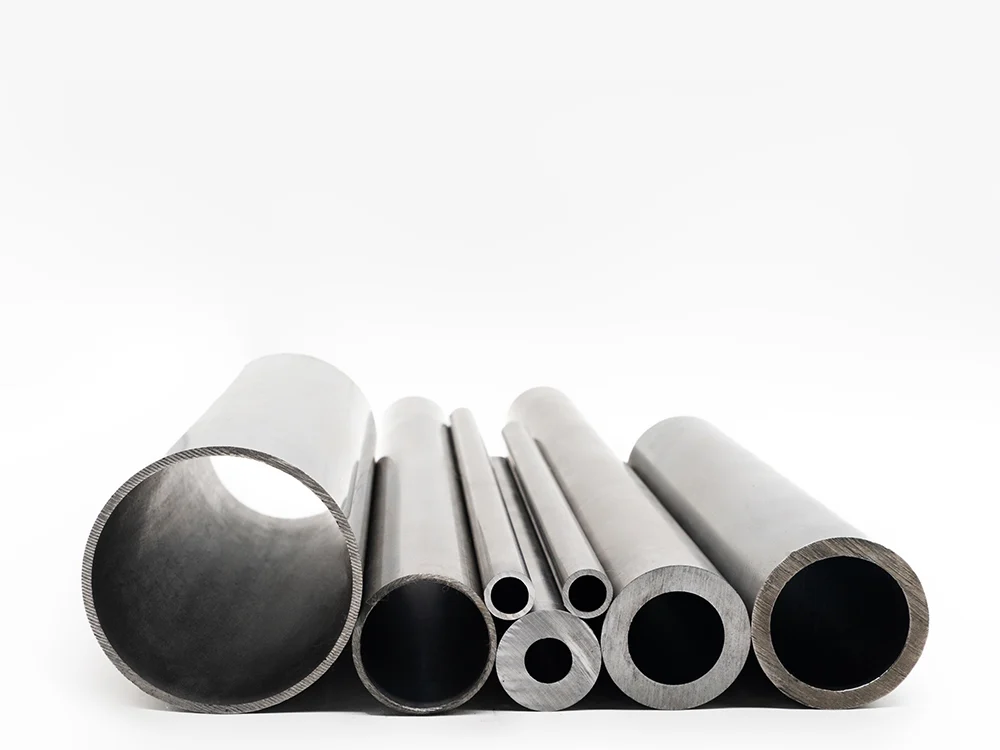
A special shaped steel tube is any hollow section whose cross section is not a plain round. In procurement terms, that includes hexagonal, octagonal, oval, triangular, double finned, and fully custom profiles produced to a drawing rather than a stock dimension. The boundary is not always obvious. Square and rectangular tubes are shaped sections, but they are common enough that mills treat them as catalog items. A hexagonal or finned special shaped steel tube is different: the die set, the plug or mandrel, and the pass schedule are usually specific to one profile. We draw these sections from 10 mm to 108 mm outside dimension, with wall thickness from 1 mm to 20 mm and a precision tolerance of ±0.1 mm. The controlling document is the section drawing, with the material grade as the second variable. GB/T 3094 covers cold drawn shaped steel tubes, but the section drawing still decides the details that the standard leaves open.
How Does Cold Drawing Create Complex Cross Sections?
Cold drawing starts with a round mother tube, either seamless or welded, that is pulled through a shaped die under tension. For a special shaped steel tube, the first pass usually converts the round to an intermediate profile, and later passes refine the final geometry. A mandrel or plug controls the inside surface when the inside profile matters. If the inside is not critical, the tube can be drawn sink style, but then the bore follows the outside shape less precisely. Reduction per pass is limited because the material work hardens. Between passes, we may normalize or stress relieve the section to restore ductility and prevent cracking in the next draw. The tooling for a special shaped steel tube is the expensive part. A custom die set for one profile can produce thousands of meters, but if the cross section changes by a few degrees, the die set may need to be recut.
Why Does the Starting Tube Shape Matter?
If the mother tube is too small in circumference, the material cannot fill the corners of the new shape. If it is too large, the tube may wrinkle or the surface may shear. We calculate the blank circumference from the finished section perimeter, then add allowance for wall thinning and corner fill. That is why a section drawing with tight corner radii prompts an early conversation about whether the radius can open slightly.
Which Shapes Actually Work in Production?
Not every special shaped steel tube profile that looks clean on a CAD screen survives the first draw. A CAD screen never complains about a sharp corner, but a die does. The shapes that work share three features: enough corner radius, a balanced reduction from the blank, and a realistic wall to perimeter ratio. The table below shows the failure patterns we watch for before quoting a new tool.
| Cross section | Common drawing risk | Practical design fix |
|---|---|---|
| Hexagonal | Corner fill and wall thinning | Hold corner radius at or above wall thickness |
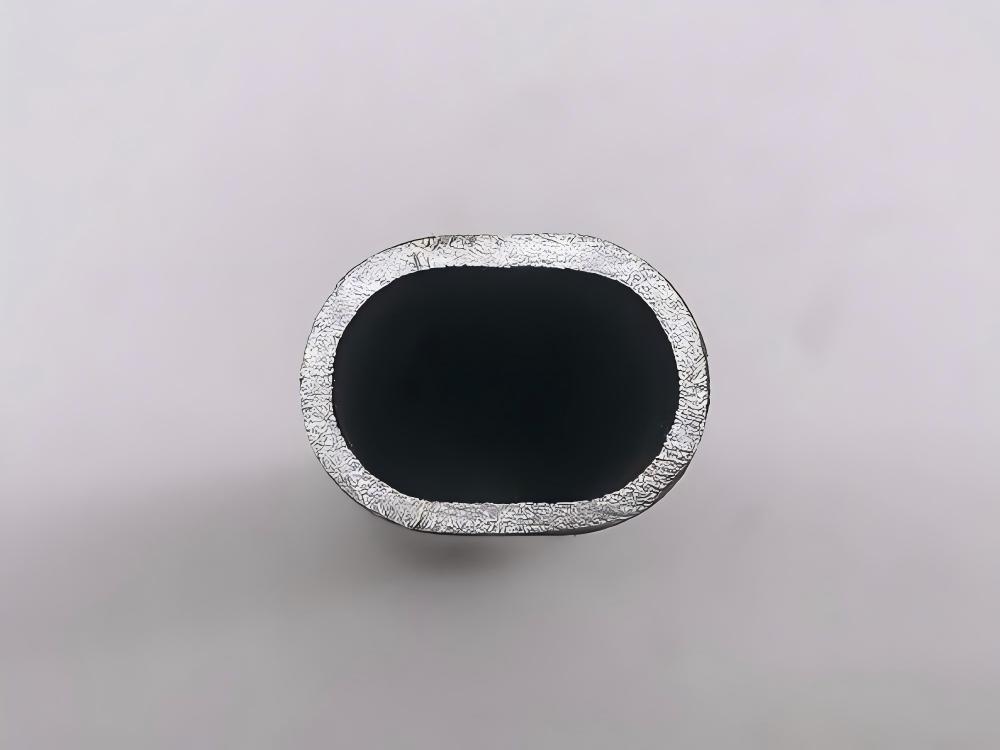
| Oval | Side wall flattening during reduction | Use a matched plug and balanced reduction |
| Octagonal | Uneven metal flow between faces | Split the shape change across two passes |
| Square or rectangular | Corner cracking and twist | Add corner radius and straighten after final pass |
| Double finned | Uncontrolled fin height | Draw the fin in stages and inspect after each pass |
We have seen special shaped steel tube profiles fail at corners sharper than the wall thickness. The outer surface either opens or folds in the first pass. Move the corner radius from 0.8 mm to 1.5 mm on a 3 mm wall, and the profile draws cleanly and holds ±0.1 mm. That single change often removes a die trial and two weeks from the schedule. The same logic applies to fin height on double finned tubes: the fin cannot be treated as a free feature because metal flow into the fin competes with metal flow around the body.
If your special shaped steel tube drawing has a corner radius below the wall thickness, confirm the minimum drawable radius before the section is locked. Send the profile to Sunny@tenjan.com with the current wall and grade, and we can check the pass schedule before tooling is committed.
What Tolerance and Material Decisions Matter Most?
On a round precision tube, EN 10305-1 or DIN 2391 gives clear dimensional classes. On a special shaped steel tube, the section drawing carries more weight than a general standard because the standard cannot list tolerances for every possible fin height or corner angle. We ask buyers to specify the outside profile, wall thickness at the flat and at the corner, corner radii, and straightness separately. If the corner tolerance is left open, the mill may accept a wider variation there than the designer expected. Material selection also changes the drawing behavior. Low carbon grades such as 1020 and 1035 flow more easily but may need stress relief to hold shape. Medium carbon and alloy grades such as 1045, 4140, and 16MnCr5 hold strength better but require slower reductions and more passes. The part drawing should state whether the tube will be used in a hydraulic cylinder, a structural member, or a machined component because the required hardness and surface finish point in different directions.
How Do You Specify and Source Special Shaped Steel Tubes?
Specifying a special shaped steel tube is simpler when the mill can see the same risks you see. The section drawing, material grade, quantity, and application determine whether the profile is a two pass draw or a six pass draw with stress relief. We also ask for the straightness requirement and the end condition. A length that will be cut into machined parts may tolerate a different surface finish than a visible structural member. When these items are fixed, the price stops moving.
If the corner radii or wall distribution are still open, the quote usually comes back with added tooling contingency. That is the exact point where inquiry beats guesswork. Send the part drawing, material grade, quantity, and wall tolerance to Sunny@tenjan.com or call +86 13401309791. We will check the profile against the drawing process and come back with a tooling and production route and a price.
What Else Do Engineers Ask About Special Shaped Steel Tubes?
Can any cross section be cold drawn if the drawing is detailed enough?
No. Cold drawing works best when the profile has some symmetry, a corner radius above the wall thickness, and enough perimeter to keep wall thickness uniform. A highly asymmetric shape can sometimes be drawn in extra passes, but the cost rises and the tolerance at the extreme features widens. Before committing to a shape, ask the mill whether the blank circumference and the reduction per pass are workable. If the drawing has a locked fin or a sharp internal corner, the practical answer may be to adjust the radius rather than force the process.
Does a special shaped tube cost more than a round tube?
The difference is smaller than many buyers expect. The material and drawing time are usually comparable to a round precision tube of the same perimeter. The real cost sits in the die set and the number of trial passes. If the profile is close to a standard shape, tooling may already exist and the premium is modest. If every face and angle is unique, the tooling cost is spread across the order quantity. For runs above a few hundred meters, the unit price difference often shrinks to a small percentage, not a multiple.
What is the difference between a shaped tube and a structural square tube?
It depends on whether the section is treated as a catalog item or a custom drawing. A structural square tube is usually made to a standard size, with standard corner radii and tolerances. A special shaped steel tube is produced to the buyer’s drawing, so the profile, wall distribution, and tolerance are controlled individually. If the application is structural and the square section already works, the catalog item will be faster. If the section must fit a machined bore or match an existing component, a custom shaped tube avoids forcing a standard size into the wrong place.
How do I know if the wall is too thin for the shape?
In profiles we have reviewed, wall thinning usually shows up first at the corner or fin tip. If the finished wall at those points falls well below the nominal wall, the section is close to the practical limit for that geometry. The safe check is to send the profile with the proposed wall, corner radii, and material grade before tooling is ordered. We can run the blank calculation and tell you whether the shape will draw cleanly or whether the wall needs to increase in one zone. Send your current wall and profile to Sunny@tenjan.com and we can confirm the drawability without committing you to an order.
If you’re interested, check out these related articles:
Precision Tube Quality Inspection Checklist
How to Choose the Right Seamless Steel Tube
Heat Treated Steel Tube: What Engineers Need to Know