Steel Tube Manufacturing in the Next Decade: What Changes
Steel tube manufacturing in the next decade is usually described in terms of machines: faster lines, more automation, smarter inspection. The change that will reach buyers first is quieter. Tube is becoming a documented, data-carrying component…
Steel tube manufacturing in the next decade is usually described in terms of machines: faster lines, more automation, smarter inspection. The change that will reach buyers first is quieter. Tube is becoming a documented, data-carrying component rather than a commodity cut to length, and the mills that hold work will be the ones able to prove a tolerance, a heat number and an emissions figure at the same time. The metallurgy will move more slowly than the paperwork around it.
Which forces will actually change steel tube manufacturing
Four forces are doing the real work, and only one of them is equipment.
Part consolidation comes first. A hexagonal, oval or D-shaped profile can eliminate a machining step or a welded joint in an assembly. The cost does not vanish; it relocates. Labour and per-part inspection give way to tooling, die maintenance and a minimum economic batch. That changes who can afford custom profiles rather than whether profiles are better.
The powertrain and energy mix is second. A battery-electric vehicle carries far less exhaust and fuel-system tube than a combustion model, but it carries structural tube in the enclosure and coolant lines in the thermal circuit. The service conditions change with the application. Exhaust tube is judged on high-temperature oxidation and condensate corrosion. A battery frame is judged on stiffness, crash energy absorption and weldability, which favours high-strength low-alloy and press-hardening grades.
Carbon reporting is third. Once a buyer must report embedded emissions for imported steel, the tube ceases to be a price-and-tolerance transaction and becomes a data transaction. That shift is covered in more detail below, because it changes what an enquiry has to contain.
Data is fourth. Heat-number traceability already exists in most serious mills; the change is that it becomes machine-readable and expected at the quotation stage rather than produced on request after a complaint.
What does not change is the backbone. Round cold-drawn seamless tube remains the default for hydraulic cylinders, boiler and heat-exchanger service, and machined components, because a wrought, homogenous wall with no weld seam is still the simplest way to guarantee pressure integrity and concentricity.
Where cold drawing stays dominant and where it is being pushed
Cold drawing earns its place through a simple mechanism. A tube is pulled through a die, over a mandrel or without one, reducing diameter and wall while cold-working the steel. The pass leaves a tighter tolerance, better concentricity and a smoother surface than hot rolling can deliver. Each pass also consumes yield and hardens the material, so a schedule alternates drawing with annealing to restore ductility before the next reduction.
That trade-off is the whole economics of the process. More passes buy precision and surface quality, and they cost money in reduced yield, mandrel wear and extra furnace time. A supplier quoting an unusually tight tolerance is usually quoting more passes, and the price reflects it whether or not the quotation says so. A mill that draws, anneals, straightens and inspects under one roof, as Tenjan Steel Tube does in Changzhou, shortens the loop between a failed dimension and the pass schedule that produced it.
Cold-rolled welded tube pushes back in specific territory: thin walls, long lengths and high volume, where the cost advantage of forming from strip is hard to beat. Its limit is the weld. The seam changes local microstructure and, in demanding pressure or machined-surface applications, becomes the feature that must be qualified rather than assumed.
Drawn-over-mandrel tube sits between the two, offering close tolerances and a seam that has been consumed by cold working. Inline eddy current and ultrasonic testing, laser gauging and automatic sorting now handle much of what operators once judged by hand. The burden moves rather than disappears: probe standards, calibration intervals and acceptance levels decide whether the automated result means anything.
A tolerance printed on a drawing is only as good as the pass schedule and annealing behind it. <Steel Tube Manufacturing Process: Precision and Quality> covers how drawing, annealing and inspection steps are sequenced to hold precision at production volume.
Why tolerance is becoming a capability question rather than a table lookup
EN 10305-1:2016 sets out delivery conditions for cold-drawn seamless tube, and those conditions carry different tolerance tables, mechanical property expectations and surface requirements [1]. Two orders for the same diameter and wall, placed under different delivery conditions, are not the same order.
It helps to separate two ideas. The specification floor is what the standard and the purchase order declare acceptable. Capability is where a given mill’s tube actually lands, batch after batch, on its own equipment. A standard defines the floor for everyone. Capability is what a buyer is really purchasing, and it is the number that determines whether a machining line runs or stops.
That distinction changes what to ask. A single tolerance figure is not a specification until four things accompany it: the tolerance basis, meaning which standard table and delivery condition it comes from; the measurement method, since a micrometer, a laser gauge and an air gauge do not resolve the same features; the measurement location and temperature; and whether the figure is an inspection result on delivered tube or a capability claim about future production. The first is evidence, the second is a promise, and the two deserve different levels of trust.
Wall eccentricity deserves more attention than outside diameter. An OD that runs slightly over can be turned. A wall that varies around the circumference cannot be corrected after the fact, and it shows up as an unbalanced bore in a hydraulic cylinder or an uneven machining allowance on a machined part.
Buyers who compare quotes on a single tolerance number often miss that EN 10305-1 attaches tolerances to a delivery condition, not to a grade alone. <How EN10305 Steel Tube Standard Affects Precision Tube Procurement> covers how the standard’s delivery conditions shape what a purchase order should specify.
How traceability moves from certificate to data stream
EN 10204:2004 defines the inspection document types that most steel buyers work with [2]. Type 3.1 is an inspection certificate issued by the manufacturer’s authorised inspection representative, who is independent of the manufacturing department. Type 3.2 carries the same manufacturer’s certificate plus verification by the purchaser’s authorised representative or an independent inspector. The difference is not bureaucratic decoration. One is the producer checking itself with internal independence; the other adds an outside signature.
Quality management scope is a separate question. ISO 9001:2015 establishes a baseline system [4], while IATF 16949:2016 adds the automotive-specific requirements that vehicle programmes expect [3]. Sites holding the automotive certificate can be screened faster for that work, but the certificate describes a system, not a tube.
| Record | What it actually shows | Responsible use | Do not infer |
|---|---|---|---|
| EN 10204 type 3.1 certificate | Inspection results on the ordered heat, signed by the manufacturer’s inspection representative | Confirm chemistry and mechanicals for the delivered lot | That an independent third party verified the results; that is type 3.2 |
| IATF 16949:2016 certificate | The site’s quality management system has been certified for the stated scope | Screening filter when qualifying a supplier for automotive work | That any individual tube meets its dimensional or mechanical specification |
| EN 10305-1 delivery condition tables | The agreed tolerances and conditions for cold-drawn seamless tube | Basis for writing the order and the inspection plan | That a supplier’s process capability reaches every entry in the table |
| Positive material identification result | The alloy family present at the tested location | Sorting mixed stock and catching grade mix-ups | Full chemical composition or mechanical properties |
| Eddy current or ultrasonic test record | Discontinuities detected under the stated probe, standard and acceptance level | Screening for surface and internal defects at that sensitivity | Absence of defects below the detection threshold or outside the tested zone |
Each record answers a narrow question well. None of them answers all five. A buyer who treats a 3.1 certificate as third-party verification, or a management system certificate as a lot release, will eventually accept material that never passed the check they thought they had ordered.
The direction of travel is to link these records into one thread: heat number to coil, coil to draw pass, pass to furnace charge, charge to test result, test result to the shipping package. Chinese, European and Japanese standards each impose their own document conventions, so the thread has to be mapped rather than copied when a part is sourced across regions.
Which materials and profiles are gaining ground
Demand is shifting toward grades that carry more load per kilogram. High-strength low-alloy steels and micro-alloyed grades let a thinner wall do the work of a heavier one, which matters wherever the tube is part of a moving structure. Boron-treated grades such as 34MnB5 exist specifically to harden predictably after press forming, and they behave very differently from a plain carbon tube in the same press.
Consumption does not disappear from a grade table just because it is unfashionable. Free-cutting grades such as 1215 and 11SMn30 remain the practical choice for high-volume machined components, because machinability drives cost more than strength does when the part is turned from bar or tube on an automatic lathe. Alloy grades continue to serve hydraulic and elevated-temperature work where a plain carbon tube would lose strength or scale.
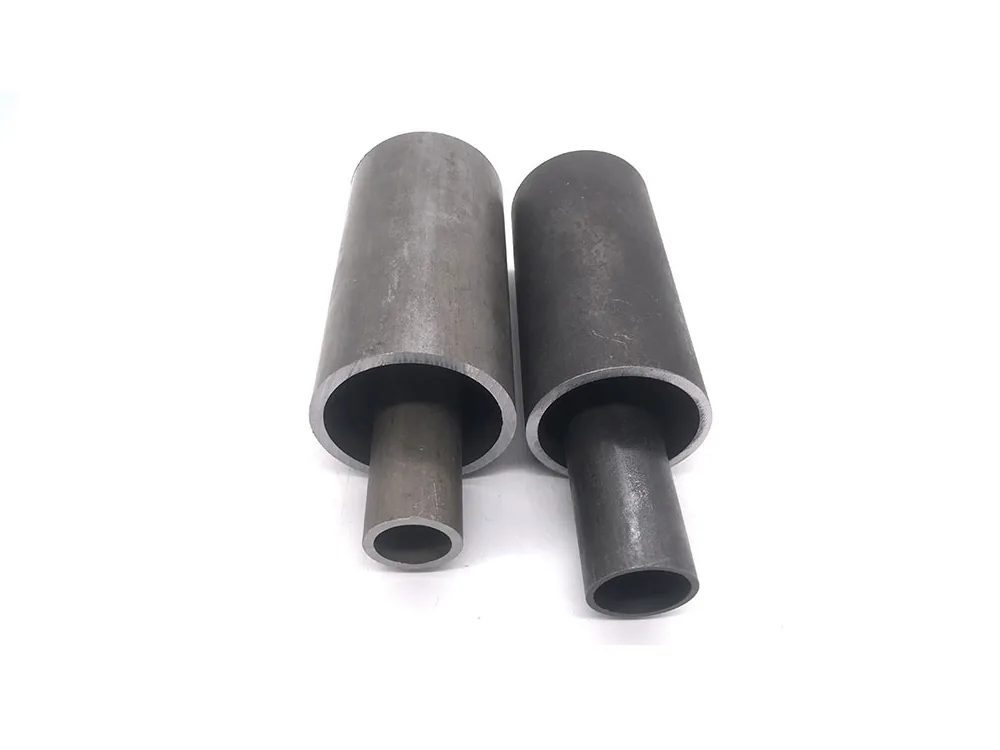
Profiles are where design freedom is expanding fastest. Square, rectangular, hexagonal, octagonal, oval, triangular and D-shaped sections can replace a round tube plus a welding or machining operation. The accounting is straightforward: a new die costs money once, and the saving repeats on every part. Below a certain annual volume, the die never pays back, and that threshold is the honest reason many custom profile projects stay on round tube.
Regional standards still gate the drawing. Japanese machine-structural work commonly specifies JIS G3445 grades such as STKM11A, Russian projects continue to reference GOST 8733, and European work follows the EN 10305 series. A supplier holding several standard systems can quote the same part against different rulebooks; one holding a single system will quietly translate your requirement into the system it knows.
A profile that removes a weld also removes a straightness and distortion problem, which is often the larger saving. <Custom-Shaped Steel Tubes: Design Considerations> covers the design checks that decide whether a shaped section is worth the tooling.
What carbon accounting changes in tube procurement
Regulation (EU) 2023/956 established the Carbon Border Adjustment Mechanism, which covers iron and steel goods among others and moves from reporting to a definitive regime with a financial obligation from 2026 [5]. For a tube buyer, the operative word is embedded emissions: the figure attaches to the goods, which means it has to be collected upstream and carried through the chain.
The mechanism matters more than the label. Embedded emissions per tonne depend on the production route, the scrap ratio, the electricity mix and, quietly, on yield. Steel that is drawn, found out of tolerance and scrapped still carries the emissions of its production. A process with poor yield therefore carries a heavier footprint per shipped tonne than the same route run well, which puts quality control and carbon accounting on the same side of the argument rather than opposite sides.
Scrap is not a free input either. Copper and tin that travel with scrap affect hot ductility, so a higher scrap ratio pushes work onto scrap segregation and chemistry control. Alloying elements such as molybdenum, nickel and chromium are recovered and priced as alloy scrap, which is why alloy tube carries a different cost and carbon profile from plain carbon tube of the same size.
Four questions sort a carbon claim quickly. Which lifecycle stages are included; whether the figure has been verified and by whom; how scrap and alloying inputs were allocated; and whether the number is a company average or specific to the product being quoted. A company average cannot support a product-level decision.
Regional rules are diverging rather than converging. A European buyer may face a reporting obligation that a buyer in another market does not, while the underlying technical standards, such as GOST 8733 or the JIS series, remain the gate for the drawing itself.
Which signals to watch in 2026
Re-checking is a maintenance task, and it needs a list. Compare current drawings against the edition of EN 10305-1 or ASTM A519 that your customer actually references, because publication does not prove adoption at every mill or acceptance at every customer. Confirm that the certificate type in the purchase order still matches what the quality plan requires. Verify the carbon data scope against the reporting obligation that applies to the goods and the destination market. Remove any internal note that treats tolerance as whatever the mill happens to deliver.
| Indicator | What movement suggests | What it does not tell you |
|---|---|---|
| Enquiries naming a standard and delivery condition instead of premium quality | Buyers are moving to auditable requirements | Whether they will pay for the capability behind them |
| Requests for heat-level data in machine-readable form | Traceability is shifting from document to data stream | That the data has been verified or is complete |
| Carbon questions arriving before the technical RFQ | Reporting obligations are reaching upstream suppliers | That the footprint is actually falling |
| Tolerance callouts below the standard’s normal table | Design margins are tightening | That any particular supplier can hold them in production |
| Shaped profile enquiries replacing round tube plus welding | Part consolidation is being evaluated seriously | That the tooling cost amortises at the volume quoted |
One caution applies to every row. Search interest in a term is not order volume, and a rise in enquiries about hydrogen service or low-carbon tube does not by itself confirm that a market has formed. Watch what buyers put in writing, not what the industry talks about.
How to prepare your tube specification for the next decade
The practical response is to make the next enquiry carry the information that will matter for the whole of the decade, not just this order. Send the application and service condition, the standard and delivery condition, the tolerance basis together with the measurement method you will use to accept or reject, the inspection document type and any non-destructive test level, the annual volume and whether a profile is under consideration, and the carbon data scope your market will require.
Tenjan Steel Tube reviews that information against the drawing and the intended process before quoting, which is the point at which a mismatch between a tolerance and a measurement method is still cheap to fix. Email Sunny@tenjan.com, call +86 51988789990, or reach phone and WhatsApp on +86 13401309791.
One boundary is worth keeping. A single tolerance number is not a specification, and no supplier should let a quotation imply that it is.
FAQ
Will welded tube replace seamless tube in the next decade
Not across the board. Welded tube wins where wall is thin, volume is high and the seam can be qualified or tolerated, which covers a great deal of general fabrication and structural work. Seamless tube keeps the applications where a homogenous wall and pressure integrity dominate: hydraulic cylinders, boiler and heat exchanger service, and machined components where an internal seam would interrupt the bore. The realistic trend is a sharper split between the two, with buyers choosing deliberately rather than defaulting.
Which steel tube standard should I specify for a new project
Start from the market that will accept the part, then from the service condition. European work usually points to the EN 10305 series for precision tube, North American mechanical work to ASTM A519, and Japanese machine-structural work to JIS G3445. The standard is only half the specification; the delivery condition, tolerance table and inspection document type decide what you actually receive. Naming a standard without those three leaves the supplier free to choose the least demanding combination it can defend.
How do I ask for carbon data without slowing down the RFQ
Ask early and ask narrowly. Request the figure with its scope, the verification status, the allocation method for scrap and alloying inputs, and confirmation of whether it is product-specific or a company average. Those four items can be answered from existing records in most mills. What slows an enquiry is a broad request for a sustainability report, which usually returns a document that cannot be attached to the goods or used in a declaration.
Is tighter tolerance always worth the price
No. Tighter tolerance costs yield, furnace time and mandrel life, and it only pays back where the downstream operation needs it. If the outside diameter is going to be turned, spending money on OD tolerance is waste; if the bore is used as drawn in a hydraulic cylinder, wall eccentricity and surface finish are worth paying for. The useful test is to identify the one feature the assembly actually depends on and specify that feature precisely, rather than tightening everything on the drawing.
References
[1] EN 10305-1:2016, “Steel tubes for precision applications: Technical delivery conditions: Part 1: Seamless cold drawn tubes,” CEN, 2016.
[2] EN 10204:2004, “Metallic products: Types of inspection documents,” CEN, 2004.
[3] IATF 16949:2016, “Quality management system requirements for automotive production and relevant service parts organizations,” International Automotive Task Force, 2016.
[4] ISO 9001:2015, “Quality management systems: Requirements,” ISO, 2015.
[5] Regulation (EU) 2023/956 of the European Parliament and of the Council of 10 May 2023 establishing a carbon border adjustment mechanism, Official Journal of the European Union, 2023.
If you’re interested, check out these related articles:
Steel Tube Supplier Evaluation: Technical Criteria for Engineers
Thin Wall Steel Tubing: When It Works and When It Fails
How to Choose a Steel Tube Supplier for Your Next Project
How EN10305 Steel Tube Standard Affects Precision Tube Procurement