Welcome to Changzhou Tenjan Steel Tube Co., Ltd
Sunny@tenjan.com



Choosing the right rebar couplers directly affects structural integrity. From experience, staying true to standards and specifications isn’t just paperwork; it’s what keeps structures safe and durable over time. When those details slip, weaknesses follow. Here we map the global standards, the key performance parameters, how specifications shape structural behavior, the testing and certification that prove compliance, and what it takes to navigate regional variations.
The performance of mechanical splices is governed by various international rebar standards, ensuring consistent quality and safety across different regions. These standards provide foundational principles for design, material, and testing. ISO 15835 outlines general requirements for performance and testing methods. ASTM A970 specifies requirements for mechanical splices for reinforcing bars, focusing on tensile and slip properties. BS 8110 coupler requirements detail specifications for structural concrete design in the UK, often referencing mechanical splices. DIN 1045 rebar connections are integral to German concrete structures, emphasizing load-bearing capacity and fatigue resistance. Adherence to these international frameworks is paramount for global construction projects.
| Standard | Primary Focus | Key Performance Criteria | Applicable Regions |
|---|---|---|---|
| ISO 15835 | General requirements for mechanical splices | Tensile strength, slip, fatigue | Global |
| ASTM A970 | Mechanical splices for reinforcing bars | Tensile strength, slip, cyclic loading | North America |
| BS 8110 | Structural concrete design | Load transfer, ductility | UK, Commonwealth |
| DIN 1045 | Concrete structures | Tensile strength, fatigue, seismic | Germany, Europe |
Selecting the correct rebar coupler involves a detailed analysis of critical technical parameters. Tensile strength is a primary consideration, ensuring the coupler can withstand anticipated forces. Fatigue performance is vital for structures subjected to dynamic or cyclic loading, preventing premature failure. Coupler slip requirements dictate the maximum allowable movement between the rebar and coupler under load, directly impacting structural stiffness. Installation tolerance refers to the permissible variations during assembly, which can affect the splice’s overall performance. These design considerations collectively determine the suitability and long-term reliability of the connection.
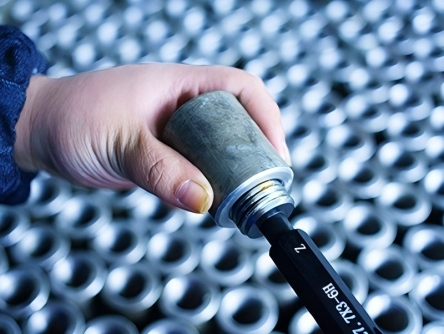
Precise adherence to rebar coupler specifications directly influences the integrity of reinforced connections. Correctly specified couplers prevent structural failures by ensuring the continuity of reinforcement. They enhance seismic performance, allowing structures to absorb and dissipate energy during earthquakes without catastrophic collapse. The durability mechanical splices provide contributes to the long-term service life of concrete structures. This compliance is vital for meeting construction safety standards and building codes compliance, safeguarding occupants and investments.
Rebar coupler specifications directly correlate with a structure’s load-bearing capacity, ductility, and overall safety margins. Proper specifications ensure that the splice can transfer forces effectively between rebar sections, maintaining the intended structural performance. They also contribute to the structure’s ability to deform without fracturing, which underpins seismic resistance. Adhering to these specifications prevents localized weaknesses, enhancing the overall safety and resilience of the construction.
Verification that couplers meet specified requirements involves testing and certification. Destructive testing methods, such as tensile and fatigue tests, evaluate the ultimate capacity and endurance of the couplers. Non-destructive testing (NDT), like visual inspections and magnetic particle testing, ensures material integrity without compromising the product. Certification by independent bodies confirms compliance with relevant standards for mechanical splices. These quality assurance protocols, including raw material inspection and precise machining, are integral to delivering reliable products.
Mandatory rebar coupler tests include tensile strength, fatigue, and slip tests, which assess the coupler’s ability to perform under various load conditions. Third-party coupler certification provides independent validation of performance and compliance. These certifications ensure rebar reliability testing and adherence to compliance standards for mechanical splices. Manufacturers must demonstrate that their couplers consistently meet or exceed the performance criteria outlined in applicable standards.
| Testing Method | Type | Purpose | Advantages | Disadvantages |
|---|---|---|---|---|
| Tensile Test | Destructive | Measure ultimate strength | Provides exact breaking point | Destroys specimen |
| Fatigue Test | Destructive | Assess endurance under cyclic loads | Reveals long-term performance | Time-consuming |
| Slip Test | Destructive | Quantify movement under load | Determines connection stiffness | Destroys specimen |
| Visual Inspection | Non-destructive | Identify surface defects | Quick, cost-effective | Limited to surface flaws |
| Magnetic Particle | Non-destructive | Detect surface/subsurface cracks | Effective for ferromagnetic materials | Requires surface preparation |
Navigating rebar coupler standard variations is a common challenge in international construction. Regional building codes often introduce unique requirements, leading to potential conflicts between specifications. Harmonizing construction standards across different jurisdictions requires a thorough understanding of each standard’s nuances. For international project specifications, engineers must reconcile these differences to ensure compliance and optimal performance. Cross border engineering challenges necessitate flexible manufacturing capabilities and detailed technical expertise to meet diverse demands.
Key differences between various rebar coupler standards lie in their specific requirements for tensile strength, fatigue resistance, and slip characteristics. Each standard, such as ISO, ASTM, BS, and DIN, employs distinct testing methodologies and performance criteria for mechanical splices. For example, some standards might emphasize ductility, while others prioritize ultimate tensile strength. Understanding these global rebar specifications is vital for selecting appropriate couplers for specific project needs.
Partner with Changzhou Tenjan Steel Tube Co.,Ltd to support structural integrity and project success. As a vertically integrated manufacturer since 2004, we specialize in precision steel tubing, including custom-shaped solutions compliant with ASTM, EN, DIN, and JIS standards. Our ISO-certified quality control, PMI, and NDT inspections help verify material integrity for critical applications in construction machinery and more. Contact us today for tailored, high-precision tubing that meets the most demanding rebar coupler specifications. Email: Sunny@tenjan.com | Tel: +86 51988789990 | WhatsApp: +86 13401309791| Tel: +86 51988789990 | WhatsApp: +86 13401309791
The primary factors include structural design requirements, expected load conditions (static, dynamic, seismic), specific building codes and standards applicable to the project’s location, rebar diameter and grade, and environmental conditions. Understanding these elements is key to selecting appropriate mechanical splices that ensure long-term structural integrity and compliance.
Different rebar coupler types, such as threaded, grouted, or swaged, achieve compliance with varying international technical standards (e.g., ISO, ASTM, BS, DIN) through specific design principles and testing. Each standard outlines distinct performance criteria for tensile strength, fatigue resistance, and slip, requiring manufacturers to design and certify couplers to meet these precise specifications for global applicability.
Quality assurance underpins compliance with stringent rebar coupler specifications by implementing checks throughout the manufacturing and installation process. This includes raw material inspection, precise machining, adherence to manufacturing tolerances, and rigorous testing (both destructive and non-destructive) of finished products. Robust QA protocols help ensure that rebar connections perform as designed, upholding structural safety and reliability.


Home Product Capabilities Case Studies Blogs About Get a Quote
Pipe & Tube Manufacturing Process Shapes & Profiles Pipes & Tubes Material Standard Steel Pipes & Tube Rebar Couplers Cold Drawn Steel Profiles & Bars
Oil & Petrochemical Industry Automotive & Motorcycle Components Mechanical Engineering Components Mining Construction Support Structures High-Pressure Boiler System Construction Machinery Geological Drilling Agricultural Machinery Parts Industrial Fluid Transfer Systems


© 2024 Changzhou Tenjan Steel Tube Co., Ltd All rights reserved. Privacy StatementTerms-ConditionsSitemap
