Welcome to Changzhou Tenjan Steel Tube Co., Ltd
Sunny@tenjan.com



Precision steel tubing demands inspection methods that actually work. Not just for compliance boxes, but because a single missed flaw can cascade into catastrophic failure downstream. At Tenjan Steel Tube, our ISO-certified quality control and advanced Non-Destructive Testing protocols exist for one reason: every seamless tube, every custom-shaped profile leaves our facility with verified integrity. That’s the foundation our clients build their applications on.
Non-destructive testing forms the backbone of quality assurance for steel tubes, catching material defects before they become field failures. NDT identifies internal and external flaws without compromising the material itself. Products destined for high-pressure boilers or automotive components require this level of scrutiny. International standards including ASTM, EN, DIN, and JIS shape our comprehensive NDT protocols. Each steel tube must demonstrate the strength and durability its application demands. Systematic NDT application prevents costly failures while protecting operational safety.
Ultrasonic testing uses high-frequency sound waves to hunt down internal flaws and verify wall thickness in steel tubes. We run UT extensively on our seamless tubes, including ST35 Seamless Pipe and 1035 Seamless Pipe, pinpointing discontinuities like cracks, voids, and inclusions with precision. Sound waves travel through the material. Echoes reveal where defects hide and how deep they sit. This method proves particularly valuable for tubes headed into high-pressure and structural service. Our technicians interpret UT data with trained eyes, delivering accurate material quality assessments.
Eddy current testing relies on electromagnetic induction to catch surface and near-surface flaws in conductive materials. ECT works exceptionally well for inspecting cold drawn welded tube and other precision profiles where surface quality matters. An alternating current through a coil induces eddy currents in the tube material. Defects like cracks or inclusions disrupt these currents, showing up as impedance changes in the coil. This technique maintains both the aesthetic and functional integrity of finished products.
Magnetic particle and radiographic examination expand our inspection toolkit, providing a more complete picture of material integrity. Each method brings distinct advantages for different material types and defect orientations. Both prove valuable for verifying alloy and carbon steel tube quality. Our expertise with these advanced techniques means even subtle defects get caught.
Magnetic particle inspection offers high sensitivity for surface and near-surface discontinuities in ferromagnetic materials. We apply MPI to products like 4140 Steel Pipe and S355JR Steel Pipe, which exhibit ferromagnetic properties. The tube gets magnetized, then fine ferromagnetic particles coat its surface. These particles cluster at flux leakage fields where discontinuities exist, making them visible. MPI catches minute cracks and flaws that other methods might miss.
Radiographic inspection with X-rays or gamma rays reveals the internal structure of steel tubes, including complex geometries and weld quality. We deploy this method for critical components like high-pressure boiler tubes where internal soundness cannot be compromised. Radiation passes through the tube while a detector or film captures varying absorption rates. Internal defects such as porosity, inclusions, or incomplete weld fusion become visible. This technique remains indispensable for verifying structural integrity in Seamless Alloy Steel Tubes and custom-shaped tubes.
Advanced NDT tells only part of the story. Fundamental visual and dimensional inspections anchor our quality assurance process. These initial checks and precise measurements confirm that precision steel tubing consistently hits OEM specifications. Standards stay stringent from the first production step.
Advanced measurement tools validate the exact form and fit of custom-shaped steel tubes and complex geometries. Laser micrometers, optical comparators, and coordinate measuring machines handle the verification work. These instruments hold every tube to the tightest tolerances, which matters most for high-precision applications. Dimensional control covers all products, including Precision Pipe&tube and EN10305-1 Steel Pipe.
| Measurement Type | Tool Used | Precision Tolerance |
|---|---|---|
| Outer Diameter | Laser Micrometer | ±0.1mm |
| Wall Thickness | Ultrasonic Thickness Gauge | ±0.1mm |
| Length | Digital Calipers | ±0.5mm |
| Straightness | Optical Comparator | 1/2000 |
| Ovality | Micrometer | ±0.1mm |
Material characterization and positive material identification go beyond defect detection into material verification territory. PMI confirms correct alloy composition, which drives performance in demanding applications like hydraulics and boilers. Material properties must match specifications exactly.
Our PMI NDT inspections verify the chemical composition of both carbon steel and alloy steel tubes. X-ray fluorescence and optical emission spectrometry confirm the presence and concentration of alloying elements. This prevents material mix-ups and guarantees that each tube, whether 25CrMo4 Steel Pipe or 41Cr4 Alloy Pipe, carries the exact properties its application requires. Rigorous verification maintains material integrity throughout production.
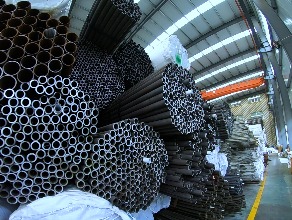
Choosing the right inspection strategy requires understanding specific industry requirements and tube types. We match inspection techniques to applications ranging from automotive components to construction machinery. Our position as a vertically integrated manufacturer lets us tailor quality control strategies precisely.
A STKM13A Steel Tubes bound for automotive components might face rigorous eddy current and ultrasonic testing. A DIN 17175 Steel Pipe for high-pressure boilers would need comprehensive radiographic examination and PMI. This tailored approach balances cost-effectiveness with uncompromising quality standards. We work closely with clients to define the most effective inspection protocols for their specific projects.
If you’re interested, check 《Analysis of Key Causes and Prevention Strategies for Cracking in Seamless Steel Tubes during Bending and Flattening》.
Leverage Changzhou Tenjan Steel Tube Co.,Ltd’s comprehensive inspection capabilities and precision manufacturing for your specific projects. Our ISO-certified quality control ensures superior material integrity and performance. We are dedicated to providing custom steel tube solutions that meet the most stringent industry standards. Contact us today to discuss your requirements.
Email: Sunny@tenjan.com
Tel: +86 51988789990
Phone: +86 13401309791
WhatsApp: +86 13401309791
For critical applications, combining NDT methods like ultrasonic testing, eddy current inspection, and radiographic examination provides comprehensive steel tube integrity verification. These methods detect internal flaws, surface discontinuities, and weld defects, all of which matter for high-pressure boilers and automotive components. Changzhou Tenjan Steel Tube Co.,Ltd utilizes advanced NDT to meet stringent industry standards.
Advanced inspection methods directly affect steel tube performance and longevity by catching potential defects before tubes enter service. This proactive quality control prevents premature failure, improves safety, and extends operational life in demanding environments. Our full process control, from raw material to finished product, ensures superior material integrity.
For seamless tubes requiring high precision, ultrasonic testing often proves most effective for detecting internal flaws and wall thickness variations. Eddy current testing handles surface and near-surface defects well. The optimal technique depends on specific application requirements and standards like ASTM, EN, DIN, and JIS. We manage this selection process based on each project’s needs.


Home Product Capabilities Case Studies Blogs About Get a Quote
Pipe & Tube Manufacturing Process Shapes & Profiles Pipes & Tubes Material Standard Steel Pipes & Tube Rebar Couplers Cold Drawn Steel Profiles & Bars
Oil & Petrochemical Industry Automotive & Motorcycle Components Mechanical Engineering Components Mining Construction Support Structures High-Pressure Boiler System Construction Machinery Geological Drilling Agricultural Machinery Parts Industrial Fluid Transfer Systems


© 2024 Changzhou Tenjan Steel Tube Co., Ltd All rights reserved. Privacy StatementTerms-ConditionsSitemap
