Steel Tube On-Time Delivery: How a 99.2% Record Is Built
A steel tube on-time delivery rate is settled weeks before the first draw, and the percentage on a supplier page rarely shows where those decisions were made. A 99.2% on-time record helps your planning only once…

A steel tube on-time delivery rate is settled weeks before the first draw, and the percentage on a supplier page rarely shows where those decisions were made. A 99.2% on-time record helps your planning only once you know what the supplier counted as on time, when the clock started, and which order details can still move the date after the contract is signed. The scheduling side of cold-drawn tube supply is where the useful answers sit: where variance enters the route, what to fix at enquiry stage, and how to test a delivery claim rather than accept it. The goal is a date you can build a production plan around.
What a 99.2% On-Time Delivery Record Actually Measures
The figure is a ratio: shipments that arrived on or before an agreed date, divided by the shipments counted in a period. Each part of that sentence is a choice. The agreed date can be the one the supplier acknowledged, the one the buyer originally requested, or the one the buyer’s line actually needed, and those three dates are rarely the same day. The unit can be an order line, a shipment, a container or a tonne. The period can be a quarter or a decade. Delivered can mean leaving the works, clearing the port, or arriving at the customer’s dock.
A rate quoted without its denominator and its window cannot be compared with another supplier’s rate. One mill reporting 99.2% across 40 shipments and another reporting 99.2% across 4,000 both look identical on a website and mean quite different things to a buyer placing a first order in a grade the mill has not run before.
The useful question is not whether the number is high. It is what the number is permitted to prove.
| Record | What it can legitimately support | What you should not infer |
|---|---|---|
| Supplier-reported 99.2% on-time rate | That most shipments in that supplier’s own counting method left on the date the supplier tracked | That your order, on a new grade or profile, will land on the same percentage |
| ISO 9001:2015 certificate [1] | That a documented quality management system has been audited against a recognised standard | That delivery dates are guaranteed, or that the certification scope covers the exact product you are buying |
| EN 10204 3.1 inspection document [2] | That the stated test results belong to the heat or lot delivered | That the tubes left the works on schedule |
| Dimensions measured on one sample tube | The size and wall of that sample, at the points measured | The capability of the full lot, or of the next lot produced |
Read that table as a set of separate permissions. The delivery record shows what the supplier’s own measurement produced; it does not transfer to a specification the supplier has never run. A certificate shows that a system was audited; it says nothing about a ship date. An inspection document ties test results to a heat; it does not tie them to a calendar. None of these records substitutes for the others.
Where Delivery Variance Starts in a Cold-Drawn Tube Order
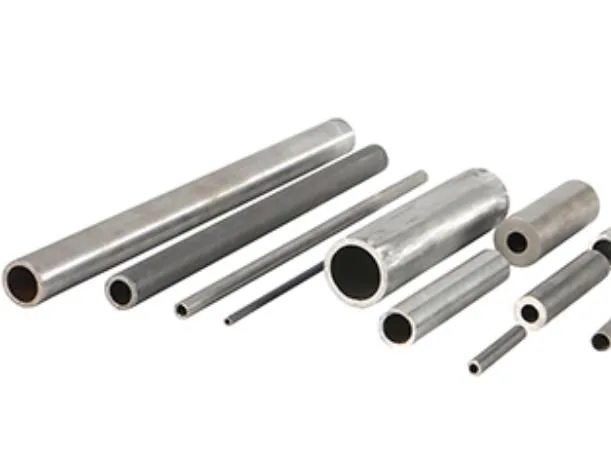
A tube order moves through a chain of dependent queues, and the final date is set by the slowest queue, not by the fastest machine. A typical route reads: raw material scheduling, hot-worked shell or billet, drawing passes, interpass annealing, final heat treatment, straightening, cut to length, end finishing, non-destructive testing, document issue.
The drawing passes are where buyers most often misjudge time. Each pass reduces wall and diameter by a limited amount, and a heavy reduction needs more than one pass with an anneal between them. An extra pass adds little machine time; it adds a furnace queue. A small order can wait for a shared anneal load, and that wait never appears in a quotation that lists drawing as five days.
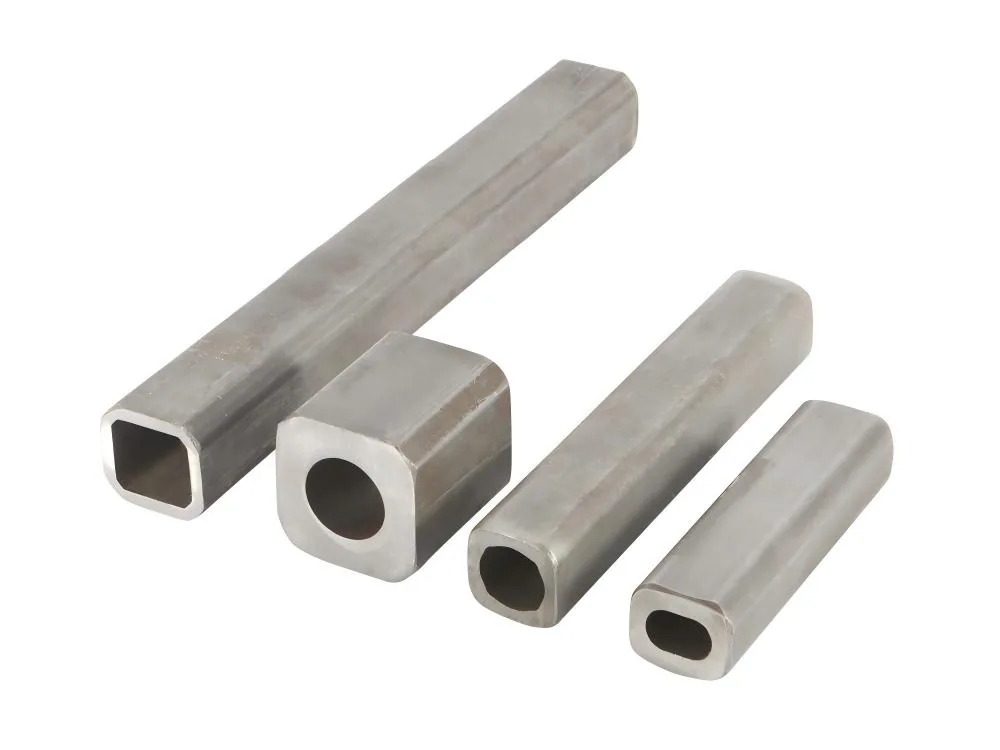
Tooling is the second source of variance. A round die for a size the plant already runs is on the shelf; a hexagonal or special profile needs its own die set and, on a first run, a trial before production begins. Heat treatment groups orders by grade and cycle, so a 300 kg order and a 3 tonne order of the same grade do not hold the same position in the queue.
Documentation is the third. An inspection package that needs the mill certificate, the test results and a third-party witness is scheduled around an inspector’s calendar, and that calendar belongs to someone outside the tube plant.
This is why two quotations for the same drawing can differ by weeks without either supplier being dishonest. One assumes a shell in stock, a tooled die and a shared furnace load. The other assumes a fresh heat, a new die and a dedicated cycle.
Two quotations for one drawing often differ because one assumes a pre-tooled, pre-scheduled route while the other starts from a fresh heat and a new die. <Cold Drawn vs Cold Rolled Steel Tubes> covers how the two processes differ in dimensional control, surface condition and cost.
Which Order Details Move the Delivery Date Before the Mill Starts
By the time production begins, most of the date is already fixed. The details below decide whether a confirmed date is realistic, and every one of them can be settled during the enquiry.
| Order detail | What to put in the enquiry | Why it changes the date |
|---|---|---|
| Grade and standard edition | Grade, product standard and the edition your designer used | Different editions carry different property and testing requirements, and the disagreement has to be resolved before scheduling |
| Delivery condition | Cold drawn hard, soft annealed, stress relieved or normalized | The condition decides whether a heat-treatment step sits in the route at all |
| Size and tolerance class | Outer diameter, wall thickness and the tolerance class that applies | A tightened tolerance can add a sizing pass or a stress-relief step |
| Cross-section | Round, square, hexagonal or special profile, with corner radius | Non-round profiles need dedicated dies and a first-article check |
| Quantity and lot grouping | Total metres plus the minimum quantity per size | Small quantities share furnace loads and wait for a full cycle |
| Inspection and documents | Document type, PMI, NDT method and coverage, third-party witness | Witnessed testing is booked around the inspector’s availability |
Where the drawing and the enquiry disagree, the drawing wins in the workshop and the enquiry wins in the schedule, which is a polite way of saying the date will slip. Send the drawing revision with the enquiry.
Grade naming deserves its own line because it causes quiet delays. S355JR on a drawing and S355JR on a mill certificate are the same designation; the open question is whether the mechanical properties were verified to the edition of the standard the designer worked from. When the two editions differ, someone has to decide which governs, and work stops until that decision is made.
How to Verify a Supplier’s Delivery Claim Before You Rely on It
A delivery claim can be tested with six questions, all of which can be asked before a purchase order exists.
- Ask for the definition. Which date, which unit, which period, and how many shipments sit behind the percentage.
- Ask for the confirmed date in writing, kept separate from your requested date, and ask what events trigger a re-confirmation.
- Ask which steps run inside the supplier’s own plant and which depend on a subcontractor, a rolling mill or an inspector’s calendar.
- Ask at which milestones you will receive progress: material received, drawing complete, heat treatment complete, testing passed, documents issued.
- Ask how many comparable orders run at the same time and what changeover a different size requires.
- Run a trial order through the real route rather than accepting a sample pulled from stock.
The trial answer deserves a boundary. A trial proves the route for that grade, that size, that quantity and those inspections. It tells you little about a heavier wall, a different cross-section or a larger lot, and the next order should be treated as a new question rather than an inherited result.
If you score suppliers formally, score the answers rather than the marketing: a supplier that names its own plant’s steps, quotes the subcontract steps honestly and states what it cannot compress is easier to plan around than one that answers every date question with a yes.
Delivery performance becomes comparable only when the technical criteria behind it are scored the same way for every supplier. <Steel Tube Supplier Evaluation: Technical Criteria for Engineers> covers the criteria engineers use to compare suppliers on capability rather than on presentation.
Fast-Track Requests and What They Displace
Asking for a shorter date is really asking for a different position in the queue, and that position has to come from somewhere.
In a plant that runs standard specifications regularly, the compressible parts are queue and load: a heat already scheduled, a die already in the tool room, a furnace load with space left. The parts that resist compression are chemistry, a new die and first-article approval. A first-run profile still needs its trial, and urgency does not remove that step.
Tenjan reports a 99.2% on-time delivery record across its order history and holds a capacity buffer for urgent work. That buffer is a scheduling decision rather than extra machine speed: capacity is reserved out of the standard plan so a priority order can take a slot without displacing every other order. For standard specifications the company quotes a fast-track window of roughly 20 to 25 days, and that window applies to sizes and grades already in the route, not to a profile that needs a die built.
A fair question to any supplier offering priority treatment is which step gets compressed and which step carries the risk. If the answer is overtime, ask on which operation, because overtime at the cut-to-length station does not shorten an anneal cycle.
What to Write Into the Purchase Order to Protect the Date
Most of the protection is won or lost in the delivery clause, and a single line reading 30 days protects nobody.
Reject this line: Delivery: 30 days.
Replace it with a clause that names the trigger, the delivery point, the notification duty and the documents: Confirmed ship date is 30 calendar days from written order acknowledgement and approval of the drawing revision stated in this order. Delivery point is the buyer’s dock. The supplier notifies the buyer in writing within two working days of any slip in heat treatment, testing or document issue. Inspection documents to EN 10204 3.1 [2], a PMI report and the NDT report are issued before shipment and form a condition of acceptance. Partial shipment requires written buyer approval. Any drawing or standard revision after acknowledgement restarts the confirmed date.
Three parts of that clause do the real work. The trigger removes the argument about when the clock started. The notification duty turns a surprise into a decision you can still act on. The document condition prevents the familiar ending where the tubes arrive and the paperwork does not, leaving accepted material sitting on a rack while everyone checks email.
Revision control on the drawing often decides the delivery date more than the machine schedule does, because each accepted change restarts part of the route. <How EN10305 Steel Tube Standard Affects Precision Tube Procurement> covers how the standard’s condition and tolerance requirements feed into procurement decisions.
Change control runs both ways. A buyer who revises a corner radius, adds a PMI requirement or changes the delivery condition after acknowledgement has changed the order, and the confirmed date should move with it. Agreeing that in advance is cheaper than negotiating it in week three.
Send the Drawing and the Date Your Line Needs
Before you commit to a date, send the drawing revision, the grade and standard edition, the size and tolerance class, the quantity, the inspection and document requirements, and the date your production line actually needs the tubes. We will separate the parts of that date that your specification fixes from the parts that depend on material scheduling and heat-treatment loads, and confirm what has to be true for the date to hold.
Changzhou Tenjan Steel Tube Co., Ltd
Email: Sunny@tenjan.com
Tel: +86 51988789990
Phone/WhatsApp: +86 13401309791
FAQ
Does a 99.2% on-time record mean my order will arrive on time?
Not by itself. The figure describes shipments the supplier counted against its own agreed dates. Your order inherits that record only if its grade, size, tolerance, quantity and testing fall inside the route that produced the number. A first-time profile or a witnessed-test requirement starts closer to an unknown, so ask for a confirmed date and the assumptions behind it rather than relying on the historical average.
How should on-time delivery be defined in a steel tube contract?
Define four things: which date is binding (the acknowledged date, not the requested one), what counts as a unit (order line, shipment or tonne), where delivery is complete (works, port or buyer’s dock), and whether documents count as part of delivery. Written into the order, those four definitions remove most end-of-project disputes before they begin.
Why do two quotations for the same drawing show different lead times?
Usually because they assume different starting points. One assumes a shell size in stock, an existing die and a shared heat-treatment load; the other assumes a fresh heat, a new die and a dedicated cycle, sometimes with a first-article check in between. Ask each supplier which steps sit inside their own plant and which depend on a subcontractor or an inspector’s calendar, and the gap usually explains itself.
Can a custom profile be delivered faster than the quoted lead time?
Sometimes, but only where the delay is queue time rather than process time. Reserved capacity, a shared furnace load with space, or a die already in the tool room can remove days. Chemistry, a new die and first-article approval do not compress because a buyer is in a hurry. Ask which specific step would be shortened and which order absorbs the displacement.
Which documents should arrive with the tubes?
At minimum an inspection document to EN 10204 3.1 [2] tied to the heat or lot, plus any PMI and NDT reports your specification calls for. Treat document issue as part of delivery: material that arrives without the paperwork usually cannot be released to production, so the practical arrival date is the later of the tubes and the documents.
References
[1] ISO 9001:2015, Quality management systems: Requirements, ISO, Geneva, 2015.
[2] EN 10204:2004, Metallic products: Types of inspection documents, CEN, Brussels, 2004.
[3] EN 10305-1:2016, Steel tubes for precision applications: Technical delivery conditions, Part 1: Seamless cold drawn tubes, CEN, Brussels, 2016.
If you’re interested, check out these related articles:
How EN10305 Steel Tube Standard Affects Precision Tube Procurement
Precision Tube Quality Inspection Checklist
Steel Tube Manufacturing Process: Precision and Quality
Managing Custom Steel Tube Lead Times for OEM Buyers
How to Choose a Steel Tube Supplier for Your Next Project