Steel Tubes in the Hydrogen Economy: Why Precision Matters
Hydrogen is often discussed in megawatts, million-tonne demand forecasts, and national roadmaps, but the physical system behind it is built from smaller components: valves, fittings, compressors, storage cylinders, and steel tubes. The role of steel tubes…
Hydrogen is often discussed in megawatts, million-tonne demand forecasts, and national roadmaps, but the physical system behind it is built from smaller components: valves, fittings, compressors, storage cylinders, and steel tubes. The role of steel tubes in the hydrogen economy is not glamorous. It is the quiet work of containment, fatigue resistance, dimensional fit, and documented material integrity. Get the tube decision wrong, and the system does not scale. Get it right, and a large part of the technical risk disappears before the first pressure cycle.
Global hydrogen demand reached about 97 million tonnes in 2023, with low-emission hydrogen still representing less than 1 million tonnes of that total [1]. That gap is exactly why steel tube selection matters. The projects moving from pilot to commercial scale are not abstract energy policy. They are engineering programs where hydrogen must be compressed, stored, moved, and used without compromising safety or schedule.
Why Hydrogen Changes the Requirements for Steel Tubing
Hydrogen has a low energy density by volume at atmospheric conditions. To move useful amounts of energy, the gas must be compressed, liquefied, or carried through chemical carriers. Each route changes the operating envelope for steel tubes: higher pressure, lower temperature, or more demanding material cleanliness.
This shift separates hydrogen service from routine mechanical tubing. A tube that performs perfectly in a hydraulic cylinder or construction machinery component may be outside the design assumptions for hydrogen service. The difference is not always the steel grade. It is the combination of material state, surface condition, dimensional stability, and the documentation needed to prove the product is what the certificate says it is.
Hydrogen Embrittlement Is the Main Engineering Constraint
The most common technical concern is hydrogen embrittlement. Hydrogen atoms can enter the steel and reduce ductility, especially in high-strength materials, welded zones, hard spots, or areas with residual stress. ISO 11114-1 provides guidance on metallic material compatibility with gas contents, and ASME B31.12 addresses hydrogen piping and pipeline design with material-specific performance factors [2][3].
This does not mean every hydrogen circuit requires an exotic alloy. It means the material condition must be controlled. Hardness, microstructure, cold work, and surface defects all influence how the steel behaves in hydrogen. For cold-drawn seamless tube, that places extra weight on process control: the amount of cold reduction, heat-treatment condition, stress-relief practice, and final inspection.
Leak Tightness, Surface Finish, and Cleanliness
Hydrogen systems are unforgiving about fit and finish. A compression fitting on a fuel system or test stand depends on precise outside diameter, roundness, and surface condition. A small scoring mark, chatter mark, or inconsistent wall section can become a stress riser or a sealing problem.
This is why dimensional accuracy is not a marketing phrase in hydrogen work. A few hundredths of a millimeter can change how a fitting seats under pressure. Cold-drawn seamless tube, with controlled OD and wall thickness, is generally better suited to these applications than welded alternatives with wider dimensional scatter.
Precision in hydrogen service is not simply about hitting a drawing tolerance; it is about making the downstream sealing system predictable. <Steel Tube Dimensional Accuracy: Why Fit Depends on It> covers why fit depends on dimensional control.
Where Steel Tubes Fit in the Hydrogen Value Chain
Steel tubes appear across the entire hydrogen chain, often in functions that are less visible than a pipeline or a fuel cell stack:
- Electrolyser skids and water treatment circuits
- Hydrogen compression and buffer storage
- Bunkering and refueling station piping
- Vehicle fuel systems and test benches
- Industrial offtake connections and hydrogen blending systems
- Cryogenic or high-pressure laboratory loops
In vehicle fuel systems, published fueling standards and vehicle fuel system standards reference high-pressure operation, commonly around 350 bar and 700 bar for on-board storage [4]. In station and test environments, lower-pressure distribution circuits often operate at much more moderate pressures, but they still demand leak-tight construction and high cleanliness because hydrogen molecules are small and escape paths can be subtle.
This matters when a buyer is reviewing a tube drawing. A hydrogen application may need seamless cold-drawn tube, special surface roughness limits, low residual oil content, and full material traceability—even when the pressure itself is not extreme.
A Specification Checklist for Hydrogen-Ready Steel Tubes
Hydrogen service does not have a single universal specification. The right approach is to build the requirement from the actual service conditions: gas purity, pressure, temperature range, pressure cycling, connection method, and applicable code.
The table below shows a simplified starting checklist for early-stage hydrogen projects.
| Design Factor | What Hydrogen Service Makes More Important | Suggested Verification |
|---|---|---|
| Material condition | Controlled hardness and fine microstructure | Material certificate with heat number and hardness limits |
| Manufacturing route | Seamless or fully validated welded construction | Inspect melt, forming, heat treatment, and NDT record |
| Dimensional control | Predictable OD, wall, roundness for fittings | Full size report; not only a spot check |
| Surface quality | Low roughness, no scores or micro-cracks | Eddy current or ultrasonic inspection |
| Cleanliness | Minimal debris and oil before installation | Packing, cleaning, and delivery specification |
| Traceability | Complete linkage from heat to final tube | EN 10204 3.1 certification [5] |
The important point is not to ask for “hydrogen tube” as if it were a catalog item. Ask for a tube with the specific material condition, tolerance, surface, and inspection documentation that your hydrogen service demands. Many project delays come from specifications that are either too loose or unnecessarily exotic.
The Practical Procurement View
From an engineering perspective, the biggest early mistake is treating hydrogen tubing as a standard-stock order. A buyer may ask only for a common seamless grade, but the technical reviewer should be asking about the mission: whether the part sees steady pressure, cyclic loading, cold temperature, or hydrogen gas that may contain trace moisture and oxygen.
Consider a fuel cell test stand. The tube drawing may call for a non-standard outside diameter because the designer selected a fitting after the tube was drawn. As a result, the project pays more, waits longer, and still ends up with a sealing path that is harder to validate. When the same requirement is normalized to a standard available OD, the material review and the sealing path both become simpler. That single design conversation can remove more risk than switching from one steel grade to another.
This is also where material selection benefits from a manufacturing view. A steel tube supplier who understands cold drawing, heat treatment, and inspection can usually identify where a specification is over-conservative and where it is under-specified. At the RFQ stage, a useful inquiry includes the medium, design pressure, temperature range, cycle count if known, connection type, and any code clause that must be met. Send that package to Sunny@tenjan.com with a drawing and ask for a design-for-manufacturing review before finalizing the bill of materials; the final contact record is the last section before the FAQ.
Material choice in high-pressure gas service is usually settled before the first production lot is even considered. <How to Choose the Right Seamless Steel Tube> covers how to choose the right seamless steel tube when pressure, cleanliness, formability, and downstream assembly all matter.
Why the Cold Drawing Process Is Relevant to Hydrogen Work
Cold drawing improves dimensional accuracy and surface finish while changing mechanical properties. In hydrogen-critical circuits, those benefits come with a caution: cold work can increase hardness and residual stress if the process is not controlled. The correct response is not to avoid cold drawing; it is to pair cold reduction with the right heat treatment or stress-relief step and verify the final condition.
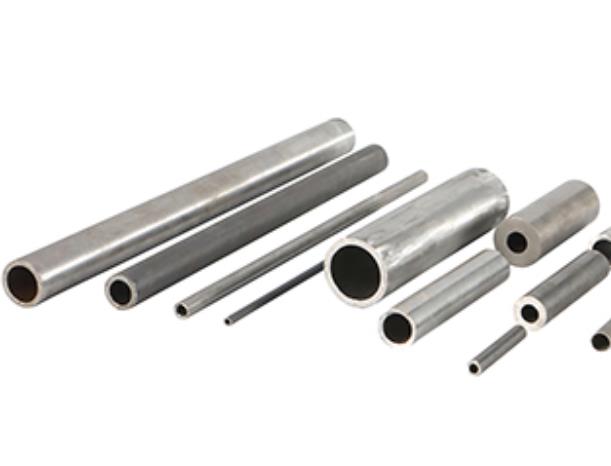
Precision cold-drawn tube is therefore not automatically “hydrogen-ready.” It is a strong starting point when the supplier can document the full process route and test the material condition. Asked the right way, the technical conversation becomes specific: what is the final hardness range, what is the surface finish, and what NDT evidence exists for the exact lot under review?
The Next Five Years
The hydrogen economy is moving from demonstration to early serial production. That shift will change procurement behavior. Buyers will stop asking for one-off specials and start asking for repeatable specifications, shorter sampling processes, and much tighter documentation. The steel tube suppliers that fit this market are not necessarily the largest; they are the ones that can hold tolerance, explain their process, and provide traceability without friction.
Three trends are likely to shape the next phase:
- Cleaner specs. Standards will force more specific material, hardness, and cleanliness requirements into ordinary tube orders.
- Smaller qualified lots. Pilot systems and test benches will continue to need small-batch precision tube before volume demand arrives.
- More emphasis on process evidence. A certificate alone will not be enough; buyers will ask how the result was achieved and whether it is repeatable.
The role of steel tubes in the hydrogen economy is therefore expanding from supplying product to supplying reliability logic. The tube becomes evidence that the system can function safely across thousands of pressure cycles, maintain leak tightness, and remain traceable when the audit arrives.
Start the Conversation with Tenjan
Tenjan has manufactured cold-drawn seamless, cold-drawn welded, and custom-shaped steel tubes since 2004, with ISO-certified quality control, PMI and NDT inspection, and full EN 10204 3.1 traceability. For hydrogen-related prototypes, pilot plants, or serial production, send drawings and required standards to Sunny@tenjan.com or call +86 51988789990. WhatsApp and direct phone inquiry are available at +86 13401309791.
Frequently Asked Questions About Steel Tubes in Hydrogen Service
Do hydrogen systems always require stainless steel tube?
No. The material choice depends on pressure, temperature, gas purity, cyclic loading, and the applicable design code. Carbon and low-alloy steel can be suitable in many dry hydrogen applications when hardness, microstructure, surface condition, and stress state are properly controlled. Stainless steel may be preferred where corrosion resistance, cleaning requirements, or broader material compatibility offer a clear advantage.
Why are seamless tubes preferred over welded tubes in many hydrogen circuits?
Seamless tube eliminates the weld seam, which is often the most variable region in terms of microstructure, hardness, and residual stress. In critical small-bore circuits, seamless cold-drawn tube can also offer tighter dimensional control and smoother surfaces. Welded tube is not automatically unsuitable, but it requires stronger process validation, weld inspection, and documentation when the service is hydrogen-related.
What standards apply to steel tube selection for hydrogen?
The applicable standards depend on the system. ISO 11114-1 addresses metallic material compatibility with gas contents, while ASME B31.12 covers hydrogen piping and pipelines [2][3]. Vehicle fuel systems reference additional automotive standards [4]. Buyers should always ask the system designer to identify the governing code before locking the tube specification.
What is the most commonly overlooked requirement in early hydrogen RFQ?
Cleanliness and final condition are the most common omissions. An RFQ may specify a known steel grade but say nothing about surface finish, residual oil, hardness range, stress-relief condition, or the required NDT evidence. The result is a tube that may meet chemistry on paper but creates validation problems later.
How should a buyer verify hydrogen compatibility before production?
Begin with a design review rather than a catalog purchase. Confirm the governing code, gas purity, pressure and temperature envelope, cyclic load conditions, connection type, and required certificates. Then request the supplier to document the complete process route and provide material certificates traceable to the heat. If the supplier cannot explain how the final condition was achieved, that is a risk signal.
References
[1] International Energy Agency, Global Hydrogen Review 2024, IEA, Paris, France, 2024.
[2] ISO 11114-1:2021, Gas cylinders — Compatibility of cylinder and valve materials with gas contents — Part 1: Metallic materials, International Organization for Standardization, Geneva, Switzerland.
[3] ASME B31.12-2019, Hydrogen Piping and Pipelines, American Society of Mechanical Engineers, New York, NY, USA.
[4] SAE J2579, Standard for Fuel Systems in Fuel Cell and Other Hydrogen Vehicles, SAE International, Warrendale, PA, USA.
[5] EN 10204:2004, Metallic products — Types of inspection documents, European Committee for Standardization, Brussels, Belgium.
If you’re interested, check out these related articles:
DIN2391 ST52 Tube: Tolerances, Grades and Sourcing Checks
Carbon Steel vs Alloy Steel Tubes