The Future of Hydraulic Systems Rests on Better Steel Tubes
The future of hydraulic systems is usually framed as a contest between fluid power and electric actuation, with the pump and the control valve taking credit for every improvement. The steel tube rarely enters that conversation,…
The future of hydraulic systems is usually framed as a contest between fluid power and electric actuation, with the pump and the control valve taking credit for every improvement. The steel tube rarely enters that conversation, which is odd, because the tube is where the new requirements actually land. Higher working pressure raises hoop stress, tighter valve clearances punish a rough bore, and shorter design cycles leave less room to correct a dimensional surprise during assembly. The practical consequence is simple. Specify the tube early, with a measurement basis attached, or inherit a constraint you did not choose.
What Is Actually Changing in Hydraulic Systems
Four shifts show up repeatedly in current hydraulic design work. Working pressure keeps climbing in mobile and industrial circuits. The pump drive is going electric or variable speed. Actuators are moving closer to the load, which shortens runs and multiplies joints. Documentation expectations keep tightening around every pressure-containing part.
Only some of these are pump problems. All of them are tube problems. Geometry, material, surface condition and traceability meet in a single part that is rarely revisited once the prototype runs, which is why the component with the lowest unit price so often sets the ceiling on a system change. When a circuit moves into a higher pressure class, the pump, valve and hose supplier all get a call. The tube frequently gets whatever drawing already exists, carried forward because it worked before.
That gap is the subject of everything below. The argument is not that hydraulics is in decline or that one grade of steel solves the decade. It is that the passive parts now carry the risk that the active parts used to absorb.
Why Higher Pressure Pushes the Constraint Into the Tube Wall
A thin-wall tube under internal pressure carries hoop stress roughly in proportion to pressure times diameter divided by wall thickness. Read that relationship in the direction that matters for design: for a fixed bore, raising system pressure demands more wall or more yield strength, and for a fixed wall, enlarging the bore to slow flow velocity does the same thing. Neither change is free. More wall adds weight and reduces the bore available for flow. A higher grade changes what the wall can carry, but it changes nothing about how far the tube deflects.
That last point deserves its own sentence, because it is where drawings go wrong. Young’s modulus is essentially the same for a plain carbon grade and a low-alloy grade. If the problem is deflection, resonance, or a fit that closes up under load, a stronger steel does not fix it. Geometry fixes it. A designer who orders E355 in place of E235 to cure a stiffness complaint has bought cost and welding difficulty and nothing else.
Wall tolerance sits underneath all of this and is usually unstated. A stress calculation uses nominal wall. The tube that arrives has a wall somewhere inside a tolerance band, and the margin in the calculation belongs to the nominal value, not to the low end of the band. Cold-drawn precision tube from a controlled process is commonly supplied with wall tolerance in the order of ±0.1 mm, which is why the tolerance belongs on the drawing next to the nominal dimension rather than in a general note. ISO 10763 tabulates dimensions and nominal working pressures for plain-end precision tubes [1], and the useful reading of that standard is that pressure capability comes from the size selection itself. It is not a property added later by a certificate.
| Change in the circuit | What it does to the tube | What it does not justify |
|---|---|---|
| Working pressure raised at the same bore | Higher hoop stress, so more wall or a higher yield grade is needed | Assuming the existing wall is still adequate because the previous system ran without failure |
| Bore enlarged to reduce flow velocity | Stress rises with diameter when wall is unchanged | Calling a wider tube with the same wall a like-for-like swap |
| Grade raised to correct deflection | Almost nothing, since elastic modulus barely moves between carbon grades | Buying stiffness with a higher number on the mill certificate |
| Wall tolerance widened to reduce cost | Stress margin and sealing fit both shift, because ferrules and seals see the real outside and inside diameter | Treating the nominal wall as the value that was verified |
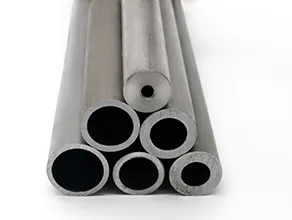
Pressure, bore, wall and grade have to be settled together, which is why selection conversations tend to restart once a circuit changes class. <Steel Tubes for Hydraulic Systems: Key Selection Factors for Engineers> covers the selection factors engineers weigh before they fix a hydraulic tube specification.
What Electrification Changes and What It Leaves Alone
Electric actuation wins where force is modest, duty is intermittent, and controllability or efficiency dominates the decision. Hydraulics keeps its ground where force density matters, where a load must be held without drawing power, and where heat has to be rejected from a small envelope. The realistic picture is not replacement. It is re-partitioning: electric drives take more of the motion, hydraulics keeps the force.
The tube consequences are indirect but real. Shorter runs put more joints into the same length of circuit, and every joint is a leak path and a potential contamination entry point. Integrated manifolds absorb functions that used to sit in separate blocks, so the tube routes change shape. Variable-speed pump drives make flow and pressure move continuously rather than sitting at a set point, which turns pressure ripple and fatigue into design variables instead of background noise.
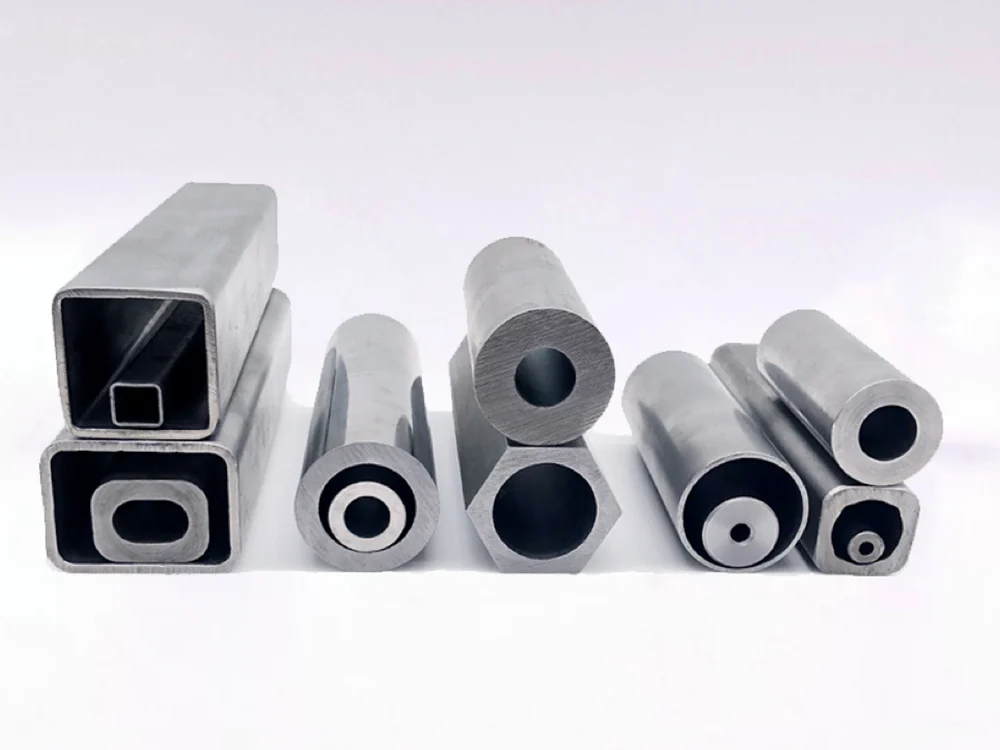
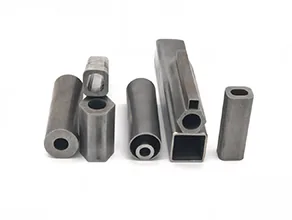
This is where profile matters more than it used to. A hexagonal tube gives wrench flats without a machining operation. A D-shaped or oval section provides anti-rotation in a package that a round tube cannot fit. Each substitution removes a cutting step, a deburring step and a chip source from the process, which matters more in a hydraulic circuit than the tube price difference suggests.
Which Standards Now Carry the Hydraulic Tube Requirement
The European precision tube series is the reference point most export drawings converge on. EN 10305-4 covers seamless cold-drawn tubes for hydraulic and pneumatic power systems [2], and it is the part of the series written with fluid power in mind rather than general mechanical use. Older drawings still name DIN 2391, which the EN 10305 series replaced. That legacy callout is not a technical problem on its own, but it creates a translation step at quoting, and translation steps are where surface requirements quietly disappear.
System-level obligations sit elsewhere. ISO 4413 sets general rules and safety requirements for hydraulic systems and their components [3], and it addresses the system rather than the acceptance criteria of one tube lot. Documentation is governed by EN 10204, which defines the types of inspection documents [4]. A 3.1 certificate is a specific inspection document tied to the tested material, and it is worth being precise about what that means: it demonstrates traceability to test results, not that the sample tested represents every metre in the crate.
Where Japanese-designed machinery is built elsewhere, JIS G3445 for machine structural purposes often appears on the tube callout. That standard is legitimate for machine structures, and it says nothing about bore cleanliness for a fluid power circuit. A drawing can therefore be fully compliant and still deliver a tube that a proportional valve will not tolerate.
| What the drawing needs to fix | Where it is defined | What that does not settle |
|---|---|---|
| Delivery condition of a cold-drawn seamless tube | EN 10305-4 for hydraulic and pneumatic power systems [2] | The working pressure of your circuit |
| Tube size and nominal working pressure | ISO 10763 dimension and pressure tables [1] | Whether the connection end suits the fitting system |
| System safety requirements | ISO 4413 for systems and components [3] | Individual tube acceptance criteria |
| Inspection document type and traceability | EN 10204 inspection document categories [4] | Whether the sampled length represents the lot |
| Machine structural carbon tube grade | JIS G3445 for machine structural purposes | Bore cleanliness for fluid power service |
Vertical integration earns its keep at exactly this point. When one plant controls piercing, cold drawing and inspection, the dimensional record and the surface record come from the same lot instead of two suppliers pointing at each other. Tenjan Steel Tube has worked that way since 2004, which is less a sales point than a practical answer to the question of who owns a nonconformance when the tube and the drawing disagree.
Legacy callouts and translated requirements are where hydraulic tube specifications usually drift. <How EN10305 Steel Tube Standard Affects Precision Tube Procurement> covers how the EN10305 standard shapes precision tube procurement decisions.
Why Inner Surface Quality Turns Into a System Specification
A spool valve works on clearance, and clearance is a contaminant filter with a very low threshold. Particles comparable to the clearance cause silting, which shows up as sluggish or sticky response. Harder particles score the bore and the spool. Either way the failure is attributed to the valve, and the source is often upstream in a component nobody inspected.
The tube bore is a reservoir as much as a passage. A rough or scaled bore holds debris and releases it gradually into the circuit, so the first hundred hours look fine and the commissioning report looks fine. Mill scale left from hot working, drawing lubricant residue, pickling and rinse carryover, and cutting burr all behave the same way. Honing a cylinder barrel and cold drawing a line tube are different operations with different surface outcomes, and a specification that treats “smooth” as one property will not separate them.
The fix is procedural rather than exotic. State roughness as an Ra value, name the measurement method and instrument, and say where on the tube it is measured. Add a cleanliness check with an acceptance limit, such as a flush test through a filter patch with a gravimetric result and a maximum particle size. Then keep the requirement in the purchase order, because a requirement that lives only in a drawing note tends to leave the conversation once price is discussed.
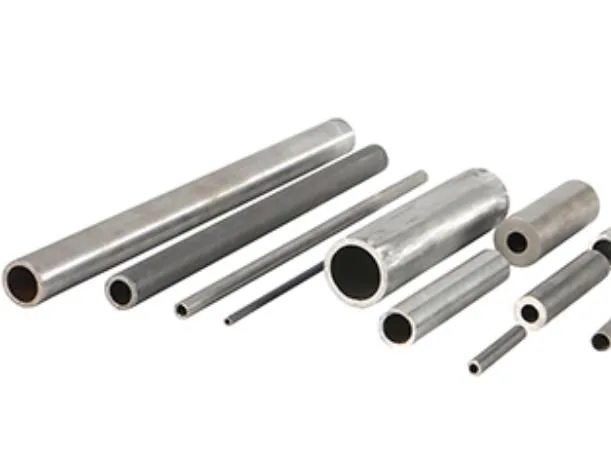
Fluid compatibility and bore condition are two halves of the same service life question. <Steel Pipe Corrosion Protection Methods for Precision Tube> covers corrosion protection methods for precision tube.
Which Indicators Tell You the Trend Is Real
Trend claims about hydraulic systems are easy to make and hard to check. The honest approach is to watch signals you can verify in your own paperwork and treat each one as evidence of a limited kind.
| Signal to watch | What movement suggests | What it does not prove |
|---|---|---|
| Drawings citing EN 10305-4 instead of DIN 2391 | The specification base is consolidating on the EN series | That every supplier’s tube reaches the same surface level |
| Surface and cleanliness requirements appearing at RFQ stage | Cleanliness is moving from assembly into procurement | That the acceptance test is defined well enough to settle a dispute |
| Pressure class rising at an unchanged bore | Wall and grade decisions need rechecking before release | That a higher grade alone restores the lost margin |
| More custom profiles in new designs | Integration is replacing machined subassemblies | That a shaped tube is cheaper at every order quantity |
| Documentation requests naming specific inspection certificates | Traceability expectations are tightening | That the certificate matches the part in the crate |
Run the review on a fixed annual cycle rather than when a problem appears. Re-read the standard edition printed on each active drawing and confirm it matches the edition named on the purchase order. A new edition published this year does not mean every drawing in the plant has been updated, and that gap between publication and adoption is where most specification disputes are born.
Add one more check that is easy to skip. Confirm that any change in a supplier’s process was communicated, because a process change that never reaches the drawing is invisible until a batch behaves differently. Hot zones deserve separate attention, since hydraulic lines routed near exhaust, furnace or die-heating areas face a temperature problem that a room-temperature tube standard does not address, and high-temperature tube specifications such as DIN 17175 exist for that adjacent duty.
Plan the Tube Specification Before the Next Design Cycle
The useful next step is not a new supplier search. It is a one-page tube specification you can send with the RFQ, so the quote answers the question you actually asked. Include the working pressure and whether it fluctuates, the circuit type and fluid, the outside diameter and wall with tolerances, the material grade and the standard edition, the bore surface requirement with its measurement method, the inspection document type, the quantity and the delivery target.
Send that sheet with your next hydraulic tube requirement to Sunny@tenjan.com, or call +86 51988789990 or +86 13401309791. A pressure rating on its own will not settle the connection end, the surface acceptance test or the documentation scope, and those three items are usually what the first quote leaves out.
FAQ
Will electric actuators replace hydraulic systems?
Not across the board. Electric actuation is the better answer when force is moderate, duty is intermittent and controllability dominates. Hydraulics holds its place where force density, load holding without continuous power draw, or heat rejection in a confined space decides the design. The realistic outcome is a re-partitioning of functions inside the same machine, with electric drives taking more motion control and hydraulics keeping the heavy force circuits. For tube selection, the practical effect is shorter runs, more joints and more integrated manifolds, not the disappearance of the circuit.
Does a higher steel grade let me use a thinner wall?
Only where strength is the governing limit. Hoop stress falls when yield strength rises, so a stronger grade can carry the same pressure with less wall. But elastic modulus barely changes between carbon and low-alloy grades, so a thinner wall of stronger steel deflects more under the same load. If the concern is stiffness, resonance or a fit that closes under pressure, the grade change makes the problem worse rather than better. Check which limit governs before reducing wall.
Which standard should a hydraulic tube drawing reference?
For seamless cold-drawn tube in fluid power service, EN 10305-4 is the most direct reference because it was written for hydraulic and pneumatic power systems. Pair it with ISO 10763 for dimensions and nominal working pressures, and name the inspection document type separately under EN 10204. Drawings that still carry DIN 2391 are workable, but the requirement should be translated deliberately at quoting so that surface and tolerance expectations do not get lost in the conversion.
How do I specify bore surface quality without over-specifying?
Anchor the requirement to function. State an Ra value, the measurement instrument, and the location and length over which it is measured. Add a cleanliness acceptance test with a defined limit, such as a flush through a filter patch with a gravimetric result and a maximum particle size. Then confirm the valve clearances in the circuit justify the level you asked for. A blanket “smooth bore” note satisfies nobody, and a requirement tighter than the valve needs adds cost without adding service life.
References
[1] ISO 10763:2019, “Hydraulic fluid power — Plain-end, seamless and welded precision steel tubes — Dimensions and nominal working pressures,” ISO, 2019.
[2] EN 10305-4:2016, “Steel tubes for precision applications — Technical delivery conditions — Part 4: Seamless cold drawn tubes for hydraulic and pneumatic power systems,” CEN, 2016.
[3] ISO 4413:2010, “Hydraulic fluid power — General rules and safety requirements for systems and their components,” ISO, 2010.
[4] EN 10204:2004, “Metallic products — Types of inspection documents,” CEN, 2004.
If you’re interested, check out these related articles:
Steel Pipe Corrosion Protection Methods for Precision Tube
Precision Tube Quality Inspection Checklist
Steel Tube Dimensional Accuracy: Why Fit Depends on It