Vertical Integration at Tenjan: Precision Tube Production
Vertical integration in precision steel tube production is not a claim about owning more machines. It is a claim about where responsibility sits when a tube misses a dimensional, mechanical, or traceability requirement. At Tenjan, the…
Vertical integration in precision steel tube production is not a claim about owning more machines. It is a claim about where responsibility sits when a tube misses a dimensional, mechanical, or traceability requirement. At Tenjan, the production chain from raw material selection through cold drawing, heat treatment, inspection, and packing sits inside one quality system. That arrangement does not make every order simple. It does make the handoffs visible, and visible handoffs are easier to control. For buyers of seamless, cold-drawn welded, or custom-shaped tube, the practical question is how that control shows up in the drawing, the certificate, and the tube that arrives.
What Vertical Integration Means in Precision Tube Production
Vertical integration is often confused with one-stop shopping. A trader can quote a tube, a mill can make it, and a heat treater can anneal it. The buyer may see one invoice, but the evidence chain passes through several companies. In a vertically integrated tube operation, the critical stages remain under one management system. The buyer still needs a clear specification, but the supplier can trace a dimensional change, a hardness result, or a surface defect back through its own process steps. A handoff between companies is a seam in the evidence chain, even when the tube itself is seamless.
| Production stage | What integrated control changes | Evidence a buyer can request |
|---|---|---|
| Raw material selection | Chemistry and incoming condition are checked before the tube is formed | Mill certificate, PMI result, grade confirmation |
| Tube forming | Seamless or welded route is selected against the final duty | Route description, size range, weld or seamless declaration |
| Cold drawing or rolling | OD, wall, surface, and mechanical condition are developed in planned passes | Drawing schedule, reduction sequence, dimensional report |
| Heat treatment | Stress relief or property adjustment is linked to the grade and final use | Furnace record, hardness and tensile results, treatment condition |
| Inspection and packing | NDT, dimensional checks, marking, and protection are released together | NDT report, final inspection record, packing list |
The table is not a promise that every order needs every document. It is a map of where to ask questions. A buyer who needs a particular certificate type should say so before the order is released, not after the tube is packed. The same applies to NDT method, acceptance level, and surface condition.
From Raw Material to Finished Tube
The production chain starts before the first draw. Tenjan has produced precision tube since 2004, and its scope covers carbon and alloy steel tube, including seamless tube, cold-drawn welded tube, cold-drawn profiles, and custom shapes such as square, rectangular, and hexagonal sections. Product literature lists an outer diameter range of 10 mm to 108 mm, wall thickness of 1 mm to 20 mm, and a ±0.1 mm precision tolerance for the precision range. Those numbers are a starting point, not a universal guarantee. The drawing and the standard determine what is actually released.

Raw material selection and verification
Before forming, the incoming grade must be identified and checked. PMI, or positive material identification, helps confirm that the alloy chemistry matches the purchase order. A mill certificate alone is a document. PMI is a check against the physical material. When the grade is critical, the buyer should specify both the certificate requirement and the PMI requirement. If the purchase order names a grade but does not say how identity will be verified, the supplier has room to interpret the requirement in the cheapest way.
Tube forming and cold drawing
Seamless tube begins as a hollow shell and is reduced. Welded tube begins as strip and a weld seam. Cold drawing then pulls the tube through a die over a mandrel to reduce OD and wall, improve surface finish, and raise strength through work hardening. The process is not a single pass. Reduction ratio, die condition, lubrication, and intermediate annealing all affect the result. If one of those variables drifts, the final dimension may still look acceptable while the residual stress or surface condition does not.
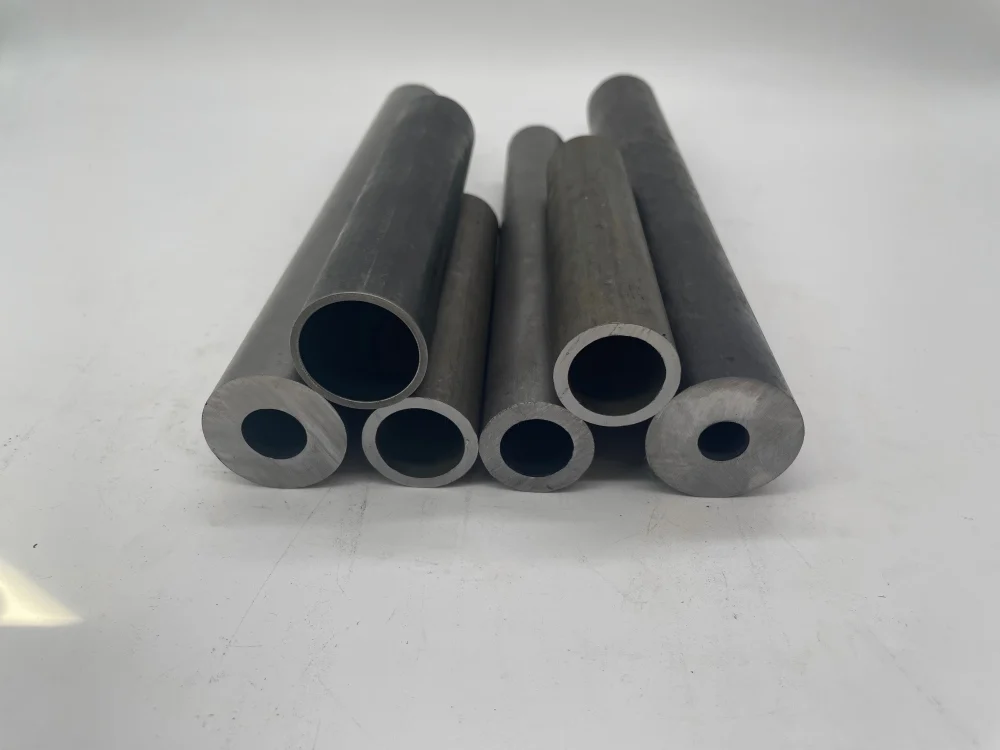
The interaction between forming, drawing, and heat treatment is where most dimensional problems are either prevented or carried forward. <Steel Tube Manufacturing Process: Precision and Quality> covers how process control supports precision and quality in steel tube production.
Heat treatment and finishing
Heat treatment is where cold working is either balanced or left as a hidden liability. Annealing, normalizing, stress relieving, and quenching and tempering change microstructure and mechanical properties in different ways. The right treatment depends on the grade, the amount of cold reduction, and the final duty. A tube that is dimensionally correct but incorrectly heat treated can machine well and still fail in service. Finishing steps such as straightening, cutting, and surface protection matter for the same reason. They can introduce or remove residual stress, and they can hide or reveal surface damage.
Why Cold Drawing and Heat Treatment Inside One Plant Matter
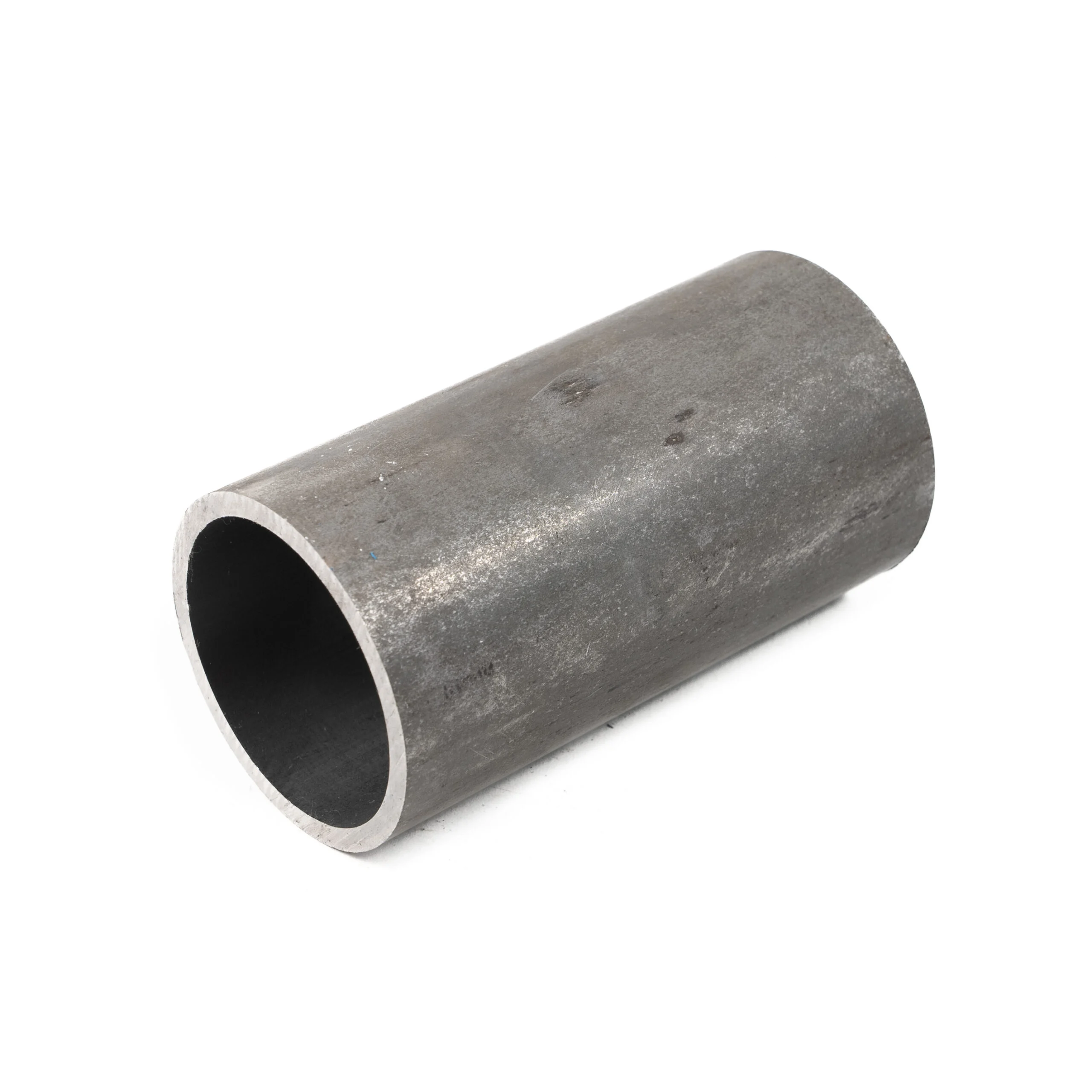
Cold drawing and heat treatment are separate operations, but they are not independent. A drawing pass changes the tube’s dimensions and strength. The following heat treatment decides how much of that strength is kept and how much ductility is restored. When these steps sit in one plant, the process engineer can adjust the next pass based on the actual incoming tube and the actual treatment result. When they are split across suppliers, the buyer often becomes the coordinator of information that should have stayed inside one process.
| Decision | What it controls | What to confirm |
|---|---|---|
| Cold drawn versus cold rolled | Surface, dimensional consistency, residual stress pattern | Route, reduction, final treatment |
| Annealing versus stress relieving | Ductility, machinability, dimensional stability | Grade, temperature cycle, hardness target |
| As-drawn versus quenched and tempered | Strength and toughness balance | Mechanical property report, test direction |
| In-house versus outsourced step | Feedback speed and responsibility | Process record, certificate type, traceability |
The distinction between cold drawn and cold rolled is not a ranking. Cold drawing is often chosen for precise OD and wall control and for the strength that comes from reduction. Cold rolling can produce a smoother surface and is useful for certain profiles and thin walls. The right route depends on the final shape, the tolerance, and the mechanical property target. A supplier that can perform both routes has more room to match the process to the tube. The buyer still has to state which result matters.
How Traceability and Inspection Fit the Production Flow
Traceability is not a folder produced at the end of an order. It is a sequence of records created as the tube moves. Heat number, incoming inspection, drawing pass, heat treatment batch, NDT result, final dimension, and packing identification should connect to the same order and the same physical tube. When those records are generated inside one quality system, a buyer can follow a nonconformance back to the stage that caused it. When they are assembled from several suppliers, the trail may still exist, but the links are harder to verify.
Tenjan’s quality control is ISO-certified and includes PMI and NDT inspection. Those tools answer different questions. PMI checks material identity. NDT, such as eddy current or ultrasonic testing, looks for surface or internal discontinuities. Neither replaces a dimensional check, a tensile test, or a hardness test. A complete release decision combines the applicable checks rather than treating one certificate as a summary of everything.
A certificate is only useful when the records behind it can be connected to the tube in the crate. <How Digital Traceability Tightens Steel Tube Quality Control> covers how digital traceability supports tighter quality control in steel tube production.
Buyers should also separate inspection from acceptance. An inspection report shows that a check was performed and what it found. Acceptance is the buyer’s decision that the result meets the agreed specification. A supplier can provide the evidence. It cannot make the buyer’s acceptance decision for them. This distinction matters when a drawing calls for a standard, a grade, and an additional customer requirement at the same time.
Matching Tube Type and Standard to the Application
Standard families describe different things. ASTM A519 is a common specification for seamless carbon and alloy steel mechanical tubing. EN 10305-1 covers seamless cold-drawn precision tubes. DIN 2391 is a familiar precision tube reference in European drawings, and JIS G3445 covers carbon steel tubes for machine structural purposes. These are not interchangeable labels. The purchase order should name the standard, the grade, the delivery condition, and any additional inspection requirement.
| Tube route | Common application | What to confirm |
|---|---|---|
| Seamless cold drawn | Hydraulic, mechanical, high-pressure duty | Standard, grade, OD and wall tolerance, NDT |
| Cold-drawn welded | Precision components and general manufacturing | Weld integrity, test method, dimensional report |
| Custom-shaped | Square, rectangular, hexagonal, oval profiles | Profile tolerance, corner radius, straightness |
| Alloy grade | Automotive, machinery, high-temperature duty | Chemistry, heat treatment, mechanical properties |
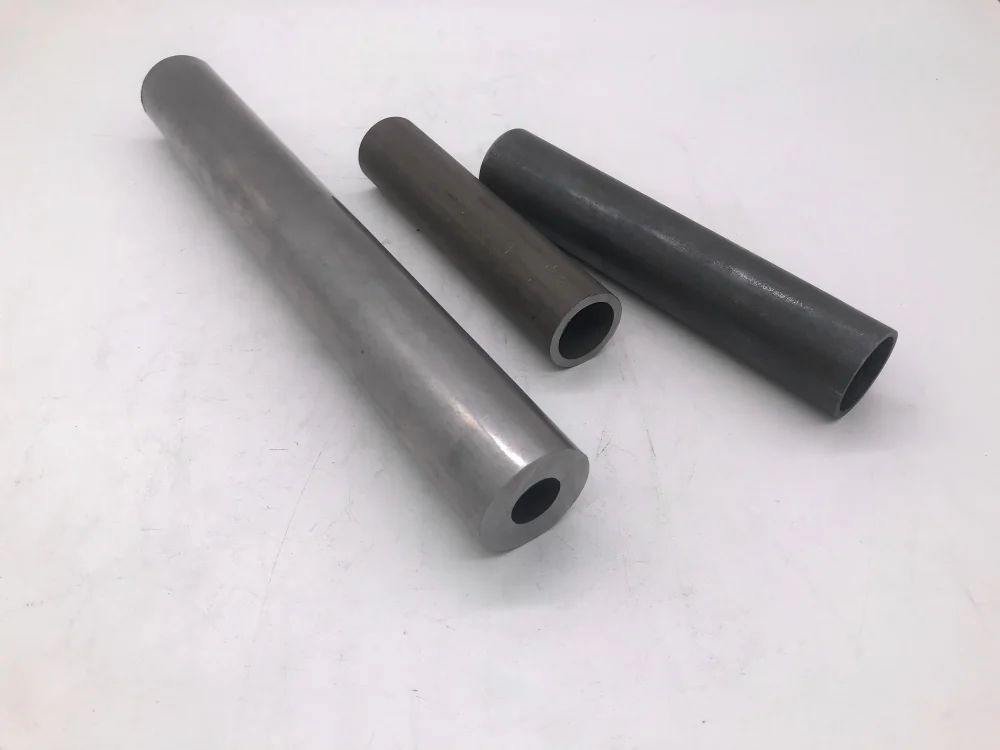
A tube that meets a dimensional standard may still be wrong for the application if the delivery condition is wrong. A normalized tube, an annealed tube, and a quenched and tempered tube can share a grade name and behave differently in machining or service. That is why the RFQ should state the final function, not only the size. The supplier can then check whether the requested standard and grade actually support that function.
Where Vertical Integration Helps and Where It Does Not
Vertical integration helps most when the order requires interaction between stages. A custom shape with tight wall tolerance, a tube that needs intermediate annealing between draws, or a batch that needs NDT before packing will benefit from short feedback loops and one chain of responsibility. It also helps when a nonconformance appears. The question changes from “which supplier caused this?” to “which stage in our process produced this result?” That is a faster and more useful question.
It does not remove the need for a clear drawing, an agreed acceptance standard, or independent verification when the application demands it. An integrated supplier may still buy raw material, tooling, or specialized services from outside. Integration is a scope of control, not a claim of self-sufficiency. Buyers should confirm which steps are actually in-house, which are subcontracted, and how the subcontracted step is inspected before release. That is especially important for heat treatment, coating, and third-party testing.
Integration also does not guarantee capacity for every size or grade. A mill with a broad product range still has changeover limits, tooling availability, and scheduling constraints. The honest answer to “can you make this?” depends on the drawing, the quantity, the standard, and the inspection plan. A supplier that says yes without asking those questions is not demonstrating vertical integration. It is demonstrating a sales desk.
What to Confirm Before Placing a Custom Tube Order
The RFQ is where vertical integration becomes useful or useless. A vague request forces the supplier to guess, and guessing erodes the advantage of having every stage under one roof. The fields below are the minimum needed to quote a custom tube without hiding a process assumption.
| RFQ field | What to state | Why it matters |
|---|---|---|
| Dimensions | OD, wall, length, tolerance, straightness | Defines the drawing and the starting tube route |
| Material and standard | Grade, standard family, delivery condition | Prevents a dimensional match from hiding a property mismatch |
| Application and duty | Hydraulic, boiler, machinery, automotive, structural | Connects the tube to temperature, pressure, and fatigue demands |
| Inspection | PMI, NDT method, certificate type, third-party witness | Sets the evidence package before production starts |
| Quantity and repeatability | Trial batch, annual volume, schedule | Shows whether tooling and process setup make sense |
| Finishing and packing | Cut length, end finish, surface protection, marking | Prevents damage and identity loss before the tube reaches the line |
A good RFQ also gives the supplier a way to say no before tooling is cut. <Steel Tube Supplier Evaluation: Technical Criteria for Engineers> covers the technical criteria engineers can use to evaluate a steel tube supplier.
Buyers should ask for a process route, not just a price. The route should identify the tube-making method, the drawing or rolling sequence, the heat treatment condition, the inspection points, and the document set. If a supplier cannot describe the route, the buyer cannot tell whether the quoted tube will repeat from lot to lot. That is true for a vertically integrated supplier as well. Integration makes the route easier to control. It does not make the route optional.
Send Your Tube Requirements for Review
Send the drawing, grade, standard, dimensions, quantity, delivery condition, and inspection requirements to Tenjan for a manufacturability review. The useful next step is a quote that names the process route and the documents you will receive, not a price alone. Email Sunny@tenjan.com, call +86 51988789990, or reach the team on +86 13401309791 by phone or WhatsApp.
FAQ
Does vertical integration mean Tenjan makes every component in-house?
No. It means the tube-making chain from raw material selection to finished tube is controlled under one quality system. Raw material, tooling, specialized coatings, or third-party tests may still come from outside suppliers. The relevant question is not whether every input is made on site. It is whether each outsourced step has a defined specification, an inspection point, and a record that connects back to the order.
How does vertical integration affect lead time for custom tubes?
Fewer handoffs usually reduce scheduling uncertainty, because the supplier can see the queue at each stage instead of waiting for an outside processor. That does not make every custom order fast. Lead time still depends on grade, tooling, quantity, heat treatment, and inspection scope. A buyer should ask for the route and the release points, then compare that sequence with the project schedule rather than relying on a single delivery promise.
Can Tenjan supply tube to ASTM, EN, DIN, and JIS standards?
Tenjan’s stated scope covers tubing compliant with ASTM, EN, DIN, and JIS standards. That does not mean every grade and size combination is available at any time. The purchase order should name the exact standard, grade, delivery condition, and any additional requirement. The supplier should then confirm the route and the inspection documents before accepting the order.
What documents should I request with a custom tube order?
Request the documents that match the risk. A mill certificate and PMI record support material identity. Dimensional and surface reports support the drawing. NDT reports support discontinuity detection. Heat treatment records and mechanical test results support the delivery condition. If the order needs a specific inspection certificate type, say so in the RFQ. The certificate type is part of the specification, not a paperwork detail added after production.
If you’re interested, check out these related articles:
How to Control Steel Pipe Polishing Process and Surface Ra
Steel Tubes for Agricultural Machinery: Precision Solutions