Steel Tube Production Capacity: What 60,000 MT Means
Steel tube production capacity is usually quoted as a single number, and that number hides most of what a buyer needs to know. Tenjan publishes 60,000 MT a year, which divides to 5,000 MT a month…

Steel tube production capacity is usually quoted as a single number, and that number hides most of what a buyer needs to know. Tenjan publishes 60,000 MT a year, which divides to 5,000 MT a month and about 240 MT on an average working day. Those conversions are worth doing because they let you measure your own order against the plant instead of against a headline. They also show the limit of the claim. Tonnage describes how much finished tube a mill can turn out in twelve months under a stated product mix, not how quickly one size will move through drawing, heat treatment and inspection. Capacity opens the conversation. The constraint closes it.
What 60,000 MT of steel tube capacity actually measures
Annual capacity is the weight of finished tube a plant can produce in twelve months at a stated product mix, shift pattern and inspection regime. Each of those conditions can move the number, which is why the same mill can quote 60,000 MT in one year and describe 48,000 MT as full utilization in another without anyone being dishonest.
The first thing to pin down is the unit. A mill can report finished, inspected and packed tonnage, or it can report charged billet. Converting billet into cold-drawn tube loses material at piercing, at end cropping, at pickling, at each drawing pass and at every inspection rejection, so finished weight is always below input weight. The gap widens as wall tolerance tightens and as testing requirements grow. A figure quoted in finished tonnes is the stricter claim, and it is the one that lets you compare capacity with your annual requirement directly.
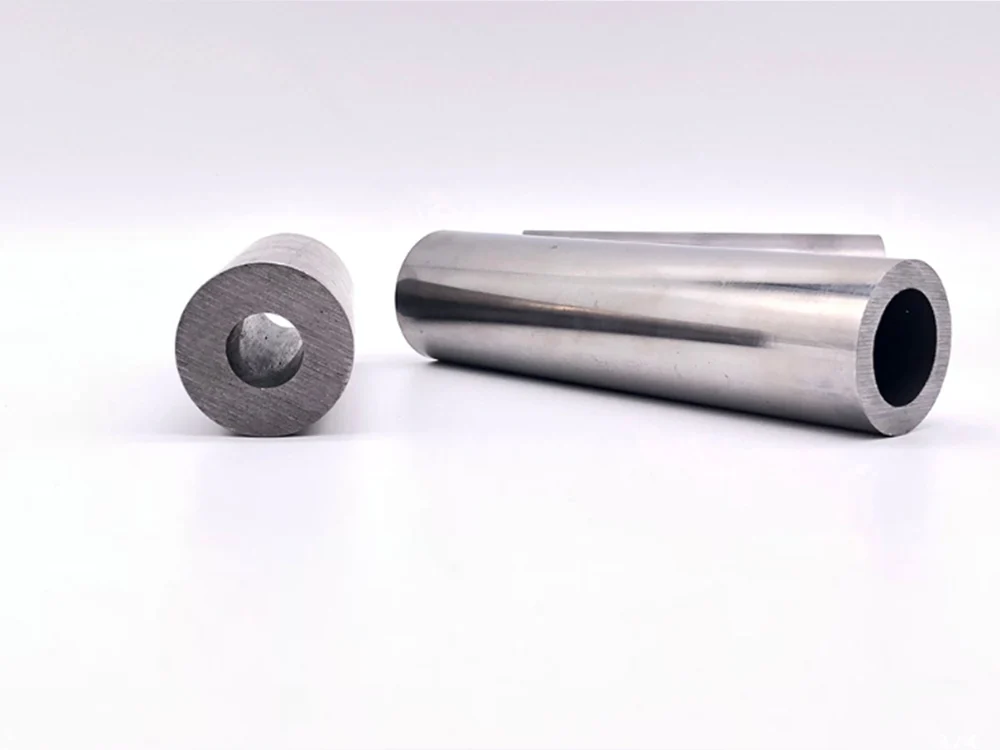
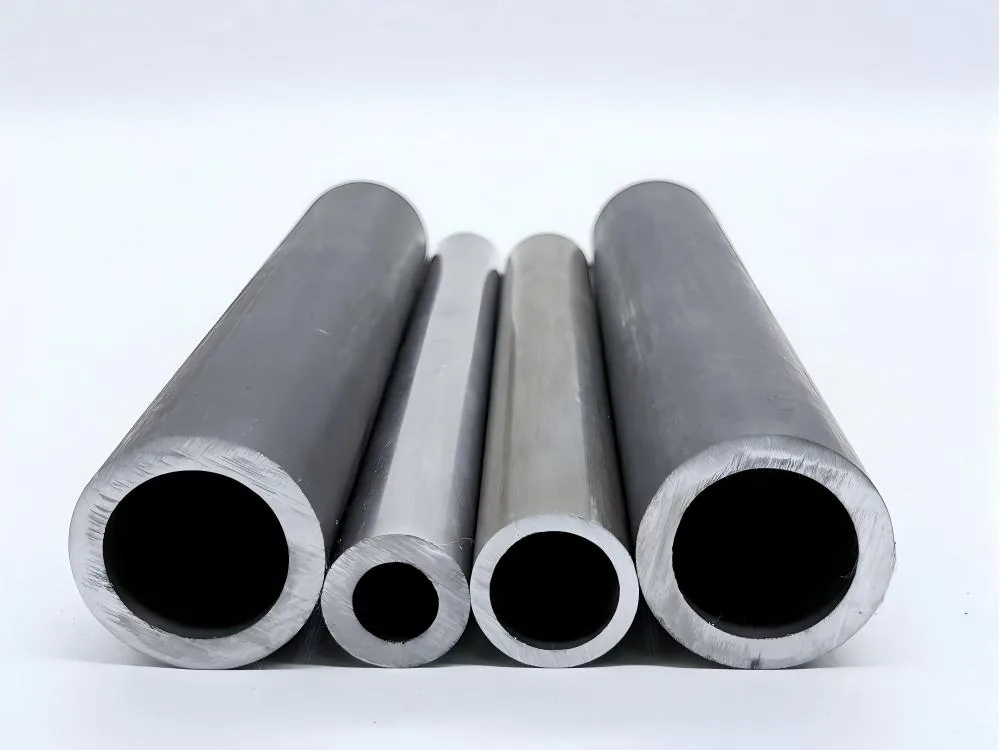
The second thing is product mix, because tube mill capacity behaves more like machine hours than like mass. A 25 mm outside diameter tube with a 2 mm wall weighs about 1.13 kg per metre. A 108 mm tube with a 20 mm wall weighs about 43 kg per metre. Run for the same time on the same bench, the heavy wall product delivers roughly 38 times the tonnage from the same hours. A plant with a heavy wall order book can post a large annual figure while holding less light wall capacity than a smaller competitor. Your order sits in a size range, so the size range is what you should ask about.
| Figure | What it covers | How to use it | Do not infer |
|---|---|---|---|
| 60,000 MT finished tube per year | Output weighed after finishing, testing and packing | Compare with your annual requirement in the same unit | That 60,000 MT of billet is consumed, or that every month produces 5,000 MT |
| About 5,000 MT per month | The annual figure divided evenly | A first check on whether your order is a rounding error or a schedule item | That capacity is flat across the year; maintenance, holidays and furnace relining interrupt it |
| About 240 MT per working day on a 250-day year | A daily average, not a daily promise | A sanity check on quoted lead times for large lots | That a day’s output can switch to your size without a setup |
| 15% capacity buffer | Uncommitted capacity the company states it holds for demand swings | Ask which process step holds the buffer and who can allocate it | That any urgent order will be accepted, or that the buffer sits where your product queues |
| 60,000 MT across all product families | A plant-wide total covering round, shaped, welded and cold-drawn output | Ask for the split by family and by line | That shaped or hexagonal capacity matches the round tube figure |
None of the figures above are third-party audited. They are the manufacturer’s own statement of capability, which is normal in this industry and useful as long as you treat them as a starting point rather than a certificate. The parts that affect your order, meaning the monthly pattern, the line split and the current constraint, are all things a supplier can answer in writing.
How to turn a tonnage figure into your own order share
Start with monthly output. At 60,000 MT a year a plant is producing about 5,000 MT a month, and 240 MT a day across a 250-day working year. Put your order into the same unit, because the share of a month is what determines how your order is treated.
For round tube, mass per metre follows from wall thickness and diameter: W = 0.02466 × t × (D − t), with t and D in millimetres and steel at 7.85 g/cm³. A 25 mm tube with a 2 mm wall gives 0.02466 × 2 × 23 = 1.13 kg per metre. Twenty tonnes of that tube is roughly 17,700 metres, which sounds like a large order and is 0.4% of one month’s output.
That fraction decides the conversation. At 0.4% you are a line item that fits wherever the schedule has a gap, and the main risk is not being ignored but being batched with other work and moved when a larger customer’s programme slips. At 10% to 30% of monthly output your order starts to shape the schedule, and the questions change to reservation, phasing and which line will run it.
Do the division before you ask for a lead time. It tells you whether you are buying capacity or buying a gap in the queue, and those two purchases fail in different ways.
| Order size | Share of a 5,000 MT month | What it usually means for scheduling |
|---|---|---|
| 5 MT | 0.1% | Batched with similar sizes; you take the slot the schedule offers |
| 20 MT | 0.4% | Routine production, lead time follows the standard queue |
| 100 MT | 2% | Worth reserving if the size is outside the running mix |
| 500 MT | 10% | Needs a phased delivery plan and a confirmed drawing and annealing window |
| 1,500 MT | 30% | A programme commitment; capacity has to be reserved before the order is confirmed |
Why a large capacity does not guarantee your delivery date
Annual capacity and weekly delivery are different promises
Capacity is a twelve-month statement. Delivery is a weekly one, and the two are linked through a schedule that is already partly sold.
Three mechanisms pull them apart. The first is committed volume: a plant with framework agreements covering most of its output can post a large annual figure while holding very little discretionary room in the month you need. The second is the size programme, because a mill rolls or buys billet in campaigns, so a size outside the current campaign waits regardless of how much capacity the plant has left. The third is changeover, where moving a drawing bench or a furnace from one size to another consumes hours that never appear in a tonnage figure.
Utilization therefore matters more than the headline. A 30,000 MT plant running at 75% has about 7,500 MT of room to accept new work. A 60,000 MT plant running at 98% has about 1,200 MT and almost no freedom to reshuffle when something goes wrong upstream. The smaller plant is the more responsive supplier in that comparison, and the only way to know which one you are talking to is to ask for the utilization of the specific process step your product uses.
This is also why delivery records need a definition. A 99.2% on-time figure is a strong number if it is measured against the date first promised to the customer and covers every line item. It is a weaker number if it is measured against an internal revised date or excludes partial shipments. Ask which one it is before you weight it in a decision.
Which process steps set the real throughput limit
A tube plant’s output is set by its slowest step, and that step moves with the order book. Tonnage tells you the total. The constraint tells you your wait.
| Process step | What limits throughput | Effect on your lead time | What to ask |
|---|---|---|---|
| Billet supply and piercing | Billet sizes in the rolling programme, furnace campaign length | A size outside the programme waits for the next campaign | Which billet sizes are held in stock and which are rolled to order |
| Pickling and surface preparation | Bath capacity and line speed | Batches queue behind other grades and surface conditions | Whether pickling is in house or subcontracted |
| Cold drawing | Number of draw benches and the passes your size requires | Tight tolerance or heavy wall needs more passes | How many passes your size needs and on which bench |
| Annealing and normalizing | Furnace load, cycle time and cooling rate | Usually the tightest constraint in precision tube | Furnace capacity, cycle time and the current queue |
| Straightening and cutting | Line speed and length tolerance | Rarely the constraint, except at long lengths | Maximum supplied length and the straightness limit |
| NDT and final inspection | Eddy current speed against ultrasonic and hydrostatic testing | Precision grades queue at the end of the line | Which tests your grade requires and what share of output is tested |
Three observations follow from that table.
The constraint is often thermal rather than mechanical. Cold drawing sets the dimensional result, but drawing passes require inter-pass annealing, and furnaces work in loads with fixed cycles. A furnace that is fully booked limits output even when every draw bench is idle, which is why a plant can accept a new drawing job and still quote a long date.
Inspection is a production step, not an afterthought. Eddy current testing runs at line speed and rarely becomes the bottleneck on its own. Ultrasonic testing is slower, and hydrostatic testing slower again, because each piece is pressurized and held. On a precision or pressure application the final queue is frequently the inspection station, and its length depends on what the purchase order asked for.
The constraint is also seasonal inside the plant. A campaign of heavy wall work can occupy the furnaces for weeks while the finishing lines run light. If your order lands in that window, the annual capacity figure is irrelevant to your date.
Test requirements change the shape of the final queue, not just its length, because a full inspection route adds checkpoints that each need their own release. <Precision Tube Quality Inspection Checklist> covers the checks a precision tube order is normally inspected against.
Where a 15% capacity buffer actually helps
Fifteen percent of 60,000 MT is 9,000 MT a year, or about 750 MT a month. That is the number that matters when you need something sooner than the standard queue allows, and it is worth asking where it sits.
A buffer is only useful in the step that constrains your product. Nine hundred tonnes of spare piercing capacity does nothing for an order waiting on an annealing furnace. So the useful question is not whether a supplier keeps a buffer but which line it keeps it on, who can allocate it, and how far ahead it is normally consumed. Some plants hold buffer as unbooked furnace time. Others hold it as billet inventory that can be released quickly. The two respond differently to a request that arrives on a Friday for a delivery in three weeks.
Tenjan states that it holds a 15% buffer alongside a fast track service returning 20 to 25 days on standard specifications, and reports a 99.2% on-time record. Used together, those three claims describe a scheduling policy rather than a capability, and a policy is something you can test. Place a trial order in your actual size and measure what happens against the date you were given, not against the date it eventually shipped.
Small batches are where a buffer earns its keep. A 2 MT order of an unusual profile rarely justifies a dedicated campaign, so it enters the plan as fill-in work between larger runs. A supplier that plans for that deliberately will give you a realistic date. One that accepts the order and hopes for a gap will not.
Why custom and shaped tube capacity is not measured in tonnes
Tooling, not tonnage, decides shaped tube lead time
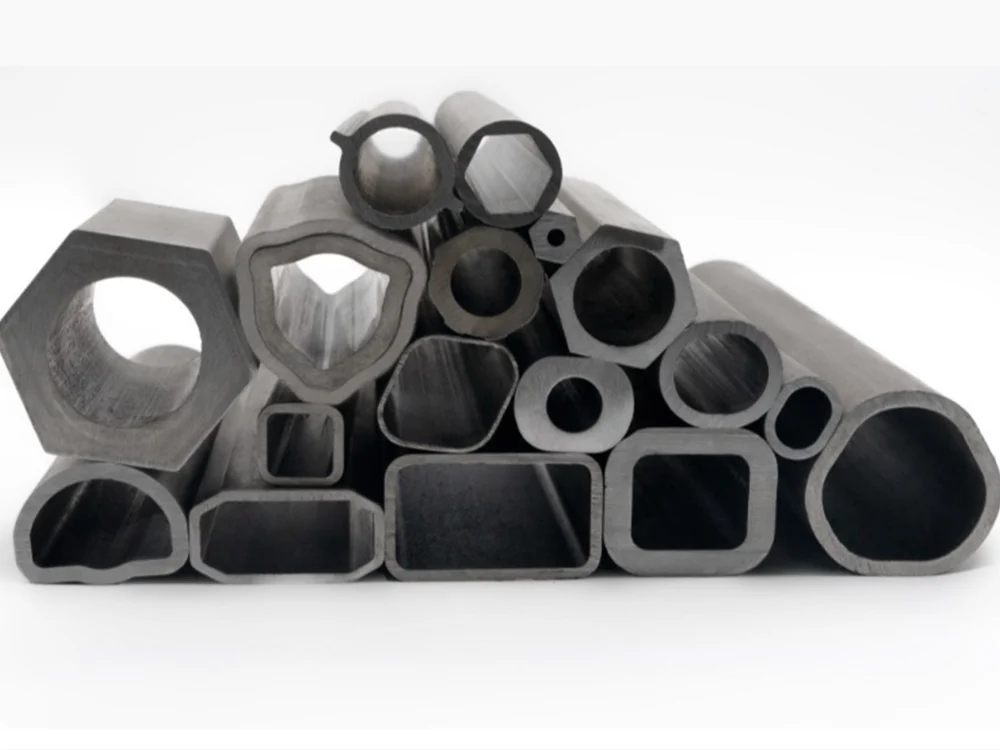
A shaped tube order, whether hexagonal, oval, D-section, finned or a profile drawn to a customer drawing, is limited by tooling and setup rather than by the mass the plant can move.
Each profile needs a die and a drawing plug, and each die has a wear life. A profile already in the plant’s die inventory can be scheduled quickly. A new profile needs die manufacture and a trial draw before production starts. That trial consumes bench time that produces almost no saleable tonnage, which is exactly the work an annual capacity figure does not describe. A plant with 60,000 MT of round tube capacity may still schedule only a few profile runs a week.
Tolerance behaves the same way. A cold-drawn precision tube held to ±0.1 mm on wall requires more checking per tonne than a commercial tolerance product, so the inspection load rises faster than the tonnage falls. On a shaped section there is a second dimension to control: corner radius, flatness and twist all have to be measured on the profile rather than on a diameter.
Wall tolerance and profile tolerance are separate measurements, and the second is the one that decides whether a shaped section assembles cleanly. <Steel Tube Dimensional Accuracy: Why Fit Depends on It> covers how dimensional accuracy affects fit at assembly.
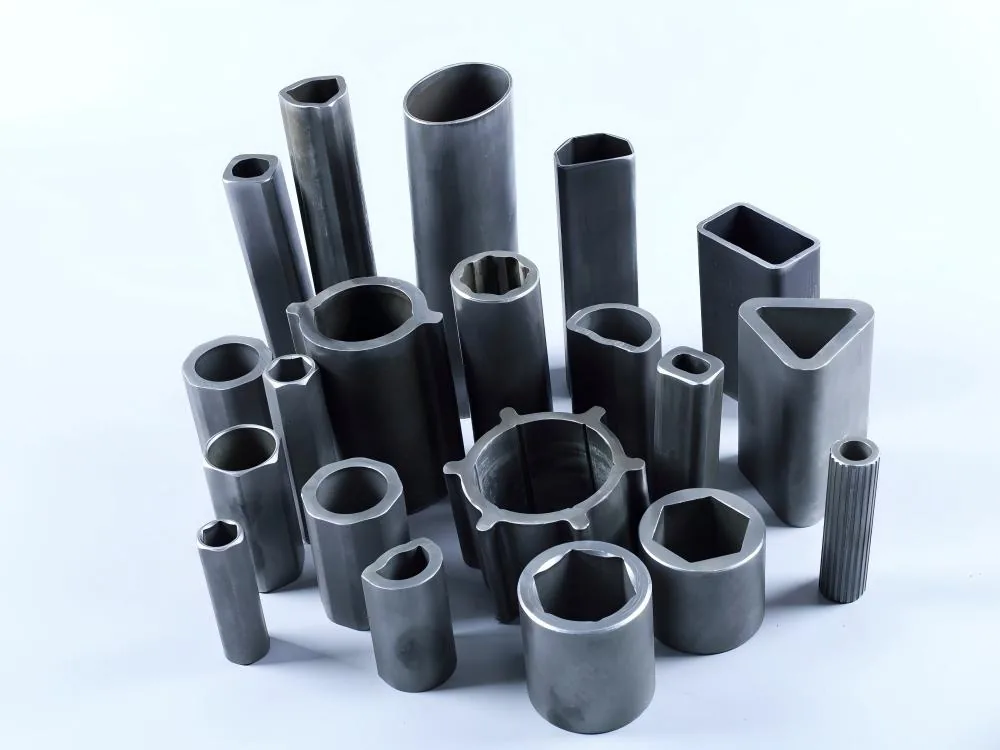
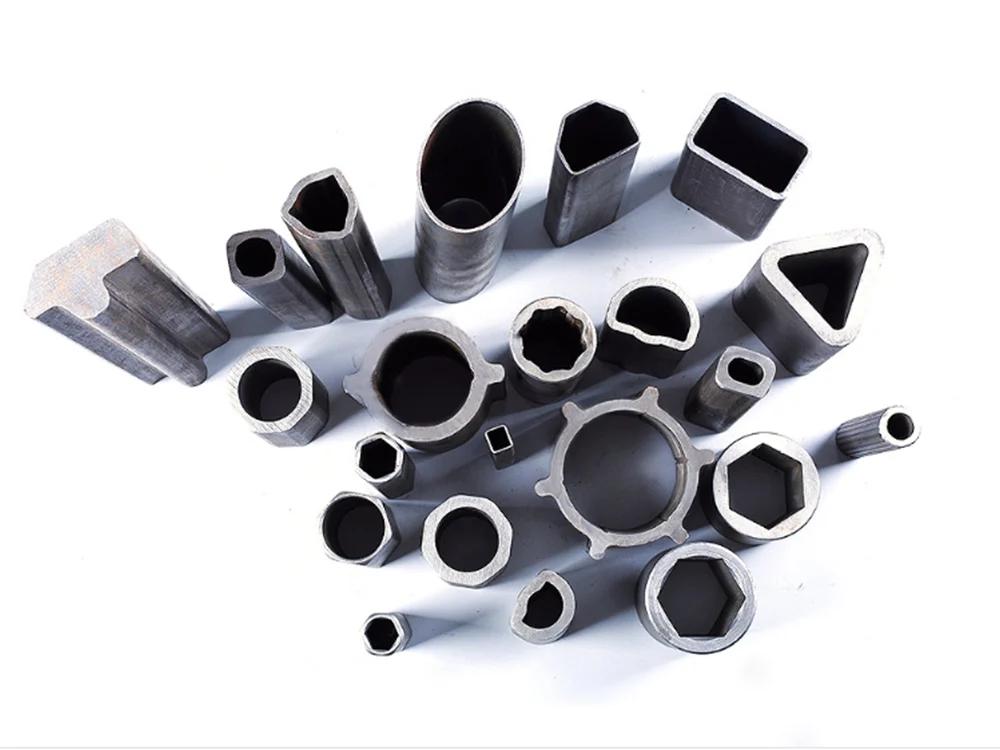
For a custom order, ask what tooling exists for your profile, how many profile runs the plant schedules in a week, what the minimum batch is, and how profile dimensions are measured. Those four answers predict your date better than any tonnage figure. A plant that offers a manufacturability review before quoting is telling you it plans to make the tooling work rather than discover the problem at the first draw.
How to verify a capacity claim before you commit
Capacity claims are not difficult to test, but they are difficult to test with one question. A single annual figure is a marketing statement. A set of related answers is evidence.
| Request | Why it changes the answer |
|---|---|
| Monthly shipments for the last 12 months, by product family | An annual total hides ramp up, seasonality and a declining line |
| Capacity by production line rather than plant total | A plant total hides whether your product shares the constrained line |
| Share of capacity committed to contract customers | Shows how much is genuinely available to a new buyer |
| The current constraint and its utilization | Tells you where your order will queue and for how long |
| Billet source and size programme | A capacity figure without billet availability is a paper number |
| On-time delivery definition and the last 12 months of records | A percentage means little without the reference date and the population measured |
The most useful change a buyer can make is to stop asking for the headline number.
Reject this request: “Please confirm your annual production capacity.”
Replace it with: “Please provide finished tonnage shipped per month for the last twelve months for this product family, the capacity and current utilization of the process step that will run it, the share of that step committed to contract customers, and your on-time delivery definition together with the record for the same period.”
That request is answerable, checkable against later performance, and it produces a number you can compare with your own schedule. It also filters. A supplier who can produce the split by line and family is managing capacity. One who can only repeat the total is quoting it.
Two documents do part of the work. A quality management certificate to ISO 9001:2015 [1], extended for automotive customers by IATF 16949:2016 [2], tells you a system exists for handling nonconformity and change, which is what protects you when a schedule slips. An inspection certificate of type 3.1 to EN 10204 [3] tells you the material was tested and the results trace to a heat, but it says nothing about scheduling. Neither document is a capacity audit, and neither replaces the monthly shipment data.
A capacity claim is one line in a supplier assessment, and the assessment is where the claim either holds up or does not. <Steel Tube Supplier Evaluation: Technical Criteria for Engineers> covers the technical criteria that separate a capable supplier from a well presented one.
For precision cold-drawn tube the delivery standard matters too. EN 10305-1:2016 [4] sets out technical delivery conditions, including tolerance grades, that a capacity conversation should be anchored to. A mill that can produce 60,000 MT but cannot tell you which tolerance grade it holds on your size is offering volume without a specification.
Ask for a capacity and lead time answer for your order
Send the outside diameter, wall thickness, grade or standard, quantity, required delivery window and the tolerance grade you need to meet. With those details the reply can be a schedule rather than a brochure figure: which line would run the order, the current queue at that step, and a date you can build a plan around. Email Sunny@tenjan.com or call +86 51988789990 or +86 13401309791, which is also the WhatsApp number. If the order is a new profile or an unusual size, include the drawing and ask for the manufacturability review at the same time, because tooling lead time sits outside the tonnage figure and outside most lead time quotes.
FAQ
Is 60,000 MT a large capacity for a steel tube mill?
Sixty thousand tonnes a year is a substantial figure for a single cold-drawn precision tube plant, but size is the least useful comparison. Without a verified dataset of industry capacity by plant and product family, any ranking claim is a marketing statement rather than a fact. The comparison that decides your order is between the plant’s monthly output in your product family and your requirement. If you need 20 MT a month, the question is not whether the plant is large but whether your 0.4% share of its month gets a stable slot. Ask for monthly shipments by family and judge from those.
How much of that capacity is actually available to a new customer?
The published figure describes the plant, not the space in it. Available capacity is what remains after contract commitments, and it sits in a specific process step. Ask for the share of the constrained step already committed, the current utilization of that step, and whether new work is quoted from the same schedule as existing customers. A plant with a genuine buffer can name the step that holds it and how far ahead it is normally consumed. One that answers with the annual total has not answered the question.
Does production capacity affect the price I pay?
Yes, indirectly. Setup, furnace load and inspection time are consumed per order rather than per tonne, so small orders of unusual sizes carry a higher cost per tonne than large runs of a running size. A plant with free capacity may price more keenly to fill a gap, while a fully booked plant has little reason to. Treat a low price from a heavily loaded plant as a scheduling risk, because the order that loses its slot first is usually the smallest one. Ask what part of the quoted price is setup and what part is material.
What is the difference between rated capacity and demonstrated output?
Rated capacity is what the equipment and shift pattern can theoretically produce. Demonstrated output is what the plant actually shipped. The gap between them is where yield loss, changeovers, maintenance and inspection rejects live. A plant rated at 60,000 MT that shipped 45,000 MT has a different set of constraints from one that shipped 58,000 MT, even though both quote the same rating. Always ask for the shipping record, because it is the only figure that has already survived contact with the schedule.
How long should I expect a custom tube order to take?
Longer than a standard size, and the extra time is mostly tooling and trial drawing rather than production. A standard specification on a mill’s fast track service is typically quoted at 20 to 25 days, while a new profile needs die manufacture, a trial draw and first article checks before the production run starts. Ask for the tooling schedule separately from the production schedule, and ask which of the two is longer. A supplier who can separate them will give you a date you can rely on. One who quotes a single number is usually quoting the production part only.
References
[1] ISO 9001:2015, “Quality management systems — Requirements,” International Organization for Standardization, Geneva, 2015.
[2] IATF 16949:2016, “Quality management system requirements for automotive production and relevant service parts organizations,” International Automotive Task Force, 2016.
[3] EN 10204:2004, “Metallic products — Types of inspection documents,” European Committee for Standardization, Brussels, 2004.
[4] EN 10305-1:2016, “Steel tubes for precision applications — Technical delivery conditions — Part 1: Seamless cold drawn tubes,” European Committee for Standardization, Brussels, 2016.
If you’re interested, check out these related articles:
Thin Wall Steel Tubing: When It Works and When It Fails
ASTM A106 vs A53 Pipe: Choosing by Pressure and Temperature