Small-Batch Custom Steel Tubes: How Tenjan Handles Short Runs
Small-batch custom steel tubes are not a scaled-down tonnage order. In a short run, the same fixed work has to be carried by far fewer pieces: the die or roller set, the first-article inspection, the material…
Small-batch custom steel tubes are not a scaled-down tonnage order. In a short run, the same fixed work has to be carried by far fewer pieces: the die or roller set, the first-article inspection, the material certificate, the crates. What separates a supplier who can absorb a 200-piece order from one who quietly adds a surcharge is rarely goodwill. It is how much of that fixed work the shop can reuse from jobs it has already set up. So the useful question is not “what is your minimum order?” but “which costs disappear when my quantity drops?”
Why Small-Batch Custom Tube Orders Fail at Most Mills
A tube line is built around a run. The die and mandrel are set for one size, the heat-treatment furnace takes a charge, and the finishing and inspection stations are staffed for a shift. None of that effort shrinks when the order shrinks. It is simply divided by a smaller number of pieces.
Four fixed blocks decide whether a short lot is practical.
Tooling comes first. A cold-drawing die is a machined, hardened and polished part made for one outside diameter and one wall. A shaped profile needs a die cut to that profile. If the size already sits in the die rack, its cost was paid by earlier work. If it does not, die making becomes its own job with its own queue.
Raw material comes second. Mills sell hollow shells, coils and bars in mill quantities, and a tube maker stocks only a limited spread of grades and wall thicknesses. A grade or wall that is not on the rack has to be ordered, and the mill minimum then applies to that order rather than to yours.
Heat treatment comes third. A batch furnace is most efficient when it is full. A small lot either waits for other work to fill the charge or runs as a partial load, and a partial load still consumes the same cycle.
Inspection comes fourth. Testing is organised per lot, not per piece. Two hundred tubes and two thousand tubes both need a first article, a chemistry check and a dimensional record.
None of this is hidden from a buyer who asks directly. It is hidden by vague claims, which is why a claim needs translating before it means anything.
| Supplier claim | What it can legitimately mean | What it does not tell you |
|---|---|---|
| No minimum order | The shop will quote small quantities | Whether a setup or die charge is added to the price |
| Small batch welcome | The line can run short lots | Whether your grade and size are already in stock |
| Sample available | A short piece can be produced | That the sample used the production die and heat treatment |
| Certified material | A certificate will be issued with the lot | Which standard the certificate follows or who tested the heat |
| Fast turnaround | The order can be scheduled quickly | Whether tooling, rather than machining, sets the date |
Those statements describe willingness. The test that matters is narrower: name the fixed cost, then ask whether it applies to your order or was already paid by someone else’s. A supplier who answers that in one sentence is usually the one who can also hold a delivery date.
Why a Short Run Costs More per Piece
Two numbers govern a short run: the fixed setup cost and the piece count. Divide the first by the second and you get what it costs to make the line ready for each tube you receive. Call it the setup-to-piece ratio, because that is all it is, and it explains most of the price difference that surprises first-time buyers.
The arithmetic is the same as a print shop. The plate costs the same whether you print fifty copies or five thousand. At fifty, the plate dominates the invoice. At five thousand, it nearly disappears. A tube die behaves the same way, and so do the furnace charge and the test series.
| Cost driver | Why it resists scaling down | What the buyer can change |
|---|---|---|
| Die and mandrel set | Made for one size or profile, so it cannot be shared across dimensions | Choose a size already in the die library or accept a visible tooling line |
| Raw material lot | Mill quantities are sold in full lengths or coils | Specify a stocked grade and wall thickness |
| Heat-treatment charge | A furnace load has a practical minimum | Combine conditions so one treatment covers the whole lot |
| First-article and destructive tests | One test series per lot regardless of quantity | Agree which tests run per lot and which run per heat |
| Packing and marking | Crates, labels and handling are per shipment | Ship once instead of in three drops |
The ratio also tells you when to stop worrying about it. If annual volume is predictable and the design is stable, the setup is amortised quickly and the per-piece price settles. If the design is still moving, a blended quote hides the fact that you are about to pay for tooling twice.
How a Cold-Drawing Line Adapts to Low Volumes
Cold drawing pulls a hollow shell over a mandrel through a die. The wall gets thinner, the outside diameter gets tighter, concentricity and surface finish improve, and the cold-worked condition raises strength. Cold rolling does comparable work with rollers, which suits profiles that a round die cannot produce.
What makes this process small-lot friendly is not a special machine. It is the amount of changeover that is already finished. A die on the rack, a stocked grade, a bench that can take a short run between longer ones, and inspection in the same building as the drawing bench. Each of those removes a queue, and queues are what short orders actually pay for.
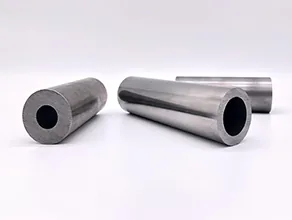
A shaped profile is settled on paper before it is settled on the bench, because corner radii and wall balance constrain the die that can be cut. <Special Shaped Steel Tube: Design and Cold Drawing Rules> covers how profile design and cold drawing rules interact.
Tenjan has worked this way since 2004, drawing and rolling tube and profiles in-house, which keeps the die decision, the raw material decision and the inspection under one roof rather than three. That arrangement is what a short run needs most, because a small order cannot absorb three separate scheduling conversations.
| Parameter | Range or option |
|---|---|
| Outside diameter | 10-108 mm (0.39-4.25 in) |
| Wall thickness | 1-20 mm (0.039-0.79 in) |
| Dimensional tolerance | ±0.1 mm |
| Processes | Cold drawn, cold rolled, cold drawn welded |
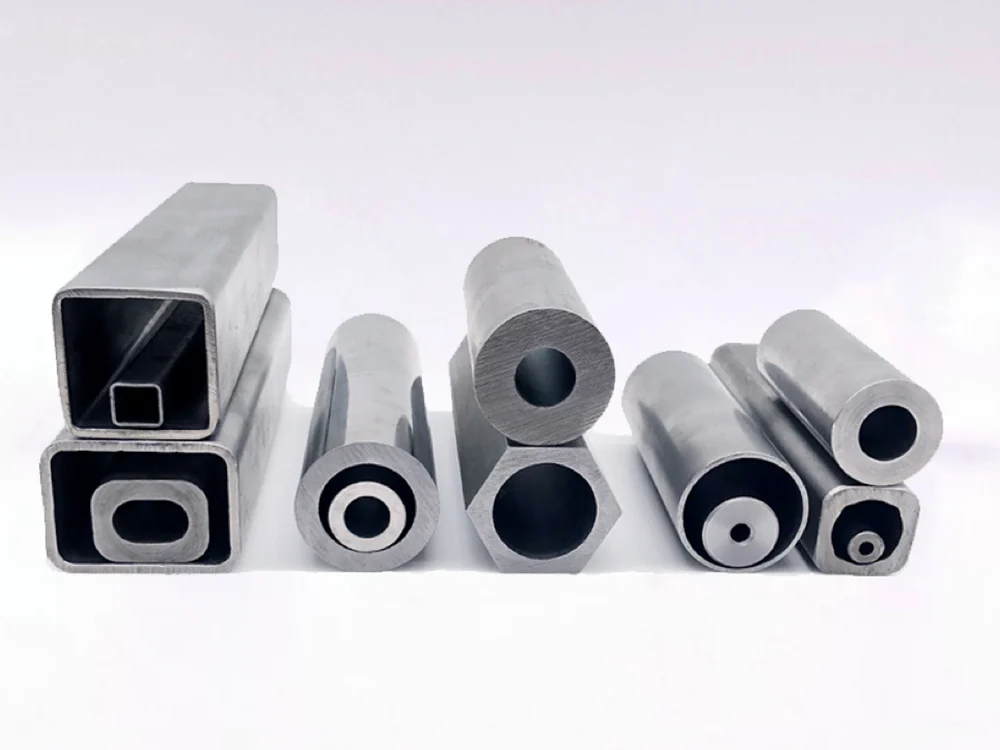
| Sections | Round, square, rectangular, hexagonal, oval, special profiles |
| Standards supported | ASTM, EN, DIN, JIS |
What to Put in an RFQ for a Few Hundred Tubes
A short-run quote is decided by a handful of fields. Miss one and the supplier either guesses or pads the price to cover the guess.
Fields that change the quoted price
| RFQ field | What to state | Why it moves the price or the date |
|---|---|---|
| Quantity and repeat pattern | Pieces now, likely annual volume, reorder rhythm | Shows whether a die cost can be spread or must be charged once |
| Section and size | Outside diameter and wall, or a dimensioned profile drawing with corner radii | A profile outside the existing die set becomes new tooling |
| Grade and condition | Steel grade plus delivered condition: annealed, cold finished, stress relieved, quenched and tempered | Condition decides the heat-treatment route and charge |
| Tolerance and length | Tolerance per dimension, cut length, end finish | Tightening one dimension can add a sizing pass |
| Inspection and documents | Test type, certificate type, third-party witnessing if required | Inspection is a fixed cost carried by the lot |
| Packing and delivery | Bundle or crate, marking, delivery term, destination | Sets handling and freight, not tube cost |
The quantity field is the one buyers most often under-use. “200 pieces” tells a shop nothing about whether the die should be charged once or spread. “200 pieces now, roughly 200 a quarter after approval” tells it everything it needs.
A vague line and a usable one
The difference is easiest to see side by side.
Reject this line: “200 pieces of 25 mm hexagonal tube, good quality, as soon as possible.”
Replace it with: “200 pieces, 25 mm across flats, 2 mm wall, grade and delivered condition as stated, tolerances per drawing, square cut ends, certificate with PMI, crates of 50, repeat order expected quarterly.”
The second version is barely longer. Only one of the two can be quoted without a follow-up email.
When a Small Batch Still Needs New Tooling
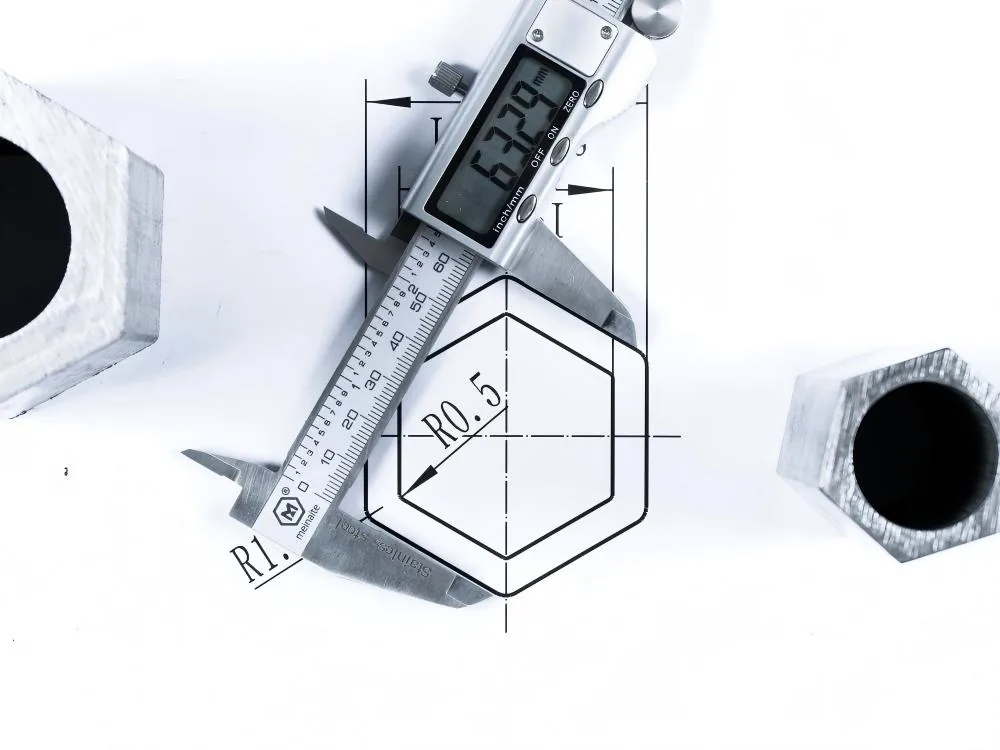
If the section or size is not in the die library, flexibility does not remove the tooling. A profile die is cut to the shape, and a shaped die is a more involved job than a round one because corner radii, flatness and wall balance have to be controlled together.
The sequence is simple but it is sequential: drawing review, die making, trial, first article, approval, run. Each stage waits for the one before it, and none of them run in parallel with the customer’s assembly schedule.
Three ways to shorten the path without pretending the die is free:
- Choose an existing size close to the design and adjust the mating part.
- Accept the nearest standard corner radius on a shaped profile.
- Approve a first article cut from the production die rather than a machined sample.
Paying for a die once makes sense when the design is stable and the reorder rhythm is known. While the design is still moving, a near-standard size plus machining is often cheaper for the first batch, because it keeps the die decision open until the drawing settles.
The die is only one input to the date, since material order, treatment and inspection each take a slot of their own. <Managing Custom Steel Tube Lead Times for OEM Buyers> covers how those stages stack up on an OEM order.
Traceability and Inspection on a Short Run
A small lot is still a lot. The tests agreed in the order are performed on the pieces you receive, and the records follow the heat number rather than the tonnage.
What changes with quantity is who performs the work and how the fixed cost is carried. Positive material identification checks the grade on the actual tube with a handheld analyser, which is quicker per piece than a laboratory chemistry test and answers the question a buyer usually has: is this the grade the certificate names. Eddy current testing finds surface and short transverse defects along the length. Ultrasonic testing looks for internal and wall defects. Both are performed on the piece, not on a sample drawn from the heat.
Documents are where short runs get careless at some suppliers. A complete package links the raw material certificate to the heat number, adds the in-house dimensional and non-destructive records, and states the standard the inspection followed. EN 10204 3.1 is the certificate type most European buyers ask for, other markets ask for an equivalent declaration, and the question worth asking is which one the paper actually follows.
The limit is worth stating plainly: inspection confirms the lot it was performed on. It does not certify the next lot, and a first article that passed does not make sampling unnecessary on a reorder.
Records only help if they can be retrieved against the piece in hand, months later and by someone who was not on the order. <How Digital Traceability Tightens Steel Tube Quality Control> covers how lot-level records are kept and used.
What Small-Batch Friendly Does Not Mean
Three things it does not mean:
- that setup cost disappears
- that any size, grade and quantity combination is available
- that a trial lot qualifies a production run
What it does mean is narrower and more useful. The shop can tell you which fixed costs your order has to carry and which ones earlier work has already paid for. That answer is checkable. A supplier who cannot name a single reused cost is offering a phrase from a brochure rather than a fact about the line.
A short run is a design decision as much as a purchasing one. The buyer who brings a drawing, a repeat rhythm and an inspection requirement to the first conversation gets a price that holds. The buyer who brings a quantity and a hope gets a number that changes later.
Send the Drawing and the Reorder Rhythm
Tell us the section and dimensions, steel grade, delivered condition, tolerance, cut length, quantity now, expected annual volume, inspection and certificate requirements, packing and destination. A short run is easier to quote when the repeat pattern is on the table than when it is discovered at the second order.
Sunny@tenjan.com | Tel +86 51988789990 | Phone and WhatsApp +86 13401309791
FAQ
How small can a custom tube order go?
Quantity is decided by the section and the grade rather than by a fixed threshold. If the size sits in the die set and the grade is stocked, a few hundred pieces falls into normal short-run territory. If either is missing, the question becomes whether the tooling or the material order can be justified at all, and the answer is specific to that drawing. Ask about die and stock position before asking for a price.
Why is the per-piece price higher on a short run?
The setup work does not shrink with the order. Die setting, first-article inspection, heat treatment and packing cost roughly the same for a small lot as for a large one, so each tube carries a bigger share of them. The visible sign of an honest quote is a setup line shown separately from the per-piece price, which also tells you when that price should fall on a reorder.
Does a small lot get the same inspection as a large order?
The tests you agree are performed on the lot you receive, and the records follow the heat number. The difference is that the fixed cost of the test series is divided by fewer pieces, and some buyers choose to reduce the test set on a first trial. That choice should be written into the order, because an unstated reduction is what turns a trial into an argument.
Can a trial lot approve a production order?
Only for the scope it covered: that die, that heat, that condition and those checks. Production approval should add a first article cut from the production tooling, the sampling frequency for the run, and the documents required per lot. A trial that passed on a machined sample rather than a drawn tube says little about wall balance or concentricity.
If you’re interested, check out these related articles:
How to Control Steel Pipe Polishing Process and Surface Ra
Custom-Shaped Steel Tubes: Design Considerations
Cold Drawn vs Cold Rolled Steel Tubes