Fast-Track Steel Tube Delivery: What 20–25 Days Requires
Fast-track steel tube delivery works when the specification is genuinely standard and the mill has capacity it can actually move. A 20–25 day schedule covers production of cold-drawn or cold-rolled tube in common carbon and alloy…

Fast-track steel tube delivery works when the specification is genuinely standard and the mill has capacity it can actually move. A 20–25 day schedule covers production of cold-drawn or cold-rolled tube in common carbon and alloy grades up to a named dispatch milestone. It does not cover ocean freight, and it does not survive a dimension change made after the order is frozen. Suppliers that hold the window and suppliers that drift to 60 days usually differ in three places: material already on site, a reserved slot on the drawing line, and inspection planned before the first tube is drawn.
What the Fast-Track Window Actually Covers
A fast-track quote is only meaningful when it names the milestone where the clock stops. Ex-works, FOB and delivered terms describe three different days, and two suppliers can both say “25 days” while measuring completely different work.
Inside the window sits billet or coil release, piercing or welding, cold drawing or cold rolling, heat treatment, straightening and sizing, non-destructive testing, dimensional and mechanical checks, marking, packing and the inspection documents. When the tube is a standard catalogue item, most of those steps run on equipment that is already set up, and that is where the compression comes from.
Outside the window sits ocean freight and port handling, buyer-side approval of pre-production samples, third-party witness inspection booked at short notice, and any new die, mandrel or drawing ring. A buyer who books a vessel before the material is released has moved the risk, not the date.
State the start trigger as well. A purchase order alone does not start a 25-day clock. The clock starts when the drawing and test list are frozen, the material is allocated to that order, and the agreed payment instrument is in place.
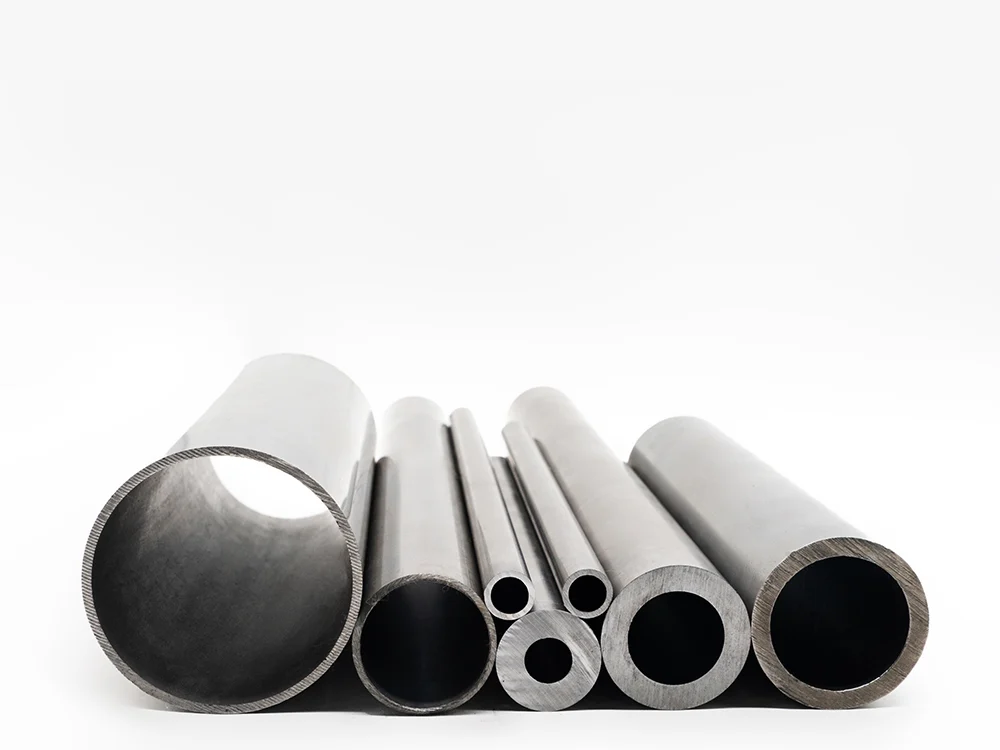
Where the Time Comes From in a Standard Run
Compressing a 25-day schedule is not about running the drawing bench faster. It is about removing the waiting between stages.
Material position decides more than any other factor. Tube making starts with a heat of steel. If the grade is held as billet or as tube shell, release takes days. If it has to be rolled to order, the mill’s rolling schedule sets the pace, and no amount of line capacity recovers that time. Common carbon and alloy grades inside the catalogue range (OD 10–108 mm, wall 1–20 mm) are usually the ones with material sitting behind them.
Reserved capacity matters next. A plant running at full utilisation cannot promise short lead times. Tenjan reports holding roughly 15% of capacity back for orders that need to move, which is the practical difference between quoting a window and having one.
Fewer handoffs shorten the middle. When drawing, heat treatment, straightening, testing and packing sit under one roof, the tube does not wait in a queue at a subcontractor. Every external step adds a transport day at each end plus a scheduling conversation in between.
Parallel inspection planning removes a second queue. Eddy current coverage, PMI and dimensional checks are booked when the batch is planned, not when it is finished. The test plan and sampling plan are agreed at freeze, so the inspection bay is waiting rather than congested.
Documents move with production. The certificate is drafted from the heat and test records as those records are produced. Waiting for paperwork is one of the most common reasons an order promised for day 25 leaves on day 31.
The sequence inside the plant decides most of the schedule, because each outsourced step adds a transport day at both ends. <Steel Tube Manufacturing Process: Precision and Quality> covers how drawing, heat treatment and inspection are sequenced on a controlled line.
Which Specifications Qualify and Which Do Not
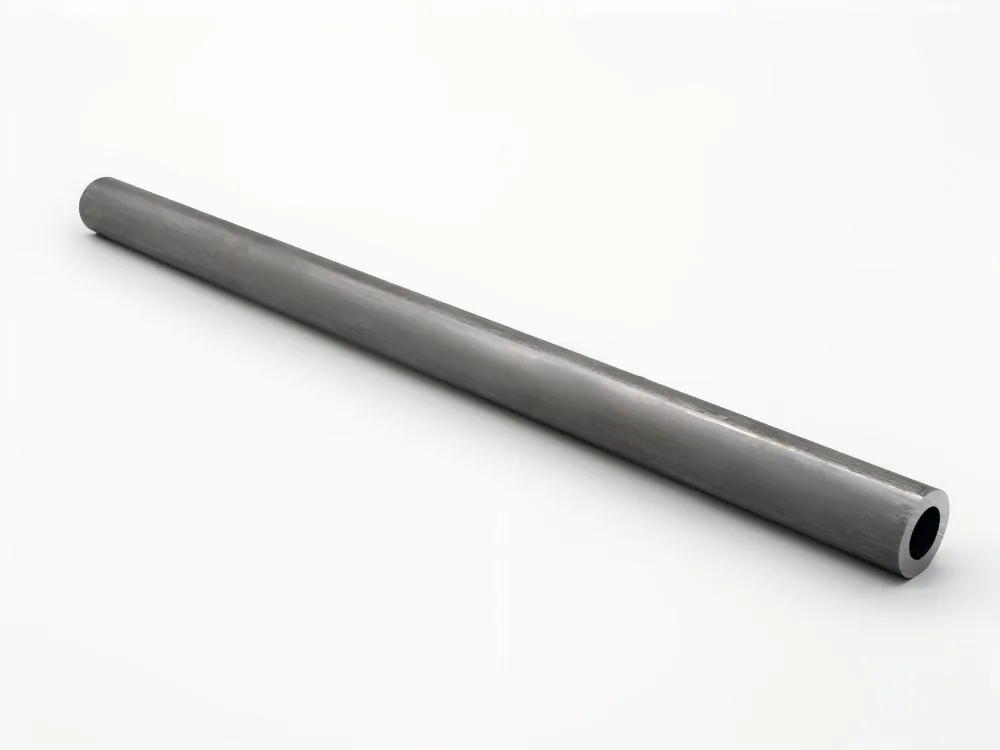
The 20–25 day window is a standard-specification service, and “standard” has a working definition: an existing drawing, a grade the plant or its mill partners can release quickly, dimensions inside the catalogue, and a routine test list. Anything that fails one of those four moves to a different schedule.
| Requirement | Fits a 20–25 day slot | Needs the custom route |
|---|---|---|
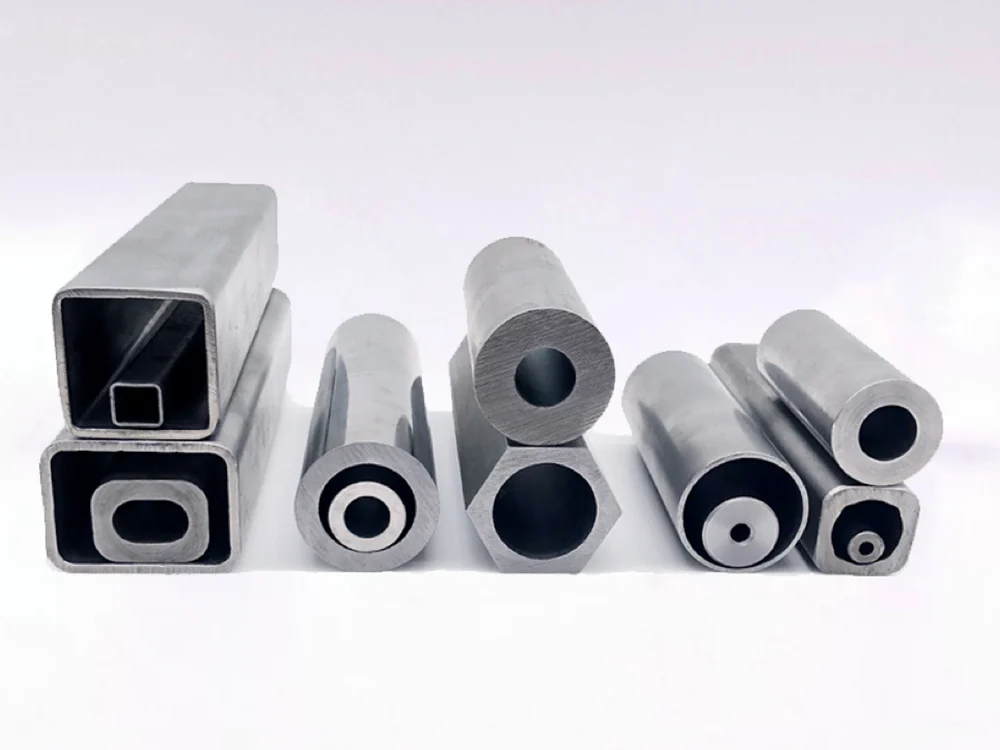
| Cross-section | Round, square or rectangular in catalogue sizes | Special profiles, oval, D-shaped, finned or double-finned sections |
| Grade | Common carbon and alloy grades held as billet or shell, or already on the mill schedule | Uncommon grades, or a dedicated heat that has to be rolled |
| Dimensions | OD 10–108 mm and wall 1–20 mm inside the normal drawing range | Sizes outside the catalogue range, or a heavy wall with no billet behind it |
| Tooling | An existing die and drawing ring | A new die, a new mandrel or prototype geometry |
| Documentation | Routine mill certificate, PMI and NDT to a standard test plan | Buyer qualification programs, PPAP, or third-party witness booked at short notice |
If a requirement lands in the right-hand column, the schedule is a custom schedule and the honest answer is a longer date. Push a special profile into a fast slot and either the die is made in a hurry or the tube is made twice, and both outcomes cost more than the delay would have.
When a profile, grade or wall ratio sits outside the catalogue, the question stops being about speed and becomes about tooling and mill scheduling. <Managing Custom Steel Tube Lead Times for OEM Buyers> covers how OEM buyers can manage custom tube lead times.
The Tradeoffs a Compressed Schedule Cannot Remove
A reserved slot is capacity that cannot be sold to anyone else, and it usually carries a price difference against a booking made eight weeks out. Ask for that premium as a separate line item rather than folded into the unit price, so it can be compared with the cost of waiting.
The commitment runs both ways. If drawing approval or the payment instrument arrives late, the slot moves to the next available position and the 25-day promise restarts from the new freeze date.
There is a freeze point, and everything after it is expensive. Once the drawing, grade and test list are locked, a dimension change sends the order back to the start of the line. Marking changes are cheaper and packing changes are cheaper still, but neither is free once the material has been cut.
Batch sharing is normal. Fast lots are often run alongside existing orders, which does not alter the grade, but the heat chemistry belongs to the batch rather than to the order alone. If a project needs a dedicated heat, say so at RFQ stage, because a dedicated heat is a custom schedule wearing a standard part number.
Inspection is not the variable. Test coverage is set by the product standard and by the purchase specification. A short lead time moves inspection earlier in the plan; it does not shorten how much tube gets tested.
A Checkpoint Schedule for a 25-Day Order
The table below is a planning template for a standard cold-drawn order, not a promise for any particular size or grade. Each gate should be confirmed against the supplier’s own committed dates before the order is placed.
| Stage | Target days | Condition to start | Still changeable |
|---|---|---|---|
| Specification freeze and slot confirmation | 0–2 | Drawing, grade, tolerance class, test list and marking agreed | Quantity and delivery split within the same specification |
| Material release | 2–4 | Heat identified, PMI scheduled, cutting plan approved | Nothing that alters OD or wall |
| Tube forming and cold drawing | 4–12 | Die and ring available, line slot held | Surface finish requests raised before drawing |
| Heat treatment and sizing | 12–15 | Furnace schedule confirmed for the batch | Temper condition, only if stated before the cycle |
| Inspection | 15–19 | Test plan issued, NDT coverage agreed | Added sampling or witness timing |
| Final operations, packing and documents | 19–25 | Marking and packing frozen, forwarder booking confirmed | Packing method that does not move the dispatch date |
Two gates decide the outcome. The freeze on day 0–2 is where the window is won, because every later change is a restart rather than an edit. The inspection release around day 19 is where it is usually lost, because a missing witness or an unbooked test bay turns five days of slack into a missed vessel.
Records That Release a Shipment and What They Do Not Prove
A fast schedule pushes documentation into the same weeks as production, so the certificate has to be planned as a production step. A document set that arrives after the tube is packed is a delay waiting for a reason.
| Record | Conditions when it applies | What it can support | What it does not prove |
|---|---|---|---|
| Mill test certificate to EN 10204 3.1 | Issued against the heat actually poured and the tests actually run | Chemistry and mechanical results for that heat, traceable to the order | That every tube in the lot was individually tested |
| PMI report | Each checked piece is identified and the reading recorded | That the alloy identity of the checked material matches the specified grade | That mechanical properties meet the grade, since identity is not performance |
| Eddy current or ultrasonic report | Coverage and sensitivity stated in the test plan | Detection of the listed defect types at that coverage and that sensitivity | That conditions outside the stated coverage are absent |
| Dimensional report | Sampling frequency and measurement method recorded | OD, wall, ovality and straightness for the lengths measured | That unsampled lengths are identical |
| Heat treatment record | Batch and cycle identified | The cycle that batch received | That the same cycle gives the same properties in a different section size |
None of these records replaces the purchase specification. They describe what was done to the material and what was measured on a sample. They do not upgrade an unlisted grade into a listed one, and they do not extend a test coverage the order never requested.
A document set is only as good as the test plan behind it, and a fast order leaves no room to discover a missing check after packing. <Precision Tube Quality Inspection Checklist> covers the checks a buyer can confirm before a precision tube lot is released.

An RFQ That Protects the Window
Most slips start before production, in an enquiry that describes the tube but not the acceptance conditions. The supplier then quotes a fast date against an assumption, and the assumption surfaces at drawing approval, when the window is already half gone.
Reject this RFQ line: “We need 500 m of precision tube, as fast as possible.”
Replace it with: “Grade E355 to EN 10305-1, cold-drawn, OD 40 mm, wall 3 mm, tolerance to the attached drawing, eddy current on 100% of length, EN 10204 3.1 with PMI, 500 m in five equal bundles, ex-works, dispatch by day 25.”
| RFQ field | What to state | Why it decides the slot |
|---|---|---|
| Dimension and tolerance class | OD, wall, tolerance zone to the drawing, length and cut tolerance | Decides whether an existing die and ring can run the order |
| Grade and heat availability | Grade designation and standard, plus whether an equivalent heat is acceptable | A grade not held in stock needs a mill heat and leaves the window |
| Product standard and test list | For example EN 10305-1, ASTM A519 or GB/T 3639, with the specific tests requested | Test coverage drives the inspection days, not the drawing days |
| Marking, packing and documents | Certificate type, marking method, packing, forwarder requirements | These freeze at the same moment as the drawing |
| Milestone and date | What day 25 means (ex-works, FOB or delivered) and the required arrival | Stops two parties counting against different clocks |
One line in the RFQ decides more than the rest: the milestone. Write the date that matters to your production schedule, then let the supplier work backwards to a dispatch day. Booking freight against a day that was never the supplier’s dispatch date is the single most common way a 25-day order becomes a 35-day one.
Reserve the Slot With a Complete Specification
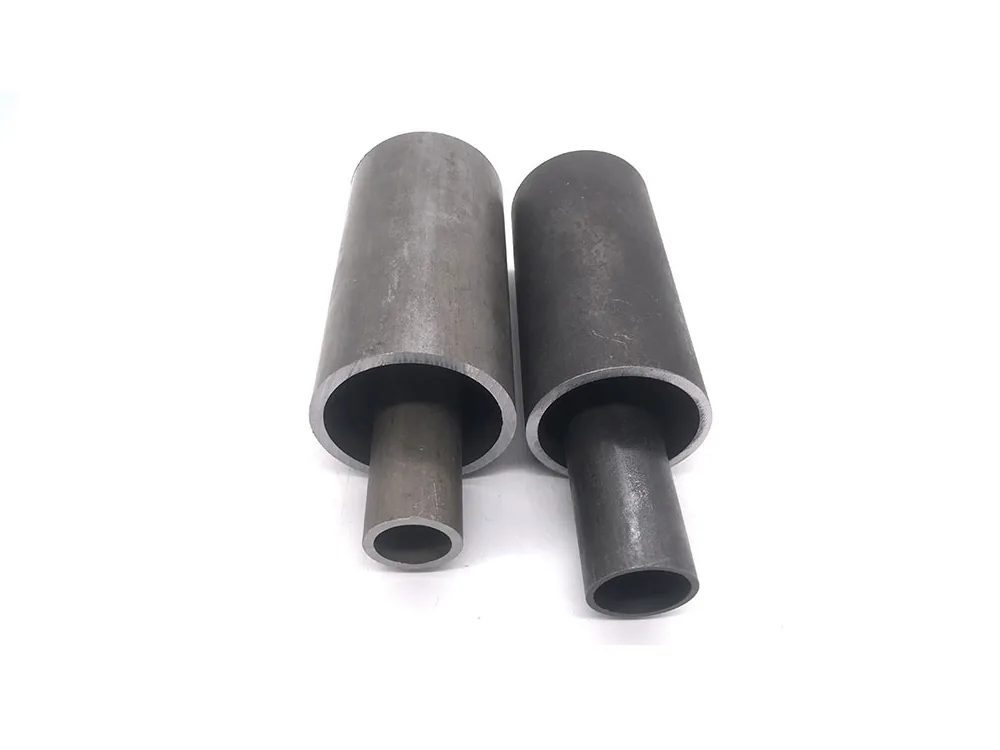
Send the drawing with its tolerance class, the grade and product standard, the test list, the marking and packing method, the quantity and length split, and the milestone you want the 25 days to end at. That set is enough to confirm whether the order fits a standard slot or belongs on the custom route, and it prevents a slot being held against a specification that later moves.
Email Sunny@tenjan.com or call +86 51988789990. WhatsApp and phone reach the same team on +86 13401309791. Changzhou Tenjan Steel Tube Co., Ltd. has produced cold-drawn and cold-rolled tube since 2004 against ASTM, EN, DIN and JIS requirements, with PMI and NDT checks inside an ISO-certified quality system.
FAQ
Does the 20–25 day window include shipping?
No. The window covers production, inspection, packing and the inspection documents up to the milestone in the quote, normally ex-works or FOB. Ocean freight, port handling and inland delivery sit outside it and depend on the sailing schedule and the forwarder. Before comparing two quotes, check that both suppliers stop their clock at the same milestone. A quote that stops at FOB and a quote that stops at delivery are not describing the same 25 days, even when the number matches.
Can a custom profile or an uncommon grade use the fast track?
Usually not. A new die, a new mandrel or a grade that must be rolled to order each add a step that cannot be pulled forward by adding shifts. Ask the supplier to separate tooling time, mill scheduling time and production time, then decide whether the custom geometry is worth the extra weeks. If the profile is essential to the design, plan the tooling approval before the production order is placed so the two do not run in sequence when they could run in parallel.
What happens if a dimension changes after the freeze point?
The order returns to the start of the line, because the die, drawing ring and cutting plan were set for the original size. The slot itself is normally not lost if the change is confirmed quickly and the line has not been committed to another batch, but the schedule restarts from the new freeze date. This is why the freeze on day 0–2 carries more weight than any other gate. Changes to marking or packing are cheaper, though still not free once material has been cut.
Is testing reduced on a fast-track order?
Test coverage stays as the standard and the purchase specification require. What changes is the timing and the sequencing: the test plan, sampling plan and inspection bay are booked when the batch is planned rather than after production ends. If a buyer asks for less testing to save days, that is a specification change, not a scheduling one, and the certificate will describe the reduced scope. Buyers who need full coverage should protect the inspection days in the schedule instead of trading them away.
How is the slot confirmed?
A slot is confirmed when three things exist together: a frozen specification, material allocated to that order, and the agreed payment instrument in place. A purchase order on its own reserves nothing. Ask for the freeze date, the dispatch date and the name of the material release approval in writing, then compare those three against your own production plan. If any of them is missing, the window is still an intention rather than a commitment.
If you’re interested, check out these related articles:
Steel Tubes for Hydraulic Systems: Key Selection Factors for Engineers
Heat Treated Steel Tube: What Engineers Need to Know
Steel Tubes for Construction Applications: Selection Guide
How to Choose a Steel Tube Supplier for Your Next Project