Steel Pipe Heat Treatment: Key Processes and Applications
Steel pipe heat treatment is not a black box reserved for metallurgists. It is a series of controlled heating and cooling steps that transform a pipe's...
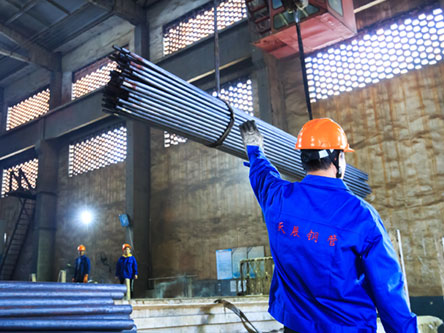
Steel pipe heat treatment is not a black box reserved for metallurgists. It is a series of controlled heating and cooling steps that transform a pipe’s internal structure to meet specific mechanical demands. In my two decades working on the factory floor and with design teams across automotive, boiler, and hydraulic cylinder projects, I have seen how the right heat treatment selection prevents field failures and how a misstep can turn a precision tube into a warranty claim. Whether you are engineering a cylinder that must survive millions of cycles or a boiler tube operating near 500 °C, the heat treatment condition determines the pipe’s ultimate strength, ductility, and long‑term stability. This article covers the core heat treatment processes used on steel pipes, how each changes material properties, and the practical criteria for selecting the right one for your application.
Common Heat Treatment Processes for Steel Pipes
Heat treatment for steel pipes typically falls into four categories: annealing, normalizing, quenching and tempering, and stress relieving. Each process targets a different microstructure and property profile.
Annealing heats the steel to a temperature above its critical point, holds it there, and then cools it very slowly, usually inside the furnace. The goal is to soften the steel, improve machinability, and relieve internal stresses. In our facility, we produce annealed tubes when customers require maximum formability for subsequent cold bending or machining operations.
Normalizing follows a similar heating step but cools the pipe in still air. This produces a finer, more uniform grain structure than annealing, giving a better balance of strength and toughness. Normalized pipe is common for structural applications and pressure parts where consistent properties matter more than extreme softness. We regularly supply normalized pipes to boiler and heat exchanger manufacturers for exactly this reason.
Quenching and tempering is a two‑step process. The pipe is heated to the austenitizing temperature, then rapidly cooled (quenched) in water, oil, or polymer to form a hard martensite structure. Because martensite is brittle, the pipe is immediately reheated to a lower tempering temperature to reduce hardness and restore toughness. The final strength‑ductility combination can be tuned by adjusting the tempering temperature. Our quenched and tempered pipes, such as 4140 and 34MnB5 grades, are used in heavy‑duty hydraulic cylinders and mining equipment where impact resistance is non‑negotiable.
Stress relieving is a lower‑temperature heat treatment, typically applied after cold drawing or welding. The pipe is heated to a temperature below the transformation range, held, and slowly cooled. This reduces residual stresses that could cause distortion during machining or accelerate corrosion in service. For cold‑drawn precision tubes, stress relieving maintains the dimensional accuracy achieved in the cold draw while relaxing internal tensions.
| Heat Treatment | Typical Temperature Range | Cooling Method | Resulting Microstructure | Common Applications |
|---|---|---|---|---|
| Annealing | 800–950 °C for carbon steels | Slow furnace cool | Coarse ferrite + pearlite | Softening for forming, machining |
| Normalizing | 870–980 °C | Still air | Fine ferrite + pearlite | Structural parts, pressure vessels |
| Quenching & Tempering | Austenitize 830–880 °C, quench; temper 150–700 °C | Rapid quench, then air cool after temper | Tempered martensite | High‑strength cylinders, shafts |
| Stress Relieving | 550–650 °C | Slow air or furnace cool | No phase change | After cold drawing, welding |
How Heat Treatment Affects Mechanical Properties
Heat treatment does not merely tweak a number on a certificate. It rewires the pipe’s grain structure at the microscopic level, and that directly translates to how the pipe behaves under load. Understanding this connection helps you avoid over‑specifying (paying for properties you do not need) or, worse, under‑specifying and risking failure.
When a steel pipe is annealed, the slow cooling allows carbon atoms to diffuse and form a relatively soft ferrite‑pearlite mix. Tensile strength drops, sometimes well below 500 MPa for a plain carbon steel, while elongation increases beyond 25 %. This is exactly what you want if the next step is cold drawing or complex machining.
Normalizing, with its faster air cool, creates a finer pearlite spacing. The yield and tensile strengths rise moderately compared to the annealed condition, and impact toughness improves because fine grains obstruct crack propagation. For many structural tube applications, normalized material hits the sweet spot: it is strong enough to carry design loads and tough enough to handle accidental overloads without fracturing.
Quenching produces martensite, a hard but brittle phase that can push tensile strength above 1000 MPa in medium‑carbon alloy steels like 4140 or 25CrMo4. The subsequent tempering step is where the real engineering choice lies. A low temper (around 200 °C) retains most of the hardness and strength, suitable for wear plates and tooling. A high temper (600–700 °C) creates a tempered martensite structure with significantly improved ductility, often called “quenched and tempered” or “QT” condition. For hydraulic cylinder tubes that must withstand cyclic pressure spikes, we typically target a temper that gives 900–1100 MPa tensile strength with at least 12 % elongation, a balance that works reliably in most mobile machinery.
Stress relieving does not alter the base microstructure; it simply reduces the internal stress level. The mechanical properties recorded on the mill certificate will be nearly identical to the pre‑treated material. The value shows up later in the machine shop and in service, where parts remain dimensionally stable and resist stress corrosion cracking.
If your application involves prolonged elevated temperature exposure, such as in power plant boiler tubes, the heat treatment must also consider creep resistance. Normalized and tempered conditions often outperform simply annealed or as‑rolled material in creep‑limited designs, a nuance that is easy to overlook when only room‑temperature tensile data is consulted.
Selecting the Right Heat Treatment for Your Application
The decision starts not with the heat treatment itself but with the part’s failure modes. I always ask three questions: What is the dominant stress the pipe will see (tension, fatigue, impact, creep)? What is the operating temperature range? And what secondary operations (welding, bending, machining) will follow pipe delivery?
For a hydraulic cylinder tube, fatigue life under pulsating pressure dominates. The pipe needs a high yield strength to keep stress amplitudes low and sufficient toughness to arrest any microcrack that does initiate. Quenched and tempered grades like SCM440 or 25CrMo4, tempered to the 800–1000 MPa tensile range, are the default choice. I have seen customers attempt to save money by using normalized tube in a cylinder, only to have it split along the weld seam or develop bore cracks within a few hundred hours of operation. The few dollars saved on material cost evaporated in warranty claims and downtime.
Boiler tubes and heat exchanger tubes face a different set of challenges: elevated temperature, corrosion from flue gases or process fluids, and the need for long‑term microstructural stability. Normalized tubes made from carbon steel ASTM A192 or low‑alloy ASTM A213 T11/T22 grades are common. The normalized condition provides a uniform grain size that resists creep deformation, and the absence of a brittle martensitic structure avoids temper embrittlement issues. In our production, we normalize all boiler tube orders unless a specific customer specification demands otherwise, and we often include a final stress‑relief after any straightening operation to lock in dimensional accuracy.
For machined components that start as tube blanks, machinability is often more important than final strength. Annealed 1020 or 1215 free‑cutting steel pipes are much easier to drill, turn, and thread, reducing tool wear and cycle times. The strength will be added later if the part undergoes case hardening or induction hardening after machining.
When the service environment includes extreme cold, such as for Arctic oil and gas equipment, toughness at low temperature becomes the critical parameter. Here, a quenched and tempered pipe with fine grain size and specifically controlled chemistry (often with nickel additions) is essential. Normalized pipe, while adequate at ambient temperatures, can lose toughness rapidly below –40 °C. I always recommend requesting Charpy impact values at the minimum design temperature, even if the material standard does not mandate it.
Industry Standards and Specifications for Heat Treated Pipes
International standards define the minimum requirements for heat treatment and the resulting mechanical properties, but they rarely tell you how to achieve them. As a buyer, you should know which standards to reference and what they actually require so that your supplier delivers a pipe that works, not just a pipe that passes.
ASTM A519, the most commonly referenced standard for seamless mechanical tubing in North America, specifies several heat treatment conditions: hot‑finished, cold‑finished, annealed, normalized, and quenched and tempered. If you order a “4140 A519 QT” tube, the standard demands a minimum tensile strength and yield strength for the quenched and tempered condition, but it leaves the specific tempering temperature to the manufacturer’s discretion. That means two suppliers can both ship compliant QT pipe yet deliver different elongation and hardness values. I have learned to always supplement the standard with an explicit hardness range and, for critical parts, a Charpy impact requirement.
European standards like EN 10305‑1 (cold‑drawn seamless tubes for precision applications) and EN 10297‑1 (seamless steel tubes for mechanical and general engineering purposes) have their own heat treatment designations: +A (annealed), +N (normalized), +QT (quenched and tempered), +SR (stress relieved). The notation is precise, but again, the buyer must specify the condition and often the mechanical property range. A tube marked EN 10305‑1 +C (cold‑drawn hard) is not heat treated at all and will behave very differently from one marked +SR.
For boiler and pressure applications, standards like ASTM A192, A213, and A210 explicitly require a specific heat treatment; for A192, it is a full anneal, normalizing, or normalizing plus tempering, and the standard also defines the maximum hardness. These requirements are prescriptive because a failure in a high‑pressure steam environment can be catastrophic. When we produce A192 tubes, we include the heat treatment lot data and hardness test results on every mill certificate.
If you are integrating pipes into an assembly that must comply with multiple national standards, look for manufacturers who can supply dual‑certified material. A quenched and tempered 25CrMo4 pipe can simultaneously meet EN 10297‑1 +QT and ASTM A519 MT1020 requirements with minor adjustments to the tempering temperature, avoiding the need to qualify two separate materials.
Quality Verification and Testing of Heat Treated Pipes
The mill certificate is not a guarantee; it is a summary of what was measured on a sample. You still need to verify that the heat treatment actually took hold throughout the batch. In our plant, every heat‑treated lot undergoes hardness testing on both ends of every pipe, and we pull samples for full tensile and impact testing at a frequency higher than the minimum required by the standard.
Hardness testing is the fastest check. A Rockwell or Brinell measurement gives a reliable indication of whether the heat treatment reached the target strength. If a quenched and tempered pipe reads too soft, we know something went wrong in the furnace cycle: perhaps the quench delay was too long or the tempering temperature drifted upward. We quarantine and re‑heat treat rather than ship borderline material.
For critical applications, we also inspect the microstructure. A quick check under a metallurgical microscope reveals whether the quenched structure is fully martensitic or contains undesirable phases like upper bainite or retained austenite. In my experience, a micrograph is worth a hundred test certificates when a failure investigation is on the line, because it shows what actually happened inside the steel, not just the numbers.
Ultrasonic testing and eddy current testing, which we perform as part of our standard NDT package, can detect internal defects that might compromise a heat‑treated pipe’s integrity, but they do not directly verify heat treatment. For that, you still need hardness and tensile correlation. When ordering heat‑treated pipe, specify that the supplier must provide actual test results, not just a statement of compliance, and that any re‑heat‑treated material must be identified separately.
Getting Custom Heat Treated Pipes from a Manufacturer
When standard off‑the‑shelf heat treatment conditions are not enough, you need a manufacturer that can tailor the process to your exact requirements. This does not need to be complicated, but it does require clear communication.
Start the conversation with your material grade, the desired mechanical properties (tensile strength, yield strength, elongation, hardness), and any special requirements like low‑temperature toughness or creep resistance. Include the applicable standard and condition symbol (ASTM A519 QT, EN 10305‑1 +A, etc.). If your part will undergo secondary heat treatment, such as induction hardening at the final machining stage, tell the supplier so they can recommend a pre‑treatment that leaves the microstructure receptive to the second cycle.
Provide the finished‑part dimensions and tolerance. Heat treatment can cause slight dimensional changes, especially during quenching, and those must be accounted for. A reputable manufacturer will factor in the growth or ovality tendencies of the grade and adjust the pre‑treatment dimensions so that the final product meets your print.
Our engineering team can produce steel tubes in a wide range of heat treatment conditions, from annealed to quenched and tempered, and we run the entire process under one roof, from raw material to finished tube. If you are evaluating options for a new design or need to qualify a new source, send your part number, quantity, and target properties to Sunny@tenjan.com or call +86 13401309791. We will provide a technical review and quotation that addresses the heat treatment, dimensional, and certification requirements together.
Questions Engineers Ask About Heat Treatment
Is heat treatment always necessary for steel pipes?
Heat treatment is only necessary when the application demands specific mechanical properties or stress relief that the as‑formed pipe cannot provide. Many cold‑drawn tubes are used in the hard‑drawn condition without additional treatment because the cold work already increases strength. The decision hinges on the service conditions: if the pipe will see high stress, cyclic loading, elevated temperature, or corrosive media, heat treatment becomes part of the reliability equation. In our facility, we recommend heat treatment whenever the customer’s design safety factor depends on guaranteed material properties.
What is the difference between annealing and normalizing from a practical standpoint?
From a practical standpoint, the key differences are final strength and cost. Annealing gives the softest, most formable pipe but takes longer and uses more energy because of the furnace cooling cycle. Normalizing cools faster in air, so it is cheaper and faster to produce, and it yields higher strength with decent toughness. I generally advise customers to choose normalizing unless they specifically need the extreme ductility of an annealed structure, for instance for a deep‑drawing operation. If fatigue life or impact resistance matters, normalized pipe performs better than annealed.
How does heat treatment affect the straightness and dimensional accuracy of a steel pipe?
Heat treatment, especially quenching, can introduce bending and ovality. That is why after quenching and tempering, pipes often require a straightening operation followed by a low‑temperature stress relief to stabilize the dimensions. For precision applications where tight tolerances are critical, we use cold‑finishing after heat treatment to bring the pipe back within the specified dimensional envelope. If your print demands a straightness of 0.5 mm per meter on a heat‑treated tube, make sure your supplier knows this before quoting, because it may require an extra sizing pass.
How can I spot a poor heat treatment job before the material reaches the shop floor?
Ask for hardness values measured on both ends of every pipe and request a cross‑section micrograph for the first article. If a supplier offers only a typical property report or a certificate that references a different heat number, be cautious. In my experience, hardness is the most reliable field check: if the hardness does not match the expected value for the specified condition, something went wrong in the furnace. Also check for uniformity; a wide hardness spread across the same lot often means uneven furnace loading or inconsistent quenching. A responsible manufacturer will provide lot‑specific test data without hesitation, and that is your best insurance against hidden quality problems.