Why Flexibility Defines Precision Steel Tube Manufacturing
Flexibility in steel tube manufacturing is often treated as a commercial soft skill—something procurement teams mention after price, tolerance, and delivery. But in precision tube supply it behaves more like a technical capability: how quickly a…
Flexibility in steel tube manufacturing is often treated as a commercial soft skill—something procurement teams mention after price, tolerance, and delivery. But in precision tube supply it behaves more like a technical capability: how quickly a process route can absorb a change in outer diameter, wall thickness, cross-sectional profile, material grade, or order size without losing dimensional control or traceability.
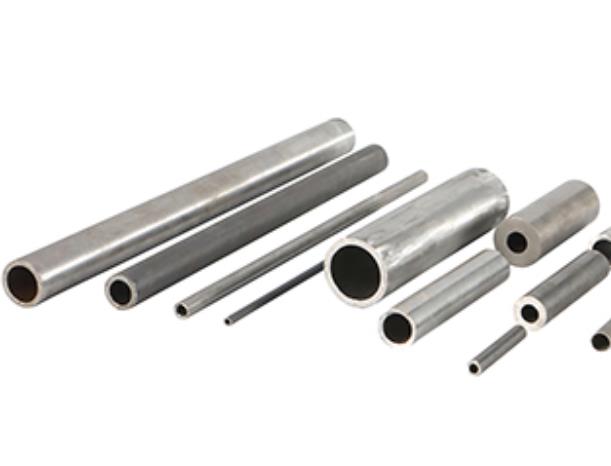
That distinction matters because a plant that makes one tube perfectly is not automatically the plant that can make the next tube profitably. A narrow-range operation often becomes efficient by removing options. A flexible operation keeps options alive: different cold-drawing passes, multiple heat-treatment states, interchangeable tooling for round and shaped profiles, and inspection plans that follow the material rather than the lot size. Seamless carbon and alloy steel mechanical tubing produced to ASTM A519 is not a single product; it is a family of grades and sizes connected by the same process discipline [1].
What Manufacturing Flexibility Actually Means
Manufacturing flexibility is best understood as the measured ability of a process route to accept variation in five inputs:
- Outside diameter and wall thickness
- Cross-sectional geometry
- Steel grade
- Order quantity
- Delivery and documentation requirements
That is not the same as saying a mill can make anything. It means the tooling, people, and quality system can move from one controlled condition to another without sacrificing documented output. The more routes a plant operates, the more important that control becomes.
Product Flexibility: The Difference Between a Catalog and a Capability
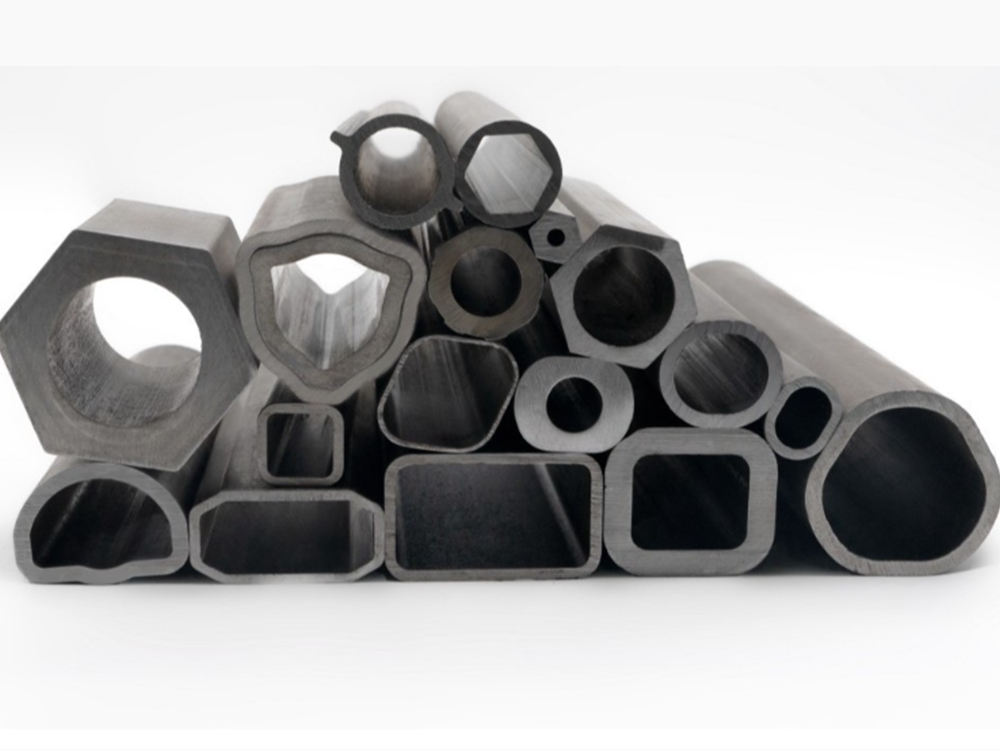
A catalog tube supplier is often excellent at repeating a narrow set of dimensions. Product flexibility is different: it asks whether the same mill can shift from a standard precision tube to a hexagonal, oval, D-shaped, or rectangular profile while maintaining the same level of dimensional discipline.
Shape changes are not free. A hexagonal or oval tube imposes different metal-flow conditions in the cold-drawing die, different straightening behavior, and a different inspection setup. A supplier that understands those transitions can often reuse the upstream seamless hollow and change only the finishing sequence. A supplier that treats every profile as a separate product line may need new trials for each geometry.
A tube drawing that changes from a round section to a hexagonal, oval, or D-shaped profile shifts the entire fit, tooling, and inspection setup. <Custom-Shaped Steel Tubes: Design Considerations> covers the design rules that keep those transitions practical.
Process Flexibility: Cold Drawing Is the Connective Tissue
Cold drawing and cold rolling are the two main precision finishing routes for steel tube. In cold drawing, a hollow is pulled through a die and over a plug or mandrel to reduce OD and wall while improving surface finish and mechanical properties. Cold rolling uses roll sets to achieve similar results through a different strain path. A flexible precision shop maintains both routes because they do not always substitute for each other; some profiles and alloys behave better under one route than the other [2].
Cold-drawn welded tube adds another flexibility point. Starting from a welded hollow can reduce material cost for round and light-wall precision components, while seamless starting stock remains the preferred route for demanding pressure, fatigue, or high-temperature applications. The flexible manufacturer treats welded and seamless as choices in a process conversation, not as fixed positions.
The table below summarizes the main route trade-offs using representative precision-tube product data.
| Process route | Typical OD × wall range | What it handles well | Flexibility note |
|---|---|---|---|
| Seamless cold drawn / cold rolled | OD 10–108 mm; wall 1–20 mm | Tight tolerances, alloy grades, special profiles | Broad profile range with controlled tool changes |
| Cold drawn welded | OD 20–108 mm; wall 1–6 mm | Round precision components, cost-sensitive work | Useful where a weld line is acceptable |
| Special-shaped tube | Based on finished profile and tooling | Hexagonal, oval, rectangular, D-shaped sections | Requires early design review and sample approval |
Material Flexibility: A Steel Tube Is Not Just a Shape
Flexibility also includes the ability to switch among carbon steel, alloy steel, and free-cutting grades without losing process discipline. A 1020 carbon steel tube and a 4140 chromium-molybdenum tube may share an OD but not a drawing schedule. The alloy requires different intermediate annealing, drawing speed, and final heat treatment. A factory that treats them as interchangeable simply because both are “steel” is likely to discover the difference during final mechanical testing.
Cold drawing has many virtues, but mind-reading is not one of them. If the service environment includes elevated temperature, the material trace, heat-treatment records, and inspection documents must follow the intended application. A DIN 17175 high-temperature tube and a standard mechanical tube are not the same product just because they share a diameter [3].
Schedule and Batch Flexibility: The Hidden Engineering Constraint
A technical discussion of flexibility becomes practical the moment a project changes. An OEM may revise a profile after prototype testing, a distributor may need mixed profiles in one replenishment order, or a plant may face an urgent replacement batch. In each case the question is not whether the supplier wants to help; it is whether the production system can re-plan the cold-drawing and finishing sequence without breaking traceability.
When a project schedule slips or an annual volume doubles, the real question is how quickly the mill can re-plan the cold-drawing and finishing sequence without losing traceability. <Managing Custom Steel Tube Lead Times for OEM Buyers> covers schedule control when custom steel tube requirements shift.
If your current routing has only one fixed process, any change becomes a special request. Before ordering, send the new drawing, tolerance stack-up, annual volume, and target standard to Sunny@tenjan.com. A serious review should return the process route, inspection plan, and lead-time effect—not only a price.
Traceability and Quality Systems: Flexibility Requires Memory
Flexibility without documentation is chaos. The more routes and profiles a plant offers, the more important the inspection record becomes. A material test report is not meaningful if the batch cannot be traced back to the heat number, drawing pass, and inspection result. EN 10204 inspection documents define how metallic products certify their material properties and traceability [4].
Likewise, a quality management system must control process change, not merely inspect the finished tube. ISO 9001:2015 requires the system to manage production changes and preserve conformity across varying inputs [5]. That is why positive material identification and non-destructive testing are useful in a flexible environment: they act as identity checks when different alloys and profiles move through the same line.
Where Flexibility Changes the Outcome
Flexibility matters most in four recurring scenarios:
- OEM prototype revision: A design change alters OD, wall, or profile. The supplier should recalculate drawing and straightening, not re-quote from a blank page.
- Mixed-batch replenishment: One purchase order includes round hydraulic tube, hexagonal stock, and a rectangular structural profile. A flexible plant can combine planning without forcing separate minimums.
- Multi-standard export: The same diameter and wall may be ordered under ASTM, EN, DIN, JIS, or GB/T. The process route can remain controlled while the documentation changes.
- Urgent replacement: A small batch should carry the same traceability and inspection discipline as a full production run.
Fit depends on more than a single OD callout; it depends on straightness, ovality, wall variation, and the surface condition that follows. <Steel Tube Dimensional Accuracy: Why Fit Depends on It> covers how those variables move when the part shape or process route changes.
Put Flexibility Into the Inquiry
Flexibility is easier to evaluate before the order than after tooling is committed. Send your drawing, tolerance stack-up, annual usage, standard requirements, and delivery target to Sunny@tenjan.com, or call/WhatsApp +86 13401309791.
Include the constraints that matter: minimum lot size, surface finish, inspection documents, and any future profile changes under consideration. A flexible precision steel tube process should show up in the quote as a defined route and inspection plan—not as a vague promise to “handle it later.” The right route gives you room to change the part without changing the risk.
Frequently Asked Questions
What does “flexible manufacturing” mean for steel tubes?
It means the ability to absorb changes in OD, wall thickness, profile, material grade, lot size, and lead time while maintaining tolerance and traceability. It is a process capability, not simply a large catalog.
Does flexibility reduce precision?
Not in a controlled operation. Flexibility is the ability to move between controlled states. Tolerances are maintained through die, mandrel, and roll control plus post-draw straightening and cutting. A flexible plant often needs stronger process control because more variables change.
Can special-shaped tubes be produced in small batches?
Often yes, if the tooling and drawing sequence can be adapted. The economics depend on die availability, profile complexity, and whether the shape can share upstream hollow dimensions. Small batches may still require first-article approval and inspection.
What should I include in an inquiry to test a supplier’s flexibility?
Include the drawing or sketch, OD/wall/profile, tolerance stack-up, material grade and standard, annual volume or lot size, delivery target, and required inspection documents. If you expect future design changes, state them early.
How does flexibility affect lead time?
It can shorten lead time when a standard route already exists and make lead time more predictable when changes occur mid-project. Process flexibility allows replanning without complete retooling. Some suppliers also maintain a capacity buffer for urgent orders, but that should be verified rather than assumed.
References
- ASTM International. ASTM A519 / A519M, Standard Specification for Seamless Carbon and Alloy Steel Mechanical Tubing. West Conshohocken, PA: ASTM International.
- European Committee for Standardization. EN 10305-1, Steel tubes for precision applications – Technical delivery conditions – Part 1: Seamless cold drawn tubes. Brussels: CEN.
- Deutsches Institut für Normung. DIN 17175, Seamless steel tubes for elevated temperatures – Technical delivery conditions. Berlin: DIN.
- European Committee for Standardization. EN 10204, Metallic products – Types of inspection documents. Brussels: CEN.
- International Organization for Standardization. ISO 9001:2015, Quality management systems – Requirements. Geneva: ISO.
If you’re interested, check out these related articles:
Heat Treated Steel Tube: What Engineers Need to Know
Custom-Shaped Steel Tubes: Design Considerations
How Digital Traceability Tightens Steel Tube Quality Control
Understanding ASTM, EN, DIN and JIS Tube Standards