High-Strength Steel Tubes in Automotive Lightweighting
Automotive lightweighting has evolved from a fuel-economy campaign into a platform-wide design constraint. High-strength steel tubes sit inside that shift more than many designers realize: in suspension links, steering columns, stabilizer bars, crash-management components, fluid-carrying lines,…
Automotive lightweighting has evolved from a fuel-economy campaign into a platform-wide design constraint. High-strength steel tubes sit inside that shift more than many designers realize: in suspension links, steering columns, stabilizer bars, crash-management components, fluid-carrying lines, and seat structures, a tube can remove mass without changing the surrounding architecture. The current direction is not a simple swap from carbon steel to alloy steel; it is a move toward thinner walls, tighter dimensional control, and more disciplined heat treatment, governed by standards such as ASTM A519 [1] and EN 10305-1 [2].
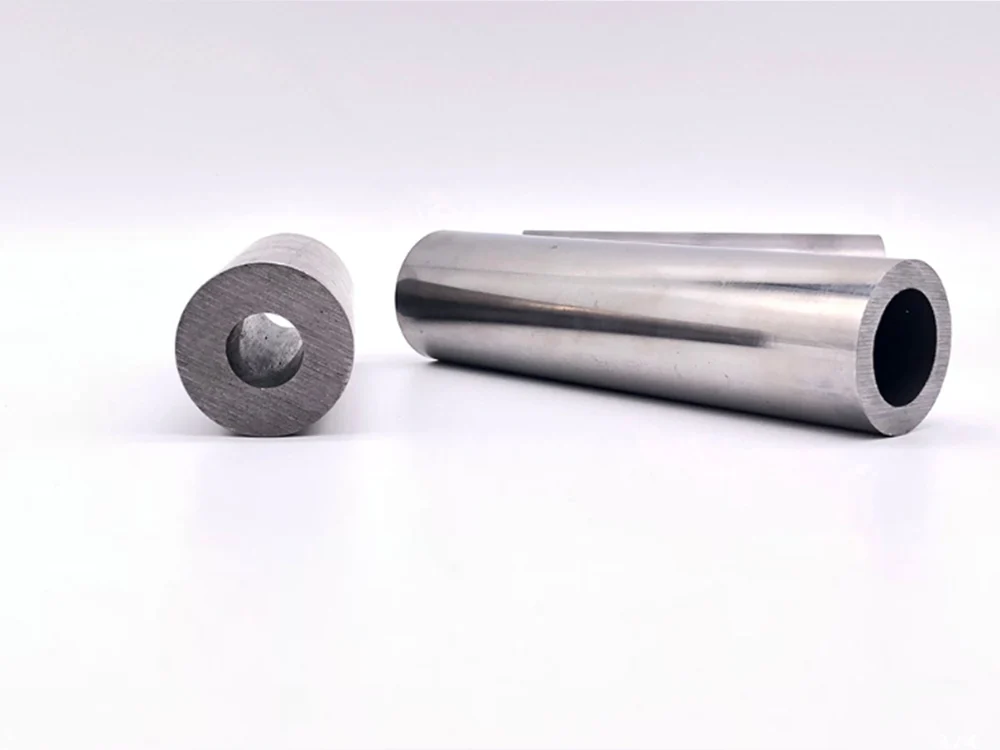
The growth of electric-vehicle platforms has added a second driver. Battery mass is directly traded against usable range, so chassis and body engineers are being asked to recover weight without adding cost or complexity. High-strength steel tube is now specified less as a catalog item and more as an engineered component with defined yield strength, delivery condition, and process-capability data. That pressure is changing which grades are quoted, how they are processed, and what documentation accompanies each shipment.
Trend 1: Thinner Walls and Microalloyed Steel Grades Are Replacing Bulk
A larger cross-section is easy: add material, accept the weight, and the part is often safe but heavy. Lightweighting asks the opposite question: how much wall can come out before strength, fatigue, or assembly loads become the limit? Advanced high-strength steel and high-strength low-alloy grades help by increasing yield strength so a thinner section can carry the same design load [3]. However, that shift works only when concentricity and material soundness are maintained, because a thin wall has less geometric margin against local buckling and wall-thickness variation [1]. This is why precision cold drawing is usually inseparable from the lightweighting discussion [2].
Microalloyed and boron-treated grades such as 25CrMo4, 34MnB5, and 4130 are appearing more often in RFQs for lightweight chassis and powertrain components. These materials are attractive not because they are exotic, but because they can reach useful strength levels after controlled processing. The subtlety is that the grade name never tells the whole story: two tubes with the same chemistry can behave very differently in bending or fatigue if their delivery condition differs. That is why automotive sourcing teams increasingly ask for the full production route, not just the mill test report.
Trend 2: Cold Drawing and Heat Treatment Are Doing More of the Engineering Work
Cold drawing is often described as a sizing process, but in high-strength automotive tube it functions as a property process. Multiple drawing passes reduce wall thickness, improve dimensional accuracy, refine the grain structure, and raise strength through strain hardening [4]. For a lightweight component, this means the design can depend on the cold-worked condition of the tube rather than only on the original melt chemistry. The practical consequence is that changing from a hot-finished tube to a cold-drawn, stress-relieved tube can allow a thinner wall without redesigning the weld or attachment features.
Heat treatment then becomes the adjustable dial. Normalizing can create a uniform, machinable microstructure; stress relieving can control residual stresses after cold work; quenched and tempered conditions can push strength higher when the part demands it [2]. Consider a suspension component design review: the team wants to reduce wall thickness, but early prototypes show excessive springback during bending. The solution is rarely a larger tube; more often it is a revised drawing pass schedule followed by stress relieving, then a slightly altered bend radius. In this kind of project, the tube producer’s process knowledge often matters as much as the steel grade.
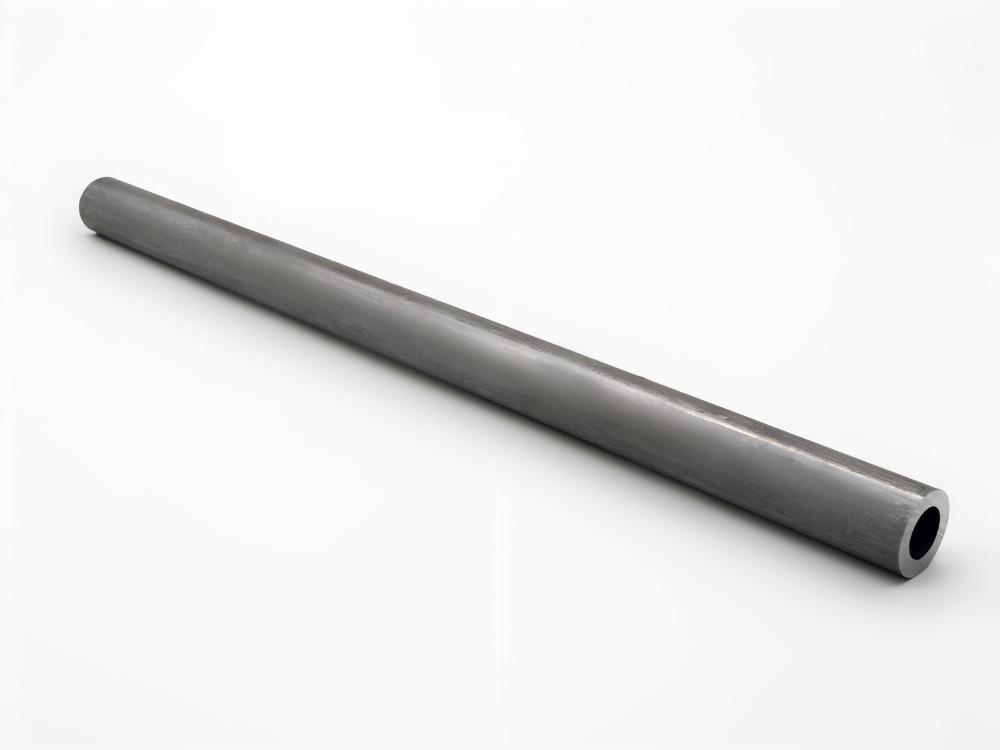
High-strength tube selection starts with the grade, but heat treatment determines whether that grade actually behaves as the data sheet suggests. <Heat Treated Steel Tube: What Engineers Need to Know> covers the condition choices that affect strength, ductility, and machinability.
Trend 3: Tolerances, Roundness, and Surface Finish Are Design Constraints, Not Afterthoughts
When wall thickness falls, dimensional variation matters more. A 0.2 mm wall tolerance on a 3 mm wall is a smaller relative error than the same variation on a 1.5 mm wall, and the second case is common in lightweight designs. Automotive drawings for lightweight tube therefore increasingly specify tighter OD, ID, wall, and roundness windows, not because inspection is easier, but because assembly and fatigue life demand it [4]. Standards such as EN 10305-1 define a framework for precision cold-drawn tube, but the buyer still needs to confirm which tolerance class applies to each drawing dimension [2].
Surface finish also becomes more important in lightweight designs. Scratch marks, die lines, or decarburization layers that were acceptable in a heavier structural tube may be unacceptable in a thin-wall suspension tube because the surface sits closer to the load path. Non-destructive testing with eddy current and ultrasonic inspection is therefore moving from a final release step to a process-control step [5]. A tube that passes chemistry but fails surface integrity at the wrong location may fail later in service.
When a drawing calls for tight tolerances on a lightweight tubular component, the standard alone is only half the picture. <How EN10305 Steel Tube Standard Affects Precision Tube Procurement> covers what procurement teams should verify before accepting a mill certificate.
Trend 4: Traceability and Quality Data Are Now Part of the Specification
High-strength automotive tube often carries more than a part number. In the context of IATF 16949, the quality management system extends beyond final acceptance to process control, risk analysis, and data retention [5]. When those requirements are layered on top of ISO 9001 fundamentals such as document control and nonconforming product management [6], the result is a supply chain where a tube is delivered with production history, material heat identity, inspection results, and traceability documents.
For EV and safety-critical applications, this traceability can extend to positive material identification and full EN 10204 3.1 material certification. The trend is unmistakable: material data is becoming part of the component record. Designers, purchasers, and quality engineers all want to know that a given tube lot can be traced back through raw steel, cold drawing, heat treatment, and NDT if a field issue appears. This level of control also supports lightweighting because it gives engineers confidence to run closer to the design limit without adding hidden safety mass [7].
High-strength steel tube is not only a dimensional commodity; how the tube is verified can be the deciding factor in a precision application. <DIN2391 ST52 Tube: Tolerances, Grades and Sourcing Checks> covers the checks that separate a true precision tube from a near-miss.
What to Specify When You Source High-Strength Automotive Tube
A clean RFQ saves time and reduces the chance of a technically correct tube that is not optimizable. The following points usually belong in a lightweight tube inquiry:
- Target envelope: outer diameter, wall thickness, length, and the tolerance class rather than a single ideal dimension. Our cold-drawn seamless tubes typically cover 10–108 mm OD and 1–20 mm wall thickness with ±0.1 mm precision tolerance.
- Material condition: cold drawn hard, cold finished soft, stress relieved, normalized, or quenched and tempered. Different conditions change springback, machinability, and final strength.
- Application loads: bending, torsion, internal pressure, or fatigue rather than only tensile strength, so the production route can be matched to the actual service.
- Certification requirements: IATF 16949, ISO 9001, EN 10204 3.1, PMI, ultrasonic, or eddy current testing.
- Annual volume and batch size: whether the tube can be run as a standard small batch or needs dedicated lot control.
If you are working through a lightweighting target right now, send your current wall thickness, grade, tolerance band, and annual volume to Sunny@tenjan.com. A direct inquiry through WhatsApp at +86 13401309791 gets you a technical review of the drawing during the quotation stage, not after the order. We would rather correct a wall-thickness assumption early than ship a tube that is close but not optimized.
Work with Our Precision Steel Tube Engineering Team
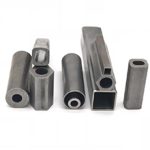
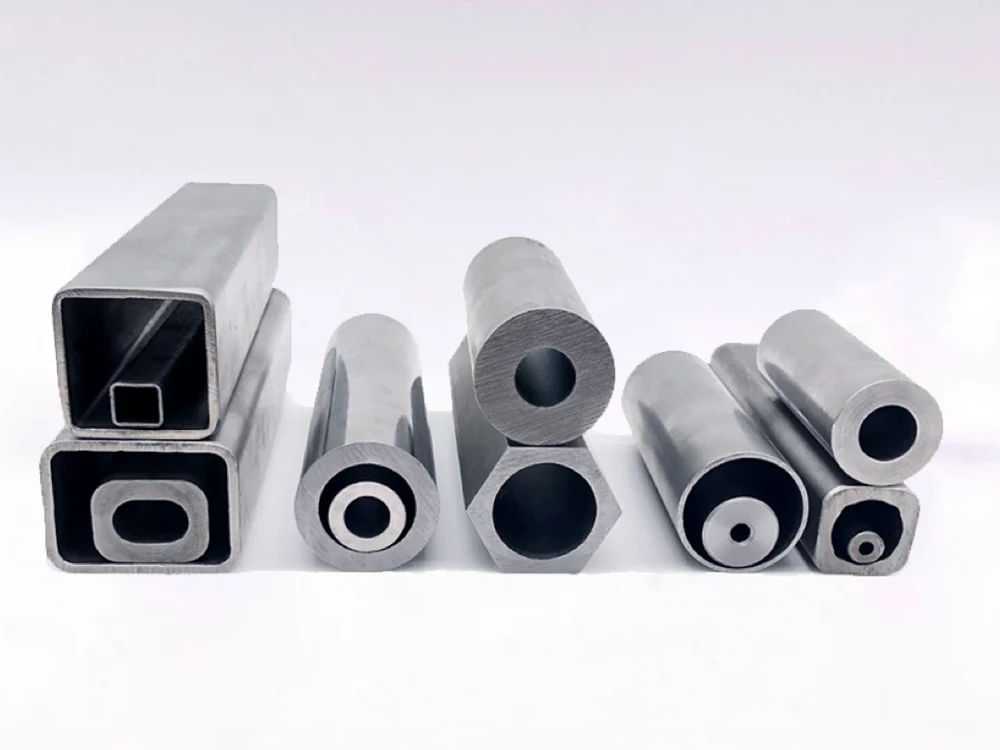
Since 2004, Changzhou Tenjan Steel Tube Co., Ltd has been a vertically integrated precision steel tube manufacturer. We produce seamless cold-drawn tubes, cold-drawn welded tubes, and custom-shaped profiles — square, rectangular, hexagonal, oval, and more complex cross-sections — compliant with ASTM, EN, DIN, JIS, and other international standards. Our process covers raw material through finished product, with PMI and NDT inspection, ISO-certified quality control, and full traceability from heat to shipment.
Tell us what you are trying to lighten. Send a drawing, material grade, quantity, and target delivery window to:
- Email: Sunny@tenjan.com
- Tel: +86 519 8878 9990
- Phone / WhatsApp: +86 134 0130 9791
We support OEMs and engineering projects with DFM feedback, small-batch customization, and documented process capability. If you are comparing suppliers, ask for tolerance capability and heat-treating route; we will provide them in writing.
Frequently Asked Questions
What makes a steel tube high-strength in automotive lightweighting?
A high-strength automotive tube usually combines a steel grade with higher yield or tensile strength — such as a microalloyed or boron-treated grade — with a controlled cold-drawing and heat-treatment route [3]. The strength is not created by chemistry alone; the final delivery condition is what determines whether a thinner wall can survive bending, fatigue, and assembly loads.
Does cold drawing really improve strength-to-weight performance?
Yes. Cold drawing reduces wall thickness, improves dimensional accuracy, and increases strength through strain hardening, allowing the part to carry the same load with less material [4]. The benefit is greatest when tolerance control and residual stress management are included in the process, not treated as separate finishing steps.
Which standards should I specify for high-strength automotive precision tube?
The core material and dimensional standards include ASTM A519 [1], EN 10305-1 [2], and DIN 2391-2 [4]. For automotive quality systems, IATF 16949 [5] is the relevant framework. The exact standard depends on whether the tube is seamless cold drawn, welded cold drawn, or intended for a hydraulic, structural, or mechanical application.
What wall-thickness reduction is realistic without compromising durability?
There is no universal figure. A safe reduction depends on the load case, the steel grade, the cold-drawing route, and the part’s fatigue or crash requirements. Teams should use finite-element analysis or component testing to confirm that the thinner section still meets the required safety factor.
How can I verify traceability and quality for lightweight automotive tube?
Request EN 10204 3.1 certification, positive material identification, batch heat identity, and ultrasonic or eddy current test records [5][6]. The strongest suppliers will also be able to show process-capability data for the specific OD, wall, and roundness requirements on your drawing.
Can high-strength steel tube be used in EV structures or only traditional chassis components?
It can be used in both. EV platforms often apply high-strength steel tubes in suspension, battery-support structures, cooling lines, and side-impact members because reducing structural mass helps offset battery weight [7]. The same material and process rules apply, but traceability and validation requirements are sometimes higher.
References
[1] ASTM A519/A519M-20, Standard Specification for Seamless Carbon and Alloy Steel Mechanical Tubing, ASTM International, 2020.
[2] EN 10305-1:2016, Steel tubes for precision applications — Technical delivery conditions — Part 1: Seamless cold drawn tubes, CEN, 2016.
[3] WorldAutoSteel, Advanced High-Strength Steel Application Guidelines, Version 6.0, WorldAutoSteel, 2022.
[4] DIN 2391-2:1994, Seamless precision steel tubes — Technical delivery conditions, DIN, 1994.
[5] IATF 16949:2016, Automotive Quality Management System Standard, International Automotive Task Force, 2016.
[6] ISO 9001:2015, Quality management systems — Requirements, International Organization for Standardization, 2015.
[7] U.S. Department of Energy, Alternative Fuels Data Center: Lightweighting, U.S. DOE, Washington, DC, USA.
If you’re interested, check out these related articles:
Steel Tubes for Agricultural Machinery: Precision Solutions
Selecting Steel Pipes for Pressure Vessels: Material, Standards, and Key Considerations
Carbon Steel vs Alloy Steel Tubes
How Digital Traceability Tightens Steel Tube Quality Control