Steel Tubes in the Circular Economy: A Practical Guide
Close your eyes and think "circular economy," and you probably picture curbside bins, bottle deposits, and compost heaps. Open them again inside a steel tube mill, and the picture sharpens into something closer to industrial metabolism:…
Close your eyes and think “circular economy,” and you probably picture curbside bins, bottle deposits, and compost heaps. Open them again inside a steel tube mill, and the picture sharpens into something closer to industrial metabolism: a 12-meter precision tube being designed, cold-drawn, installed in a hydraulic system — and, years later, re-entering the material stream without being downgraded into filler.
The honest surprise for many engineers is that steel tubes are not the problem child of this story. Steel is magnetically sortable, metallurgically stable through repeated melting, and highly traceable when the right documentation chain is in place. The harder work happens upstream, in design, specification, tolerance decisions, and procurement habits. This guide walks through what circularity actually means for precision steel tubes, where standards are moving, and which procurement choices quietly waste the most circular potential.
Why Steel Tubes Are Already Circular
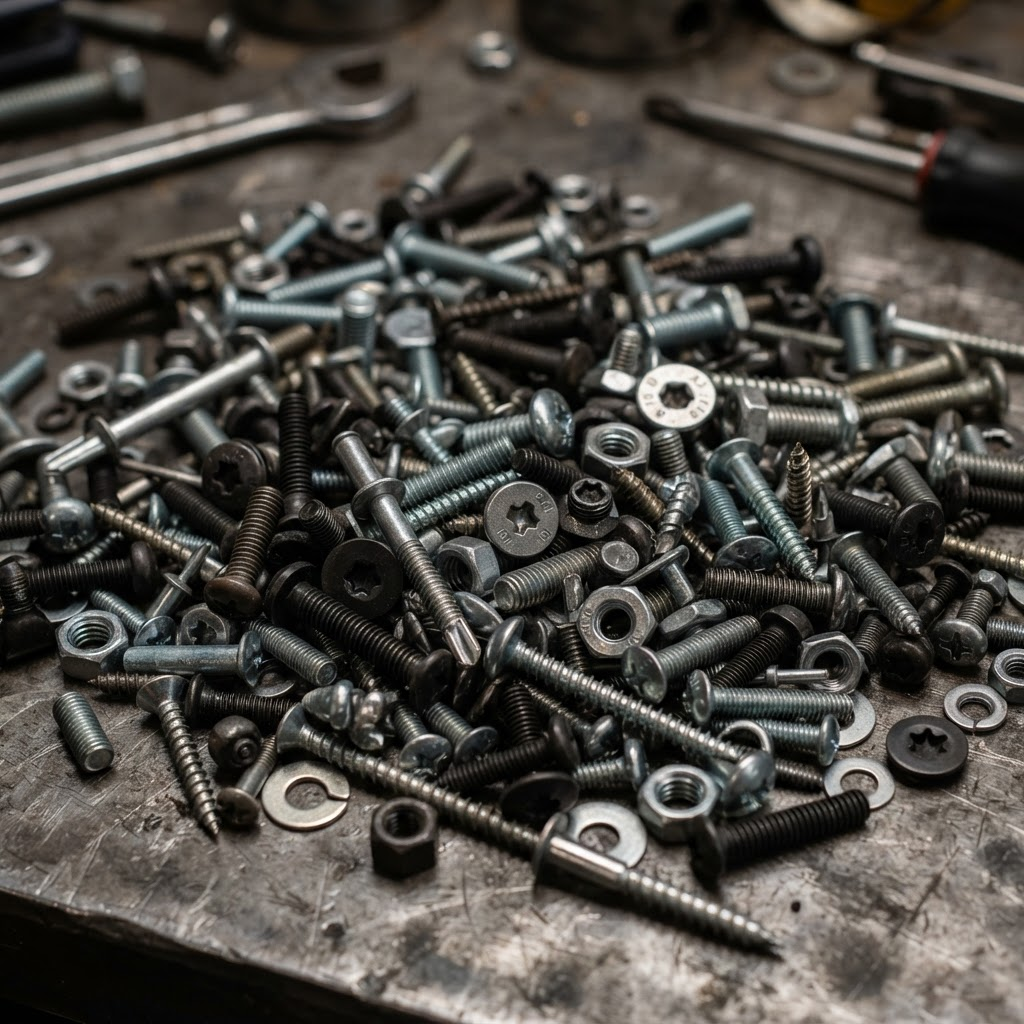
Steel carries one of the strongest default positions in any circular economy discussion: it is the most recycled engineering material in the world, and the recycling loop does not require a downgrade in properties. Unlike many polymers that lose mechanical performance with each thermal cycle, steel can be re-melted and re-formed repeatedly with its alloy chemistry adjusted on demand [1]. The magnetic personality helps here too — steel separates cleanly from mixed demolition and production waste streams, which is why offcuts, end-of-life tube assemblies, and machining swarf routinely return to the furnace.
The resource arithmetic is equally blunt. Every tonne of recycled steel conserves roughly 1,400 kg of iron ore, 740 kg of coal, and 120 kg of limestone, while avoiding about 1.5 tonnes of CO₂ emissions compared with primary ore-based production [1]. For tube buyers, that means a scrap-heavy electric arc furnace route can carry a materially lighter carbon load than a blast furnace route starting from ore [2].
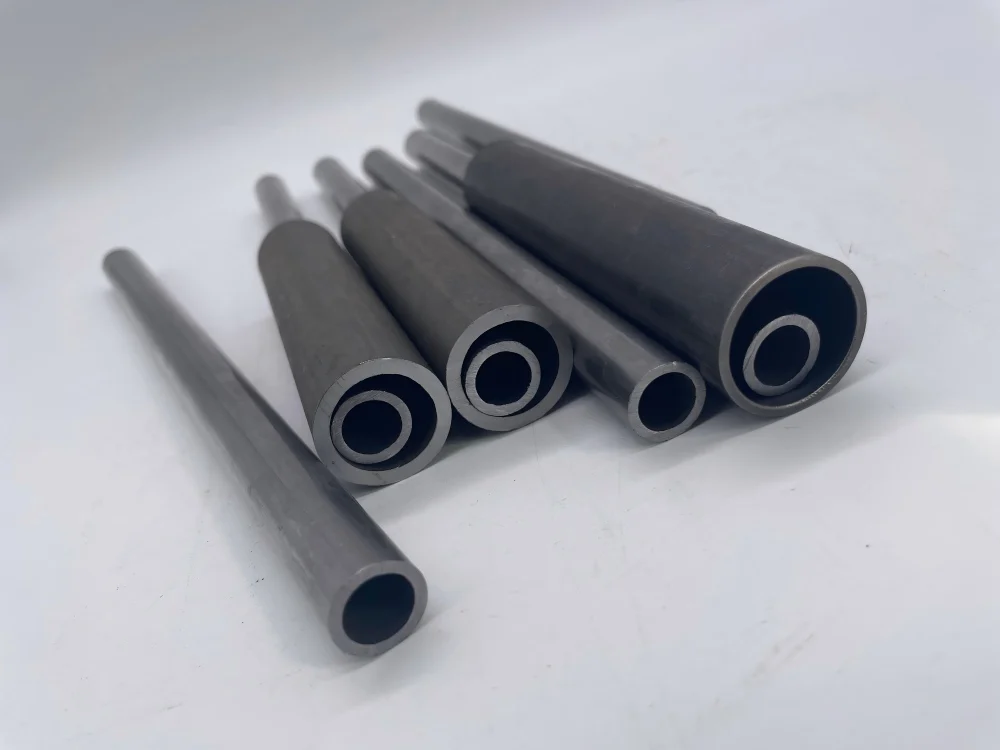
Put a round precision tube back through this loop and the geometry barely matters to the process: the chemistry and cleanliness do. That is exactly why mill traceability, documented scrap segregation, and controlled alloying are the quiet foundation of circular steel tube supply — not slogans on a sustainability page.
The R-Strategy Ladder for Steel Tube Projects
Circularity is not one action. The R-ladder, formalized in the influential 2017 study Circular Economy: Measuring Innovation in the Product Chain, ranks ten strategies from “Refuse” to “Recover” in order of declining environmental value [3].
For steel tube projects, four layers matter most:
- R2 Reduce — shave wall thickness, shorten redundant runs, specify near-net section shapes so less material is purchased in the first place.
- R3 Reuse — put a dimensionally stable, inspected tube back into service instead of melting a perfectly good part.
- R4–R6 Repair, refurbish, remanufacture — recondition surface damage, re-machine tolerances, or rebuild a failed assembly around the original tube.
- R8 Recycle — the fallback that everyone understands and therefore overuses as a plan.
Ask a design team which R-strategy it actually optimized for, and the pause can be uncomfortable. That silence is expensive: a welded or threaded assembly designed with no disassembly thinking can still be recycled, but it cannot easily be reused or remanufactured. Reuse and remanufacture are where the biggest energy savings hide, because no re-melting energy is spent at all [3].
This is also where dimensional discipline becomes a circular-economy tool. Reuse and remanufacture are only practical when the as-built geometry is predictable enough to re-certify.
Reuse depends on knowing what the tube actually measures, not just what the drawing promised. <Steel Tube Dimensional Accuracy: Why Fit Depends on It> covers how real-world tolerance drift decides whether a tube can be safely re-fitted, not just re-melted.
Material Efficiency in Precision Tube Manufacturing
R2 Reduce is where precision tube manufacturing quietly outperforms conventional machining. A tube produced by cold drawing or cold rolling starts life as a hollow near-net section whose wall thickness is controlled to ±0.1 mm, so the subsequent machining step is light finishing rather than aggressive material removal. The alternative — boring a solid bar into a sleeve — converts a meaningful share of the purchased steel directly into chips before a single part ships. In cold drawing, the material stays in the wall, not the swarf bin.
That difference is not just cost accounting; it is the upstream half of the circular loop. Less purchased stock means less ore demand, less transport mass, and less scrap generated in the first place. When swarf is produced, it should be segregated by grade and returned through the same closed-loop scrap route, because mixed swarf destroys the metallurgical value that clean recycled steel protects [1].
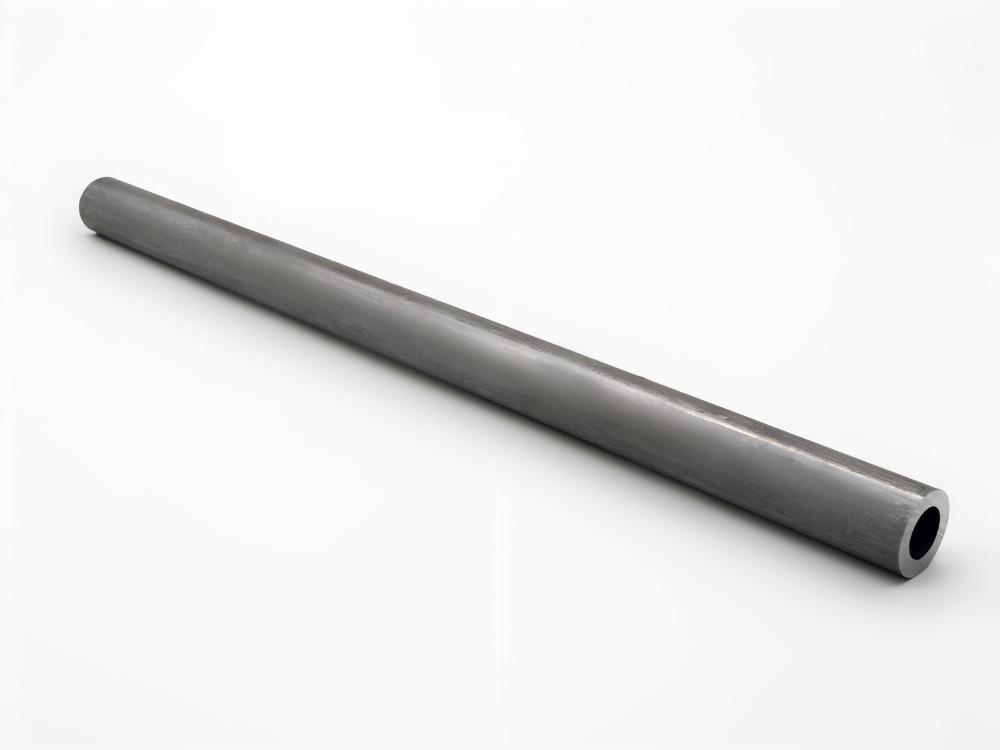
A hydraulic cylinder example makes the point concrete. Start with a cold-drawn precision tube in E355 or ST52 with the ID already near final size, and the machining operation removes only a thin finishing allowance. Start from solid bar, and the same finished cylinder pours a large fraction of its purchased mass into the chip bin. On a shop floor, the gap between those two process routes is what R2 Reduce looks like in practice.
The process route writes itself into both your scrap rate and your embedded carbon. <Steel Tube Manufacturing Process: Precision and Quality> covers why cold-drawn and cold-rolled precision tubes behave differently from machined stock in a circular accounting.
For buyers validating these claims quantitatively, life-cycle assessment is the accepted instrument. ISO 14040 provides the principles and framework for comparing process routes without marketing noise [4].
Corrosion Protection: Extending Service Life Is Circular Too
The cheapest circular win is often the least glamorous: keep the tube in service longer. Every year of additional service life delays the energy cost of re-melting, transport, and re-manufacture — and corrosion is the primary reason precision tubes leave service early.
Practical protection spans material selection, controlled surface treatment, and barrier or cathodic protection where conditions demand it. The correct route depends on the environment, not on a generic coating decision: a dry indoor hydraulic line, a coastal structural tube, and a buried utility pipe face different degradation mechanisms. EN ISO 12944 lays out the systematic framework for protecting steel structures with paint systems across those exposure classes [5].
The circular reading of this is straightforward. A tube that suffers local surface corrosion may be repairable through re-polishing, passivation, or a controlled coating restoration — an R4/R5 outcome. A tube that experiences deep pitting, wall loss, or stress-corrosion cracking has already lost the dimensional margin that would justify reuse, and is one step closer to the R8 scrap pile.
Extending time-in-service is one of the least expensive circular interventions available. <Steel Pipe Corrosion Protection Methods for Precision Tube> covers the practical protection routes for precision tube surfaces and how to match them to the failure mode.
A Practical Note on Circular Tube Sourcing
If circularity is a formal project requirement, put it in the RFQ — not in a follow-up email after award. The specification should name the process route, the inspection documents, and the surface or tolerance expectations that will govern reuse. A supplier that cannot tell you whether the part will be cold-drawn or machined cannot tell you its real scrap rate either.
At Changzhou Tenjan Steel Tube, our engineering team reviews circularity requirements together with dimensional targets. The working input is simple: a drawing, the applicable standard (ASTM A519, EN 10305-1, DIN 2391, JIS G3445, and so on), target quantity, and the required inspection level. Send that to Sunny@tenjan.com and you will get a feasibility answer rather than a generic quotation. If you are mid-specification and unsure whether your tolerances push you toward cold drawing or machining, send the drawing anyway; the early review is free.
Standards, Traceability, and Where the Rules Are Headed
Circular steel depends on proof, especially when a tube is destined for reuse or remanufacture rather than anonymous scrap. EN 10204 inspection documents are the backbone of that proof: a 3.1 certificate ties a delivered tube to its heat analysis and mechanical test results, while a 3.2 certificate adds independent verification [6]. Think of this as the material passport in its most practical industrial form — not a blockchain fantasy, but a paper-and-laboratory chain that survives audits.
Around that core, several frameworks are tightening:
- EN 15804 governs environmental product declarations for construction products, giving buyers a comparable, third-party-readable basis for choosing between otherwise similar steel products [7].
- ISO 14021 constrains self-declared environmental claims such as “recycled content” or “recyclable,” demanding accurate, verifiable, and non-misleading language [8]. Vague eco-adjectives without numbers are increasingly indefensible.
- Directive (EU) 2024/825 sharpens consumer-facing green claim rules in the EU, requiring traders to substantiate statements before they appear in marketing [9].
- The Carbon Border Adjustment Mechanism (CBAM), established by Regulation (EU) 2023/956, phases a carbon price onto imported iron and steel products — including tube categories — with the definitive regime applying from 2026; importers must report embedded emissions sourced from the mill [10].
The practical consequence for engineering buyers: “circular” language must now be backed by standards, certificates, and numbers. A supplier that offers EN 10204 3.1 documentation, a stated process route, and honest emission data is operating in the same system your auditors are joining.
Specifying Circular Steel Tubes: A Working Checklist
| What to request | Why it matters for circularity |
|---|---|
| EN 10204 3.1 or 3.2 certificate | Ties each tube to a heat and mechanical test for traceable reuse or recycling |
| Process route: cold drawn vs. machined | Near-net shaping indicates lower upstream scrap |
| Scrap segregation and reintegration practice | Closed-loop handling preserves metallurgical value |
| Dimensional tolerance capability | Predictable geometry governs whether parts can be re-fitted |
| Standard reference (ASTM, EN, DIN, or JIS) | Creates comparable, auditable specifications across supply chains |
| PMI and NDT inspection plan | Supports re-certification decisions for reuse or remanufacture |
| Minimum order flexibility | Enables repair and refurbishment runs, not only full-new production |
| Evidence behind environmental claims | Filters vague “eco” language under ISO 14021 discipline |
Here is the question worth carrying into the next design review: which R-strategies did this specification actually optimize — and which ones did it accidentally block? If the answer is not immediately obvious, the circular engineering work has not started yet.
Talk to a Steel Tube Manufacturer About Circular Specifications
For projects where recyclability, traceability, or material efficiency is a stated requirement, Changzhou Tenjan Steel Tube can support the specification from raw material through finished product.
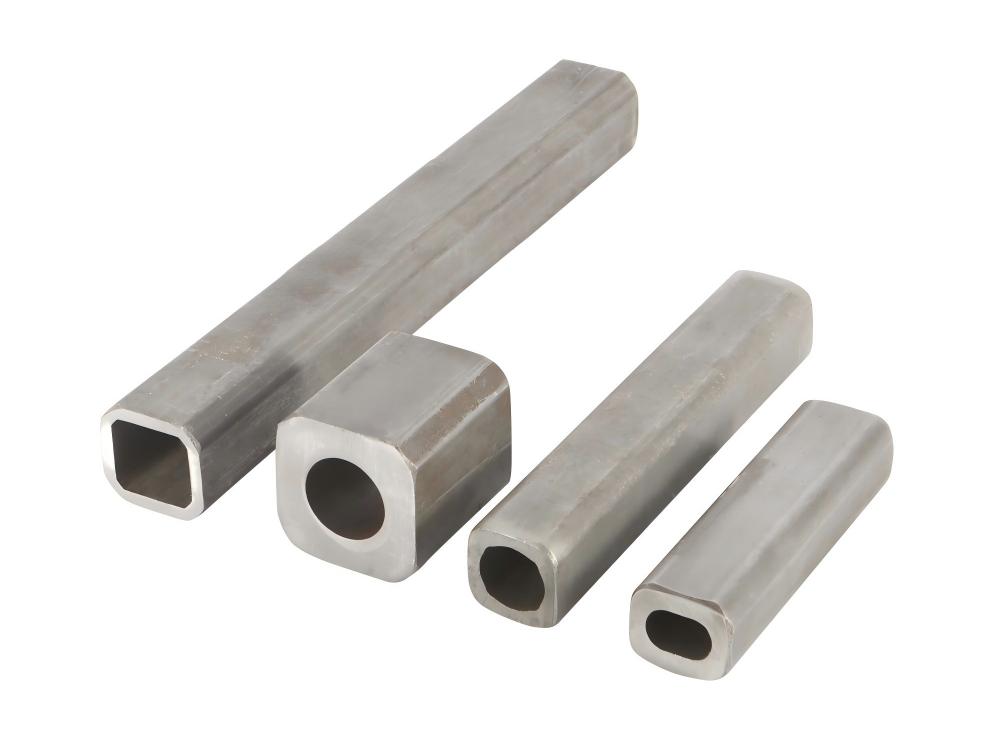
- Products — seamless tubes, cold-drawn profiles, cold-drawn welded tubes, and custom-shaped sections in square, rectangular, hexagonal, and complex geometries
- Dimensional range — outer diameter 10–108 mm, wall thickness 1–20 mm, with ±0.1 mm precision tolerance
- Standards support — ASTM, EN, DIN, JIS, and GOST
- Documentation and inspection — EN 10204 3.1 traceability, ISO-certified quality control, PMI and NDT inspection
Contact Tenjan
- Email: Sunny@tenjan.com
- Tel: +86 51988789990
- Phone: +86 13401309791
- WhatsApp: +86 13401309791
FAQ: Steel Tubes and the Circular Economy
Can recycled steel tubes match the performance of tubes made from virgin steel?
Yes. Steel does not degrade through repeated melting the way many polymers do; alloying elements can be adjusted at the melt stage to hit the required chemistry. The real requirement is documentation. An EN 10204 3.1 certificate confirms the heat analysis and mechanical test results, which is what makes a recycled-content tube auditable and engineer-safe [6].
What is the difference between reuse and recycling for steel tubes?
Reuse keeps the tube in service after inspection, dimensional verification, and any necessary surface repair. Recycling re-melts scrap into new steel. Reuse saves far more energy because the melting and re-forming steps are avoided entirely, which is why the R-ladder ranks it as the higher-value strategy [3].
Which document proves material traceability?
EN 10204 is the reference framework. A 3.1 certificate contains the heat analysis and mechanical test results with the manufacturer’s authorized validation, while 3.2 adds independent verification from a third-party inspector [6]. For demanding applications, full process control from raw material to finished tube is the match to that document.
How does CBAM affect steel tube imports into the EU?
The Carbon Border Adjustment Mechanism requires importers of covered iron and steel products — including many tube categories — to report embedded emissions. The transition period runs until the definitive regime begins in 2026, when financial adjustment starts; practical impact falls on documentation, because the emission values must originate from the producing mill [10].
Does cold drawing really reduce material waste?
Compared with machining a part from solid bar, yes — cold drawing forms a hollow near-net section directly, so the machining step removes only a finishing allowance. The exact benefit depends on geometry, but the process route is one of the strongest levers in R2 Reduce for precision components [4].
What should I ask a supplier about circular production?
Request the process route, scrap segregation practice, EN 10204 certificate type, dimensional tolerance capability, and the evidence behind any environmental claim. A supplier that can answer all five is already working inside the same traceable system your auditors will demand [6], [8].
References
[1] World Steel Association, “Steel and the circular economy,” worldsteel.org. [Online]. Available: https://worldsteel.org
[2] International Energy Agency, “Iron and Steel Technology Roadmap,” IEA, Paris, 2020. [Online]. Available: https://www.iea.org/reports/iron-and-steel-technology-roadmap
[3] J. Potting, M. Hekkert, E. Worrell, and A. Hanemaaijer, “Circular Economy: Measuring Innovation in the Product Chain,” PBL Netherlands Environmental Assessment Agency, The Hague, 2017. [Online]. Available: https://www.pbl.nl
[4] International Organization for Standardization, ISO 14040:2006, Environmental management — Life cycle assessment — Principles and framework, ISO, Geneva, 2006.
[5] International Organization for Standardization, EN ISO 12944-1:2018, Paints and varnishes — Corrosion protection of steel structures by protective paint systems — Part 1: General introduction, ISO, Geneva, 2018.
[6] European Committee for Standardization, EN 10204:2004, Metallic products — Types of inspection documents, CEN, Brussels, 2004.
[7] European Committee for Standardization, EN 15804:2012+A2:2019, Sustainability of construction works — Environmental product declarations — Core rules for the product category of construction products, CEN, Brussels, 2019.
[8] International Organization for Standardization, ISO 14021:2016, Environmental labels and declarations — Self-declared environmental claims (Type II environmental labelling), ISO, Geneva, 2016.
[9] European Parliament and Council, “Directive (EU) 2024/825 empowering consumers for the green transition,” Official Journal of the European Union, 2024. [Online]. Available: https://eur-lex.europa.eu
[10] European Parliament and Council, “Regulation (EU) 2023/956 establishing a carbon border adjustment mechanism,” Official Journal of the European Union, 2023. [Online]. Available: https://eur-lex.europa.eu
If you’re interested, check out these related articles:
Managing Custom Steel Tube Lead Times for OEM Buyers
Steel Pipe Heat Treatment: Key Processes and Applications
Steel Tube Dimensional Accuracy: Why Fit Depends on It