How AI Is Used in Steel Tube Production: A Practical Guide
Artificial intelligence in steel tube production used to sound like a lab project. Today it is mostly unglamorous engineering: a camera checking a weld seam, a model flagging a drifting drawing speed, a maintenance algorithm listening…
Artificial intelligence in steel tube production used to sound like a lab project. Today it is mostly unglamorous engineering: a camera checking a weld seam, a model flagging a drifting drawing speed, a maintenance algorithm listening to a bearing. That is exactly why it works. The question is not whether AI belongs in a precision tube mill, but where it pays back fastest on a cold-drawn or cold-rolled line.
Why Steel Tube Production Is a Natural Fit for AI
Steel tube manufacturing generates thousands of small signals: furnace temperature curves, drawing force, mandrel wear, ultrasonic echo patterns, and dimensional measurements every few meters. A human shift leader cannot watch all of them at once; a model can. The World Steel Association places modern steel production inside a broad push toward smarter process control and lower specific energy use [1]. McKinsey finds that AI-enabled quality and process-control use cases in manufacturing regularly deliver scrap reduction, yield improvement, and faster defect diagnosis [2].
That matters for precision tube producers because tolerances leave little room. A cold-drawn tube ordered to ±0.1 mm on wall thickness cannot wait until final inspection to catch a trend: by then the batch is scrap. The role of AI is to catch the trend while the batch is still running.
Machine Vision: Teaching the Line to See
The most implemented AI step in steel tube production is machine vision for surface and dimensional inspection. Instead of relying only on sampling, cameras and laser gauges scan the tube surface continuously. A deep-learning model compares each image against a defect library, then classifies scratches, pits, seams, and scale patterns. This is not a theoretical upgrade: the baseline inspection criteria already exist in standards such as ASTM A519 for mechanical tubing and EN 10305-1 for precision tubes [3][5].
This is the one AI entrance every tube mill should evaluate first. But there is a catch the vendor slides rarely mention.
Before deciding what AI should detect, every plant needs a stable inspection baseline. <Precision Tube Quality Inspection Checklist> covers the checks engineers use to define those defect criteria.
Machine vision works when the defect definition is explicit. If the only rule is “looks bad,” the model will learn the inspector’s mood, not the metallurgy. Phrased differently: AI does not remove the need for clear quality standards; it automates the checking of standards you have already written down [4].
Predictive Process Control for Cold Drawing and Heat Treatment
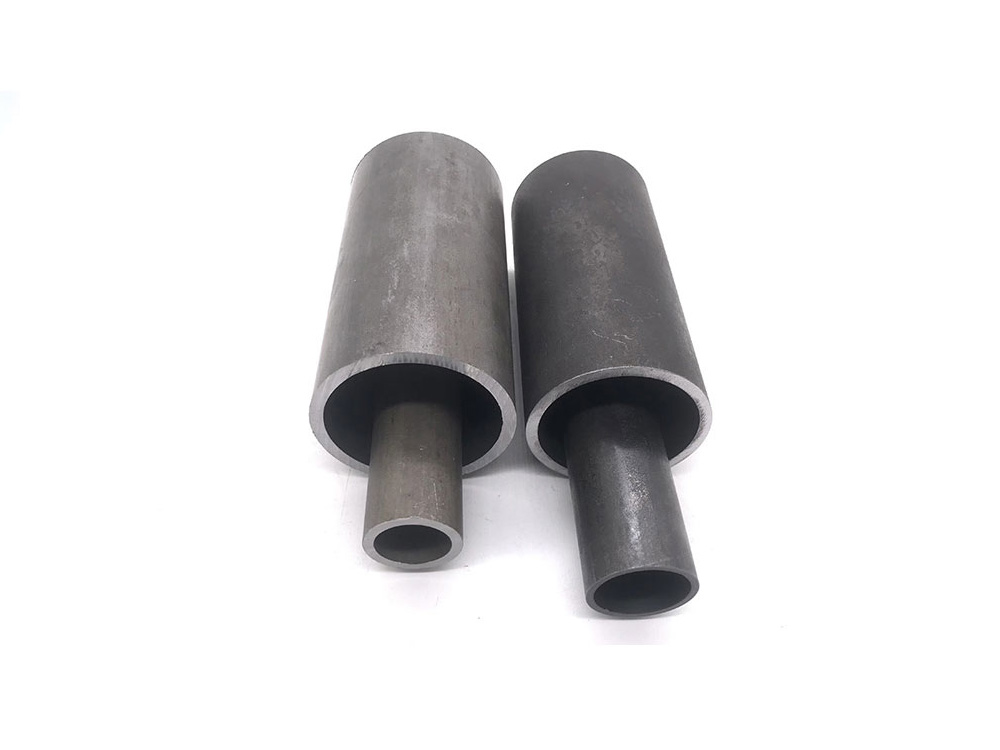
Beyond inspection, AI is used as a predictive controller. In cold drawing, process variables such as drawing speed, die angle, lubrication condition, and incoming hardness interact in ways that are hard to reduce to a single formula. Instead of engineering a closed-form rule, a plant can train a model on historical production data plus final mechanical results. The model then predicts the outcome of a parameter change before steel actually enters the die.
I once watched a furnace operator chase a hardness drift for half a shift, adjusting zones one at a time. With a small regression model tied to the thermocouple history, the same search took under ten minutes. The model did not do anything heroic; it just remembered the patterns the operator had already seen once and could not retrieve on demand.
The same logic applies to normalizing, annealing, and quench-and-temper cycles. All produce measurable signatures in temperature curves, soak time, and cooling rate. An AI model that links those signatures to final hardness or grain structure lets operators adjust the furnace before the batch becomes outside specification.
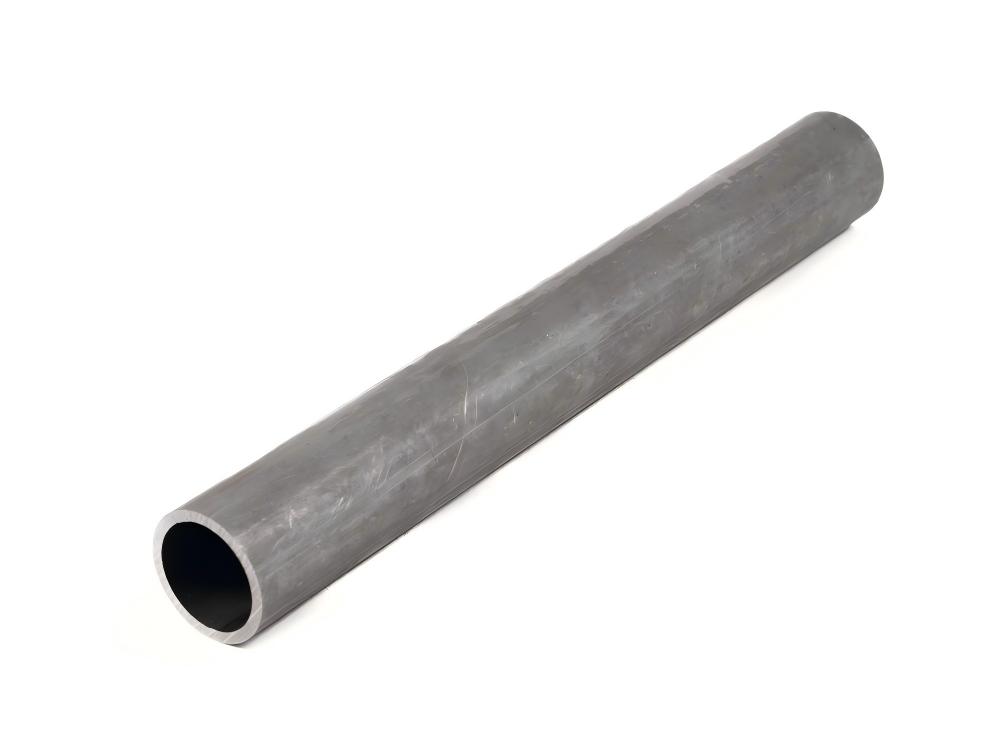
Note the phrase “before the batch becomes outside specification.” That is the commercial point. The value is not the algorithm; it is the avoided rework and the shorter trial-and-error during new product qualification [2][7].
Predictive control depends on consistent upstream heat treatment. <Steel Pipe Heat Treatment: Key Processes and Applications> covers the process windows that AI models then learn to hold.
Condition Monitoring and Predictive Maintenance
Maintenance is where AI meets the factory floor with the least resistance. Motors, draw benches, straighteners, and cutting saws all broadcast condition data. A predictive maintenance model uses vibration, current, temperature, and cycle counts to estimate when a component will degrade, rather than replacing it on a rigid calendar.
The practical benefit in tube production is fewer unplanned stops. An ultrasonic test bench that fails mid-shift stops every downstream order. A model that flags the failing probe or pump a week earlier turns an emergency into a planned job. Deloitte’s manufacturing research has long ranked unplanned downtime among the biggest hidden costs in discrete production [7].
However, predictive maintenance is only as good as the maintenance records behind it. If work orders are vague, the model has no ground truth to learn from. NIST’s AI Risk Management Framework is useful here, not because tube mills are high-risk AI deployers, but because its documentation discipline maps well onto practical quality systems [8].
Digital Twins and Process Optimization
A digital twin in steel tube production is a live simulation of the line: the draw bench, the furnace, the gauging station, and the order flow. When process data streams into the twin in real time, engineers can test a new die set, a faster drawing speed, or a changed annealing curve on the model before touching the physical line.
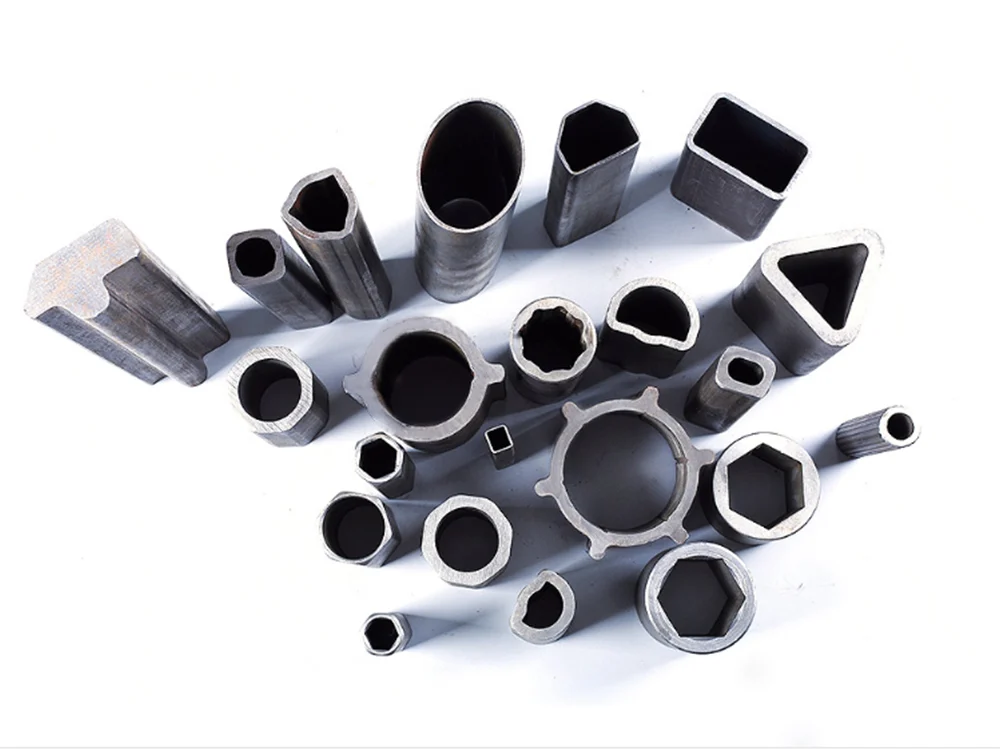
This is helpful for small-batch custom profiles, where every new shape is effectively a small R&D project. Rather than burning three trial tubes to find a workable drawing sequence, the AI-assisted twin narrows the parameter window down to one or two physical trials. The result is faster quoting and fewer expensive surprises on custom square, hexagonal, or oval cross-sections.
The engineering caution is the same as in every other AI application: the twin is only as accurate as the data feeding it. A twin trained on last year’s lubrication schedule will quietly recommend last year’s results. Calibration is a process, not a purchase.
Quality Records, Traceability, and the Human-AI Loop
AI becomes more useful when the surrounding quality system is digital. If every tube carries a heat number, a set of PMI readings, an ultrasonic signature, and a final dimensional record, the AI model has the context to answer better questions: Which raw-material heats produce the most draw-break risk? Which downstream customer returns share a common upstream signature?
That is how AI shifts from “inspection gadget” to “plant-level learning.” A human engineer still owns the uncomfortable decisions: accept a borderline batch, rework a profile, call a customer, or shut the line down. AI narrows the search space; it does not remove accountability. This human-AI loop is the realistic version of what popular articles call a “smart factory.”
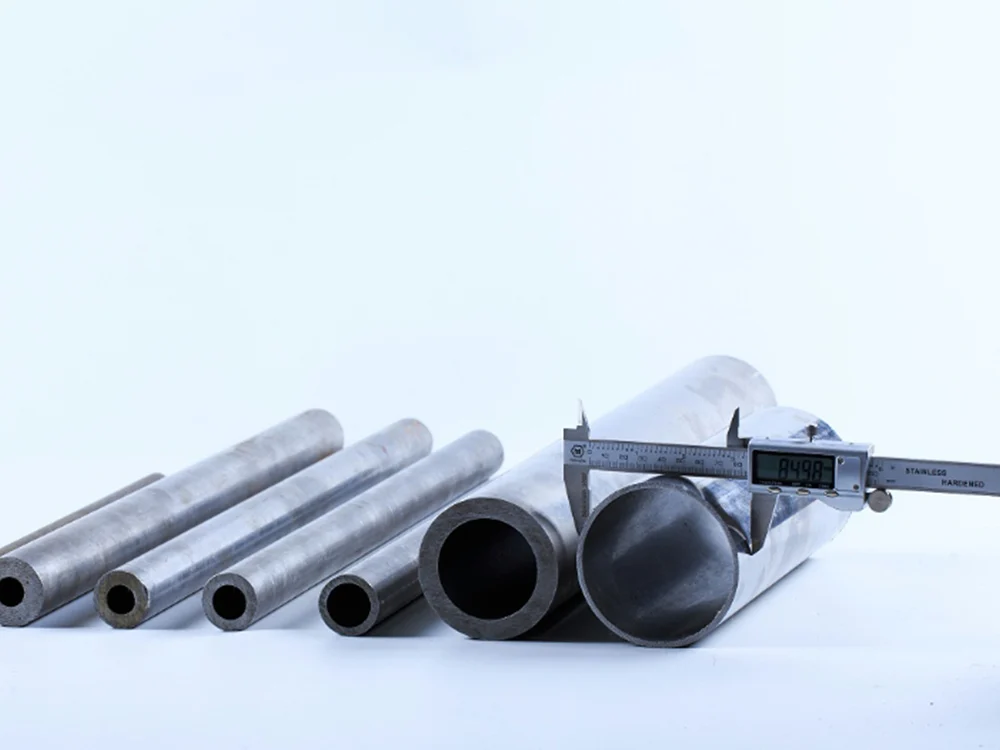
AI-driven sorting works best when the inspection history is already digitized. <How Digital Traceability Tightens Steel Tube Quality Control> covers how full-process traceability turns inspection data into an auditable quality record.
Where AI Still Falls Short in Steel Tubing
Engineers should keep three limits in view. First, data quantity: a small-batch job shop producing 300 tubes a month does not have the defect population a deep model would like; rule-based gauging often works better. Second, data quality: legacy lines without digital sensors need an instrumentation project before an AI project, and that instrumentation often costs more than the software. Third, standards compliance: AI can suggest acceptance, but final disposition must still follow the customer’s standard, whether ASTM, EN, DIN, or JIS [3][5][9]. As of this writing, major tube standards still place final acceptance with a qualified person or documented procedure, not a model.
If your mill is evaluating AI-readiness, send the current inspection standard, a batch of defect photos, and the tolerance band for the profile you care about to Sunny@tenjan.com. Engineers can map which AI steps fit your existing line before you invest in sensors or licenses.
Get Engineering Support for AI-Ready Steel Tube Quality
AI projects in tube production succeed when the person scoping them understands cold drawing, NDT, and customer tolerances. Tell us what you are trying to improve, and we will help you separate the useful automation from the demo-ware.
Reach the Tenjan engineering team:
- Email: Sunny@tenjan.com
- Tel: +86 519 8878 9990
- Phone/WhatsApp: +86 134 0130 9791
To get a useful first response, include:
- Tube standard and material grade (for example, ASTM A519 1020, EN 10305-1 E355, JIS G3445 STKM13A)
- Outside diameter, wall thickness, and tolerance
- Current inspection method and the defect or scrap issue you are chasing
- Monthly volume and whether the application is automotive, hydraulic, or machinery
We take a small-batch-friendly approach, which means the conversation does not have to start with a huge production commitment.
Frequently Asked Questions
Can AI replace human inspectors in steel tube production?
In a precision tube mill, AI is better understood as a force multiplier for inspectors, not a replacement. Machine vision can examine a far larger share of the tube surface than manual sampling, but final disposition on borderline indications still belongs to a certified inspector and the applicable standard [6]. Where human inspectors remain essential is in judging new defect types and in accepting the commercial consequence of a borderline call.
What data does a steel tube plant need before using AI?
The minimum is a digital record of the process inputs and the quality outputs. For a cold-drawn line, that means incoming heat or lot identity, drawing parameters, die and mandrel state, gauge measurements, and final mechanical or NDT results. Plants that already keep full traceability from raw material to finished tube can start almost immediately; plants that still record results on paper should fix that first [4].
How much can AI reduce scrap in steel tube production?
Results vary by product mix and starting data quality. Some mills report double-digit percentage reductions in specific scrap categories once a vision or process model is tuned, but there is no universal number worth quoting. The honest way to estimate payback is to run a pilot on one pain point — such as surface defects on a single standard tube family — and measure the change over a few production weeks [2].
Does AI work for small-batch custom tube production?
Yes, with a narrower scope. Instead of a large defect-detection model, small-batch producers usually get more value from a digital twin or a predictive process model that shortens new-profile trial-and-error. The constraint is data volume, so the first AI project should target a recurring profile or a dominant defect, not the entire custom catalog.
Which AI tools are easiest to start with in a tube mill?
Start with the sensing you already have. A camera-based surface inspection system on a single line, or a condition-monitoring package on critical draw-bench motors, is easier to implement than a plant-wide brain. The common failure mode is buying a platform before the data exists. The practical sequence is: digitize the process record, win one use case, then expand.
References
- World Steel Association, “World Steel in Figures 2025,” Brussels, Belgium, 2025.
- McKinsey & Company, “Unlocking value with AI in manufacturing,” 2024.
- ASTM International, “ASTM A519/A519M-24: Standard Specification for Seamless Carbon and Alloy Steel Mechanical Tubing,” West Conshohocken, PA, 2024.
- International Organization for Standardization, “ISO 9001:2015, Quality management systems — Requirements,” Geneva, 2015.
- European Committee for Standardization, “EN 10305-1:2016, Steel tubes for precision applications — Technical delivery conditions — Seamless cold drawn tubes,” Brussels, 2016.
- International Organization for Standardization, “ISO 9712:2021, Non-destructive testing — Qualification and certification of NDT personnel,” Geneva, 2021.
- Deloitte, “Predictive maintenance and the smart factory,” 2023.
- National Institute of Standards and Technology, “Artificial Intelligence Risk Management Framework (AI RMF 1.0),” Gaithersburg, MD, 2023.
- Japanese Industrial Standards Committee, “JIS G3445:2021, Carbon steel tubes for machine structural purposes,” Tokyo, 2021.
If you’re interested, check out these related articles:
Custom-Shaped Steel Tubes: Design Considerations
Steel Tubes for Construction Applications: Selection Guide
Cold Drawn vs Cold Rolled Steel Tubes