Welcome to Changzhou Tenjan Steel Tube Co., Ltd
Sunny@tenjan.com



Steel specifications exist because engineers need predictable material behavior. When a boiler tube fails, nobody cares which committee wrote the standard—they care whether the material performed as promised. ASTM and EN represent two distinct approaches to that promise, and the differences matter more than most procurement teams realize until something goes wrong.
ASTM specifications tend to give manufacturers room to work. A carbon steel tube requirement under ASTM might allow carbon content anywhere from 0.10% to 0.30%, letting producers optimize for their specific processes. EN standards take the opposite approach—they specify tighter ranges and often dictate how the steel should be made, not just what it should contain.
This philosophical split shows up everywhere. ASTM A519 steel tube specifications cover seamless carbon and alloy steel mechanical tubing with broad property ranges. EN 10297-1 steel pipe addresses similar applications but with more prescriptive requirements for heat treatment and testing frequency. Even the naming conventions reflect different thinking: ASTM uses alphanumeric codes like A106 Grade B, while EN employs structured designations like S355JR steel pipe that encode material type and properties directly.
The practical impact hits during material substitution. A designer specifying ASTM A519 steel pipe has flexibility in sourcing. Someone locked into EN10305-1 steel pipe for precision steel tubing faces stricter compliance requirements but gets tighter dimensional tolerances in return.
Chemical composition differences between standards create real performance variations. EN standards for critical applications frequently impose stricter limits on sulfur and phosphorus—elements that weaken grain boundaries under stress. An EN specification might cap sulfur at 0.015% where an equivalent ASTM grade allows 0.035%.
Heat treatment protocols also diverge. EN standards often mandate specific normalizing or quenching procedures, while ASTM grades may leave heat treatment to manufacturer discretion within property limits. This affects everything from machinability to fatigue life.
Producing alloy steel tube grades like 41Cr4 alloy pipe and 25CrMo4 steel pipe requires hitting these precise compositional targets. The same applies to carbon steel tube requirements across both standard systems—the chemistry must match the specification, not approximate it.
Steel tube manufacturing looks different depending on which standard governs the work. EN10305-1 steel pipe production demands exceptional dimensional accuracy—we’re talking about cold drawing and cold rolling processes controlled to fractions of a millimeter. ASTM A519 steel pipe manufacturing emphasizes mechanical testing to verify strength and ductility, with somewhat more tolerance on dimensions.
Testing protocols diverge significantly. Both systems require Non-Destructive Testing and Positive Material Identification, but the frequency and acceptance criteria differ. EN standards typically mandate more frequent testing during production runs. ISO certified steel tubes integrate requirements from both frameworks, which means maintaining parallel quality systems.
Cold drawn welded tube production illustrates the challenge. Each tube undergoes dimensional checks, surface inspection, and mechanical testing—but the specific measurements and pass/fail criteria depend entirely on which standard applies. A tube that passes ASTM requirements might fail EN specifications on dimensional tolerance, or vice versa.
Standard selection determines project outcomes in ways that aren’t always obvious during specification writing. High-pressure boiler tubing standards require materials that maintain strength at elevated temperatures and resist creep over decades of service. ASTM A192 steel pipe and DIN 17175 steel pipe both address these needs, but with different testing requirements and acceptance criteria.
Automotive steel tube materials face completely different demands—formability matters more than high-temperature strength, and fatigue life under cyclic loading becomes critical. EN10305-1 steel pipe dominates hydraulic cylinder tubing specifications in European automotive applications, while STKM11A steel pipes serve similar functions in Japanese designs.
| Application Area | Recommended ASTM Standards | Recommended EN Standards | Key Performance Considerations |
|---|---|---|---|
| High-Pressure Boilers | ASTM A192, ASTM A106 Gr.B | EN 10216-2 (P235GH) | High-temperature strength, creep resistance |
| Automotive Components | ASTM A513, ASTM A519 | EN 10305-1, EN 10305-4 | Formability, fatigue strength, precision |
| Hydraulic Systems | ASTM A519 | EN 10305-1, EN 10305-4 | Dimensional accuracy, surface finish, pressure rating |
| General Structural | ASTM A500 | EN 10210, EN 10219 | Weldability, yield strength |
The table shows how different standards address different needs. Getting this wrong means either over-specifying (and overpaying) or under-specifying (and risking failure).
High-pressure boiler applications present a straightforward geographic split. ASTM A192 steel pipe and ASTM A106 Gr.B steel pipe dominate North American pressure vessel tubing standards because they’ve proven reliable over decades of service. European projects default to EN 10216-2, with grades like P235GH or P265GH handling high-temperature steel tubes and boiler tube material selection.
Both approaches work. The choice typically follows the regulatory framework governing the installation rather than any inherent superiority of one standard over another. A boiler built to ASTM specifications in Texas would need EN compliance if installed in Germany—same performance requirements, different documentation.
International projects force engineers to navigate equivalencies that don’t quite exist. Clients regularly ask about EN 10216 vs ASTM A519 equivalent materials for mechanical tubing, expecting a simple answer. The reality involves comparing chemical compositions, mechanical properties, and manufacturing tolerances across standards that weren’t designed to align.
DIN standards for steel tubes like ST35 seamless pipe or ST37 steel pipe have their own relationships to JIS steel tube equivalents such as JIS G3445 steel pipe or STKM11A steel pipes. International steel tube compliance requires understanding all these connections—and their limitations.
Steel tube interchangeability assessment involves detailed analysis. Can an EN-specified material work in an ASTM-designed system? Usually yes, with engineering review. The chemical compositions often overlap, and mechanical properties frequently exceed minimum requirements from either standard. But “usually” isn’t “always,” and the exceptions matter in critical applications.
ASTM A106 Grade B finds its closest EN equivalent in EN 10216-2 P235GH or P265GH. Both seamless steel tube specifications target high-temperature pressure service, and their chemical compositions align reasonably well.
The differences hide in details. Impact toughness requirements may vary. Heat treatment conditions might not match exactly. Surface finish specifications could differ. These variations rarely cause problems in typical applications, but they can matter in extreme service conditions. Verification with material specialists remains essential before assuming full interchangeability, particularly when regulatory compliance is at stake.
Standard specifications handle common applications well. They struggle with unusual requirements—non-standard cross-sections, combined property demands, or dimensional tolerances tighter than any published specification addresses.
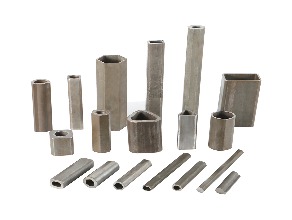
Custom steel tube manufacturing fills these gaps. Cold drawn profiles and custom-shaped steel tubes—square, rectangular, hexagonal steel pipes and tubes, plus complex geometries—serve applications that standard round tubes can’t address. High-precision tubing for OEM engineering projects often requires capabilities beyond what any standard contemplates.
Vertically integrated manufacturing enables this flexibility. Controlling every step from raw material through finished product allows precise adjustment of material properties and dimensions. Producing tubes compliant with ASTM, EN, DIN, and JIS standards simultaneously becomes possible when the entire process is under one roof. Special-shaped alloy steel tubes and special-shaped carbon steel tubes emerge from the same capability—understanding what each standard requires and having the process control to deliver it.
Standardization bodies are slowly moving toward greater harmonization. The goal is reducing trade barriers and simplifying material selection for international projects. Testing methodologies and certification processes are gradually aligning across different organizations.
This evolution demands flexible production capabilities and advanced quality control systems. Sustainable steel tube production practices—recycled materials, energy-efficient processes—are becoming standard requirements rather than optional differentiators. As specialized applications multiply, standards will likely become more granular, addressing niche performance requirements while maintaining broader frameworks for general use.
Manufacturers who track these changes and adapt their processes accordingly will maintain competitive positions. Those who don’t will find themselves unable to serve increasingly demanding global markets.
For over two decades, Changzhou Tenjan Steel Tube Co.,Ltd has been a trusted global partner in precision steel tubing. Our vertically integrated manufacturing ensures unparalleled quality, from raw material to finished product, compliant with ASTM, EN, DIN, and JIS standards. Whether you require seamless tubes for high-pressure boilers, custom-shaped profiles for automotive applications, or specialized hydraulic tubing, our ISO-certified processes and comprehensive inspections guarantee material integrity and performance. Partner with Tenjan for tailored, high-precision steel tube solutions that meet your most demanding engineering challenges. Contact us today to discuss your project requirements and discover the Tenjan difference. Email: Sunny@tenjan.com | Tel: +86 51988789990 | WhatsApp: +86 13401309791| Tel: +86 51988789990 | WhatsApp: +86 13401309791
ASTM certification typically focuses on meeting minimum requirements for a specific grade, with manufacturers having flexibility in how they achieve those targets. EN standards take a more prescriptive approach, often requiring detailed inspection documents (3.1 or 3.2 certificates) that provide full traceability and test results for each batch. EN specifications also tend to mandate more frequent testing during production. The practical difference shows up in documentation thickness—an EN-certified tube comes with more paperwork, but that paperwork provides more detailed assurance of what’s actually in the material.
Sometimes, but not automatically. Similar chemical compositions and mechanical properties don’t guarantee interchangeability. Design codes, permissible tolerances, testing protocols, and regional regulatory compliance all factor into the decision. An EN 10216-2 P235GH seamless tube shares many characteristics with ASTM A106 Grade B, but minor differences in impact toughness requirements or surface finish could affect performance in critical applications. Engineering review before substitution isn’t optional—it’s essential for safety and compliance.
Automotive applications split along geographic and functional lines. ASTM standards like ASTM A519 steel pipe serve North American manufacturers needing high-strength precision tubing. EN standards, particularly EN10305-1 steel pipe for hydraulic and pneumatic systems, dominate European automotive production. The specific component function drives the choice—hydraulic lines need different properties than structural frames or exhaust systems. Fatigue strength, corrosion resistance, and formability requirements vary by application, and the target market’s regulatory framework determines which standard governs compliance.


Home Product Capabilities Case Studies Blogs About Get a Quote
Pipe & Tube Manufacturing Process Shapes & Profiles Pipes & Tubes Material Standard Steel Pipes & Tube Rebar Couplers Cold Drawn Steel Profiles & Bars
Oil & Petrochemical Industry Automotive & Motorcycle Components Mechanical Engineering Components Mining Construction Support Structures High-Pressure Boiler System Construction Machinery Geological Drilling Agricultural Machinery Parts Industrial Fluid Transfer Systems


© 2024 Changzhou Tenjan Steel Tube Co., Ltd All rights reserved. Privacy StatementTerms-ConditionsSitemap
