Welcome to Changzhou Tenjan Steel Tube Co., Ltd
Sunny@tenjan.com



When a boiler tube fails in service, the post-mortem rarely points to the chemistry being wrong on paper. More often, the root cause sits in a decision someone made six months earlier: which grade to specify, how tightly to hold the heat treatment, or which mill’s interpretation of “compliant” was good enough. ASTM A213 T11 sits in the middle of many of these conversations — common enough to take for granted, specific enough that taking it for granted will come back to haunt you. At our mill, we have seen the difference between a tube that meets the standard and one that actually performs over a decade of thermal cycling, and the gap is wider than most procurement specifications account for.
ASTM A213 T11 is a seamless ferritic alloy steel tube standard covering 1.25Cr-0.5Mo-Si composition for boiler tubes, superheater tubes, and heat exchanger tubes. The standard is often called ASME SA213 T11 when used in pressure vessel construction under ASME code. Compared to plain carbon steel boiler tube grades, adding chromium and molybdenum gives T11 a functional ceiling roughly 100–150°F higher in continuous service — not dramatic on a data sheet, but significant when a process engineer is trying to avoid derating an entire unit.
The baseline chemistry table looks like this:
| Element | Composition (%) |
|---|---|
| Carbon | 0.05 – 0.15 |
| Manganese | 0.30 – 0.60 |
| Phosphorus (max) | 0.025 |
| Sulfur (max) | 0.025 |
| Silicon | 0.50 – 1.00 |
| Chromium | 1.00 – 1.50 |
| Molybdenum | 0.44 – 0.65 |
Tensile strength minimum is 415 MPa, yield strength minimum is 205 MPa, and elongation varies by wall thickness but typically sits above 22%. These numbers are the pass/fail line, not the target. A tube just barely clearing the minimum tensile while sitting at the upper end of the carbon range might technically ship as T11, but it will behave differently during field bending and welding than a tube with a mid-range chemistry balanced for toughness. We have learned to ask the supplier not just “does it meet the standard?” but “where in the standard does it fall?”
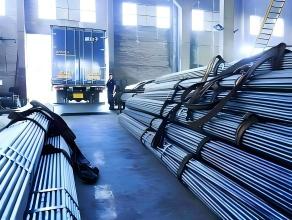
T11 shows up most often in power generation boiler tubing: waterwall tubes, superheater sections, and economizer tubing where metal temperatures range from 400°C to 550°C. It is not the highest-temperature option — T22 and T91 take over above roughly 560°C — but in that middle band, T11 delivers the right creep resistance without the weld preheat complexity or cost step-up of higher-alloy alternatives. In one combined-cycle heat recovery steam generator project our team supported several years ago, the engineer initially specified T22 across all sections until we walked through operating temperature mapping for each zone. T11 covered two-thirds of the tube footage at 20% lower material cost, with no compromise in predicted service life once the actual temperature distribution was modeled rather than assumed.
Refinery service is the other big home for T11. Furnace tubes, cracking heater tubes, and transfer line exchangers in hydroprocessing units frequently specify A213 T11 where resistance to hydrogen attack and high-temperature sulfidation matter. The chromium content does not make it stainless, but 1.00–1.50% Cr combined with controlled silicon provides measurable resistance in low-sulfur environments that would chew through plain carbon steel within months.
If operating metal temperatures will consistently exceed 560°C, move to T22 or T91. If corrosion resistance in aqueous environments is the primary concern, chromium-molybdenum grades are not the right tool — these are oxidation-resistant in dry, high-temperature conditions, not wet corrosion fighters.
A spec sheet for T11 tells you the chemistry and mechanical properties delivered. It does not tell you how the tube was made, and that matters more than most end users realize. The cold drawing sequence, the normalizing temperature soak time, the tempering ramp rate — none of these appear on a mill test certificate, but they determine whether the tube develops uniform grain structure or carries residual stress patterns that show up during field bending.
We normalize T11 tubes at approximately 900–950°C followed by tempering, which produces a ferritic-pearlitic structure with uniformly distributed carbides. The critical step that separates a tube that fabricates cleanly from one that fights the bender is the cooling rate after normalizing: too fast, and you get variable hardness bands at the surface; too slow, and the chromium-molybdenum carbides coarsen enough to reduce toughness. Our process engineering team treats the post-normalizing cooling as a tracked parameter, not just an “air cool” box to tick.
For buyers, this matters in practical terms. If your tube supplier cannot describe their heat treatment cycle in detail — soak temperature, hold time, cooling method — they probably buy from someone who also cannot. You are two steps removed from the process controls that actually determine tube quality, and that distance tends to show up as inconsistency across a shipment.
The most common point of confusion we field is the relationship between A213 T11, A213 T22, and A335 P11. The table below captures the key differences:
| Grade | Cr (%) | Mo (%) | Max Service Temp (approx.) | Typical Use |
|---|---|---|---|---|
| T11 | 1.00–1.50 | 0.44–0.65 | 550–560°C | Boiler tubes, refinery heaters |
| T22 | 1.90–2.60 | 0.87–1.13 | 570–590°C | Higher-temp superheaters, reformers |
| P11 | 1.00–1.50 | 0.44–0.65 | 550–560°C | Pipe version (A335), same chemistry as T11 |
| T91 | 8.00–9.50 | 0.85–1.05 | 600–620°C | Advanced supercritical boilers |
The P11 vs. T11 question trips up newer buyers regularly: same chemistry, but A335 P11 covers pipe dimensions (typically larger OD, thicker wall) while A213 T11 covers tube dimensions for heat transfer applications. If you are ordering schedule 160 material in 4-inch nominal, you are almost certainly in P11 territory whether you call it that or not.
T11 sits in a sweet spot where the alloy cost is moderate and the fabrication requirements are forgiving. Welding T11 typically requires preheat to 150–200°C but does not mandate post-weld heat treatment for many service conditions the way T91 does. For a maintenance team at a refinery or power plant, that difference translates into shorter turnaround windows and fewer contractor complications.
If your application involves frequent thermal cycles between ambient and 500°C, T11’s thermal expansion behavior and oxidation resistance strike a good balance. If temperature excursions above 570°C are possible even occasionally, invest in T22 upfront — the safety margin is cheaper than an unplanned outage.
Checking that a supplier “has” T11 is the easy part. Determining whether their T11 will perform requires looking at a few specific markers:
Mill test certificate detail: A proper MTC for T11 should list actuals for every element, not just “conforms.” Look for the heat number, the heat treatment temperature and duration, and the actual mechanical test results — not just the specification minimums.
NDT capability: Ultrasonic testing or eddy current testing for seamless tube should be standard, not optional. Ask whether testing covers 100% of the length and the full wall thickness. Spot-checking is not the same thing.
Traceability: From incoming billet to final tube, the heat number should follow the material. If a supplier cannot walk you through their traceability workflow without hesitating, the paperwork is likely assembled after production rather than during it.
Process ownership: Cold drawing in-house versus buying finished tube and reselling matters. The more steps a supplier controls directly, the fewer gaps exist where quality can drift without anyone catching it.
We have spent two decades building process controls around precision tube manufacturing — from raw material verification through cold drawing, heat treatment, testing, and final inspection — specifically for grades like T11 where the standard defines the floor, not the ceiling. If your current supplier treats ASTM A213 T11 as a commodity item that just needs a certificate, it is worth a conversation about what happens between the billet and the delivery truck.
For buyers carrying a specific specification package, my recommendation is straightforward: send your part number, target quantity, and any supplementary requirements (normalizing temperature window, NDT extent, surface finish, marking details) to Sunny@tenjan.com or reach us at +86 13401309791. We can confirm mill capability against your exact requirements and provide a lead time that reflects actual production scheduling, not a sales estimate.
Yes, and this is one of T11’s practical advantages. With proper preheat to 150–200°C and controlled bending radius (typically 3x OD minimum), T11 cold bends without cracking. The key is the normalizing quality from the mill — a tube that was under-normalized or cooled unevenly will crack at bend radii that a properly processed tube handles without issue. If your bending contractor reports cracking on new T11 tube, check the mill certificate’s heat treatment details before blaming the bending procedure.
Functionally, identical. ASME SA213 is the ASME Boiler and Pressure Vessel Code adoption of the ASTM A213 standard. For most procurement purposes, the grades are interchangeable, but if your equipment must carry an ASME code stamp, the material must be ordered and certified to SA213 specifically. Check your engineering specification — the code body matters more than the chemistry when it comes to certification acceptance.
It depends on wall thickness, applicable code, and service conditions. For thin-walled tubes (under roughly 13 mm) in many boiler applications, PWHT can be waived if preheat and interpass temperature controls are maintained. ASME Section I and B31.1 provide specific exemption criteria based on thickness and chemistry. When in doubt, consult your welding engineer — but T11 is far more forgiving on this point than T91 or P91, making it attractive for field repairs where PWHT equipment is impractical.
Portable positive material identification using X-ray fluorescence or optical emission spectroscopy can confirm the chromium and molybdenum content within seconds. This works well for grade verification at receiving inspection. For full chemistry including carbon, a laboratory OES analysis on a small sample is still the gold standard. We recommend PMI on every heat received from a new supplier — it is cheap insurance, and catching a grade mix-up before the tube enters your fabrication workflow saves orders of magnitude more than the test costs.
Generally no, and this is a common misapplication. T11’s chromium is there for high-temperature oxidation resistance, not aqueous corrosion protection. In water service — especially with dissolved oxygen or chlorides — T11 will corrode at rates comparable to plain carbon steel. If you need boiler-quality tube for water service, consider carbon steel grades under A210 or A192 instead. The alloy cost buys you nothing in wet conditions.
If your project involves T11 tube and you are working through specification interpretation, minimum order quantity constraints, or lead time planning, we are happy to review your requirements. A quick email with your target dimensions and quantity to Sunny@tenjan.com is the fastest way to confirm mill availability and delivery schedule.


Home Product Capabilities Case Studies Blogs About Get a Quote
Pipe & Tube Manufacturing Process Shapes & Profiles Pipes & Tubes Material Standard Steel Pipes & Tube Rebar Couplers Cold Drawn Steel Profiles & Bars
Oil & Petrochemical Industry Automotive & Motorcycle Components Mechanical Engineering Components Mining Construction Support Structures High-Pressure Boiler System Construction Machinery Geological Drilling Agricultural Machinery Parts Industrial Fluid Transfer Systems


© 2024 Changzhou Tenjan Steel Tube Co., Ltd All rights reserved. Privacy StatementTerms-ConditionsSitemap
