Welcome to Changzhou Tenjan Steel Tube Co., Ltd
Sunny@tenjan.com



Steel pipe quality control determines whether a tube survives its service life or fails prematurely. In more than 20 years of manufacturing precision steel tubes, I have seen how a well-structured quality process separates a reliable supplier from one that simply ships product. This article walks through what steel pipe quality control practically involves—not just a list of tests, but the stage-gate approach that catches issues early, when correction is still possible and less expensive. My goal is to give you the filter to assess any supplier’s QC maturity, because that filter is what protects your project’s performance and schedule.
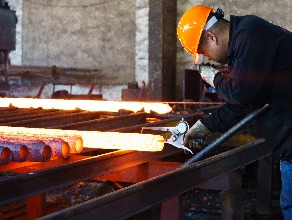
Too many procurement engineers treat quality control as a final inspection. They assume that if a tube passes a pressure test, it is good. But QC must begin long before the first draw. I once traced a batch failure back to a raw ingot that had an off-spec chemical composition, which had passed initial visual inspection but was missed because no positive material identification was done at receiving. A systematic QC plan sets hold points at every critical step: raw material intake, in-process dimensional checks after cold drawing, intermediate NDT, and final verification. Without this layered approach, a supplier is gambling that defects will magically reveal themselves at the end—and they often don’t.
From the moment steel enters the facility, QC gates begin.
– Receiving inspection: Verification of chemical composition via PMI, visual checks for surface defects, and dimensional checks on incoming billets or hot-rolled blanks. For example, our S355JR and 4140 tube production starts with a spectrometer check against the heat number. If the chemistry deviates from the order spec, the batch is quarantined immediately.
– In-process inspection: After cold drawing or cold rolling, tubes are checked for dimensions—outer diameter, wall thickness, straightness, ovality—and for surface condition. We typically use a combination of laser micrometers and eddy current testing to catch seam cracks or pits that are invisible to the eye. For precision tubes ordered under DIN 2391 or EN 10305-1, the tolerance is ±0.1 mm or tighter; continuous monitoring prevents drift.
– Mechanical and NDT: Tensile tests, hardness checks, and flattening/flaring tests are pulled from each batch. Ultrasonic or hydrostatic testing follows, depending on the application. Boiler tubes under ASTM A192 require a hydrostatic test at 1.5 times the design pressure; a single pinhole leak is grounds for rejection of the entire bundle.
– Final inspection and documentation: Dimensional final verification, surface finish, and marking are checked before the shipment is released. Every package is tied to the heat number and batch records, ensuring full traceability.
This table gives a snapshot:
| Defect Type | Detection Method | Prevention |
|---|---|---|
| Off-spec chemistry | PMI, spectrometer | Supplier audit, incoming check |
| Wall thickness variation | Laser micrometer, UT | Regular tooling inspection |
| Surface cracks | Eddy current, visual | Proper drawing lubricant, annealing |
| Internal laminations | Ultrasonic testing | Raw material quality control |
| Dimensional overshoot | Laser measurement | In-process feedback to drawing parameters |
A mill test certificate (MTC), such as an EN 10204 3.1, is the official record of tests performed and their results. It confirms the material’s chemical composition, mechanical properties (tensile strength, yield strength, elongation), and any supplementary tests (impact, hardness). But a certificate’s value depends entirely on how it was generated. I’ve seen MTCs that list only the minimum required mechanical values without the actual measured numbers. Others include impact test results taken from a separately produced specimen, not from the same heat. These gaps matter when the tube will operate at low temperatures or in cyclic loading.
So when you review an MTC, ask: Does it reference the specific heat number and batch number? Are the traceability links intact? Does it include results for every mandated test, or just a subset? If you need impact testing for Arctic service, that must be explicitly ordered and verified. The certificate itself is not the guarantee; the quality of the underlying process is what gives the certificate meaning.
If your program involves tubes for high-pressure or safety-critical applications, confirming that the mill test certificate includes specific impact test or hardness data for your grade is worth doing before finalizing your BOM. Reach out at Sunny@tenjan.com to clarify what tests are mandatory for your standard.
Every tube failure I have investigated traces back to one of a few root causes. The most frequent are:
– Dimensional drift: Tolerances creep out of spec because tooling wears down gradually. We counter this by plotting SPC charts and replacing dies before they degrade.
– Internal cracks: Residual stresses from improper annealing or uneven cooling cause cracks that open under pressure. Ultrasonic testing inline catches them before a tube leaves the drawing bench.
– Surface defects: Pits, scoring, or scale can degrade fatigue life. A well-designed process—proper cold-drawing lubricant and post-draw cleaning—coupled with visual inspection eliminates most of these.
– Mix-ups: Without rigorous heat tracing, a carbon steel tube can get mixed with an alloy lot. We use PMI at multiple stages and barcode-based tracking to prevent this.
You can read more about how cracking issues are controlled in our article on Analysis of Key Causes and Prevention Strategies for Cracking in Seamless Steel Tubes during Bending and Flattening.
When you are selecting a tube supplier, the facility’s QC capability matters more than a price list. I recommend asking these questions:
– Does the supplier have in-house NDT capability (ultrasonic, eddy current, hydrostatic) or do they outsource? In-house testing gives immediate feedback and tighter process control.
– What certifications do they hold? ISO 9001 is a baseline; look for additional certifications related to your standard, such as ISO/TS for automotive or ASME for pressure vessels.
– How do they handle non-conformances? A mature system will have documented root-cause analysis and corrective action, not just scrapping the bad tube.
– Can they supply first article inspection reports and full batch traceability back to the steel mill?
A vertically integrated manufacturer like Changzhou Tenjan Steel Tube, which performs PMI and NDT inspections in-house and offers full process control from raw material to finished product, eliminates the gaps that occur when different subcontractors handle different stages. For example, if you need 16MnCr5 tubes for gear blanks, confirm that the supplier’s in-house testing covers proper case-hardening response—we do.
Relying on hope that a tube will perform is not a strategy. When you work with a supplier whose QC process is integrated and transparent, you reduce the risk of field failures, warranty claims, and costly delays. You also gain the ability to specify exact properties—like a tighter wall tolerance for a hydraulic cylinder or a specific hardness after quenching and tempering—knowing that the process can deliver it consistently.
If your next project demands precision tubes where in-service reliability is non-negotiable, send your part number and quantity to Sunny@tenjan.com. We’ll confirm the standards, proposed QC plan, and lead time that fits your schedule. Reach us at +86 13401309791 for urgent inquiries.
What is the most reliable non-destructive test for seamless steel tubes?
A single test rarely catches everything. Ultrasonic testing is the standard for detecting internal volumetric defects; eddy current testing excels at surface and near-surface flaws; hydrostatic testing confirms pressure integrity. In critical applications, I recommend combining at least two methods—UT and hydrostatic, for instance—to catch different failure modes.
How often should in-process inspections occur?
Frequency depends on the process stability and the criticality of the part. For a stable cold-drawing line running a standard grade, a sample per shift might be sufficient. For a new tool setup or a high-strength alloy like 4130 or 4140, we increase frequency to every bundle until the process proves itself capable.
Does a high-quality mill test certificate mean the tube is good?
Not automatically. The certificate reports what was tested and the results. But if a critical test was omitted—such as impact testing for low-temperature service—the certificate will look clean while the tube may still fail. Always cross-check the ordered requirements against the certificate data.
How can I verify a supplier’s traceability system?
Ask for a sample trace record that links a finished tube back to the original steel heat number, including all processing steps. During a site audit, walk a tube backward from the shipping dock to the receiving log. A reliable trace system will let you do this in minutes, not hours.
For projects that involve complex profiles or multi-standard compliance, sharing your specifications early can reveal gaps in the QC chain before they become problems. Send your requirements to Sunny@tenjan.com and we’ll review the applicable testing regimen together.


Home Product Capabilities Case Studies Blogs About Get a Quote
Pipe & Tube Manufacturing Process Shapes & Profiles Pipes & Tubes Material Standard Steel Pipes & Tube Rebar Couplers Cold Drawn Steel Profiles & Bars
Oil & Petrochemical Industry Automotive & Motorcycle Components Mechanical Engineering Components Mining Construction Support Structures High-Pressure Boiler System Construction Machinery Geological Drilling Agricultural Machinery Parts Industrial Fluid Transfer Systems


© 2024 Changzhou Tenjan Steel Tube Co., Ltd All rights reserved. Privacy StatementTerms-ConditionsSitemap
