Welcome to Changzhou Tenjan Steel Tube Co., Ltd
Sunny@tenjan.com



The wall thickness tolerance of seamless tubes is a crucial indicator for measuring their quality grade, directly affecting the pipe's pressure-bearing capacity, processing performance, and service life. During the production and use of seamless tubes, the precision of wall thickness tolerance control often determines the final quality of the product. This article delves into the key factors influencing the wall thickness tolerance of seamless tubes and explores effective control methods.
Impact of Raw Material Characteristics on Wall Thickness Tolerance
The uniformity of raw materials is fundamental to ensuring the wall thickness tolerance of seamless tubes. Chemical composition segregation, internal defects, and microstructural inhomogeneity in the steel billet can all lead to wall thickness fluctuations during the rolling process. In particular, the core quality of the billet directly relates to the wall thickness uniformity of the tube body after piercing.
Changzhou Tenjan Tube Co., Ltd. addresses this issue through strict raw material screening and pre-processing techniques. The company procures round steel from major mills such as Baosteel and Xingcheng, characterized by dense microstructure and uniform composition, effectively reducing wall thickness deviation caused by raw material issues.
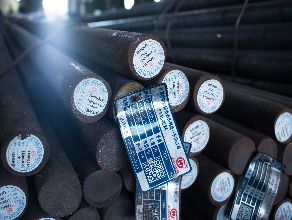
The raw material for seamless steel tubes
Crucial Role of Production Process Parameters
The piercing process is the core stage influencing the wall thickness tolerance of seamless tubes. Improper parameter settings, such as plug position, roll gap, and feed speed, can all cause wall thickness unevenness. Temperature control is especially critical; uneven heating leads to inconsistent plastic deformation of the metal, subsequently causing wall thickness fluctuations.
During the rolling process, tension control between stands also directly affects wall thickness precision. Changzhou Tenjan Tube Co., Ltd. employs advanced automated control systems to monitor and adjust process parameters in real-time. The precise control of rolling force and speed via PLC control systems ensures stable wall thickness tolerance within the standard range.
Equipment Condition and Die Precision
The operating condition of production equipment has a direct impact on the wall thickness tolerance of seamless tubes. Roll wear, loose guide devices, and backlash in the drive system can all lead to wall thickness variations. Especially for small-diameter thin-walled tubes, equipment precision requirements are higher.
Influence of Heat Treatment Process
Temperature non-uniformity during the heat treatment process can cause deformation of seamless tubes, thereby affecting wall thickness tolerance. Particularly during quenching, differences in cooling rates may lead to non-synchronous phase transformations, resulting in localized wall thickness changes.
Changzhou Tenjan Tube Co., Ltd. utilizes walking beam heat treatment furnaces to ensure uniform heating of the tubes. The furnace temperature is precisely controlled by a computer system, with the maximum temperature difference maintained within ±5°C. Furthermore, a forced circulation cooling system is employed to guarantee uniform cooling, effectively controlling wall thickness changes during heat treatment.
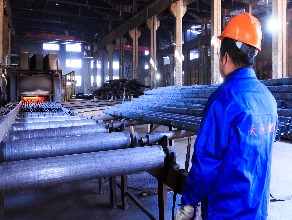
Heat Treatment Process for Seamless Steel Tubes
Technological Innovation and Quality Control
Changzhou Tenjan Tube Co., Ltd. continuously enhances its wall thickness tolerance control level through ongoing technological innovation. The company has introduced online thickness measurement systems to monitor wall thickness changes in real-time and promptly adjust process parameters. 3D simulation technology is used to optimize pass design, improving the uniformity of metal flow.
Regarding quality control, the company has established a comprehensive quality management system. Each batch of seamless tubes undergoes rigorous wall thickness inspection, employing ultrasonic thickness gauges for multi-point measurements along the entire length to ensure wall thickness tolerance meets standard requirements. For tubes intended for precision applications, wall thickness tolerance can be controlled within ±5%.
Conclusion
The factors influencing the wall thickness tolerance of seamless tubes involve multiple aspects including raw materials, processes, and equipment, necessitating systematic control measures. Changzhou Tenjan Tube Co., Ltd. ensures its products meet high-standard wall thickness tolerance requirements through advanced production equipment, sound process control, and stringent quality management. The company remains committed to technological innovation and quality improvement, providing customers with superior seamless tube products. For more technical information or product details, please call 0519-88789990 or visit the official website at https://www.tenjan.com/.


Home Product Capabilities Case Studies Blogs About Get a Quote
Pipe & Tube Manufacturing Process Shapes & Profiles Pipes & Tubes Material Standard Steel Pipes & Tube Rebar Couplers Cold Drawn Steel Profiles & Bars
Oil & Petrochemical Industry Automotive & Motorcycle Components Mechanical Engineering Components Mining Construction Support Structures High-Pressure Boiler System Construction Machinery Geological Drilling Agricultural Machinery Parts Industrial Fluid Transfer Systems


© 2024 Changzhou Tenjan Steel Tube Co., Ltd All rights reserved. Privacy StatementTerms-ConditionsSitemap
