Welcome to Changzhou Tenjan Steel Tube Co., Ltd
Sunny@tenjan.com



Getting steel tubes right comes down to one thing: control. Every step matters, from the raw billet to the finished product sitting on the shipping dock. Material inconsistencies that seem minor on paper can translate into real problems once tubes are installed in high-pressure systems or load-bearing structures. The approach here centers on tight adherence to global standards and inspection methods that actually catch defects before they become someone else’s problem. Precision runs through the entire process, and that shows up in how these tubes perform when it counts.
The ISO-certified quality control system at Changzhou Tenjan Steel Tube Co.,Ltd. sets the baseline for everything that follows. This framework touches every production stage, keeping output consistent and specifications locked in. Checks happen from the moment raw materials arrive through final verification before shipment. Systematic monitoring catches deviations early, which protects the reputation built around precision steel tubing. Quality assurance measures run continuously through daily operations rather than appearing only at inspection points. Products consistently hit the benchmarks that matter in this industry.
Manufacturing processes incorporate ASTM, EN, DIN, and JIS standards throughout. This compliance means steel tubes work for projects across different regions with different regulatory requirements. Each standard specifies chemical compositions, mechanical properties, dimensions, and testing protocols in its own way. ASTM A179 Steel Pipe covers seamless cold-drawn low-carbon steel tubes for heat exchangers. DIN 17175 Steel Pipe handles high-temperature boiler applications. Products like JIS G3445 Steel Pipe and STKM11A Steel Pipes follow these same rigorous alignment requirements.
| Standard | Focus Area | Key Characteristics |
|---|---|---|
| ASTM | Material & Testing | Broad range, often performance-based |
| EN | European Harmonization | Mechanical and structural applications |
| DIN | German Industrial Norms | Precision and specific material grades |
| JIS | Japanese Industrial | Boiler, heat exchanger, and structural uses |
Full control over the production chain starts with raw material sourcing and runs through every processing step. This setup eliminates the gaps where quality problems typically hide. Stringent checks at each stage verify material composition and structural properties before work continues. End-to-end oversight keeps defects low and quality predictable. The difference shows up in material integrity and how tubes actually perform in service.
NDT protocols guarantee material integrity and catch defects that visual inspection would miss. Positive Material Identification confirms alloy composition, which prevents the kind of material mix-ups that cause serious problems downstream. Ultrasonic testing finds internal flaws and wall thickness variations. Eddy current testing picks up surface and near-surface discontinuities. These methods apply to all products, including Seamless Alloy Steel Tubes, ensuring reliability where it matters most.
NDT becomes especially critical for high-pressure boiler tubes where failure consequences are severe. Ultrasonic and eddy current testing detect internal flaws, surface cracks, and wall thickness variations that could lead to catastrophic failures. Tubes like ASTM A192 Steel Pipe and DIN 17175 Steel Pipe undergo these inspections as standard practice. Rigorous NDT application prevents problems in high-temperature, high-pressure environments where there is no room for material defects.
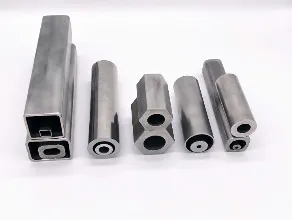
Cold drawn and custom shaped steel tubes require manufacturing precision that holds tight tolerances across complex geometries. cold drawn profiles and cold drawn welded tube production achieves exceptional dimensional accuracy for specific application requirements. Capabilities extend to Special-Shaped Alloy Steel Tubes and Special-Shaped Carbon Steel Tubes, along with profiles like oval-steel-pipes%26tubes, hexagonal-steel-pipes%26tubes, and octagonal-steel-pipes%26tubes. Surface finish and mechanical properties meet the demands of complex engineering designs.
Precision tube manufacturing uses meticulous dimensional measurement systems for products like Precision Pipe&tube. Metallurgical microscopy analyzes the microstructural integrity of Seamless Carbon Steel Tubes. Mechanical testing covers tensile strength, hardness, and impact resistance to verify performance characteristics. Continuous in-process monitoring combined with final product inspection ensures every seamless, cold-drawn, and custom tube meets exact specifications.
High-precision tubing solutions serve OEMs and engineering projects across automotive, hydraulics, and construction machinery sectors. 4140 Steel Pipe and SCM440 Steel Pipe handle demanding automotive component applications. ST52 Steel Pipe and E355 Steel Pipe see heavy use in construction machinery. These tubes are engineered for extreme conditions and the kind of operational demands that expose any weakness in material or manufacturing quality.
Quality standards translate directly into durability and reliability for automotive and hydraulic applications. 25CrMo4 Steel Pipe and 41Cr4 Alloy Pipe handle high-stress automotive requirements. Hydraulic systems rely on ST35 Seamless Pipe and S355JR Steel Pipe for robust performance under pressure cycling. Precise dimensional tolerances and superior material properties prevent premature wear and the kind of failures that shut down production lines or strand equipment in the field.
Investment in research and development keeps processes and product offerings moving forward. The team explores new materials and manufacturing techniques that push beyond current capabilities. Adapting to market demands and technological changes happens continuously rather than in occasional overhauls. The goal remains consistent: exceed current quality standards and establish new benchmarks for what precision steel tubing can deliver.
Engineering projects that require precision steel tubing meeting rigorous international standards start with the right supplier. Changzhou Tenjan Steel Tube Co.,Ltd. brings vertically integrated manufacturing, ISO-certified quality control, and tailored solutions for critical applications. Contact us to discuss specific requirements and see how material integrity and performance translate into project success. Email: Sunny@tenjan.com | Tel: +86 51988789990 | WhatsApp: +86 13401309791| Tel: +86 51988789990 | WhatsApp: +86 13401309791
ASTM, EN, DIN, and JIS are international standards bodies that define specifications for steel tubes, covering chemical composition, mechanical properties, dimensions, and testing methods. While they often address similar applications, their specific requirements, nomenclature, and testing protocols differ in ways that matter for compliance. Tenjan Steel Tube maintains full compliance with all these major standards, providing tubes that meet diverse global project specifications.
Non-Destructive Testing inspections like ultrasonic testing, eddy current testing, and radiographic inspection detect internal flaws, surface cracks, wall thickness variations, and material inconsistencies without damaging the tube. Rigorous NDT application ensures structural integrity and safety for tubes destined for critical high-pressure applications where failure is not an option.
Precision steel tube manufacturing employs Positive Material Identification to verify alloy composition, precise dimensional measurement systems, and metallurgical microscopy for microstructural analysis. Mechanical testing covers tensile strength, hardness, and impact resistance. These methods combine with continuous in-process monitoring and final product inspection to ensure every tube meets exact specifications.
Vertical integration means controlling the entire manufacturing process from raw material sourcing through the finished product. This comprehensive oversight enables stringent quality checks at every stage, ensuring consistency in material composition, precise manufacturing tolerances, and adherence to all quality standards. End-to-end control minimizes defects, enhances material integrity, and guarantees superior final products.


Home Product Capabilities Case Studies Blogs About Get a Quote
Pipe & Tube Manufacturing Process Shapes & Profiles Pipes & Tubes Material Standard Steel Pipes & Tube Rebar Couplers Cold Drawn Steel Profiles & Bars
Oil & Petrochemical Industry Automotive & Motorcycle Components Mechanical Engineering Components Mining Construction Support Structures High-Pressure Boiler System Construction Machinery Geological Drilling Agricultural Machinery Parts Industrial Fluid Transfer Systems


© 2024 Changzhou Tenjan Steel Tube Co., Ltd All rights reserved. Privacy StatementTerms-ConditionsSitemap
