Welcome to Changzhou Tenjan Steel Tube Co., Ltd
Sunny@tenjan.com



Carbon pipes sit at the heart of countless industrial systems, quietly doing the heavy lifting that keeps machinery running and fluids moving where they need to go. Getting the right one for a specific job means understanding what goes into making them and how different compositions behave under real-world conditions. What follows covers the practical side of carbon pipe technology, from the metallurgy that determines performance to the manufacturing choices that separate adequate pipes from excellent ones.
The carbon content in steel pipes acts as the primary dial for adjusting mechanical behavior. More carbon generally means harder, stronger material, but that comes at the cost of ductility and weldability. Finding the right balance depends entirely on what the pipe needs to do.
Low-carbon grades like 1020 Steel Pipe work well when forming and welding are priorities. Medium-carbon options such as S45C Steel Tubes and 1035 Seamless Pipe split the difference between strength and workability. When applications demand more, alloy steels enter the picture. Grades like 4140 Steel Pipe and 25CrMo4 Steel Pipe bring chromium and molybdenum into the mix, boosting hardenability and high-temperature performance. The chemistry sheet matters because it predicts how the pipe will behave when conditions get demanding.
| Grade (Example) | Carbon Content (%) | Key Properties | Typical Applications |
|---|---|---|---|
| 1020 | 0.18-0.23 | Good weldability, formability | General structural, automotive |
| 1035 | 0.32-0.38 | Balanced strength, ductility | Machinery parts, shafts |
| S45C | 0.42-0.48 | Good mechanical properties, machinability | Machine structural components |
| 4140 | 0.38-0.43 | High strength, toughness, wear resistance | Automotive, high-pressure parts |
| 25CrMo4 | 0.22-0.29 | High hardenability, high-temperature strength | Boilers, pressure vessels |
How a carbon pipe gets made affects its performance just as much as what it’s made from. Seamless production starts with a solid billet, pierced and rolled without ever creating a weld seam. That absence of a seam means uniform strength throughout the wall, which matters when pressure containment is non-negotiable.
Cold drawing and cold rolling take things further. These processes squeeze the metal through dies at room temperature, tightening tolerances and improving surface quality. Precision Pipe&tube products go through these steps to hit specifications that hot-finished material simply cannot match. For applications where cost and precision need balancing, cold drawn welded tube offers a middle path. The manufacturing route chosen shapes everything from dimensional consistency to how the pipe handles fatigue over time.
Cold drawing significantly improves the mechanical properties of carbon steel tubes. This process increases tensile strength and yield strength by inducing strain hardening. It also refines the grain structure, leading to enhanced fatigue resistance. Furthermore, cold drawing provides superior dimensional accuracy and a smoother surface finish, reducing friction and improving aesthetic quality for precision applications.
The range of industries relying on carbon pipes reflects their adaptability. High pressure, elevated temperatures, corrosive fluids, mechanical stress: carbon pipes handle all of these depending on grade and construction.
Automotive manufacturing uses STKM11A Steel Pipes and STKM13A Steel Tubes for components where strength and tight tolerances matter. Power generation facilities spec ASTM A192 Steel Pipe and DIN 17175 Steel Pipe for boiler tubes that see extreme heat and pressure daily. Hydraulic systems in heavy equipment run on ST52 Steel Pipe and E355 Steel Pipe, chosen for their mechanical properties and weldability. Oil and gas operations, geological drilling rigs, and petrochemical plants all depend on carbon pipes to move fluids reliably under conditions that would quickly destroy lesser materials.
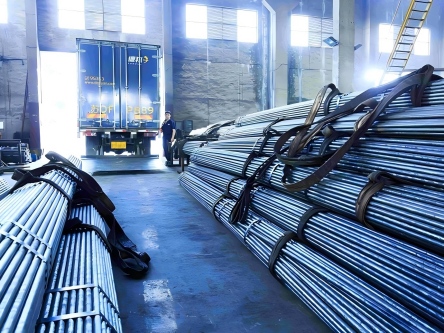
Seamless carbon pipes offer significant advantages in high-pressure systems due to their inherent structural integrity. Without a welded seam, they provide superior pressure containment and a uniform wall thickness, minimizing weak points. This design reduces the risk of leaks and catastrophic failures, ensuring enhanced safety and operational efficiency in demanding high-pressure environments.
International standards exist because carbon pipes often go into applications where failure carries serious consequences. ASTM, EN, DIN, and JIS specifications define what a pipe must be made of, how it must perform, and how those properties get verified.
ASTM A106 Gr.B Steel Pipe shows up regularly in high-temperature service. EN10305-1 Steel Pipe covers precision cold-drawn tubes. Meeting these standards requires more than paperwork. ISO-certified quality systems back up claims with actual testing. Positive Material Identification confirms the chemistry matches what the documentation says. Non-Destructive Testing catches internal defects before pipes ship. This verification chain protects everyone downstream who depends on the pipe performing as specified.
For critical applications, carbon pipes must adhere to specific industry standards. Key standards include ASTM (e.g., ASTM A179 Steel Pipe for heat exchangers, ASTM A519 Steel Pipe for mechanical tubing), EN (e.g., EN 10297-1 Steel Pipe for mechanical applications), DIN (e.g., DIN 2391 Steel Pipe for precision tubes), and JIS (e.g., JIS G3445 Steel Pipe for machine structural purposes). These standards define material properties, dimensions, testing requirements, and application suitability, ensuring reliability and safety.
Standard catalog items cover most needs, but some applications demand something different. OEMs designing new equipment and engineers tackling unusual projects often need pipes with non-standard dimensions, specific alloy tweaks, or unconventional cross-sections.
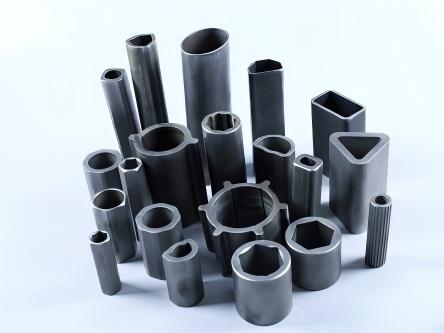
Custom-shaped steel tubes like Hexagonal Steel Pipes&Tubes, Oval Steel Pipes&Tubes, and Triangle Lemon Steel Pipes&Tubes serve applications where round pipe simply will not work. Manufacturing these requires control over the entire production sequence, from raw material selection through final inspection. That level of integration makes it possible to deliver pipes that match exact dimensional and material specifications, even when those specifications fall outside standard offerings.
Choosing a Manufacturing Partner
The manufacturer behind a carbon pipe affects long-term value as much as the pipe itself. Vertical integration, where one company controls everything from raw material sourcing to finished product shipment, reduces the variables that can introduce quality problems. Changzhou Tenjan Steel Tube operates this way, maintaining oversight across the entire production chain.
That control translates into consistent quality and reliable supply. When specifications get tight or timelines get short, having a single accountable source simplifies problem-solving. Precision manufacturing, standards compliance, and customization capability all matter, but they matter most when backed by a supplier who can actually deliver on commitments.
Seamless carbon pipes are manufactured from a solid billet, offering superior pressure resistance, uniform wall thickness, and higher structural integrity, making them ideal for high-pressure and high-temperature applications. Welded pipes, while cost-effective, have a seam that can be a point of weakness under extreme conditions. Changzhou Tenjan specializes in both, ensuring the right solution for your specific needs.
To ensure compliance, always verify that your supplier adheres to recognized international standards such as ASTM, EN, DIN, and JIS. Look for ISO-certified manufacturers like Changzhou Tenjan Steel Tube, who conduct rigorous quality control, including PMI (Positive Material Identification) and NDT (Non-Destructive Testing) inspections, guaranteeing material integrity and performance.
Absolutely. Leading manufacturers, including Changzhou Tenjan Steel Tube, offer extensive customization capabilities for carbon pipes. This includes tailored dimensions, specific alloy compositions, and custom-shaped steel tubes (e.g., square, rectangular, hexagonal, or complex geometries) to meet the precise requirements of OEMs and specialized engineering projects. Our full process control from raw material to finished product ensures high-precision results.
For over two decades, Changzhou Tenjan Steel Tube Co.,Ltd has been the trusted name in precision carbon pipe manufacturing. Our vertical integration, ISO-certified quality, and commitment to custom engineering ensure your critical applications receive only the highest standard of steel tubing. Connect with our experts today to discuss your project requirements and experience the Tenjan difference in quality and reliability. Email us at Sunny@tenjan.com or call us at +86 51988789990 or +86 13401309791.


Home Product Capabilities Case Studies Blogs About Get a Quote
Pipe & Tube Manufacturing Process Shapes & Profiles Pipes & Tubes Material Standard Steel Pipes & Tube Rebar Couplers Cold Drawn Steel Profiles & Bars
Oil & Petrochemical Industry Automotive & Motorcycle Components Mechanical Engineering Components Mining Construction Support Structures High-Pressure Boiler System Construction Machinery Geological Drilling Agricultural Machinery Parts Industrial Fluid Transfer Systems


© 2024 Changzhou Tenjan Steel Tube Co., Ltd All rights reserved. Privacy StatementTerms-ConditionsSitemap
