Welcome to Changzhou Tenjan Steel Tube Co., Ltd
Sunny@tenjan.com



Choosing the right hydraulic tube and the right way to bend it has a direct, visible effect on performance and service life. We have seen how small differences in material behavior, tooling, and process control determine whether a tube holds pressure and stays reliable. Our approach stays steady across every project: evaluate feasibility, select the right materials, apply proven bending methods, prevent defects, validate against standards, and deliver parts that match demanding conditions.
A hydraulic tube is a critical component designed to convey fluids under high pressure, commonly in hydraulic systems. Its functionality relies on precise material properties and manufacturing accuracy. The fundamental principles governing tube bending involve understanding material ductility, wall thickness, and the bend radius. These factors dictate whether a tube can be bent without compromising its structural integrity. We consider these elements meticulously to ensure the bent tube maintains its pressure resistance and operational reliability.
We employ various engineering solutions for bending hydraulic tubes, focusing on maintaining structural integrity and pressure resistance. Cold drawing is a primary process that enhances dimensional accuracy and surface finish. Mandrel bending, another specialized technique, supports the tube’s interior during bending, preventing ovality and wall thinning. These advanced methods are critical for producing tubes that meet the demanding performance requirements of hydraulic applications. We continually refine our processes to address common challenges and ensure superior product quality.
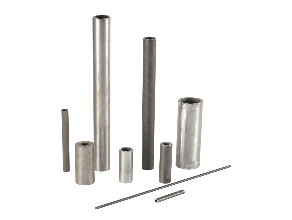
The selection of materials and rigorous quality control are paramount for reliable bent hydraulic tubes. Different steel alloys, such as carbon steel and alloy steel, exhibit distinct responses to bending. Our ISO-certified processes, including Positive Material Identification (PMI) and Non-Destructive Testing (NDT) inspections, are vital for preventing defects and ensuring long-term performance. We emphasize material integrity and full process control from raw material to finished product.
The alloy composition significantly influences a tube’s bending characteristics. For instance, 4140 Steel Pipe offers excellent strength and toughness, making it suitable for applications requiring high wear resistance. Conversely, ST35 Seamless Pipe provides good formability due to its low-carbon content. Understanding these material differences is critical for selecting the appropriate tube for specific bending requirements and ensuring the final product’s performance.
| Material Type | Key Properties | Bending Suitability | Common Applications |
|---|---|---|---|
| Carbon Steel | Good weldability, formability | High | General structural, fluid transport |
| Alloy Steel | High strength, toughness, wear resistance | Medium to High | Automotive, high-pressure boilers |
| Chromium-Molybdenum | Excellent hardenability, high-temperature strength | Medium | Automotive, petroleum cracking |
| Free-Cutting Steel | Superior machinability | Variable | Precision components |
Preventing defects like ovality, wrinkling, and wall thinning is critical in hydraulic tube bending. Ovality occurs when the tube cross-section deforms into an oval shape, compromising flow efficiency. Wrinkling often appears on the inner radius of the bend due to material compression. Wall thinning, occurring on the outer radius, can reduce the tube’s pressure capacity. We mitigate these issues through precise tooling, controlled bending speeds, and advanced simulation software.
For those interested in maintaining the structural integrity of steel tubes, we recommend reading 《Analysis of Key Causes and Prevention Strategies for Cracking in Seamless Steel Tubes during Bending and Flattening》.
We provide tailored, high-precision tubing for diverse critical applications, meeting the demands of OEMs and specialized engineering projects. Our advanced manufacturing capabilities enable us to produce Special-Shaped Alloy Steel Tubes and Special-Shaped Carbon Steel Tubes with complex geometries. This includes various cross-sectional profiles such as Oval Steel Pipes&Tubes, Hexagonal Steel Pipes&Tubes, and Triangle Lemon Steel Pipes&Tubes. We ensure that even the most intricate designs maintain structural integrity and performance.
The future of hydraulic tube bending is being shaped by continuous innovations, including advanced automation and sophisticated simulation software for stress analysis. These technologies allow for predictive modeling, minimizing material waste and optimizing bending processes. We anticipate further advancements in material science, leading to tubes with enhanced properties that can withstand even more extreme conditions. These innovations will ensure that bent hydraulic tubes continue to meet increasingly stringent performance and design requirements, driving efficiency and reliability across industries.
Discover how Changzhou Tenjan Steel Tube Co.,Ltd’s expertise in precision steel tubing and custom bending solutions can support your next engineering project. Contact us today for tailored hydraulic tube fabrication that meets the highest ASTM, EN, DIN, and JIS standards. Email Sunny@tenjan.com or call +86 51988789990.
Bending hydraulic steel tubes requires careful consideration of material properties (e.g., ductility, yield strength), wall thickness, bend radius, and the specific bending method used to prevent material fatigue, ovality, and maintain pressure integrity. Adherence to industry standards like ASTM, EN, DIN, and JIS is critical for safety and performance.
Cold drawing enhances the mechanical properties of steel tubes, increasing their strength and surface finish. While it can improve dimensional accuracy, it also makes the material harder, potentially requiring more controlled bending processes or annealing to prevent cracking or excessive springback, especially for tighter bend radii.
Key quality control measures include Non-Destructive Testing (NDT) such as ultrasonic or eddy current inspection for internal flaws, Positive Material Identification (PMI) to verify alloy composition, dimensional inspection for ovality and wall thinning, and pressure testing to ensure leak-free performance under operating conditions. ISO certification further guarantees adherence to rigorous quality standards.
Yes, with advanced engineering solutions and specialized bending equipment, hydraulic tubes can be bent into complex geometries while maintaining performance. This often involves mandrel bending, 3D bending simulations, and precise tooling to control material flow and prevent deformation, ensuring the tube’s structural integrity and pressure rating are preserved for critical applications.
Partnering with a vertically integrated manufacturer like Tenjan Steel Tube offers significant benefits, including full process control from raw material to finished product, ensuring consistent quality and material integrity. This allows for tailored, high-precision tubing solutions, reduced lead times, and expert consultation on material selection and bending feasibility, critical for complex OEM and engineering projects.


Home Product Capabilities Case Studies Blogs About Get a Quote
Pipe & Tube Manufacturing Process Shapes & Profiles Pipes & Tubes Material Standard Steel Pipes & Tube Rebar Couplers Cold Drawn Steel Profiles & Bars
Oil & Petrochemical Industry Automotive & Motorcycle Components Mechanical Engineering Components Mining Construction Support Structures High-Pressure Boiler System Construction Machinery Geological Drilling Agricultural Machinery Parts Industrial Fluid Transfer Systems


© 2024 Changzhou Tenjan Steel Tube Co., Ltd All rights reserved. Privacy StatementTerms-ConditionsSitemap
