Welcome to Changzhou Tenjan Steel Tube Co., Ltd
Sunny@tenjan.com



We get asked a lot which steel best fits a given job. The line between hot rolled and cold drawn matters, yet it’s easy to mix them up. Both start from similar stock, then diverge in processing, which changes microstructure, strength, tolerances, and surface finish in meaningful ways. Understanding that difference helps engineers and manufacturers choose with confidence, protecting structural integrity and performance across a wide range of industrial work.
How steel is made sets everything that follows, from microstructure to dimensional accuracy and finish. Hot rolling and cold drawing take different paths, and those choices leave a distinct fingerprint on the final product. We control each stage from raw material to finished piece, mindful of how temperature and mechanical force shape the outcome.
Hot rolling starts by heating steel billets to more than 926°C (1700°F), above the steel’s recrystallization temperature.
1.We send the heated billets through a series of rollers.
2.These rollers progressively reduce the cross-sectional area and shape the steel into its desired form.
3.The high temperature prevents work hardening, allowing for easier deformation.
4.Cooling occurs naturally after rolling, which can lead to a less uniform microstructure.
5.This process often results in a scaled surface and looser dimensional tolerances.
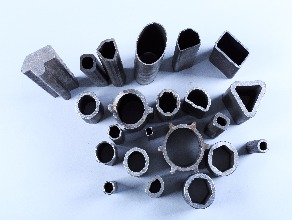
The cold drawing process starts with hot rolled steel that has been descaled and cleaned.
1.We pull the steel through a die at room temperature.
2.This mechanical deformation refines the grain structure and increases material strength.
3.The cold working process enhances dimensional accuracy and surface finish.
4.We often perform subsequent heat treatments, such as annealing, to relieve internal stresses and improve ductility.
5.This method yields steel with superior mechanical properties and tighter tolerances.
The differing manufacturing processes directly affect the mechanical properties of hot rolled and cold drawn steel. Cold drawn steel generally exhibits superior performance across key characteristics.
| Property | Hot Rolled Steel | Cold Drawn Steel |
|---|---|---|
| Tensile Strength | Moderate | High |
| Yield Strength | Moderate | High |
| Hardness | Lower | Higher |
| Ductility | Higher | Moderate (can be adjusted) |
| Dimensional Toler. | Wider | Tighter |
| Surface Finish | Rough, scaled | Smooth, bright |
We observe that the cold drawing process significantly increases both tensile and yield strength due to work hardening. While cold drawn steel might initially have reduced ductility compared to hot rolled, subsequent heat treatments can restore a desirable balance. For applications demanding high strength and wear resistance, cold drawn materials like SCM440 Steel Pipe or 25CrMo4 Steel Pipe are often specified.
Cold drawn steel consistently outperforms hot rolled steel in dimensional tolerances and surface quality. Our processes ensure much tighter control over dimensions, producing a smoother, more aesthetically pleasing surface. This precision is key for components requiring minimal post-processing. For instance, EN10305-1 Steel Pipe and DIN 2391 Steel Pipe exemplify the high accuracy achieved through cold drawing, making them ideal for hydraulic cylinders and automotive parts where exact dimensions are paramount.
The choice between hot rolled and cold drawn steel depends on the specific industry demands and performance requirements. Cold drawn steel’s enhanced properties make it ideal for critical applications, aligning with our expertise in precision manufacturing.
Hot rolled steel is generally more cost-effective for applications where dimensional precision and surface finish are not primary concerns. Its lower processing cost makes it suitable for large structural components and general construction. For example, Q355B Steel Pipe and St37 Steel Pipe are frequently used in structural engineering due to their good weldability and mechanical properties, where the application tolerates wider dimensional variations.
Cold drawn steel excels in applications demanding high precision, superior strength, and excellent surface quality. Its enhanced mechanical properties and tight tolerances are invaluable in critical engineering sectors. We provide Precision Pipe&tube for automotive and motorcycle components, where exact fits and high fatigue strength are vital. Similarly, in fluid transport systems and high-pressure boilers, materials like ASTM A179 Steel Pipe and DIN 17175 Steel Pipe are chosen for their reliability under demanding conditions.
For a deeper understanding of material behavior, consider reading about the challenges in processing steel tubes. If you’re interested, check 《Analysis of Key Causes and Prevention Strategies for Cracking in Seamless Steel Tubes during Bending and Flattening》.
The economic factors involved in selecting between hot rolled and cold drawn steel extend beyond initial material costs. While cold drawn steel may have a higher upfront price, its superior properties often lead to overall cost savings. Reduced machining time, minimized material waste, and extended product lifespan contribute to a more favorable total cost of ownership. For example, using 1215 Steel Pipe or Y15 Steel Pipe with excellent machinability can significantly lower manufacturing costs for intricate components.
Hot rolled steel often has a rougher, scaled surface and less precise dimensions, often with rounded edges. Cold drawn steel, in contrast, features a smooth, bright surface, sharp corners, and very tight dimensional tolerances due to the cold working process.
Yes, hot rolled steel often serves as the raw material for the cold drawing process. It undergoes pickling to remove scale, followed by cold drawing, which refines its properties to those of cold drawn steel.
Generally, cold drawn steel has a higher per-unit cost due to the additional processing steps. However, its superior properties can lead to overall cost savings in manufacturing by reducing machining time, minimizing waste, and eliminating the need for post-processing treatments like grinding or polishing.
Cold drawn steel tubes are manufactured to various international standards, including ASTM A519 (seamless carbon and alloy steel mechanical tubing), EN 10305 (steel tubes for precision applications), DIN 2391 (seamless precision steel tubes), and JIS G3445 (carbon steel tubes for machine structural purposes), among others, depending on the specific application and regional requirements.
The high dimensional accuracy of cold drawn steel is paramount in applications requiring tight fits and precise component integration, such as hydraulic cylinders, automotive shafts, precision bearings, and any machinery where exact dimensions are vital for performance and longevity.


Home Product Capabilities Case Studies Blogs About Get a Quote
Pipe & Tube Manufacturing Process Shapes & Profiles Pipes & Tubes Material Standard Steel Pipes & Tube Rebar Couplers Cold Drawn Steel Profiles & Bars
Oil & Petrochemical Industry Automotive & Motorcycle Components Mechanical Engineering Components Mining Construction Support Structures High-Pressure Boiler System Construction Machinery Geological Drilling Agricultural Machinery Parts Industrial Fluid Transfer Systems


© 2024 Changzhou Tenjan Steel Tube Co., Ltd All rights reserved. Privacy StatementTerms-ConditionsSitemap
