Welcome to Changzhou Tenjan Steel Tube Co., Ltd
Sunny@tenjan.com



Selecting the right square steel tubes starts with a clear grasp of their dimensions and where each standard fits. Precision underpins structural integrity and assembly fit, and our experience keeps reminding us that small mismatches turn into big costs. Below is a practical look at size ranges, the main standards in use, how manufacturing affects tolerances, and how to pick and calculate what you need, with options for custom profiles when the project calls for them.
Precision in steel tube manufacturing is paramount. We observe that even minor deviations in dimensions can compromise structural integrity and assembly fit. Therefore, understanding and adhering to dimensional standards is fundamental to successful engineering and construction.
Square steel tubes are hollow structural sections with a square cross-section. Manufacturers produce them from carbon or alloy steel. Key dimensions include side length, wall thickness, and corner radius. These tubes offer high strength-to-weight ratios, making them efficient for various structural applications.
Dimensional standards ensure interchangeability and consistent performance across different manufacturers. Without these standards, components would not fit together reliably. This could lead to structural failures or extensive rework. We rely on these standards to guarantee product quality and safety.
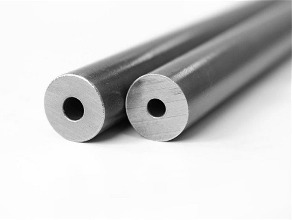
International standards provide a common language for specifying and manufacturing square steel tubes. We see these standards as crucial for global compatibility and quality assurance. They define material grades, dimensions, and testing procedures.
The ASTM A500 standard specifies cold-formed welded and seamless carbon steel structural tubing. This standard covers various shapes, including square, rectangular, and round. It is widely used in North America for structural applications. Common grades include Grade B, C, and D, each with specific yield and tensile strength requirements.
| Side Dimension (mm) | Wall Thickness (mm) | Weight (kg/m) | ASTM A500 Grade | Application |
|---|---|---|---|---|
| 25 x 25 | 1.5 – 3.0 | 1.0 – 2.2 | B, C | Light structural, frames |
| 50 x 50 | 2.0 – 5.0 | 2.9 – 7.0 | B, C, D | General structural, machinery |
| 100 x 100 | 3.0 – 8.0 | 8.8 – 22.8 | B, C, D | Heavy structural, columns |
The EN 10219 standard is a European norm for cold-formed structural hollow sections. It covers both welded and seamless square tubes. This standard is critical for construction projects within Europe. It includes material grades like S235JRH, S275J0H, and S355J2H, indicating specific impact properties.
| Side Dimension (mm) | Wall Thickness (mm) | Weight (kg/m) | EN 10219 Grade | Application |
|---|---|---|---|---|
| 30 x 30 | 2.0 – 4.0 | 1.7 – 3.2 | S235JRH | Architectural, light frames |
| 60 x 60 | 3.0 – 6.0 | 5.2 – 9.8 | S275J0H | General construction, supports |
| 120 x 120 | 4.0 – 10.0 | 14.2 – 34.5 | S355J2H | Heavy load-bearing structures |
The JIS G3466 standard specifies carbon steel square pipes for general structural purposes in Japan. This standard is crucial for projects adhering to Japanese industrial requirements. It defines dimensions and mechanical properties for various applications.
| Side Dimension (mm) | Wall Thickness (mm) | Weight (kg/m) | JIS G3466 Grade | Application |
|---|---|---|---|---|
| 20 x 20 | 1.2 – 2.3 | 0.7 – 1.3 | STKR400 | Furniture, light fabrication |
| 40 x 40 | 1.6 – 3.2 | 1.9 – 3.7 | STKR400 | General structural, frames |
| 80 x 80 | 2.3 – 4.5 | 5.3 – 10.0 | STKR490 | Building structures, bridges |
For more information on the causes and prevention of cracking in seamless steel tubes during bending and flattening, we recommend reading 《Analysis of Key Causes and Prevention Strategies for Cracking in Seamless Steel Tubes during Bending and Flattening》.
Several factors significantly impact the final dimensions and allowable tolerances of square steel tubes. We meticulously control these elements during manufacturing to ensure product quality. Understanding these influences helps in selecting the right tube for specific needs.
The manufacturing process, primarily cold drawing or cold forming, dictates dimensional precision. Cold drawing involves pulling a tube through a die, resulting in exceptional dimensional accuracy and surface finish. Cold-formed welded tubes are shaped from flat steel strips and then welded. This process offers good dimensional control but generally less precision than cold drawing. We utilize both processes to meet diverse client requirements.
Dimensional tolerances define the permissible variations from specified dimensions. These include variations in side length, wall thickness, and straightness. Corner radii, the curvature at the tube’s corners, are also critical. Standards specify acceptable ranges for these parameters. Tighter tolerances often increase manufacturing costs but are essential for precision applications. For example, DIN 2391 Steel Pipe specifies precision seamless cold-drawn steel pipes with high accuracy.
Square steel tubes are versatile components used across numerous industries. Their selection depends on the specific application’s structural, aesthetic, and environmental demands. We guide our clients in making informed choices based on performance requirements.
Square steel tubes find extensive use in construction, automotive, and machinery manufacturing. In construction, they serve as columns, beams, and trusses. The automotive industry uses them for chassis and frame components. For example, Q355B Steel Pipe is a high-strength low-alloy structural steel pipe used in structural engineering. Hydraulic systems frequently incorporate square tubes for fluid transport. Each application demands specific dimensions and material properties.
Engineers must accurately calculate the weight and load-bearing capacity of square tubes. This ensures structural integrity and safety. The weight per unit length is calculated using the material density and cross-sectional area. Load-bearing capacity depends on material strength, wall thickness, and tube geometry. We provide detailed specifications to aid these critical calculations.
Formula for Weight per Unit Length (W):
W = (4 * side_length – 4 * wall_thickness) * wall_thickness * density
Example: For a 50x50x3mm square tube (side_length = 50mm, wall_thickness = 3mm) made of carbon steel (density ≈ 7850 kg/m³):
W = (4 * 0.050m – 4 * 0.003m) * 0.003m * 7850 kg/m³ ≈ 4.35 kg/m
Many projects require square steel tubes that deviate from standard dimensions. We specialize in providing customized solutions to meet these unique engineering challenges. Our capabilities extend to producing a wide range of custom profiles and specifications. We offer Special-Shaped Alloy Steel Tubes and Special-Shaped Carbon Steel Tubes to address complex design requirements.
We leverage advanced cold drawing and cold rolling processes to achieve precise dimensions and superior surface finishes. This allows us to manufacture square tubes with exact side lengths, wall thicknesses, and corner radii. Our custom solutions ensure optimal performance and seamless integration into complex assemblies. We work closely with OEMs and engineering firms to deliver tailored products.
Cold-formed square steel tubes, like those manufactured to ASTM A500 or EN 10219, typically offer tighter dimensional tolerances, smoother surface finishes, and higher strength due to strain hardening, making them ideal for precision applications. Hot-formed tubes generally have larger tolerances and a rougher surface.
The choice of standard depends primarily on the geographical location of the project, local building codes, and specific application requirements. ASTM is prevalent in North America, EN in Europe, and JIS in Asia. Consult with engineers and suppliers like Tenjan Steel Tube to ensure compliance and optimal performance.
Yes, manufacturers like Tenjan Steel Tube specialize in producing custom-shaped steel tubes, including square tubes with non-standard side lengths, wall thicknesses, and even specific corner radii. This is often achieved through precision cold drawing processes to meet unique OEM and engineering project specifications.
Wall thickness governs the structural integrity, load-bearing capacity, and overall weight of the square steel tube. Thicker walls provide greater strength but also increase material cost and weight. It must be selected based on the specific stress and load requirements of the application.
We provide high-quality, precision-engineered square steel tubes tailored to your exact specifications. Our expertise ensures reliable and efficient solutions for your most demanding projects. Contact us today to discuss your requirements. Email: Sunny@tenjan.com | Tel: +86 51988789990 | WhatsApp: +86 13401309791| Tel: +86 51988789990 | WhatsApp: +86 13401309791


Home Product Capabilities Case Studies Blogs About Get a Quote
Pipe & Tube Manufacturing Process Shapes & Profiles Pipes & Tubes Material Standard Steel Pipes & Tube Rebar Couplers Cold Drawn Steel Profiles & Bars
Oil & Petrochemical Industry Automotive & Motorcycle Components Mechanical Engineering Components Mining Construction Support Structures High-Pressure Boiler System Construction Machinery Geological Drilling Agricultural Machinery Parts Industrial Fluid Transfer Systems


© 2024 Changzhou Tenjan Steel Tube Co., Ltd All rights reserved. Privacy StatementTerms-ConditionsSitemap
