Welcome to Changzhou Tenjan Steel Tube Co., Ltd
Sunny@tenjan.com



An engineer once placed a 1020 carbon steel tube into a hydraulic system that should have used ST52. The tube failed within 300 cycles. It was not a material defect and certainly not a manufacturing error — it was the small, expensive consequence of reading a grade chart as a menu rather than a decision framework. The numbers and letters on a line card look orderly. The application conditions behind them rarely are, and the gap between a spec sheet and a service environment is where most selection mistakes originate.
When I walk through our factory in Changzhou and see racks of 4130 sitting next to S355JR and cold-drawn DIN 2391 tubes bound for different continents, the range of grades we stock looks inevitable. But to someone specifying for an earthmoving cylinder or a superheater in a power plant, that range can feel like a wall of unfamiliar alphanumeric codes. A steel pipe grade comparison chart is helpful only after you know which properties actually matter for the job. Here is how I break down the common grades across standards — and more importantly, when one becomes the wrong choice.
Carbon content drives the conversation more than any other element, but it never works alone. A 1020 tube and a 1035 tube differ by roughly 0.15% carbon, which sounds negligible until you try to weld the 1035 without preheat or bend it to a tight radius. The 1035 brings higher tensile strength but loses ductility in direct proportion. Manganese, chromium, molybdenum, and the treatments applied afterward — cold drawing, normalizing, quenching and tempering — all shift the balance.
We produce both grades in the same diameter range, often on the same line. From the same starting billet, the 1020 finishes softer and more formable. The 1035 hardens more during cold drawing and typically requires stress relieving if the finished component will see fatigue loading. The chemical spreadsheets make them look like cousins. The forming and in-service behavior puts them in different categories entirely.
Three factors determine whether a grade will survive in service longer than the warranty period:
Yield strength relative to the highest intermittent load, not just the steady-state design pressure.
Ductility measured by elongation after fracture — a 12% elongation tube cannot safely replace one with 20% in a dynamic structure.
Weldability, particularly the carbon equivalent value, which tells you whether the heat-affected zone will harden into a brittle ring.
If you are comparing grades across standards, translate to these three properties first. The trade names and national standards will sort themselves out afterward.
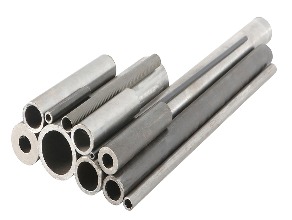
Carbon steel tubes handle the majority of general structural and mechanical work, but the spread within this family is wide enough to cause real problems if someone treats them as interchangeable. I have seen procurement lists where 1020, 1035, and S45C appear as alternates for the same part number — which works only when the part is under-stressed enough to never reveal the difference.
1020 remains the default for parts that need bending, flattening, or welding without elaborate heat treatment. Its 0.18–0.23% carbon range puts it well under the threshold where martensite formation becomes a practical concern in the HAZ. We ship large volumes of 1020 to manufacturers building agricultural machinery frames and general structural assemblies, where the forming sequence matters more than the final tensile strength.
1035 sits in the middle and creates the most confusion. Its tensile strength runs 25–30% higher than 1020 after cold drawing, which tempts designers to substitute it into higher-stress applications without rethinking the fabrication process. The tradeoff is real: 1035 can crack during severe cold forming, and welding requires preheat above 150°C to avoid hard-zone cracking. I have seen it used successfully in automotive suspension bushings and medium-load shafts, but I have also seen it specified into a tube that required 90-degree cold bending and failed in production. That failure was not the tube’s fault. It was a selection decision that ignored the grade’s cold-work limits.
S45C is the high-strength option in this group, with carbon around 0.42–0.48%. After quenching and tempering, it delivers hardness and wear resistance that 1020 cannot approach, which makes it the preferred choice for induction-hardened pins, bushings, and machine structural parts under cyclic loading. But if you try to weld it without a complete post-weld heat treatment cycle, the result is a martensitic HAZ that behaves like glass under impact. I would not specify S45C into any welded assembly unless the design accounts for post-weld treatment in the production routing — and I have had that conversation with more than one engineering team that initially assumed “carbon steel welds fine.”
Chromium and molybdenum change the selection logic completely. Move from a 0.30% manganese-only approach to a 0.80–1.10% chromium plus 0.15–0.25% molybdenum composition, and the tube gains hardenability that pushes the strength ceiling up by 40–50% while retaining reasonable toughness. The alloy group is where the cross-standard comparisons get subtle, because 4130 and 25CrMo4 are chemically similar but not identical, and 4140 is a distinct step up in carbon and hardenability.
4130 is the workhorse of the alloy tube world for a reason: it welds with standard preheat and post-heat practices, hardens predictably, and does not embrittle under normal heat-treatment controls. We supply 4130 tubes into motorsport roll cages, aerospace structural components, and high-pressure fluid systems where the weight-strength ratio earns its premium over carbon steel. The DIN equivalent 25CrMo4 aligns closely on chromium and molybdenum targets, though the carbon range is slightly narrower, and I have found the mechanical properties after identical quench-and-temper cycles to be effectively interchangeable for most design purposes. Procurement teams cross-shopping ASTM A519 4130 against EN10297-1 25CrMo4 can proceed with confidence — but verify the actual mill certificate for the specific heat treatment condition, because the standard allows a range wide enough to shift the properties by 15%.
4140 contains 0.38–0.43% carbon compared to 4130’s 0.28–0.33%, and that extra tenth of a percent translates to roughly 15–20% higher strength in the quenched-and-tempered condition. It also demands more care: weld procedures need tighter interpass temperature control, and the preheat floor rises. We see 4140 specified into heavy-wall hydraulic cylinder barrels, drilling equipment, and mining machinery components where impact loading and abrasive wear combine. If 4130 is “strong enough with margin,” I would not upgrade to 4140 speculatively. The additional strength is real. The narrower processing window is equally real.
The 5140 and 5120 alloy grades sit in adjacent territory. 5140 (essentially 40Cr) offers high hardenability at a mid-range carbon level and works well in induction-hardened shafts and structural pins. 5120 is a lower-carbon case-hardening grade designed for carburizing — strong, wear-resistant surface layer with a tough core. Selecting 5120 for a through-hardened application makes no sense, and I have seen that mismatch happen when a material substitution was made by designation similarity rather than by heat-treatment logic.
| Grade | Carbon % | Tensile Strength (MPa, approx.) | Key Alloy Elements | Best Application Window |
|---|---|---|---|---|
| 1020 | 0.18–0.23 | 410–520 | Mn | Welded structures, formed parts, general mechanical |
| 1035 | 0.32–0.38 | 520–640 | Mn | Medium-stress shafts, limited cold forming |
| S45C | 0.42–0.48 | 600–750 qt | Mn | Induction-hardened pins, wear surfaces |
| 4130 / 25CrMo4 | 0.28–0.33 | 650–850 qt | Cr, Mo | Aerospace structures, motorsport, high-pressure systems |
| 4140 | 0.38–0.43 | 800–1,000 qt | Cr, Mo | Heavy-wall cylinders, drilling tools, mining equipment |
Seeing “4130” and “25CrMo4” on the same procurement sheet used to cause hesitation — and in some cases, unnecessary rejection — because the buyer assumed the standard difference reflected a quality gap. In practice, ASTM A519, EN10297-1, and DIN 2391 define delivery conditions, testing protocols, and dimensional tolerance frameworks for mechanical tubing. The underlying material properties are comparable when the chemical ranges and heat-treatment conditions match.
Where the standards diverge is in the requirements most buyers never think about until a shipment is on hold at the port. ASTM A519 leaves surface quality and non-destructive testing largely to purchaser-supplier agreement. EN10297-1 mandates a more structured approach to surface condition classification. DIN 2391, still actively referenced in many markets despite being superseded by EN10305-1, carries the tightest dimensional tolerance demands in my experience — the cold-drawn precision tube under DIN 2391 often holds wall thickness to ±0.08 mm, which is tighter than the default allowance in ASTM A519.
The practical consequence shows up in hydraulic cylinder applications. A tube ordered as “ASTM A519 1026 honed” might arrive with adequate ID finish but wider tolerance on OD concentricity than the same part ordered under EN10305-1 E355. If the cylinder design uses a close-fitting external guide ring, that OD tolerance difference matters. I have worked with hydraulic OEMs who standardize on EN10305-1 not because the steel chemistry is superior but because the dimensional consistency reduces their downstream machining and assembly cost. The grade comparison is the starting point. The standard-level comparison is what prevents field problems.
For buyers managing multi-country supply chains, the practical approach is this: compare the mill certificate values — not just the standard numbers. A DIN 2391 ST52 tube and an ASTM A519 1026 tube can have nearly identical tensile and yield figures, and when the certificates confirm it, substitution is technically sound. The risk is assuming equivalence without checking the heat-specific data.
If your program involves parts that cross between ASTM-governed regions and EN-governed regions on the same assembly, it is worth confirming dimensional and surface requirements with the production team before ordering across standards — reach out at Sunny@tenjan.com or call +86 51988789990.
A grade designation promises chemistry and, if the standard specifies heat treatment, a range of mechanical properties. It does not guarantee straightness, concentricity, or ID surface finish. Those depend on the manufacturing process sequence, and cold drawing is the step that transforms an ordinary seamless tube into something you can use in a honed cylinder or a close-tolerance shaft assembly.
When we cold-draw a tube, the starting hot-rolled hollow passes through a die and over a mandrel at room temperature. The cross-section reduces typically by 15% to 30%, depending on the target dimensions. That reduction cold-works the material, raising yield strength by 20–50% above the annealed state. For grades like 1020 and ST52, this is often enough to eliminate a separate heat-treatment step. For 1035 and S45C, the cold drawing may be followed by stress relieving to stabilize dimensions and prevent warping during subsequent machining.
The process also corrects the geometry. An as-rolled tube with 0.5 mm of wall eccentricity can be drawn to a tolerance band of ±0.1 mm or tighter. The surface finish improves from a typical hot-rolled roughness of 6–12 µm Ra to 1–3 µm Ra, which matters for any application where a seal, bearing, or sliding fit runs against the tube surface.
Cold-drawn precision tubes under EN10305-1 and DIN 2391 carry explicit dimensional tolerance classes. A tube ordered as “EN10305-1 E355 +C” tells you the material is a high-strength non-alloy steel, cold-drawn hard, with dimensions held to the standard’s precision tables. A generic “seamless 4130 tube” without the process specification could be hot-finished, cold-drawn, or cold-drawn and stress-relieved — and the mechanical properties will differ across those conditions even though the chemistry is identical.
I specify the cold-drawing condition explicitly on every procurement document. The grade comparison chart gets the chemistry right. The delivery condition determines whether the tube fits the fixture.
Does higher tensile strength from a higher-grade tube always give better performance?
No — higher tensile strength often comes with reduced ductility and reduced weldability. A 4140 tube in the quenched-and-tempered condition may carry 900 MPa tensile, but if the application requires welded attachments and no post-weld heat treatment is planned, the 1020 or ST52 tube will be the safer engineering choice. Strength is only one column in the selection matrix.
Can 4130 and 25CrMo4 be used interchangeably without requalification?
In most mechanical applications, yes, because the chromium and molybdenum ranges overlap and the strength after equivalent heat treatment falls within the same band. But if the component requires certification to a specific standard for regulatory or customer acceptance reasons, verify that the mill certificate explicitly references the required standard. The tubes may be functionally identical, but the paperwork chain is what satisfies the audit.
What is the most common grade selection mistake you see?
Specifying by brand or by a competitor’s line card rather than by the load, environment, and fabrication sequence. A tube grade that works beautifully in a normalized structural frame may fail quickly in a cyclically pressurized system. The comparison chart gives the options. The mistake is picking the option before fully defining the job.
Why do some grades require stress relieving after cold drawing while others do not?
The degree of cold work, combined with the carbon content, determines how much residual stress and hardness build up during drawing. Low-carbon grades like 1020 can tolerate significant cold reduction without becoming too brittle for subsequent machining or light forming. Grades above 0.30% carbon, including 1035 and most alloy grades, accumulate enough internal stress during drawing to cause dimensional instability, distortion during machining, or reduced fatigue life if not stress-relieved. The stress-relief cycle — typically 550–650°C for carbon steels, slightly higher for alloys — relaxes the grain structure without significantly reducing the strength gained from drawing.
If a buyer does not have in-house metallurgical support, how should they approach grade selection for a new application?
Start with a clear description of the worst-case load, the operating temperature range, the fabrication processes the tube will undergo, and any certification requirements. Share those four data points with the mill or the supplier’s technical team rather than asking for a specific grade. I have resolved more selection problems by asking the right questions about the application than by quoting standard numbers. Share your requirements and we will confirm the suitable grade options and required documentation.


Home Product Capabilities Case Studies Blogs About Get a Quote
Pipe & Tube Manufacturing Process Shapes & Profiles Pipes & Tubes Material Standard Steel Pipes & Tube Rebar Couplers Cold Drawn Steel Profiles & Bars
Oil & Petrochemical Industry Automotive & Motorcycle Components Mechanical Engineering Components Mining Construction Support Structures High-Pressure Boiler System Construction Machinery Geological Drilling Agricultural Machinery Parts Industrial Fluid Transfer Systems


© 2024 Changzhou Tenjan Steel Tube Co., Ltd All rights reserved. Privacy StatementTerms-ConditionsSitemap
