Welcome to Changzhou Tenjan Steel Tube Co., Ltd
Sunny@tenjan.com



Working with steel pipes long enough, you start to notice patterns in how materials behave under stress. The steel pipe normalizing process sits at the heart of what separates adequate tubing from truly reliable components. This heat treatment reshapes the internal structure of steel in ways that directly affect how pipes perform when conditions get demanding. For anyone sourcing precision steel tubing for critical applications, understanding what normalizing actually does—and why it matters—can mean the difference between components that last and those that fail prematurely.
The steel pipe normalizing process refines grain structure and creates uniform mechanical properties throughout the material. It involves heating steel above its upper critical temperature, holding it there, then cooling it in still air. That controlled cooling rate is what produces the fine, consistent microstructure that makes normalized pipes perform better.
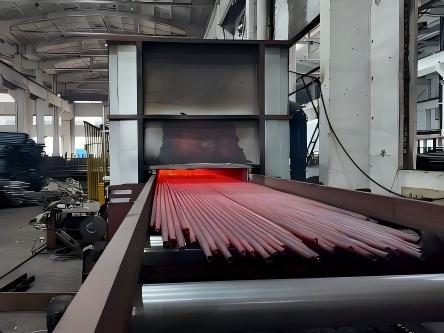
The process moves through distinct stages. First, pipes are heated to temperatures between 800°C and 950°C, pushing the material into full austenite transformation—a phase called austenitizing. The exact temperature depends on carbon content and alloy composition. Holding pipes at this temperature allows complete recrystallization and dissolves carbides that would otherwise create weak points. Then the pipes come out of the furnace and cool in ambient air. This air cooling rate falls between furnace cooling (used in annealing) and quenching. The primary outcome is grain refinement, which eliminates the coarse, uneven microstructures left behind by hot working or casting. Both carbon steel and alloy steel pipes end up with more homogeneous internal structures, reduced internal stress, and improved material characteristics overall.
(Flowchart: Stages of the Steel Pipe Normalizing Process)
Normalizing does more than check a box on a spec sheet. It fundamentally changes how steel pipes behave under load, addressing problems that manufacturing processes like cold drawing introduce—significant internal stresses and inconsistent microstructures. The grain refinement that normalizing produces translates directly into measurable improvements in mechanical properties.
Normalized steel pipes show better ductility, meaning they can deform plastically without cracking. Their toughness increases, allowing them to absorb more energy before fracturing—critical in applications with dynamic loads or sudden impacts. Tensile strength and yield strength become more consistent throughout the material, which gives engineers predictable performance data to work with. Normalizing also reduces residual stress, a hidden problem that causes premature fatigue failure in pipes that look fine on the surface. This stress reduction improves fatigue resistance and dimensional stability. For seamless tubes heading into high-pressure systems, consistent toughness and effective stress relief are not optional features—they are baseline requirements for safe operation over the full service life.
(Table: Impact of Normalizing on Key Mechanical Properties)
Selecting the right heat treatment requires understanding what each process actually accomplishes. Normalizing gets confused with annealing, quenching, and tempering regularly, but each produces different microstructures and serves different purposes. The choice comes down to what properties the final application demands and what trade-offs are acceptable.
All these processes involve heating and cooling steel, but temperatures, cooling rates, and objectives differ substantially. Quenching uses rapid cooling—typically in oil or water—to achieve high hardness, usually followed by tempering to reduce brittleness. Stress relieving operates at lower temperatures and focuses on reducing internal stresses without significantly changing mechanical properties. Normalizing, with its air cooling, lands between these extremes. It produces a good balance of strength and ductility, making it suitable for applications where neither extreme hardness nor maximum softness is the goal. Understanding these distinctions helps engineers and procurement teams optimize both material performance and cost.
(Comparison Table: Normalizing vs. Annealing vs. Quenching)
The normalizing vs annealing comparison comes down to cooling methods and what you need the material to do afterward. Annealing uses furnace cooling—a slow, controlled process that produces softer, more ductile material with coarser grain structure. Its main purposes are stress relief, increased ductility, and improved machinability. Normalizing uses air cooling, which moves faster than furnace cooling. This quicker rate promotes finer grain structure and uniform properties, resulting in higher strength and toughness than annealed steel delivers. Both processes provide stress relief and improve ductility, but normalizing prioritizes the strength-toughness balance that structural components need.
International standards exist because consistent quality matters when components fail in ways that cost money or endanger people. These specifications ensure that normalized steel pipes from different manufacturers can be compared, specified, and trusted. Compliance with ASTM A519, EN 10297, DIN 2391, and JIS G3445 is not bureaucratic overhead—it is the foundation of reliable engineering.
ASTM A519 covers seamless carbon and alloy steel mechanical tubing and frequently requires normalizing to achieve specified mechanical properties. EN 10297 defines requirements for seamless circular steel tubes used in mechanical and general engineering, where normalizing plays a key role in meeting material condition specifications. DIN 2391 addresses seamless precision steel tubes, and JIS G3445 covers carbon steel tubes for machine structural purposes—both standards incorporate normalizing as a standard treatment for optimal performance. Rigorous quality control backed by ISO certification, PMI inspections, and NDT inspections ensures that every normalized pipe meets exact material specifications. This level of verification gives procurement teams confidence that precision tubing will perform as expected in the field.
| Standard | Description | Key Application |
|---|---|---|
| ASTM A519 | Seamless carbon and alloy steel mechanical tubing | Automotive, hydraulic systems, general mechanical |
| EN 10297 | Seamless circular steel tubes for mechanical engineering | Structural components, machinery |
| DIN 2391 | Seamless precision cold-drawn steel tubes | High-precision mechanical applications |
| JIS G3445 | Carbon steel tubes for machine structural purposes | Machine components, structural elements |
Normalized steel pipes show up in industries where failure is expensive, dangerous, or both. The enhanced mechanical properties from normalizing translate into real-world performance improvements that engineers can measure and rely on. The process creates pipes that handle demanding conditions without the unpredictable behavior that untreated or improperly treated materials exhibit.
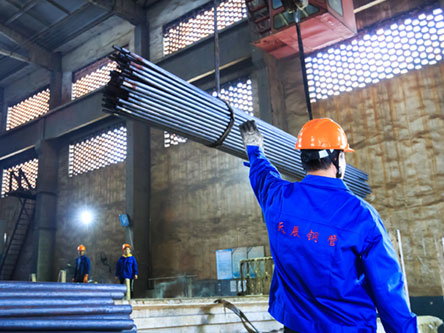
In the automotive industry, normalized seamless tubes go into suspension systems, chassis components, and hydraulic lines—applications where high strength and fatigue resistance determine whether parts last or fail. Hydraulic systems and construction machinery need pipes tough enough to handle high pressures and dynamic loads over thousands of operating cycles. The energy sector uses normalized carbon steel applications and alloy steel applications in high-pressure boilers and fluid transport systems, where creep resistance and structural stability at elevated temperatures matter. OEMs and large engineering projects specify normalized steel pipes because consistent quality and predictable performance reduce risk. Custom-shaped steel tubes, when normalized, deliver tailored solutions for unique designs while maintaining the mechanical attributes that make the design work.
(Infographic: Key Industries Benefiting from Normalized Steel Pipes)
Controlling the entire manufacturing process—from raw material to finished product—creates opportunities to optimize normalizing outcomes that fragmented supply chains cannot match. Full process control means that every variable affecting the final precision steel tubing can be monitored, adjusted, and verified. This level of integration is what separates manufacturers who understand normalizing from those who simply perform it.
Cold-drawn profiles and cold drawn welded tube products benefit significantly from normalizing because the cold working process introduces stresses and microstructural changes that need correction. A vertically integrated manufacturer can coordinate the drawing and heat treatment processes to achieve optimal results rather than treating them as separate operations. ISO-certified quality control combined with PMI and NDT inspection capabilities verifies that normalized products meet specifications before they ship. This approach supports global supply requirements where consistency across batches and production runs is essential for tailored solutions in automotive, hydraulic, and other demanding applications.
For over two decades, Changzhou Tenjan Steel Tube Co.,Ltd has built expertise in precision steel tubing processes including normalizing. Engineering projects that require custom-shaped, high-precision steel tubes compliant with international standards benefit from working with manufacturers who understand how heat treatment decisions affect final performance. Full process control and vertical integration create opportunities to optimize material integrity for critical applications. Email: Sunny@tenjan.com | Tel: +86 51988789990 | Phone/WhatsApp: +86 13401309791| Tel: +86 51988789990 | Phone/WhatsApp: +86 13401309791
Normalizing improves ductility, toughness, and grain structure uniformity in ways that show up in mechanical testing. Internal stress reduction makes pipes more reliable in fatigue-prone applications. The steel pipe normalizing process creates consistent mechanical properties throughout the material rather than the variable properties that untreated pipes often exhibit. These improvements matter most in applications where predictable performance under load is a safety or reliability requirement.
The process transforms coarse, irregular grain structures—common after hot working or casting—into finer, more uniform pearlite and ferrite microstructures. This grain refinement eliminates localized weaknesses and creates homogeneous material properties throughout the pipe cross-section. For precision steel tubing, this microstructural consistency is what enables reliable performance in demanding applications.
Normalizing becomes necessary when applications require enhanced mechanical properties, significant stress relief, or specific microstructural characteristics. Pipes that have undergone cold drawing often need normalizing to correct the stresses and structural changes that process introduces. The decision depends on end-use requirements and applicable industry standards—some specifications mandate normalizing while others leave it to engineering judgment.
Both carbon steel and alloy steel pipes respond well to normalizing. The process is particularly common for pipes used in high-pressure systems, automotive components, hydraulic cylinders, and structural applications where consistent strength and durability determine service life. Seamless tubes frequently undergo normalizing because the process complements the inherent quality advantages of seamless construction.


Home Product Capabilities Case Studies Blogs About Get a Quote
Pipe & Tube Manufacturing Process Shapes & Profiles Pipes & Tubes Material Standard Steel Pipes & Tube Rebar Couplers Cold Drawn Steel Profiles & Bars
Oil & Petrochemical Industry Automotive & Motorcycle Components Mechanical Engineering Components Mining Construction Support Structures High-Pressure Boiler System Construction Machinery Geological Drilling Agricultural Machinery Parts Industrial Fluid Transfer Systems


© 2024 Changzhou Tenjan Steel Tube Co., Ltd All rights reserved. Privacy StatementTerms-ConditionsSitemap
