Welcome to Changzhou Tenjan Steel Tube Co., Ltd
Sunny@tenjan.com



Steel pipes that don’t hold their shape cause problems long before anyone notices. A hydraulic cylinder starts leaking. A boiler tube develops stress cracks. An automotive assembly line grinds to a halt because components won’t fit. These failures rarely announce themselves as roundness issues, but that’s often exactly what they are. The geometry of a pipe’s cross-section determines how well seals seat, how evenly pressure distributes, and whether parts mate as designed. Getting this right isn’t about chasing perfection for its own sake—it’s about preventing the cascade of failures that follow when pipes deviate from circular.
Roundness tolerance defines how much a pipe’s cross-section can deviate from a perfect circle while still meeting specifications. It’s a distinct measurement from ovality, though the two get confused constantly. Ovality measures the difference between maximum and minimum outside diameters at a single point along the pipe. Roundness tolerance captures the overall circularity of that cross-section—a broader assessment of geometric integrity.
The distinction matters because a pipe can pass ovality checks while still having localized irregularities that affect performance. Industry data suggests that roughly 30% of operational failures in hydraulic and fluid transport systems trace back to dimensional inaccuracies in tubing. That number reflects real-world consequences: compromised sealing surfaces, uneven stress distribution, and accelerated wear patterns.
Maintaining tight roundness tolerance directly impacts system efficiency. When a pipe’s cross-section deviates from circular, seals don’t seat properly. Fluid flow becomes turbulent where it should be laminar. Components designed for interference fits either won’t assemble or create unexpected stress concentrations. The steel tube specifications that seem like paperwork abstractions translate into whether systems work reliably over their intended service life.
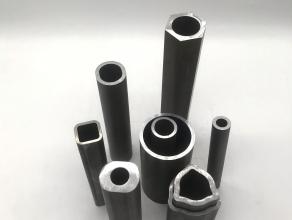
Accurate roundness assessment requires more than a single diameter measurement. The standard approach involves taking multiple outside diameter readings around the pipe’s circumference at several points along its length. Digital micrometers provide point measurements, while laser scanning systems generate comprehensive circularity profiles that reveal subtle deviations manual methods might miss.
International standards establish the framework for what constitutes acceptable roundness tolerance across different applications. ASTM A519 Steel Pipe covers seamless carbon and alloy steel mechanical tubing, specifying dimensional requirements that tighten considerably for critical applications. EN 10216-2 addresses seamless steel tubes for pressure purposes, with roundness requirements calibrated to operating conditions. JIS G3445 Steel Pipe provides parallel specifications for the Japanese market, reflecting similar engineering priorities.
These standards don’t exist in isolation. Quality control for steel pipes integrates dimensional verification with non-destructive testing methods that assess internal structure and surface integrity. The combination ensures that pipes meeting roundness tolerance requirements also possess the material properties their applications demand.
The measurement process starts with positioning the pipe to eliminate sag or deflection that could skew readings. Precision instruments—micrometers, calipers, or coordinate measuring machines—capture diameter values at multiple angular positions around the circumference. The spread between maximum and minimum readings at any cross-section indicates pipe eccentricity and overall roundness deviation.
Acceptable limits vary dramatically based on intended use. Precision Pipe & Tube destined for hydraulic cylinders typically requires roundness tolerance within ±0.05 mm to ensure reliable sealing under pressure cycling. Automotive components generally work within ±0.1 mm, tight enough for proper fit but acknowledging the realities of high-volume production. Structural tubing tolerates broader deviations around ±0.5 mm since load-bearing applications prioritize wall thickness and material strength over geometric precision.
| Standard/Application | Typical Roundness Tolerance | Notes |
|---|---|---|
| Hydraulic Cylinders | ±0.05 mm (0.002 in) | Critical for sealing |
| Automotive Components | ±0.1 mm (0.004 in) | Ensures proper fit |
| Structural Tubing | ±0.5 mm (0.02 in) | General load-bearing |
| Boiler Tubes | ±0.2 mm (0.008 in) | High-pressure integrity |
Application-specific tolerances reflect engineering judgment about where precision matters most. A structural column supporting a building doesn’t need hydraulic-cylinder roundness—but a cylinder rod tube absolutely does.
For deeper insight into how material composition and manufacturing techniques affect mechanical properties, 《Analysis of Key Causes and Prevention Strategies for Cracking in Seamless Steel Tubes during Bending and Flattening》 explores the relationship between processing parameters and tube integrity.
The journey from raw steel to finished tube involves multiple stages where roundness can be preserved or compromised. Cold drawing and cold rolling represent the precision manufacturing processes that most effectively enhance dimensional accuracy. These methods work the material at ambient temperatures, allowing tighter control over final dimensions than hot forming permits.
Die condition during cold drawing seamless tubing directly affects roundness outcomes. As dies wear, they apply pressure unevenly, introducing subtle shape deviations that accumulate across production runs. Hot rolling presents different challenges—uneven cooling after the rolling operation causes differential contraction that can distort cross-sectional geometry.
Welded steel pipe roundness depends heavily on weld seam quality and subsequent sizing operations. The heat-affected zone around the weld behaves differently than base metal during forming, requiring careful process control to achieve uniform circularity.
Material integrity inspection throughout production catches problems before they propagate. Vertical integration benefits manufacturers who control every stage from raw material selection through final inspection. This full process control addresses issues that arise from uneven cooling, improper handling, or inconsistent material composition—variables that become difficult to manage when production spans multiple facilities or suppliers.
Seamless Pipe & Tube and Cold Drawn Pipe & Tube produced under controlled conditions consistently achieve tighter roundness tolerance than products from fragmented supply chains where process variables multiply.
Several manufacturing defects contribute to out-of-round conditions. Uneven cooling after hot rolling creates differential contraction—the pipe’s exterior cools faster than its interior, and asymmetric cooling rates around the circumference introduce permanent distortion. Die wear during cold forming applies inconsistent pressure that gradually degrades circularity across production batches.
Handling damage represents an underappreciated cause of roundness deviation. Improper stacking during storage or transport can permanently deform pipes, particularly thin-walled sections. The damage often goes unnoticed until assembly reveals fit problems.
Prevention requires systematic process control. ISO 9001 certification standards establish frameworks for monitoring and adjusting manufacturing parameters continuously. Regular equipment maintenance and calibration prevent the gradual drift that degrades product quality over time. Quality assurance in steel tubes integrates dimensional verification at multiple production stages rather than relying solely on final inspection to catch problems.
The impact of roundness deviations extends far beyond dimensional non-conformance reports. In hydraulic systems, pipe eccentricity prevents seals from maintaining consistent contact around the circumference. The resulting leakage reduces system pressure, wastes fluid, and can contaminate surrounding equipment. What begins as a minor geometric deviation becomes a maintenance headache and potential safety hazard.
Automotive tube precision requirements exist because assembly processes assume components will fit as designed. Out-of-round tubes create interference where clearance should exist, or gaps where interference fits are specified. Either condition accelerates wear, increases friction, and shortens component life.
Boiler tube requirements reflect the severe consequences of failure in high-pressure, high-temperature service. Roundness deviations create stress concentration in pipes—localized areas where forces multiply beyond design limits. Under sustained pressure cycling, these stress concentrations initiate cracks that propagate toward catastrophic rupture.
Construction machinery components face similar challenges. Fitting and assembly difficulties cascade through production schedules, while compromised structural integrity creates liability exposure that extends well beyond initial manufacturing costs.
The cost implications of tolerance deviations compound over time. Immediate expenses include rework, scrap, and expedited replacement orders. Downstream costs encompass warranty claims, field failures, and the reputational damage that follows when products don’t perform as specified. One documented case involved a hydraulic cylinder failure traced to ovality in the cylinder tube—a deviation small enough to pass casual inspection but large enough to cause seal failure and catastrophic system breakdown.
Out-of-round steel pipes in critical systems trigger predictable failure modes. Increased friction and premature wear develop in dynamic applications because contact surfaces don’t distribute loads evenly. Hydraulic cylinders experience accelerated seal degradation, leading to leakage that reduces efficiency and contaminates fluid systems.
System integrity suffers in ways that may not become apparent until failure occurs. High-pressure environments amplify the consequences of geometric imperfections—a slightly oval boiler tube concentrates stress at its minor axis, creating conditions for crack initiation under thermal cycling.
These outcomes explain why sourcing OEM precision tubing from manufacturers with robust quality control matters for critical applications. The cost difference between precision tubing and commodity product often represents a small fraction of the total system cost, while the performance difference can determine whether systems operate reliably or fail prematurely.
Producing steel tubes with reliable roundness tolerance requires integrated control across every production stage. Specialized cold-drawn and cold-rolled processes achieve the dimensional accuracy that critical applications demand. Precision Pipe & Tube manufactured through these methods exhibits roundness characteristics that commodity products cannot match.
Custom steel tube solutions address applications where standard products fall short. Specialized cold-drawn profiles and custom shapes meet unique engineering requirements while maintaining the geometric precision that standard shapes achieve. This capability matters when applications demand non-circular cross-sections with the same dimensional control expected from round tubing.
Adherence to multiple international standards—ASTM, EN, DIN, and JIS—ensures products meet requirements across global markets. Material integrity inspection protocols including PMI (Positive Material Identification) and NDT (Non-Destructive Testing) verify that tubes possess both the dimensional accuracy and material properties their applications require.
Full process control from raw material selection through final inspection distinguishes manufacturers who consistently deliver precision from those who achieve it occasionally. Whether producing Seamless Carbon Steel Tubes or Special-Shaped Alloy Steel Tubes, this comprehensive approach ensures superior dimensional accuracy and reliable performance.
Selecting a vertically integrated manufacturer provides assurance that expertise and quality systems work together throughout production. The combination delivers roundness tolerance performance that supports critical applications across hydraulic, automotive, pressure vessel, and structural markets.
Ready to discuss specific roundness tolerance requirements for your application? Contact Tenjan Steel Tube to explore custom solutions. Email Sunny@tenjan.com or call +86 51988789990. WhatsApp inquiries welcome at +86 13401309791.


Home Product Capabilities Case Studies Blogs About Get a Quote
Pipe & Tube Manufacturing Process Shapes & Profiles Pipes & Tubes Material Standard Steel Pipes & Tube Rebar Couplers Cold Drawn Steel Profiles & Bars
Oil & Petrochemical Industry Automotive & Motorcycle Components Mechanical Engineering Components Mining Construction Support Structures High-Pressure Boiler System Construction Machinery Geological Drilling Agricultural Machinery Parts Industrial Fluid Transfer Systems


© 2024 Changzhou Tenjan Steel Tube Co., Ltd All rights reserved. Privacy StatementTerms-ConditionsSitemap
