Welcome to Changzhou Tenjan Steel Tube Co., Ltd
Sunny@tenjan.com



Getting this wrong costs more than money. I’ve seen projects stall for weeks because someone ordered pipe when they needed tube, or specified the wrong schedule for a high-pressure line. The terms get thrown around interchangeably, but steel pipe and steel tube serve fundamentally different purposes, and the manufacturing differences between them determine whether your system performs or fails. This breakdown covers what actually matters when you’re making the call between pipe and tube for demanding applications.
Steel pipes exist to move things—fluids, gases, slurries. The sizing system reflects this purpose. When you specify a steel pipe by nominal pipe size and schedule, you’re really talking about flow capacity. A 4-inch NPS pipe isn’t actually 4 inches in any measurable dimension; it’s a standardized designation that tells you roughly what the internal diameter will be for a given schedule.
Common materials run toward carbon steel and alloy steel, manufactured to standards like ASTM A53. You’ll find steel pipe in water supply lines, oil and gas pipelines, and structural applications where nobody cares much about the exact outer diameter. The priority is getting the right flow rate and pressure rating, not hitting precise dimensional targets.
Two manufacturing routes dominate steel pipe production, and each leaves its mark on the final product.
Welded pipes start as flat steel plates rolled into cylinders, then joined along the seam. Electric Resistance Welded pipe uses electrical current to heat and fuse the edges. Double Submerged Arc Welded pipe handles thicker walls by welding from both inside and outside surfaces. The weld seam represents a potential weak point, though modern welding produces joints as strong as the base metal in most applications.
Seamless pipes take a different path entirely. A solid steel billet gets pierced and then rolled and drawn into a hollow cylinder. No weld means no seam-related failure modes, which is why seamless construction shows up in high-pressure service where the consequences of failure justify the higher cost.
| Standard | Material Type | Typical Applications |
|---|---|---|
| ASTM A53 | Carbon Steel | Fluid conveyance, general structural |
| ASTM A106 Gr.B | Carbon Steel | High-temperature service, fluid transport |
| DIN 17175 | Carbon/Alloy Steel | High-pressure boilers, heat exchangers |
| S355JR | Structural Steel | General structural, construction |
| JIS G3461 | Carbon Steel | Boilers, heat exchangers |
Steel tubes solve a different problem. They’re engineered for structural and mechanical applications where you need exact dimensions, consistent wall thickness, and predictable mechanical properties. The specification method reflects this: exact outside diameter and wall thickness, not nominal sizes.
The tolerance differences are substantial. Where a steel pipe might vary by several percent in wall thickness, a precision steel tube holds tolerances tight enough for press-fit assemblies. This precision costs more to achieve, but it’s non-negotiable for automotive components, hydraulic cylinders, and construction machinery where parts must fit together reliably.
Materials overlap with pipes—carbon and alloy steels dominate—but the manufacturing standards differ. ASTM A519 covers mechanical tubing, and the requirements for dimensional consistency exceed what pipe standards demand.
Cold drawing transforms steel tube properties in ways that matter for demanding applications. The process pulls a tube through a die at room temperature, reducing diameter and wall thickness simultaneously. The metal work-hardens as it deforms, increasing yield strength and tensile strength.
Beyond strength gains, cold drawing delivers surface finish and dimensional accuracy that hot processes can’t match. A cold-drawn tube comes out with tighter tolerances, smoother surfaces, and more uniform properties along its length. For hydraulic cylinders that need consistent bore dimensions or automotive shafts that must balance precisely, these characteristics aren’t optional. Precision Pipe&tube products and cold-drawn manufacturing represent the high end of what’s achievable in steel tube production.
The distinction comes down to what you’re optimizing for. Pipes optimize for flow. Tubes optimize for structure and mechanical function.
Dimensional specification tells the story clearly. Pipe dimensions describe what flows through them. Tube dimensions describe the physical object itself. This isn’t semantic—it determines how you design around the material and what tolerances you can count on.
Manufacturing precision follows from intended use. Nobody needs a water main held to half a millimeter tolerance. But a hydraulic cylinder bore that’s off by that much won’t seal properly. The manufacturing processes evolved to meet these different requirements, which is why tubes generally cost more per pound than equivalent pipes.
| Feature | Steel Pipe | Steel Tube |
|---|---|---|
| Primary Function | Fluid/gas conveyance | Structural, mechanical, pressure |
| Dimensional Spec. | Nominal Pipe Size (NPS), Schedule | Exact Outer Diameter (OD), Wall Thickness |
| Tolerances | Looser | Tighter, precise |
| Shapes | Primarily round | Round, square, rectangular, Special-Shaped Alloy Steel Tubes, Special-Shaped Carbon Steel Tubes |
| Manufacturing | Hot rolled, ERW, DSAW, seamless | Cold drawn, seamless, welded |
| Strength | Moderate | Higher, optimized for specific loads |
The selection process starts with understanding what the material actually needs to do.
High-pressure boilers and geological drilling operations need pipes that can handle internal pressure across temperature cycles. ASTM A106 Gr.B Steel Pipe handles elevated temperatures well. DIN 17175 Steel Pipe shows up in European boiler applications for similar reasons. The sizing system works because these applications care about flow capacity and pressure rating, not external dimensions.
Automotive components, hydraulic systems, and construction machinery demand something different. These applications need precise fit, consistent mechanical properties, and often specific geometric profiles. ASTM A519 Steel Pipe and EN10305-1 Steel Pipe serve these mechanical and structural roles because they deliver the dimensional accuracy and strength consistency that pipes don’t provide.
The shape options matter too. Pipes are round because that’s optimal for pressure containment. Tubes come in round, square, rectangular, and custom profiles because structural and mechanical applications often need specific cross-sections to handle loads efficiently or fit into constrained spaces.
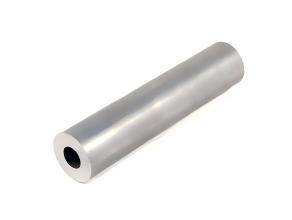
Changzhou Tenjan Steel Tube Co.,Ltd has been producing precision steel tubing since 2004, with vertically integrated manufacturing that controls the process from raw material through finished product. The product range covers seamless tubes, cold-drawn profiles, cold drawn welded tubes, and custom-shaped steel tubes including square, rectangular, and Hexagonal Steel Pipes&Tubes.
Compliance with ASTM, EN, DIN, and JIS standards provides baseline assurance, but the real verification comes from testing. ISO-certified quality control includes PMI testing to confirm material composition and NDT inspection to catch internal defects before they become field failures. For automotive, hydraulic, and construction projects where material failure creates serious consequences, this level of verification isn’t excessive.
The pipe versus tube decision shapes project outcomes in ways that aren’t always obvious at the specification stage. Get it right, and the system performs as designed. Get it wrong, and you’re dealing with fit problems, premature failures, or unnecessary cost.
Tubes deliver precision and mechanical performance for structural and mechanical applications. Pipes deliver flow capacity and pressure handling for conveyance systems. The manufacturing processes that produce each type evolved to serve these different needs, and trying to substitute one for the other usually creates problems.
Evaluating project requirements against these differences takes time upfront but prevents expensive corrections later. The material choice affects not just initial cost but long-term reliability and maintenance burden.
Changzhou Tenjan Steel Tube Co.,Ltd brings nearly two decades of precision steel tubing expertise to demanding projects. Vertically integrated manufacturing means full process control from seamless production through custom-shaped tubes, all compliant with global standards. For automotive, hydraulic, and construction applications where material quality directly affects system performance, that control matters.
Reach out to discuss specific requirements.
Email: Sunny@tenjan.com | Tel:+86 51988789990 | WhatsApp:+86 13401309791| Tel:+86 51988789990 | WhatsApp:+86 13401309791
Steel pipes typically come from hot rolling and welding processes, or seamless hot rolling for higher-pressure service. The manufacturing prioritizes throughput and pressure capability over dimensional precision. Steel tubes, particularly Precision Pipe&tube products, often go through cold drawing after initial forming. Cold drawing improves dimensional accuracy, surface finish, and mechanical properties simultaneously. The extra processing step adds cost but delivers characteristics that pipe manufacturing doesn’t achieve.
Steel pipes use nominal sizing because conveyance applications care about internal flow area, not exact external dimensions. A schedule 40 pipe delivers predictable flow capacity regardless of minor wall thickness variations. Steel tubes specify exact outside diameter and wall thickness because structural and mechanical applications need parts that fit together precisely. A hydraulic cylinder with inconsistent bore dimensions won’t seal reliably. Press-fit assemblies fail if the tube diameter varies beyond tight limits. The tolerance difference between pipe and tube reflects these fundamentally different requirements.
Seamless Pipe&Tube construction eliminates weld seams entirely, removing a potential failure initiation point. For critical pressure applications where failure consequences are severe, this matters. Beyond the seamless advantage, tubes offer tighter dimensional control and often higher mechanical properties from cold working. Automotive fuel systems, hydraulic lines, and precision pressure vessels often specify tubing rather than pipe because the combination of seamless construction, dimensional precision, and enhanced mechanical properties provides reliability margins that standard pipe doesn’t match.


Home Product Capabilities Case Studies Blogs About Get a Quote
Pipe & Tube Manufacturing Process Shapes & Profiles Pipes & Tubes Material Standard Steel Pipes & Tube Rebar Couplers Cold Drawn Steel Profiles & Bars
Oil & Petrochemical Industry Automotive & Motorcycle Components Mechanical Engineering Components Mining Construction Support Structures High-Pressure Boiler System Construction Machinery Geological Drilling Agricultural Machinery Parts Industrial Fluid Transfer Systems


© 2024 Changzhou Tenjan Steel Tube Co., Ltd All rights reserved. Privacy StatementTerms-ConditionsSitemap
