Welcome to Changzhou Tenjan Steel Tube Co., Ltd
Sunny@tenjan.com



The moment you start specifying steel tubing for an aircraft or spacecraft, you realize how little margin exists for compromise. Every tube carries loads, channels fluids, or supports structures in environments that would destroy ordinary materials within hours. I’ve watched engineers spend weeks selecting a single tube specification because they understand what’s at stake—not just performance metrics, but the lives depending on that component performing exactly as designed, every single time.
Aerospace applications push materials into territory where most steels simply cannot survive. Components face simultaneous challenges: immense mechanical forces during takeoff and landing, temperature swings from sub-zero altitudes to engine-adjacent heat zones, and corrosive exposure from atmospheric conditions and hydraulic fluids. Standard industrial steel tubes crack, corrode, or deform under these combined stresses.
This reality drives the aerospace industry toward specialized aerospace alloys and high-strength steel with properties engineered for survival. Fatigue resistance matters because components endure millions of stress cycles over an aircraft’s service life. Corrosion resistance prevents hidden degradation that could compromise structural integrity without warning. High-temperature performance ensures tubes maintain their mechanical properties when ambient conditions would soften conventional steels.
Lightweighting adds another constraint. Every gram saved translates to fuel efficiency gains and increased payload capacity over thousands of flight hours. This pushes material selection toward alloys offering maximum strength-to-weight ratios without sacrificing durability.
Steel tubes serve functions throughout aerospace systems: structural components forming the aircraft skeleton, hydraulic lines transmitting control inputs, landing gear assemblies absorbing impact forces, engine components withstanding thermal cycling, fuel lines requiring absolute leak integrity, and control systems demanding precise dimensional stability. A single tube failure in any of these applications could cascade into catastrophic consequences.
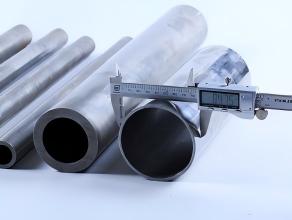
Producing aerospace grade steel tubes requires manufacturing discipline that most industrial tube makers never achieve. The difference lies in process control—maintaining consistency across thousands of tubes while hitting tolerances measured in hundredths of millimeters.
Vertical integration provides the foundation for this control. At Changzhou Tenjan Steel Tube, we manage every production stage from raw material receipt through final inspection. This eliminates the quality gaps that occur when processes transfer between facilities or suppliers. Seamless aerospace tubing, produced without welds that could become stress concentration points, offers superior structural integrity for critical applications.
Cold drawn profiles represent a core manufacturing capability. The cold drawing process pulls steel through precision dies, mechanically refining dimensions while simultaneously improving material properties. This technique produces custom shaped steel tubes including square steel tubes, rectangular steel tubes, and hexagonal tubes. More complex geometries emerge from specialized tooling designed for specific aerospace requirements.
The cold drawing process delivers benefits beyond dimensional control. It increases tensile strength and hardness through work hardening, improves surface finish quality, and enhances fatigue life—the number of stress cycles a component can endure before failure. For hydraulic systems requiring exact fit and structural supports demanding predictable load-bearing behavior, this precision engineering is non-negotiable.
Precision in aerospace tube manufacturing emerges from the interaction of specialized equipment, controlled processes, and continuous verification. It starts with tooling designed specifically for tight tolerances—dies machined to exact specifications and maintained within strict wear limits.
Cold pilgering and cold drawing processes mechanically refine tube dimensions through controlled deformation. Cold pilgering uses oscillating dies to reduce tube diameter and wall thickness simultaneously, while cold drawing pulls tubes through stationary dies for final sizing. Both processes improve dimensional accuracy beyond what hot forming can achieve.
Precision measurement tools monitor every production stage. Laser micrometers verify outside diameter, ultrasonic gauges measure wall thickness, and coordinate measuring machines confirm geometric tolerances. This continuous monitoring catches deviations before they propagate through subsequent production steps, ensuring consistent quality across production runs.
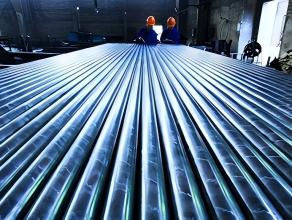
Material integrity in aerospace cannot be assumed—it must be demonstrated through documented compliance with recognized standards and verified through rigorous testing protocols. Adherence to global aerospace standards represents a fundamental requirement, not a marketing claim.
Quality management systems provide the framework for consistent production. ISO certified processes establish baseline controls, while aerospace-specific standards add requirements tailored to aviation, space, and defense applications. Products must comply with international specifications including ASTM aerospace standards, EN aerospace standards, DIN aerospace standards, and JIS aerospace standards, depending on customer requirements and application geography.
Testing protocols verify that manufactured tubes actually possess the properties their specifications claim. Non-destructive testing methods detect flaws without damaging the material being inspected. Ultrasonic testing uses sound waves to identify internal discontinuities like voids or inclusions. Eddy current inspection detects surface and near-surface defects through electromagnetic induction. These NDT methods allow 100% inspection of production output.
Positive material identification confirms chemical composition matches specification requirements. A tube labeled as a specific alloy must actually contain the specified elements in the correct proportions. PMI testing, typically using X-ray fluorescence, provides this verification.
Material traceability connects every finished tube back to its raw material source, heat treatment records, and inspection results. This documentation chain proves critical when investigating field failures or demonstrating compliance during customer audits. The aerospace supply chain demands this level of quality control and documentation as standard practice.
Aerospace tubing applications draw from a range of alloy steel tubes and carbon steel tubes, each selected for properties matching specific operational demands.
High-strength low-alloy steel delivers excellent strength-to-weight ratios while maintaining weldability for assembly operations. Stainless steel aerospace grades provide corrosion resistance essential for external components exposed to atmospheric moisture and fuel lines handling aggressive fluids. Maraging steel, strengthened through precipitation hardening rather than carbon content, achieves exceptional strength and toughness for landing gear applications where impact resistance is paramount.
Chromium-molybdenum alloys like 4140 Steel Pipe and 25CrMo4 Steel Pipe combine strength, toughness, and high-temperature performance. The chromium content improves hardenability and corrosion resistance, while molybdenum enhances strength at elevated temperatures and prevents temper brittleness.
| Alloy Type | Key Properties | Typical Aerospace Application |
|---|---|---|
| 4140 Steel Pipe | High strength, toughness, wear resistance | Landing gear, structural |
| 25CrMo4 Steel Pipe | Excellent hardenability, high-temp strength | Engine components |
| HSLA Steel | High strength-to-weight, good weldability | Airframe structures |
| Stainless Steel | Corrosion resistance, moderate strength | Fuel lines, hydraulic systems |
Suppliers serving the aerospace industry must hold certifications demonstrating systematic commitment to quality and safety. ISO 9001 establishes foundational quality management principles, but aerospace applications demand more.
AS9100 certification represents the aerospace industry’s specific quality standard. It incorporates all ISO 9001 requirements while adding provisions addressing aviation, space, and defense organization needs—including configuration management, risk management, and product safety requirements.
NADCAP accreditation certifies special processes that significantly affect product quality. Heat treating, non-destructive testing, welding, and surface treatment processes often require NADCAP approval because their quality cannot be fully verified through final product inspection alone. The process itself must be controlled and validated.
Individual customers frequently impose additional approval requirements based on their specific quality systems and risk assessments.
Choosing an aerospace tube supplier involves evaluating capabilities that extend well beyond product catalogs. An experienced manufacturer with documented aerospace production history brings understanding of industry requirements that newer entrants lack.
Custom solutions and technical support capabilities matter because OEM aerospace and engineering projects rarely fit standard specifications exactly. The ability to collaborate on material selection, dimensional optimization, and testing protocols adds value beyond simple order fulfillment. A vertically integrated supplier maintains full process control, eliminating quality risks that arise when production transfers between independent facilities.
Practical considerations include global supplier capabilities for serving multiple manufacturing locations, lead time management for production planning, and cost efficiency achieved through process optimization rather than quality shortcuts. Long-term partnership with a supplier who understands aerospace manufacturing nuances streamlines supply chain operations and reduces qualification costs for new programs.
The distinction between a vendor who ships products and a partner who contributes to project success becomes apparent when problems arise or requirements change mid-program.
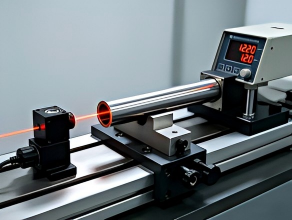
Quality and integrity assurance operates through multiple independent verification layers. Raw material testing confirms incoming steel meets chemical and mechanical specifications before production begins. In-process controls monitor critical parameters during manufacturing, catching deviations before they affect finished products.
In-house quality control teams perform continuous checks against documented specifications. Third-party inspection and certification bodies provide independent verification that removes potential bias from self-assessment.
Material testing combines destructive and non-destructive methods. Destructive testing—tensile tests, impact tests, hardness measurements—confirms mechanical properties on sample specimens. Non-destructive testing including PMI and NDT inspections verifies every production tube without consuming product.
Process validation demonstrates that manufacturing methods consistently produce compliant results. This involves qualifying equipment, training operators, and documenting procedures that control all variables affecting product quality.
For aerospace engineers and procurement specialists seeking unparalleled precision and certified material integrity, Changzhou Tenjan Steel Tube Co.,Ltd offers vertically integrated manufacturing solutions. From custom-shaped profiles to seamless and cold-drawn tubes compliant with global aerospace standards, partner with us for your most critical applications. Contact our experts today to discuss your project requirements and discover how Tenjan’s commitment to quality can elevate your aerospace designs. Email: Sunny@tenjan.com | Tel:+86 51988789990 | Phone:+86 13401309791 | WhatsApp:+86 13401309791| Tel:+86 51988789990 | Phone:+86 13401309791 | WhatsApp:+86 13401309791
Landing gear components represent one of the most demanding applications, requiring steel tubes that absorb repeated high-impact loads without fatigue cracking. Hydraulic systems depend on tubes maintaining precise internal dimensions and surface finish to ensure seal integrity under high pressure. Engine components face thermal cycling that would cause dimensional instability in lesser materials. Airframe structures and structural supports carry dynamic loads throughout flight envelopes, demanding consistent mechanical properties across temperature ranges. Each application benefits from steel tubes engineered for its specific stress profile.
Cold drawing improves aerospace steel tube performance through several mechanisms. The mechanical deformation refines grain structure, increasing tensile strength and hardness beyond the base material’s annealed properties. Surface finish improves because the drawing die burnishes the tube exterior, reducing surface roughness that could initiate fatigue cracks. Dimensional accuracy tightens because the die controls final dimensions precisely. Most significantly for aerospace applications, cold drawing enhances fatigue life by introducing beneficial compressive residual stresses and eliminating surface defects that serve as crack initiation sites.
Changzhou Tenjan Steel Tube manufactures custom geometries for aerospace projects requiring shapes beyond standard round tubes. Our cold drawn profiles capability produces square, rectangular, and hexagonal steel tubes to specified dimensions. More complex geometries—including asymmetric profiles, tubes with internal features, and shapes matching specific aerodynamic or structural requirements—emerge from custom tooling designed for individual engineering projects. These custom shaped steel tubes maintain the same precision and material integrity standards applied to standard products.


Home Product Capabilities Case Studies Blogs About Get a Quote
Pipe & Tube Manufacturing Process Shapes & Profiles Pipes & Tubes Material Standard Steel Pipes & Tube Rebar Couplers Cold Drawn Steel Profiles & Bars
Oil & Petrochemical Industry Automotive & Motorcycle Components Mechanical Engineering Components Mining Construction Support Structures High-Pressure Boiler System Construction Machinery Geological Drilling Agricultural Machinery Parts Industrial Fluid Transfer Systems


© 2024 Changzhou Tenjan Steel Tube Co., Ltd All rights reserved. Privacy StatementTerms-ConditionsSitemap
