Welcome to Changzhou Tenjan Steel Tube Co., Ltd
Sunny@tenjan.com



In the production process of seamless steel tubes, pickling is an indispensable pretreatment step. It is not the ultimate goal but serves as a crucial foundation for ensuring tube quality. When selecting seamless tubes, many users often focus on mechanical properties or dimensional accuracy, easily overlooking the profound impact of this key link—pickling—on product reliability and service life. Changzhou Tenjan Tube Co., Ltd. strictly adheres to production processes, prioritizing pickling as a key aspect of quality control.
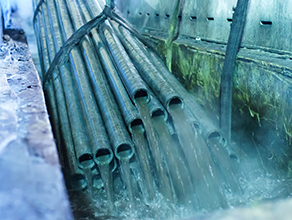
The Core Mission of Pickling: Eliminating Surface Defects
After hot rolling, a hard layer of iron oxide scale forms on the surface of seamless steel tubes. If not removed, this oxide layer poses multiple risks: Firstly, it can conceal defects such as cracks and hairline seams on the tube surface, preventing quality inspectors from accurately assessing the material's true condition. Secondly, the hard scale can severely wear down the molds required for subsequent cold drawing or cold rolling, increasing production costs. Therefore, pickling acts as a "thorough cleansing," clearing obstacles for the "health check" and "precision processing" of seamless tubes.
Process Empowerment: Laying the Foundation for Deep Processing
Pickling is particularly critical for seamless tubes requiring further cold processing. Production practices at Changzhou Tenjan Tube Co., Ltd. show that the tube surface, after pickling followed by phosphating and saponification treatments, can form an effective lubricant carrier. This lubricating film significantly reduces friction during cold drawing or cold rolling, preventing surface scratches or scoring. This not only ensures excellent surface smoothness but also guarantees the smooth progression of cold processing, thereby producing high-precision, high-performance cold-drawn seamless tubes.

Quality Assurance: Enhancing Comprehensive Performance and Consistency
Pickling also effectively eliminates some microscopic stresses generated in the early stages of processing, resulting in a more uniform material structure. Although this step may seem simple, it establishes a solid foundation for subsequent possible heat treatments, contributing to the stability of the comprehensive mechanical properties of seamless tubes. A tube that hasn't been adequately pickled may retain surface oxides that could become initiation points for corrosion or stress concentration later, compromising its application safety in critical areas.
Conclusion
In summary, although the pickling process is an intermediate step in seamless tube production, its role is pivotal. It directly affects the surface purity of the product, the feasibility of subsequent processing, and the reliability of the final product. The strict control Tenjan exercises over the pickling process reflects its commitment to pursuing quality, ensuring that every seamless tube delivered is not only dimensionally accurate but also possesses a clean surface and stable performance.


Home Product Capabilities Case Studies Blogs About Get a Quote
Pipe & Tube Manufacturing Process Shapes & Profiles Pipes & Tubes Material Standard Steel Pipes & Tube Rebar Couplers Cold Drawn Steel Profiles & Bars
Oil & Petrochemical Industry Automotive & Motorcycle Components Mechanical Engineering Components Mining Construction Support Structures High-Pressure Boiler System Construction Machinery Geological Drilling Agricultural Machinery Parts Industrial Fluid Transfer Systems


© 2024 Changzhou Tenjan Steel Tube Co., Ltd All rights reserved. Privacy StatementTerms-ConditionsSitemap
