Welcome to Changzhou Tenjan Steel Tube Co., Ltd
Sunny@tenjan.com



Boiler tubes face a brutal reality: temperatures that push past 500°C, pressures that test every weld and seam, and operating cycles that never really stop. DIN 17175 exists because standard steel simply cannot survive these conditions. The specification defines seamless tubes engineered specifically for elevated temperature service, covering everything from the chemistry that makes creep resistance possible to the mechanical thresholds that determine whether a tube holds or fails. What follows breaks down the technical requirements, the applications where these tubes prove their worth, and the quality controls that separate reliable components from potential failures.
DIN 17175 sets requirements for seamless steel tubes destined for boiler installations, pressure vessels, and piping systems where heat and pressure combine to create genuinely hostile conditions. The standard matters because material integrity at 450°C behaves nothing like material integrity at room temperature. Steel that performs adequately in mild service can deform, oxidize, or simply fail when subjected to sustained thermal stress.
The specification covers both carbon steel and alloy steel grades, each formulated for different temperature and pressure regimes. Carbon steel grades like St35.8 and St45.8 offer solid weldability and adequate strength for moderate high-temperature work. The alloy grades tell a more interesting story. 15Mo3, 13CrMo44, and 10CrMo910 incorporate molybdenum and chromium in specific proportions. These elements form stable carbides within the steel matrix, pinning dislocations and strengthening grain boundaries. The result is dramatically improved creep resistance and oxidation performance at temperatures where carbon steel would gradually deform under its own weight.
Chemical composition dictates microstructural stability over extended high-temperature exposure. The standard specifies tensile strength, yield strength, and elongation at both room and elevated temperatures, ensuring tubes retain structural integrity under operational stress. Creep rupture strength and stress rupture data receive particular attention because long-term performance under sustained load matters more than short-term test results. EN 10216-2 shares many technical requirements with DIN 17175, and the two standards often appear interchangeably in European specifications. Our manufacturing processes ensure that DIN 17175 Steel Pipe products consistently meet these specifications.
| Grade | Carbon (C) max | Silicon (Si) max | Manganese (Mn) max | Chromium (Cr) | Molybdenum (Mo) |
|---|---|---|---|---|---|
| St35.8 | 0.17 | 0.35 | 0.40-0.80 | – | – |
| St45.8 | 0.21 | 0.35 | 0.40-1.20 | – | – |
| 15Mo3 | 0.15 | 0.35 | 0.40-0.80 | – | 0.25-0.35 |
| 13CrMo44 | 0.10-0.17 | 0.10-0.35 | 0.40-0.70 | 0.70-1.10 | 0.40-0.60 |
| 10CrMo910 | 0.08-0.14 | 0.10-0.40 | 0.30-0.60 | 2.00-2.50 | 0.90-1.10 |
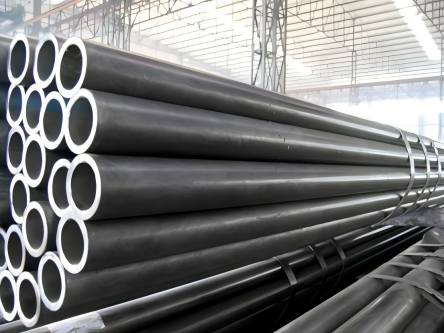
Power generation consumes the largest share of DIN 17175 production. Boilers, superheaters, and reheaters operate at temperatures routinely exceeding 500°C while containing steam at pressures that would rupture ordinary pipe. The tubes convert water into high-energy steam driving turbines that generate electricity. Thermal stress cycles through every startup and shutdown, and the tubes must absorb this punishment without deformation or cracking.
Heat exchangers in chemical and petrochemical plants present different challenges. These applications transfer heat between fluids that may be corrosive, abrasive, or both. The tubes experience thermal fatigue from repeated heating and cooling cycles while simultaneously resisting chemical attack. Structural integrity under these combined stresses determines whether a heat exchanger runs for years or fails within months.
Industrial boilers across manufacturing, food processing, and district heating systems rely on DIN 17175 tubes for steam generation. The applications vary widely, but the fundamental requirement remains constant: tubes must contain high-pressure steam at elevated temperatures without leaking, deforming, or failing catastrophically.
Grade selection depends on specific operating conditions. Superheaters and reheaters demand grades with higher chromium and molybdenum content because these components see the highest temperatures in the system. The additional alloying cost pays for itself in extended service life and reduced maintenance downtime.
Creep describes something counterintuitive: steel slowly stretching under constant load at high temperature, even when the stress falls well below the yield strength. The phenomenon begins at temperatures above roughly 0.3 to 0.4 times the absolute melting point. For carbon steel, this means creep becomes significant around 350°C. For alloy steels, the threshold shifts higher, but the mechanism remains the same.
Inside a boiler tube operating at 500°C, internal steam pressure creates constant hoop stress in the tube wall. Over months and years, this sustained stress causes gradual elongation and wall thinning. Grain boundaries slide past each other. Voids nucleate at triple points where grain boundaries meet. The material slowly weakens from within, and eventually the remaining wall thickness cannot contain the pressure.
DIN 17175 alloy grades counteract creep through specific metallurgical mechanisms. Molybdenum additions form stable carbides that resist dissolution at high temperature. These carbides pin dislocations, preventing the atomic-scale movements that accumulate into macroscopic deformation. Chromium contributes to oxidation resistance while also participating in carbide formation. The combination of these elements pushes the creep threshold higher and slows the deformation rate at any given temperature.
Engineers use stress rupture data and creep curves to predict remaining tube life and establish safe operating limits. This data drives maintenance scheduling and replacement decisions. Our manufacturing processes control chemical composition and microstructure to maximize creep resistance in Seamless Alloy Steel Tubes, directly extending service life in demanding applications.
Tube reliability in critical service depends on manufacturing precision and inspection thoroughness. Seamless production eliminates weld seams that could serve as stress concentrators or corrosion initiation sites. Cold drawing refines grain structure, improves surface finish, and tightens dimensional tolerances. The combination produces tubes with consistent properties throughout their length and circumference.
ISO 9001 certification establishes the quality management framework, but the specific inspection methods determine whether defective tubes reach customers. Positive Material Identification confirms that the steel chemistry matches the specified grade. This matters because a tube labeled 13CrMo44 but actually made from St35.8 would fail prematurely in high-temperature service. The chemical composition difference is invisible to visual inspection but critical to performance.
Non-destructive testing catches manufacturing defects before tubes enter service. Ultrasonic testing detects internal voids, inclusions, and laminations that could propagate under stress. Eddy current testing identifies surface and near-surface flaws. These methods find problems that would otherwise remain hidden until catastrophic failure.
Material traceability connects each finished tube to its raw material source, processing parameters, and inspection results. When a tube fails in service, traceability allows root cause analysis. When tubes perform well, traceability confirms that the manufacturing process produced the expected results.
DIN 17175 originated as a German specification, but international projects frequently require comparison with American and European alternatives. Understanding the relationships between standards prevents specification errors and enables proper material substitution when necessary.
ASTM A192 Steel Pipe covers seamless carbon steel boiler tubes for high-pressure service. The specification aligns roughly with DIN 17175 St35.8, focusing on carbon steel for moderate high-temperature applications. ASTM A210 addresses medium-carbon steel with higher strength than A192, comparable to some mid-range DIN 17175 grades.
EN 10216-2 functions as the direct European equivalent to DIN 17175. Both standards share common material grades: 16Mo3 corresponds to 15Mo3, and 13CrMo4-5 matches 13CrMo44. Minor differences exist in chemical composition ranges and testing procedures, but the materials perform equivalently in service. Project specifications typically accept either standard interchangeably.
The choice between standards usually follows regional design codes and client preferences rather than technical necessity. American projects default to ASTM specifications. European projects favor EN standards. German legacy installations may specifically require DIN 17175. The underlying metallurgy remains consistent across standards.
| Feature | DIN 17175 | ASTM A192 | EN 10216-2 |
|---|---|---|---|
| Scope | Seamless steel tubes for elevated temp. | Seamless carbon steel boiler tubes | Seamless steel tubes for pressure purposes |
| Primary Materials | Carbon and Alloy Steels | Carbon Steel | Carbon and Alloy Steels |
| Key Grades | St35.8, 15Mo3, 13CrMo44 | Grade A1 | P235GH, 16Mo3, 13CrMo4-5 |
| Application Focus | Boilers, superheaters, heat exchangers | High-pressure boilers, superheaters | Boilers, pressure vessels |
| Equivalence | Often compared to EN 10216-2 | Lower grades similar to DIN 17175 St35.8 | Direct European equivalent to DIN 17175 |
Grade selection requires honest assessment of actual operating conditions rather than conservative overspecification. The primary variables are temperature, pressure, and fluid chemistry. Secondary considerations include expected service life, maintenance access, and budget constraints.
Operating temperature drives the most significant selection decisions. Carbon steel grades like St35.8 perform adequately up to approximately 400°C for extended service. Above this threshold, creep becomes increasingly significant, and alloy grades become necessary. 15Mo3 extends the useful range to roughly 450°C. 13CrMo44 and 10CrMo910 push further, with 10CrMo910 suitable for service approaching 550°C.
Pressure determines required wall thickness for any given grade. Higher-strength grades allow thinner walls, reducing material cost and improving heat transfer. However, the strength advantage diminishes at elevated temperature, where creep resistance matters more than room-temperature yield strength.
Fluid chemistry affects corrosion rates and may require specific alloying additions. Steam service presents different challenges than hydrocarbon processing. Combustion gases containing sulfur compounds attack certain alloys preferentially. Understanding the specific corrosive environment guides material selection beyond simple temperature and pressure considerations.
We offer custom steel tubes and OEM solutions for projects requiring non-standard dimensions or modified compositions. Technical consultation helps match material capabilities to project requirements, avoiding both underspecification that leads to premature failure and overspecification that wastes budget.
Operating Temperature: Maximum and average service temperatures determine minimum alloy content requirements.
Operating Pressure: Internal and external pressures establish wall thickness and strength grade requirements.
Fluid Medium: Steam, gas, or liquid service affects corrosion considerations and material compatibility.
Required Lifespan: Expected service life influences grade selection and maintenance planning.
Mechanical Loads: External stresses or vibrations may require additional strength margin.
Budget Constraints: Performance requirements must balance against project cost realities.
Changzhou Tenjan Steel Tube Co.,Ltd has manufactured precision steel tubing for over two decades. Our vertical integration covers seamless production, cold drawing, and custom shaping to global standards including DIN 17175. ISO-certified quality control, PMI verification, and comprehensive NDT inspection ensure consistent product quality. Full process control from raw material through finished product enables tailored solutions for OEMs and complex engineering projects. Contact us to discuss your specific requirements. Email: Sunny@tenjan.com | Tel:+86 51988789990 | WhatsApp:+86 13401309791| Tel:+86 51988789990 | WhatsApp:+86 13401309791
DIN 17175 specifies seamless steel tubes for elevated temperature service with detailed material grades, chemical compositions, and mechanical properties. ASTM A192 focuses narrowly on carbon steel, while DIN 17175 includes alloy steels with enhanced creep and oxidation resistance. EN 10216-2 is largely equivalent to DIN 17175 with minor procedural differences. The standards serve similar purposes but originate from different regulatory frameworks.
Creep resistance determines how quickly a tube deforms under sustained high-temperature stress. DIN 17175 alloy grades contain molybdenum and chromium that form stable carbides, pinning dislocations and strengthening grain boundaries. This slows the gradual elongation and wall thinning that eventually leads to rupture. Higher creep resistance translates directly to longer service intervals between inspections and replacements.
PMI testing confirms chemical composition matches the specified grade. Ultrasonic testing detects internal voids, inclusions, and laminations. Eddy current testing identifies surface and near-surface defects. Material traceability documentation links each tube to its raw material source and processing history. These methods catch manufacturing defects before tubes enter critical service.
Custom dimensions including outer diameter and wall thickness can be specified for particular applications. Alloy modifications achieve specific performance characteristics like enhanced corrosion resistance or higher creep strength. OEM solutions address unique engineering specifications that standard products cannot satisfy. Technical consultation matches material capabilities to project requirements.
Thermal fatigue from repeated heating and cooling cycles, oxidation from high-temperature exposure, and stress corrosion cracking from aggressive fluids represent common failure modes. DIN 17175 grades with higher alloy content resist oxidation and thermal fatigue more effectively than plain carbon steel. Proper grade selection for specific operating conditions prevents premature failures that result from material limitations.


Home Product Capabilities Case Studies Blogs About Get a Quote
Pipe & Tube Manufacturing Process Shapes & Profiles Pipes & Tubes Material Standard Steel Pipes & Tube Rebar Couplers Cold Drawn Steel Profiles & Bars
Oil & Petrochemical Industry Automotive & Motorcycle Components Mechanical Engineering Components Mining Construction Support Structures High-Pressure Boiler System Construction Machinery Geological Drilling Agricultural Machinery Parts Industrial Fluid Transfer Systems


© 2024 Changzhou Tenjan Steel Tube Co., Ltd All rights reserved. Privacy StatementTerms-ConditionsSitemap
