Forecasting in Steel Tube Procurement: An OEM Buyer's Guide
Ask a procurement manager what hurts most when a product line shifts, and the answer is rarely the price of steel. It is the moment a forecast misses in both directions at once: too much inventory…

Ask a procurement manager what hurts most when a product line shifts, and the answer is rarely the price of steel. It is the moment a forecast misses in both directions at once: too much inventory of the wrong tube specification and a shortage of the right one. Forecasting in steel tube procurement lives at the uncomfortable intersection of demand uncertainty and manufacturing lead time. Get it wrong and capital sits in a warehouse as cold-rolled tube nobody ordered; get it partly wrong and the line still stops for want of one DIN 2391 precision section.
The point of a forecast is not to predict the future perfectly. It is to make the future buyable, in the right shape, at the right moment, without paying for certainty you do not have. That sounds simple. In steel tube procurement, where grades, outside diameters, wall thicknesses, shapes, and surface finishes multiply into thousands of possible combinations, simplicity disappears fast. By the end, you will have a per-specification planning view, a sharing routine for suppliers, and a checklist that turns a rolling forecast into a replenishment plan.
Why Procurement Forecasts Drift
Forecasts fail in predictable ways. The APICS/ASCM dictionary defines a forecast as an estimate of future demand [1], but that neutral definition hides the practical problem: a rolling estimate is only as stable as the assumptions underneath it. Steel tube buyers usually see four failure modes.
First, aggregate demand looks smooth while specification demand is lumpy. A plant may consume 40 tonnes of seamless tube a month, but those tonnes split across ASTM A519 mechanical tubing, EN 10305-1 precision sections, and a handful of custom special-shaped profiles in uneven batches. Average demand hides the peaks.
Second, lead time changes faster than the forecast refresh cycle. A cold-drawn welded tube order that quoted four weeks in one quarter can quote seven weeks the next if mill capacity tightens. The forecast that looked sensible at procurement review becomes a stockout two weeks later.
Third, buyers confuse shipment history with consumption. A warehouse receipt is not a usage signal; it is a timing artifact of orders, freight, and customs. When import clearances stretch a shipment by ten days, usage data shifts even though demand never moved.
Fourth, internal stakeholders each hold a private forecast. Sales pads the number, production trims it, finance discounts it, and the buyer is left reconciling three different futures. The most expensive forecast error is not the wrong number; it is three right numbers that never agree.
Lead time variability is the friction that quietly erodes even careful forecasts. <Managing Custom Steel Tube Lead Times for OEM Buyers> covers how production constraints and buffering shape realistic planning cycles.
The Inputs That Make a Forecast Usable
A usable steel tube forecast is built from a small set of inputs, not from a single magic number. The table below maps the inputs that matter most in precision tube procurement.
| Input | What it tells you | Typical source | Risk if ignored |
|---|---|---|---|
| Monthly consumption by specification (grade, OD, wall, shape) | True usage per SKU family | ERP/MRP history, line records | Ordering aggregates that hide lumpy specs |
| Safety stock rules by lead time class | Buffer needed per spec | Inventory policy, supplier lead-time data | Stockouts on long-lead precision sections |
| Open order book and pipeline | Near-term pull signal | Sales and production planning | Misreading a spike as run-rate demand |
| Supplier committed lead times by process (cold drawn, cold rolled, heat treated) | Replenishment window | Supplier quotations, capacity reviews | Planning on stale or optimistic lead times |
| Quality and inspection hold history | Rejection and rework delays | Incoming inspection, material certificates | Underestimating true net available material |
| Macro steel demand direction | Capacity and price trend context | Industry associations and market outlooks | Negotiating or buffering against the wrong cycle |
The world steel market gives this last input a useful backdrop. The World Steel Association’s short-range outlook tracks demand across regions and downstream sectors [2]. A buyer looking at a rising automotive or construction-machinery outlook should treat precision tube lead times with more caution, because the same mills that serve mechanical tubing also serve those adjacent markets. When demand from adjacent sectors tightens, custom cold-drawn sections are usually the first allocations to stretch.
Linking Forecasts to Lead Times and Safety Stock
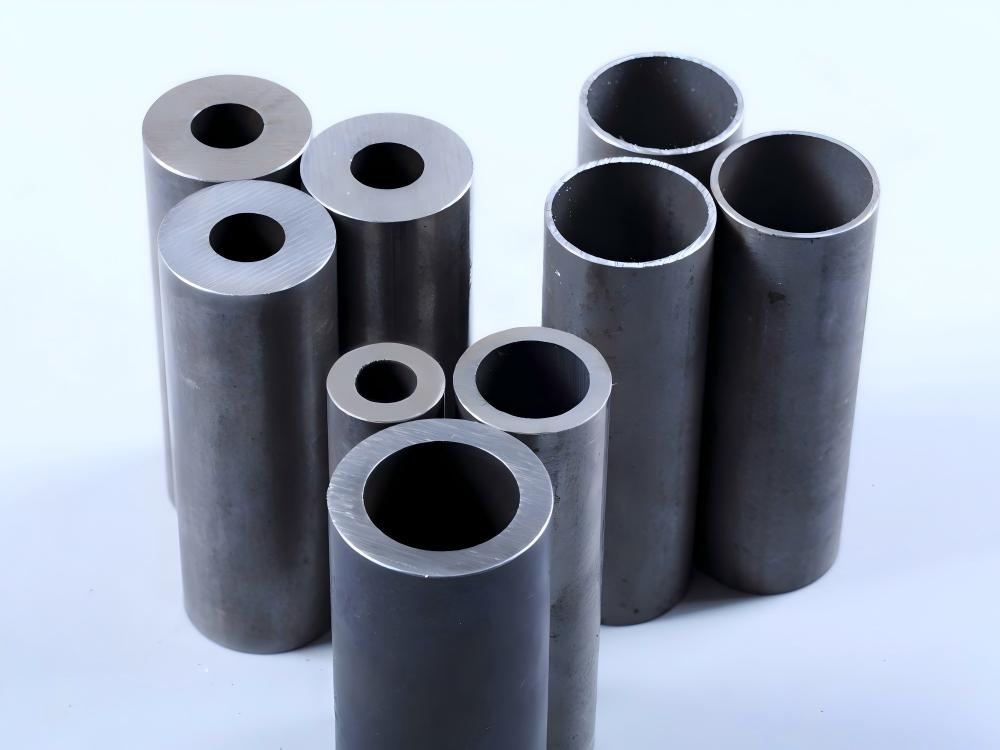
A forecast has no operational value until it connects to lead time and safety stock. The simplest way to make that connection is a per-specification planning view: for each tube family, record average monthly usage, supplier lead time, minimum order quantity, and target safety stock. The reorder point then falls out of the arithmetic instead of feeling.
The precision tube standards make this discipline easier because they already impose structure. EN 10305-1 sets technical delivery conditions for seamless cold drawn tubes, including tolerance classes and surface and inspection requirements [3]. When a buyer fixes the specification at the forecast stage — grade, OD, wall, length, and tolerance class — the supplier can commit to a realistic lead time instead of quoting a range. A forecast expressed as “20 tonnes of precision tube” is a conversation starter; a forecast expressed as “EN 10305-1, E235, OD 25 mm, wall 2 mm, tolerance class B, 300 six-metre lengths per month” is a production slot.
Safety stock becomes easier to hold when the specification list is disciplined. Standard sizes can share buffer across projects, while special-shaped profiles such as hexagonal, oval, or triangular sections usually need spec-specific buffer because no neighbouring demand can absorb them. Forecasting those profiles requires tighter review: a small forecast error on an oval cold-drawn section is harder to rebalance than the same error on common round stock.
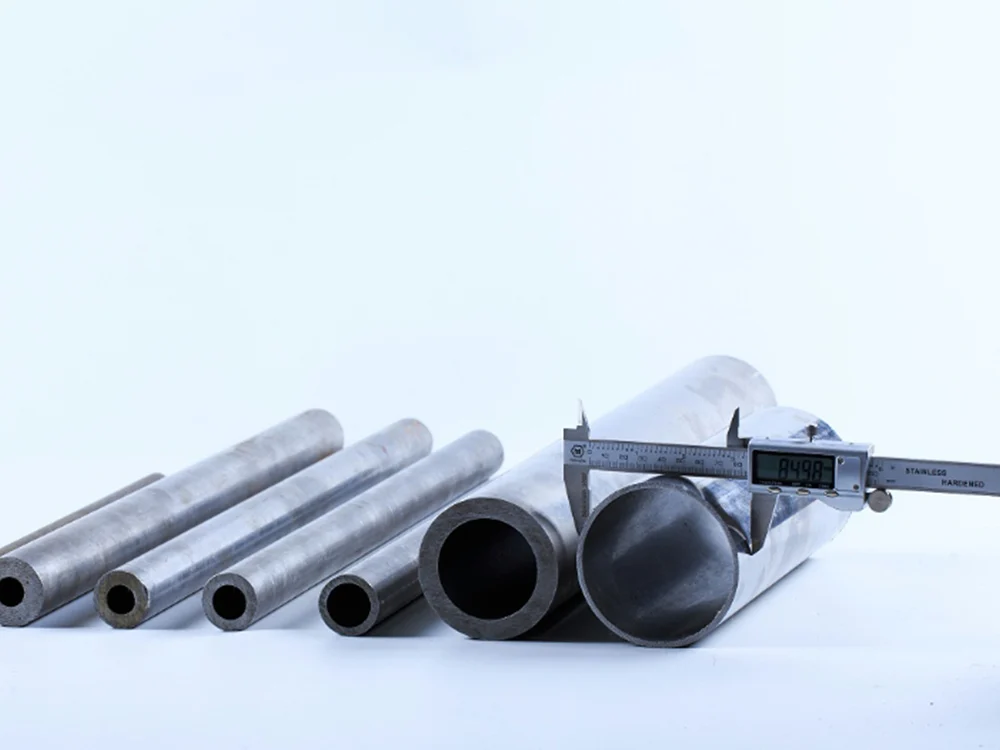
The arithmetic also changes with the material standard. ASTM A519 covers seamless carbon and alloy mechanical tubing with defined chemistry and mechanical properties [4]. A buyer who specifies ASTM A519 grade 4130 or 4140 is buying a longer and more constrained supply path than one ordering low-carbon ST37-class stock sizes. The forecast horizon should extend as the specification becomes more constrained, because re-allocation options shrink.
When forecast volumes finally convert to orders, the per-item specification details decide availability. <DIN 2448 Seamless Steel Pipe: Sizing, Weights and Ordering> covers how dimension and weight choices shape what can actually be supplied.
What to Share With Your Steel Tube Supplier
Forecasting in steel tube procurement is not something buyers do alone. The supplier is the other half of the equation, and most suppliers would rather receive an imperfect rolling forecast than a perfect surprise purchase order. A 12-month volume table, updated monthly, is the standard unit of collaboration.
Three pieces of information make the supplier’s response materially better. First, share the forecast by specification family, not just total tonnage. Second, flag the items that are forecast-sensitive: which SKUs can tolerate a modest swing and which cannot move at all. Third, communicate the decision calendar: the buyer’s own approval gates, budget cycles, and seasonal shutdowns, because those events drive the demand pattern more than end customers do.
ISO 9001:2015 pushes both parties toward this kind of information flow, requiring organizations to manage risks to conformity and to communicate requirements clearly with external providers [5]. In practice, that means a certified supplier should be able to receive a forecast, map it against capacity, and come back with a committed schedule plus the buffer assumptions behind it. A supplier who responds only with price per tonne is not yet forecasting with you.
A forecast is only as useful as the relationship it feeds. <Steel Tube Supplier Evaluation: Technical Criteria for Engineers> covers the capacity and communication signals buyers should check before committing volumes.
If you are holding a 12-month usage table for cold-drawn or shaped tubes and feeling unsure whether the buffer is realistic, send the specification list and monthly volumes to Sunny@tenjan.com. The engineering team reads forecast tables against actual mill loading and current lead times, then returns a planning view with committed windows — no obligation and no sales script. You can also reach the team on WhatsApp at +86 13401309791.
Building a Forecasting Cadence That Sticks
The final piece is rhythm. A single annual forecast is a plan for being wrong slowly; a monthly rolling forecast is a plan for being wrong quickly and cheaply. Build the cadence around four fixed beats: a monthly consumption review by specification, a quarterly supplier capacity check, a six-month re-plan for buffer sizing, and an annual rebaseline against project and contract pipelines.
When the cadence holds, forecasting stops being an event and becomes a byproduct of the buyer’s normal work. The monthly review catches drift before it becomes a shortage; the quarterly supplier check catches lead time changes before they become surprises; the six-month buffer review catches spec shifts before inventory ossifies into slow-moving stock.
When the annual rebaseline lands, treat it as a hypothesis, not a fact. The buyer who anchors too hard to one number loses the flexibility that makes steel tube procurement work. Forecasts are like cold-drawn tolerances: they are most useful when the allowed deviation is specified in advance.
Ready to Turn Your Forecast Into a Supply Plan
A forecast only pays off when it becomes a replenishment plan a supplier can hold. If you are an OEM buyer or engineering project manager with a rolling volume table, Tenjan Steel Tube can turn it into a practical supply view for seamless, cold-drawn, cold-rolled, and custom-shaped sections.
Start with a short planning package:
- Send the next three to six months of volume by grade, OD, wall thickness, and shape.
- Flag the five specifications where a shortage would hurt most.
- Request a per-spec lead time commitment and minimum order quantity.
- Ask whether buffer stock can be held on repeat standard sizes.
- Confirm EN 10204 3.1 traceability documents align with your incoming inspection system.
Email your forecast table to Sunny@tenjan.com, call +86 51988789990, or message WhatsApp +86 13401309791. The team reviews mill loading before responding, so the lead times you receive reflect real capacity, not a generic promise.
FAQ
How far ahead should OEM buyers forecast steel tube demand?
A 12-month rolling view is the most useful default, with the first three months held at specification level and months four to twelve at family level. This matches typical supplier production planning horizons and leaves room to adjust as customs, capacity, and project timing change. Longer horizons work for budget purposes; they rarely survive contact with a real mill schedule unmodified.
What data should I share with a steel tube supplier to improve lead times?
Share monthly volume by grade, outside diameter, wall thickness, shape, and length, plus your open order book and your decision calendar. The more the supplier can see the specification mix and when decisions are made, the more accurately it can pre-allocate mill time and raw material. Total tonnage alone hides the lumpy specifications that actually drive lead time.
Why do steel tube forecasts fail when demand shifts quickly?
Because most forecasts refresh monthly while upstream conditions shift weekly. Lead times, customs clearance, and adjacent-sector mill demand can all move inside a single forecast cycle. When a forecast is treated as a static number rather than a rolling estimate, any single shift turns into either excess inventory or an expedited order with premium freight.
How do I manage inventory when forecasts keep changing?
Separate your specifications into stable and volatile families. Hold shared buffer on standard sizes where adjacent demand can absorb error, and keep spec-specific safety stock on custom shapes and constrained grades where it cannot. Then shorten the review cycle: a monthly review with a weekly watchlist usually beats an annual rebaseline. The goal is to be wrong in small, quick increments rather than one large, slow adjustment.
What is the difference between a forecast and a purchase order?
A forecast is a planning signal, not a commitment. It tells the supplier what you expect to need, so capacity and raw material can be reserved. A purchase order is the legal commitment that converts that signal into production. Buyers who make the distinction clear — and who keep forecasts separated from order quantities — usually get better capacity treatment from certified suppliers.
References
[1] ASCM Supply Chain Dictionary, 17th ed., Association for Supply Chain Management, Chicago, IL, USA, 2022.
[2] World Steel Association, “Short Range Outlook,” Brussels, Belgium, Oct. 2025.
[3] EN 10305-1:2016, Steel tubes for precision applications — Technical delivery conditions — Part 1: Seamless cold drawn tubes, European Committee for Standardization, Brussels, Belgium, 2016.
[4] ASTM A519/A519M-21, Standard Specification for Seamless Carbon and Alloy Steel Mechanical Tubing, ASTM International, West Conshohocken, PA, USA, 2021.
[5] ISO 9001:2015, Quality management systems — Requirements, International Organization for Standardization, Geneva, Switzerland, 2015.
If you’re interested, check out these related articles:
Steel Pipe Heat Treatment: Key Processes and Applications
How to Choose the Right Seamless Steel Tube
Steel Tubes for Engineering Applications: Precision, Standards, and Selection
DIN 2448 Seamless Steel Pipe: Sizing, Weights and Ordering
ASTM A106 vs A53 Pipe: Choosing by Pressure and Temperature