How to Ensure Compliance in International Steel Tube Trade
Compliance in international steel tube trade is rarely a single border event. It is a chain that runs from the product specification and HS code to the mill certificate, the incoterm, the import license, and the…
Compliance in international steel tube trade is rarely a single border event. It is a chain that runs from the product specification and HS code to the mill certificate, the incoterm, the import license, and the post-shipment audit. Buyers learn this either at the quotation stage—or at the port, where storage charges accumulate and a detained container is a very expensive classroom.
Classify the tube correctly: HS codes, standards, and product identity
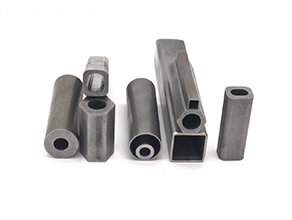
How to ensure compliance in international steel tube trade often begins with an unglamorous six-digit number. The Harmonized System assigns a base code used by customs authorities for duty, statistics, and risk screening; countries then add national subdivisions that can change the duty rate and licensing requirement [1]. A cold-drawn circular seamless tube, a square structural tube, and a hexagonal profile may look like close relatives in a catalog, but they can sit in completely different tariff lines.
Standards create the second identity layer: ASTM A519, EN 10305-1, DIN 2391, JIS G3445, and GB/T 8162 define grades, tolerances, and test requirements. The WTO Technical Barriers to Trade Agreement requires countries to publish technical regulations and aim for non-discrimination, but it does not make standards interchangeable [2]. A certificate that satisfies one standard may be insufficient for another market unless the test methods and acceptance criteria are mapped.
Ask your supplier: “Which HS code are you using? Which standard exactly is the quote based on? What is the declared country of origin?” If the answer is a vague “industrial steel tube,” the compliance risk has just announced itself.
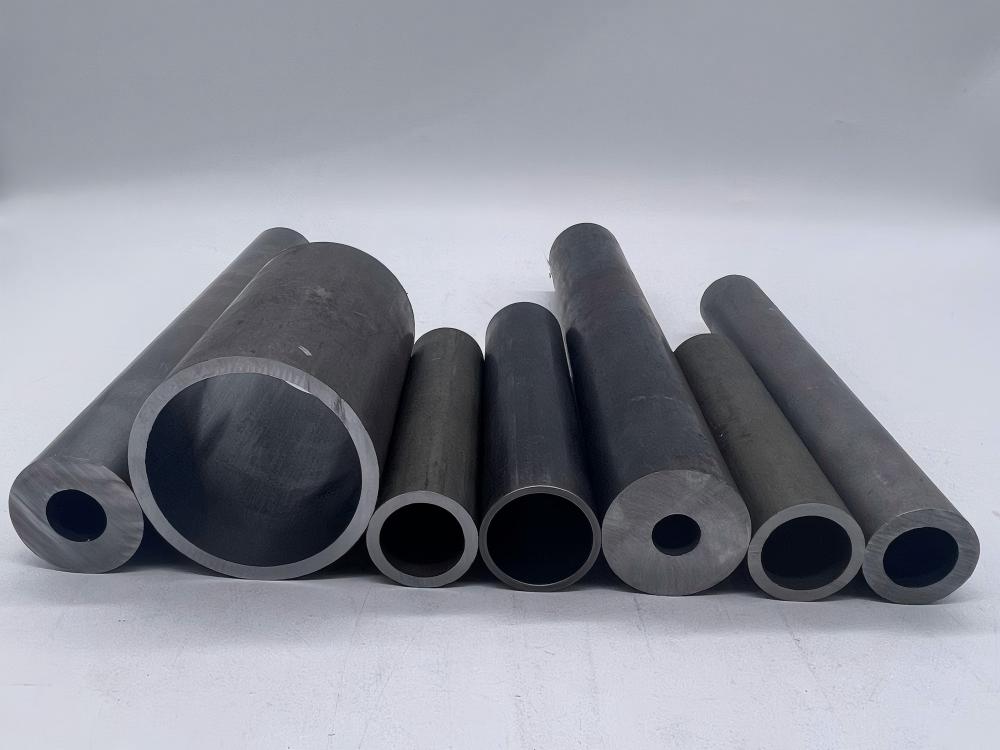
The document package your steel tube shipment cannot clear without
Customs clearance rarely asks for your engineering drawings. It asks for documentary evidence. The EU Union Customs Code requires accurate declarations supported by the documents needed to verify goods, value, and origin [3]. For steel tube imports, a practical package usually includes:
- Commercial invoice: precise description, HS code, quantity, unit value, and delivery terms.
- Packing list: bundles, piece counts, net weight, and gross weight.
- Bill of lading or airway bill: the transport document that controls release.
- Certificate of origin: to support preferential or non-preferential duty treatment.
- Mill test certificate or inspection certificate: chemical composition, mechanical properties, and test results.
- Import license or permit: required by some markets for specific steel products.
- Heat number linkage: the certificate should trace back to the bundles actually shipped.
Under EN 10204, metallic product inspection documents are categorized by type: 2.1 and 2.2 are manufacturer declarations, while 3.1 and 3.2 add independent verification; a 3.1 certificate is often the minimum that demanding buyers accept [4].
Before you accept a quotation that says “MTC provided,” ask what type of inspection document is included. If the answer cannot be tied to a standard such as EN 10204 3.1, the saving on the tube may disappear in port delays. Email Sunny@tenjan.com with your target standard and destination country, and the team can clarify which inspection document is appropriate for your order.
Incoterms and customs valuation: who does what at the border
Incoterms 2020 defines 11 short rules that allocate transport, customs, and risk between buyer and seller [5]. EXW, FOB, CIF, and DDP are the ones most often seen in steel tube trade. The compliance issue is not which term sounds cheaper; it is who has the information and authority to clear the goods.
- EXW (Ex Works): the buyer handles export and import clearance in the seller’s country, which can be risky without a local export agent.
- FOB (Free On Board): the seller clears export; the buyer arranges freight and import.
- CIF (Cost, Insurance and Freight): the seller arranges freight and insurance to the destination port, but import clearance remains the buyer’s job.
- DDP (Delivered Duty Paid): the seller handles import clearance and pays duties; this places the greatest obligation on the seller.
Customs value is usually based on transaction value, but related-party sales, commissions, and tooling charges can invite adjustment. A clearly worded invoice that matches the contract and incoterm is the cheapest insurance against a valuation dispute.
Think of Incoterms as the baton pass in a relay race: if the transition point is unclear, the baton—your shipment—gets dropped exactly where customs wants to see authority. Nobody saves money by double-paying clearance because an EXW seller could not complete export formalities.
Trade defense, sanctions, and carbon rules: the moving target
Steel is one of the most politically sensitive traded materials. Buyers should check three layers before ordering: anti-dumping or countervailing duties, safeguard measures, and unilateral actions. In the United States, Section 232 measures imposed additional tariffs and country-specific restrictions on steel imports [7]. In the EU, steel products have faced safeguard measures tied to quota windows.
The European Union’s Carbon Border Adjustment Mechanism adds a reporting and, later, payment obligation for embedded emissions on many iron and steel imports [6]. A product may be technically excellent and still carry a carbon cost if the importer is not ready with verified emissions data.
Sanctions and dual-use controls apply less often to ordinary structural tubes but can affect oil-and-gas, military, or high-alloy grades. Screening the end user and end use should therefore be part of the pre-shipment check, not a post-shipment surprise.
Because tariff and safeguard rules change by product code and destination, a generic answer is not enough. Send the exact OD, wall thickness, grade, shape, and destination to Sunny@tenjan.com or WhatsApp at +86 13401309791, and request a current compliance check before you commit to an order.
Product-level compliance: standards, testing, and traceability
Customs may accept the paperwork, but the end user’s inspector may reject the tube if the material does not match the certificate. Product compliance therefore covers three technical layers: standard compliance, non-destructive testing, and traceability.
- Standard compliance: verify that the grade and test requirements match the correct standard. An EN 10305-1 precision tube is not the same as an EN 10297-1 mechanical tube, even if both are seamless.
- Non-destructive testing: eddy current and ultrasonic testing detect surface and internal defects, while positive material identification verifies alloy composition.
- Traceability: heat numbers, coil numbers, and production dates link each bundle back to raw material and forward to the customer’s receiving inspection.
When a drawing fits only within a tight tolerance band, compliance is not just a certificate issue; it is a dimensional issue at the assembly level. <Steel Tube Dimensional Accuracy: Why Fit Depends on It> covers how dimensional precision affects fit and downstream quality.
ISO 9001:2015 requires a quality management system to control documented information and traceability, but certification alone is not a substitute for testing every lot [8]. The buyer’s leverage is in specifying which inspection document is required and in asking for batch-level evidence rather than a generic certificate.
What to require from a steel tube supplier before you commit
Supplier due diligence is itself a compliance control. A manageable process includes:
- Confirm the manufacturing location and export license.
- Verify standards certificates and request a specimen mill test certificate.
- Clarify the incoterm and who will clear export.
- Define country-of-origin rules before quoting; they are not automatic.
- Require document retention and recall capability after delivery.
A supplier that cannot explain how a standard is controlled in production is usually a supplier that cannot defend a certificate during inspection. <Steel Tube Supplier Evaluation: Technical Criteria for Engineers> covers the technical evidence engineers should request before approving a supplier.
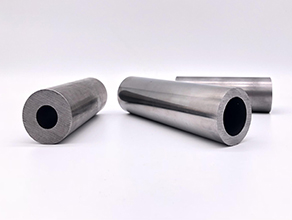
Traceability deserves special attention. When a heat number can be traced backward to raw material and forward to the customer’s bundle, recalls and nonconformance reports become much smaller exercises.
When document numbers and heat numbers can be traced back to raw material, root-cause analysis becomes faster and fewer lots need quarantine. <How Digital Traceability Tightens Steel Tube Quality Control> covers how digital traceability tightens quality control across the production chain.
One practical model is a manufacturer that starts with raw material control, includes PMI and NDT in process, and issues inspection documents such as EN 10204 3.1. Changzhou Tenjan Steel Tube Co., Ltd. has been producing precision steel tube since 2004 and supports ASTM, EN, DIN, and JIS requirements.
Getting a steel tube shipment through compliance without learning at the port
Trade compliance is not a single form. It is the interaction of product identity, documentation, incoterm, trade policy, and quality evidence. If you are buying precision steel tube across borders, start with the destination requirements and work backward to the mill.
Changzhou Tenjan Steel Tube Co., Ltd. has served OEM and engineering buyers since 2004, with production controlled from raw material to finished tube. The team can support ASTM, EN, DIN, and JIS specifications, PMI and NDT inspection, and EN 10204 3.1 documentation.
Contact Tenjan today:
- Email: Sunny@tenjan.com
- Tel: +86 51988789990
- Phone / WhatsApp: +86 13401309791
For a faster response, send the target standard, OD/wall/grade, destination country, and intended incoterm.
Frequently Asked Questions About Steel Tube Trade Compliance
What is the most common compliance mistake in steel tube import?
The most common mistake is quoting the order before confirming the HS code and destination-country standard. The tube may be technically perfect and still enter a different tariff line or require a different inspection document.
Is an EN 10204 3.1 certificate enough for every market?
Not always. Some markets require a 3.2 certificate or country-specific registration. A 3.1 certificate links inspection to the manufacturer, while 3.2 adds independent verification by an authorized inspector.
Does a steel tube need a different HS code for different shapes?
Yes. Round seamless tube, welded tube, rectangular profile, and specialized shaped tube can fall under different classifications. Confirm the code with a customs broker or request an advanced ruling.
How can I prove the origin of a steel tube?
Origin is usually supported by a certificate of origin, supplier declaration, and mill documentation linking heat numbers, production records, and shipment details.
Who is responsible for export clearance under EXW?
Under EXW, the buyer normally handles export clearance in the seller’s country, although the seller must provide the documents needed for export. If your team has no local presence there, FOB is often more practical.
References
[1] World Customs Organization, Harmonized Commodity Description and Coding System (HS) Nomenclature 2022, WCO, Brussels, 2022. [Online]. Available: https://www.wcoomd.org/en/topics/nomenclature/instrument-and-tools/hs-nomenclature-2022-edition.aspx
[2] World Trade Organization, Agreement on Technical Barriers to Trade, Annex 1A, WTO Agreement, 1994. [Online]. Available: https://www.wto.org/english/docs_e/legal_e/17-tbt_e.htm
[3] European Union, Regulation (EU) No 952/2013 of the European Parliament and of the Council laying down the Union Customs Code, OJ L 269, Oct. 10, 2013. [Online]. Available: https://eur-lex.europa.eu/legal-content/EN/TXT/?uri=CELEX%3A32013R0952
[4] CEN, EN 10204:2004 – Metallic products – Types of inspection documents, European Committee for Standardization, Brussels, 2004.
[5] International Chamber of Commerce, Incoterms 2020, ICC Publication No. 723E, Paris, 2019.
[6] European Union, Regulation (EU) 2023/956 establishing a carbon border adjustment mechanism, OJ L 130, May 16, 2023. [Online]. Available: https://eur-lex.europa.eu/eli/reg/2023/956/oj
[7] U.S. Department of Commerce, Bureau of Industry and Security, Section 232 National Security Investigation of Steel Imports, Federal Register, Washington, DC. [Online]. Available: https://www.bis.doc.gov/index.php/232-steel
[8] International Organization for Standardization, ISO 9001:2015 – Quality management systems – Requirements, ISO, Geneva, 2015.
If you’re interested, check out these related articles:
Carbon Steel vs Alloy Steel Tube: Which Material Works
How to Choose the Right Seamless Steel Tube