Steel Tubes in the EV Transition: What Engineers Should Know
Electric vehicle programs are changing the way engineers think about steel. The material is not disappearing; its job description is being rewritten. Annual EV sales passed 17 million units in 2024, according to the International Energy…
Electric vehicle programs are changing the way engineers think about steel. The material is not disappearing; its job description is being rewritten. Annual EV sales passed 17 million units in 2024, according to the International Energy Agency [1], and nearly every one of those vehicles still depends on precision metal parts for crash energy management, fluid pressure, and rotating structures. Steel tubes, especially cold-drawn seamless and high-strength profiles, have moved from engine-adjacent components into battery structures, cooling loops, and hollow e-axle shafts.
Where Steel Tubes Take on New Roles in EVs
Consider a hollow e-axle shaft. The first design often starts as a solid bar because it is familiar. But a solid bar places much of its mass near the centerline, where it adds weight without contributing much torsional stiffness. A seamless alloy tube removes that low-value center mass while preserving strength and creating a path for lubricant flow or lightweight integration. The trade-off is dimensional: straightness, concentricity, and wall-thickness variation must be tightly controlled because the shaft rotates at high speed.
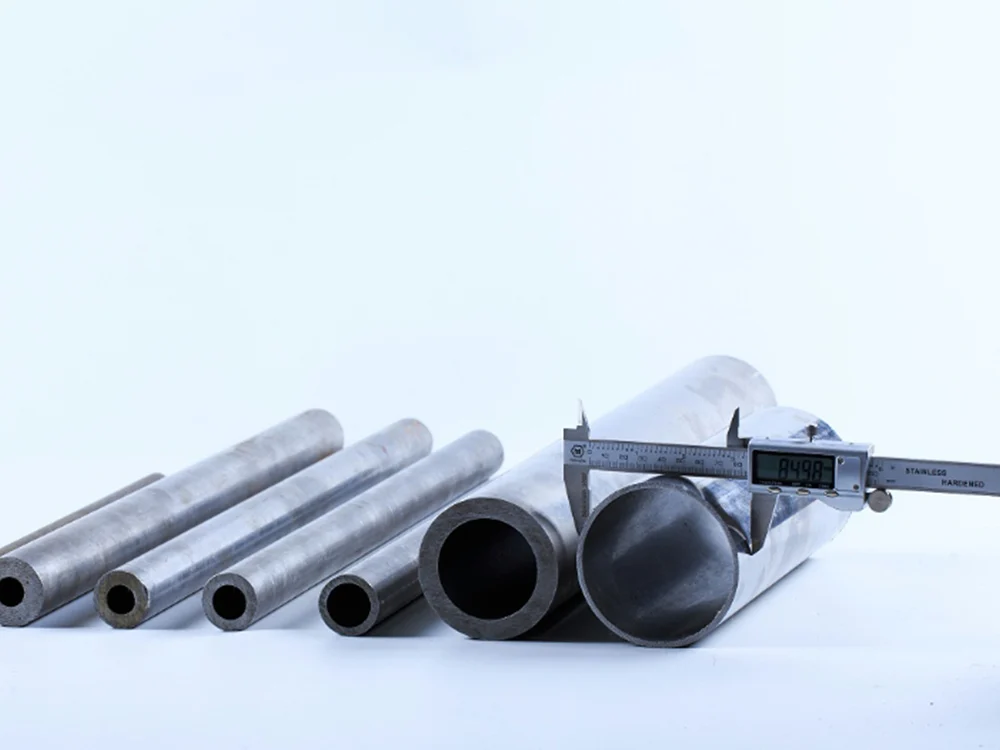
Thermal management is another growth area. Fast charging and denser battery packs push more heat through fewer spaces. Steel precision tubes carry coolant through battery-pack circuits, power electronics, and heat exchangers. They are chosen not because they are the lightest option, but because they can combine pressure integrity, burst margin, and predictable forming behavior in a crash environment. Internal cleanliness becomes the hidden requirement: residue left inside a tube can turn a precision cooling circuit into a slow chemistry experiment.
Body and chassis structures remain less glamorous but impossible to ignore. Side-sill reinforcement tubes, subframes, and anti-roll bars rely on high-strength steel to deliver repeatable energy absorption and fatigue life. The World Steel Association notes that advanced high-strength steels remain a primary route for automotive lightweighting because they provide crash performance, fatigue strength, and manufacturing familiarity [2].
Need a technical check before the drawing is frozen? Send the application pressure, temperature range, and preliminary tube OD/wall to Sunny@tenjan.com (Tel/WhatsApp: +86 13401309791) and ask for material, tolerance, and testing advice.
Material and Specification Choices That Decide EV Tube Performance
Most EV tube failures start in the specification meeting, not on the production line. The grade may be right, but the delivery condition, straightness, or surface requirement is left too open. A more reliable approach is to classify the tube by the property that dominates its function.
| EV application | Typical tube material family | Dominating requirement |
|---|---|---|
| Hollow rotor / e-axle shaft | 25CrMo4 / 4130, 34MnB5, medium-carbon alloy | Fatigue strength, straightness, torsional stiffness |
| Battery-pack cooling circuit | Low-carbon precision tube, annealed or coated | Internal cleanliness, burst pressure, corrosion behavior |
| Side sill / subframe / anti-roll bar | S355JR, Q355B, high-strength formed sections | Weldability, energy absorption, dimensional repeatability |
| Steering / braking / actuation line | Precision cold-drawn low-carbon | Pressure integrity, dimensional stability, surface finish |
| Gear carrier / motor support | 45# / 40Cr or S45C family | Machinability, core toughness, heat-treatment response |
In a rotating hollow shaft, material selection is partly about stiffness and partly about fatigue. Cold-drawn seamless tubing under ASTM A519 or EN 10305-1 gives the engineer a controlled starting point: known chemistry, controlled ovality, and a surface condition suitable for heat treatment [3]. For cooling circuits, the same precision-tube logic applies, but the engineer will usually spend more time specifying internal roughness, cleaning limits, and coating adhesion than maximum tensile strength [4].
EV grade selection is rarely a simple carbon-versus-alloy answer. <Carbon Steel vs Alloy Steel Tube: Which Material Works> covers strength, weldability, and cost trade-offs for this decision.
When the same tube program must satisfy a rotor shaft and a structural member, the specification logic changes. <Steel Tubes for Engineering Applications: Precision, Standards, and Selection> covers how application requirements translate into material standards and delivery conditions.
A hollow shaft or cooling line lives or dies by fit. <Steel Tube Dimensional Accuracy: Why Fit Depends on It> covers tolerance, straightness, and ovality decisions before production.
Material selection is only half the specification. Send your preliminary grade, load case, and annual volume to Sunny@tenjan.com (WhatsApp: +86 13401309791) and ask for a DFM review that ties tolerance, heat treatment, and testing to the application before you release the drawing.
Quality Controls That Separate EV-Ready Tubes from General Stock
EV safety-related parts are not bought by chemistry alone. The tube needs an evidence file: heat number, dimensional report, non-destructive testing results, and material identity confirmation. ISO 9001:2015 provides the quality-management baseline, but the product-specific details matter more [5]. A well-controlled process starts with cold drawing or cold rolling to improve dimensions and surface finish, then moves to heat treatment—normalizing, stress relieving, quenching, or tempering—to create the required microstructure.
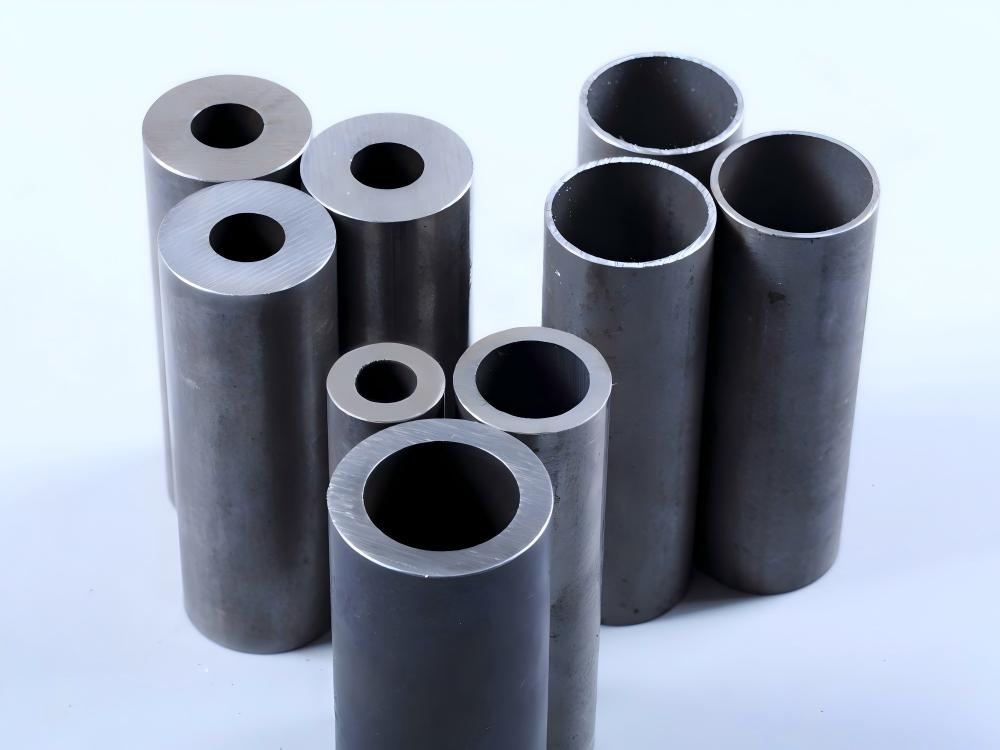
Non-destructive testing should be specified by method rather than by blanket phrase. Eddy current testing detects surface and near-surface defects; ultrasonic testing can address wall thickness and internal anomalies. Positive material identification helps prevent mixed alloy grades from entering the flow path. Cleaning and preservation are equally important: pickling, rinsing, and controlled packaging reduce the risk of contamination that could shorten coolant or hydraulic-fluid life.
One practical rule for EV drawings: ask whether the supplier can hold the tolerance after bending or heat treatment, not only on the incoming blank. If the answer is yes only for the straight blank, the specification is not finished. That step separates a tube supplier from a manufacturing partner.
Specifying Steel Tubes for EV Applications: A Practical Sequence
- Define the load case: static, cyclic, pressure, temperature, and corrosion exposure.
- Choose material and standard from the operating envelope—ASTM A519, EN 10305-1, JIS G3445, or an equivalent project standard.
- Lock OD, wall, roundness, straightness, and tolerance band. For precision cold-drawn small-diameter tube, ±0.1 mm on OD/wall is a common industrial starting point, but rotor shafts may need tighter roundness and straightness.
- State internal cleanliness, surface condition, and any coating requirement before the first samples.
- Specify inspection evidence: eddy current, ultrasonic, PMI, heat-number traceability, and EN 10204 3.1 certification as applicable.
- Confirm process capability on samples, not only on certificates. A short run reveals whether the process can repeat the required range.
Ready to Define the Right Steel Tube for Your EV Program?
Tenjan’s engineering team works from the drawing, the duty cycle, and the annual volume to recommend a matched specification: material, delivery condition, tolerance, surface treatment, and test certificates. Send the application details to Sunny@tenjan.com, Tel: +86 51988789990, Phone/WhatsApp: +86 13401309791.
Frequently Asked Questions
Do EV programs mainly use aluminum instead of steel tubes?
Not in every case. Aluminum is attractive where weight and thermal conductivity dominate. Steel remains common in high-pressure lines, high-cycle shafts, crash structures, and cost-sensitive platforms because it offers predictable fatigue life, established welding, and high strength per unit cross-section.
Which steel grades are most common for EV thermal management and hollow shafts?
For hollow shafts and gear carriers, chromium-molybdenum grades such as 25CrMo4/4130 and boron grades such as 34MnB5 appear often. For cooling circuits, low-carbon precision tube with controlled internal cleanliness and a compatible coating is a typical starting point. Grade selection should follow the pressure, temperature, and fatigue envelope, not a catalog listing alone.
What tolerance should an EV tube drawing specify?
There is no universal number. Precision cold-drawn tube can commonly be specified at ±0.1 mm on OD and wall, but rotating shafts may need tighter roundness and straightness. The drawing should state the tolerance in the final formed or heat-treated condition, not only on the incoming blank.
How is traceability handled for EV safety-related parts?
Specify heat-number-linked EN 10204 3.1 certification, NDT and PMI records, and a quality-management baseline aligned with ISO 9001 or IATF 16949. This connects each tube to its raw material, manufacturing route, and inspection results [5].
References
- International Energy Agency (IEA). Global EV Outlook 2024. Paris: IEA, 2024. https://www.iea.org/reports/global-ev-outlook-2024
- World Steel Association. Automotive Steel. Brussels: worldsteel, 2024. https://worldsteel.org/steel-topics/automotive/
- ASTM International. ASTM A519/A519M-17, Standard Specification for Seamless Carbon and Alloy Steel Mechanical Tubing. West Conshohocken, PA: ASTM International, 2017. https://www.astm.org/a519_a519m-17.html
- European Committee for Standardization. EN 10305-1:2016, Steel tubes for precision applications — Technical delivery conditions — Part 1: Seamless cold drawn tubes. Brussels: CEN, 2016.
- International Organization for Standardization. ISO 9001:2015, Quality management systems — Requirements. Geneva: ISO, 2015. https://www.iso.org/standard/62085.html
If you’re interested, check out these related articles:
How to Verify ISO Certification for Steel Tube Manufacturers
Carbon Steel vs Alloy Steel Tube: Which Material Works
Steel Tube Manufacturing Process: Precision and Quality
Steel Tubes for Agricultural Machinery: Precision Solutions
Steel Tube Dimensional Accuracy: Why Fit Depends on It