Steel Tube Mill Partnerships: Baosteel, Xingcheng and Shagang
A steel tube mill partnership settles more about the finished tube than most purchase orders admit. The round bar or hollow billet that reaches the draw bench already carries its cast structure, its segregation pattern and…
A steel tube mill partnership settles more about the finished tube than most purchase orders admit. The round bar or hollow billet that reaches the draw bench already carries its cast structure, its segregation pattern and its inclusion load, and the drawing, annealing and testing steps downstream can only work within the limits that material sets. Since 2004 we have bought raw material for seamless, cold-drawn and custom-shaped tubing, and three mills carry most of that load: Baosteel, Xingcheng and Shagang. This guide explains what those relationships change on the shop floor, what they do not prove, and how a buyer can check a mill origin claim before releasing a batch.
Why the source mill shapes what a cold-drawn steel tube can do
Continuous casting and rolling decide what sits inside the bar before the tube maker touches it. Centre segregation, core porosity and non-metallic inclusions are set at that stage. Cold drawing reduces the wall and lengthens the tube; the steel matrix flows, inclusions largely do not. An inclusion stringer close to the bore acts as a stress raiser, and the first place it tends to announce itself is a longitudinal seam on the outer diameter or a signal on the eddy current line rather than a failed part in the field.
Chemistry is the second inherited condition. A mill’s standard grade range is a window, not a point. Two heats inside the same window can respond differently to the same quench and temper cycle, which is why chrome-moly grades in the 4140 and 42CrMo family need a hardenability band discussed rather than a grade name copied from a data sheet. Hardness scatter after heat treatment becomes machining scatter, and machining scatter becomes an argument about whose tolerance was wrong.
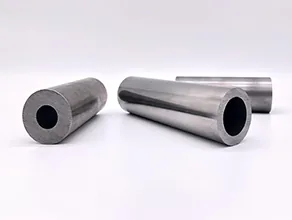
The mill also sets the incoming form: black bar, peeled bar, or turned and ground bar. A bar that arrives with seams keeps the memory of them, and no amount of drawing practice removes that memory entirely. What drawing can do is hold the geometry tightly around it, which is how a precision tube reaches a tolerance band of ±0.1 mm while still carrying its raw material history.
None of this makes the mill the only variable. Die angle, reduction per pass, lubrication, mandrel condition and the annealing cycle decide roundness, wall eccentricity and surface finish. The mill sets the ceiling of what the material allows; the drawing line decides how close to that ceiling a shipment lands.
What Baosteel, Xingcheng and Shagang bring to the table
Three names, three positions in the Chinese long-products market. Baosteel is a large integrated producer with a broad flat and long product list, and its chemistry control is built around high-volume automotive and structural programmes. Xingcheng Special Steel, part of CITIC Pacific Special Steel, sits in the special steel camp, with bearing grades and alloy structural grades among its base. Shagang Group runs very large long-product capacity and is often the practical answer for general engineering and structural grades where availability and price position matter more than a narrow chemistry window.
Read those as market positions rather than a league table. The same grade designation rolled at two mills can differ in residual element levels and in how wide the delivered chemistry window actually is. A certificate tells you where the steel came from; it does not tell you whether that particular heat suits a hydraulic cylinder bore or a shock absorber tube.
Why hold three sources instead of one: no single rolling programme covers every grade and size we are asked for, and rolling schedules slip. Keeping qualified sources at more than one mill is often the difference between a delivery date and an apology. Grade families also sort themselves. Free-cutting grades such as Y15, 1215 and 11SMn30 come from particular melting routes and need sulphur control that suits machining, while bearing-type and alloy structural heats belong with the special steel producers.
Grade designations travel between standards with small but consequential differences in chemistry and acceptance rules. <Understanding ASTM, EN, DIN and JIS Tube Standards> covers how the same tube can sit under ASTM, EN, DIN or JIS with different test requirements.
What partnership sourcing should change in your RFQ
A long relationship with a mill changes what the mill will do for you: tighter chemistry windows, reserved rolling slots, early warning before a grade is withdrawn, and a defined incoming form. None of that reaches a buyer automatically. It reaches the purchase order only when the RFQ asks for it in writing.
| RFQ field | What to request | Failure it prevents |
|---|---|---|
| Mill and plant | Group name plus the specific plant, and the steelmaking route where relevant | Two plants in one group can run different practices |
| Heat reference | Heat number on the inspection document and on every bundle tag | A certificate that cannot be tied to the bundle it arrived with |
| Document type | EN 10204 3.1 where measured values are required | A compliance statement standing in for test results |
| Chemistry | Grade plus any tightened element limits that affect your process | Heat-to-heat scatter that reappears as hardness variation after heat treatment |
| Incoming form | Peeled, turned, ground or black bar | Surface seams inherited from the bar showing up after drawing |
| Change notice | Written notice before a melt source or grade route changes | A silent supply change found at the machine instead of at goods-in |
The field buyers most often leave out is the plant. A document carrying only a group name narrows the audit trail at exactly the point where it matters, and it is far easier to fix on the RFQ than in a corrective action six months later.
Once the mill source is fixed, the remaining risk sits in the supplier’s own process and paperwork. <How to Choose a Steel Tube Supplier for Your Next Project> covers the supplier checks that run alongside mill selection.
How to verify mill origin without a plant visit
Start with the heat number. It is the only string that ties a cast to a bundle and a bundle to a tube, and it costs nothing to ask for it twice, once on the inspection document and once on the tag.
EN 10204 3.1 is the document type that carries specific test results, signed by the manufacturer’s authorised inspection representative, who is independent of the manufacturing department. A 2.2 document is a statement of compliance with the order rather than a table of measured values. Both have a place, and they are not interchangeable when the buyer needs to see numbers rather than a signature. A certificate is a passport, not a character reference: it confirms where the steel came from, not how the tube was drawn.
PMI on the finished tube separates alloy families and catches a mixed bundle before it reaches a machining cell. It says nothing about which mill rolled the bar, so treat it as an identity check rather than an origin check. Non-destructive test reports work the same way. An eddy current or ultrasonic record proves the tube met an agreed acceptance level; it carries no information about steelmaking.
| Record | What it is based on | Responsible use | Do not infer |
|---|---|---|---|
| EN 10204 3.1 inspection document | Test results from the producing mill’s samples, signed by an independent inspection representative | Confirms the heat met the specified chemistry and mechanical requirements | That the tube in your rack came from that heat; the tag still has to match |
| Heat number on the bundle tag | Mill marking carried through to dispatch | Links a delivered bundle to a cast | That the marking reached the correct bundle without the mill’s own handling record |
| PMI on the finished tube | Portable spectrometry at the tube surface | Screens alloy family and catches mixed material | The producing mill, the heat number, or mechanical properties |
| Eddy current or ultrasonic report | A non-destructive test on the finished tube | Shows the tube met the agreed test acceptance level | Anything about cast quality or steelmaking origin |
| First-article dimensional data | Measurements taken on the trial lot | Shows the supplier held the tolerance on that lot | That the same tolerance holds across later heats |
Each record answers one question. Stacked together they answer the buyer’s real question, which is whether this bundle came from the steel it claims and meets the requirements that were agreed.
A heat number is only useful while it survives the whole route from cast to bundle tag. <How Digital Traceability Tightens Steel Tube Quality Control> covers how digital records support quality control across a tube order.
Where a mill partnership stops helping
The draw bench is not the mill’s business. Die wear, mandrel condition, reduction schedule, lubrication and the annealing cycle decide roundness, wall eccentricity and surface finish, and a good mill source will not rescue a worn die. When a drawn tube misses its tolerance, the material pedigree is usually the wrong place to look first.
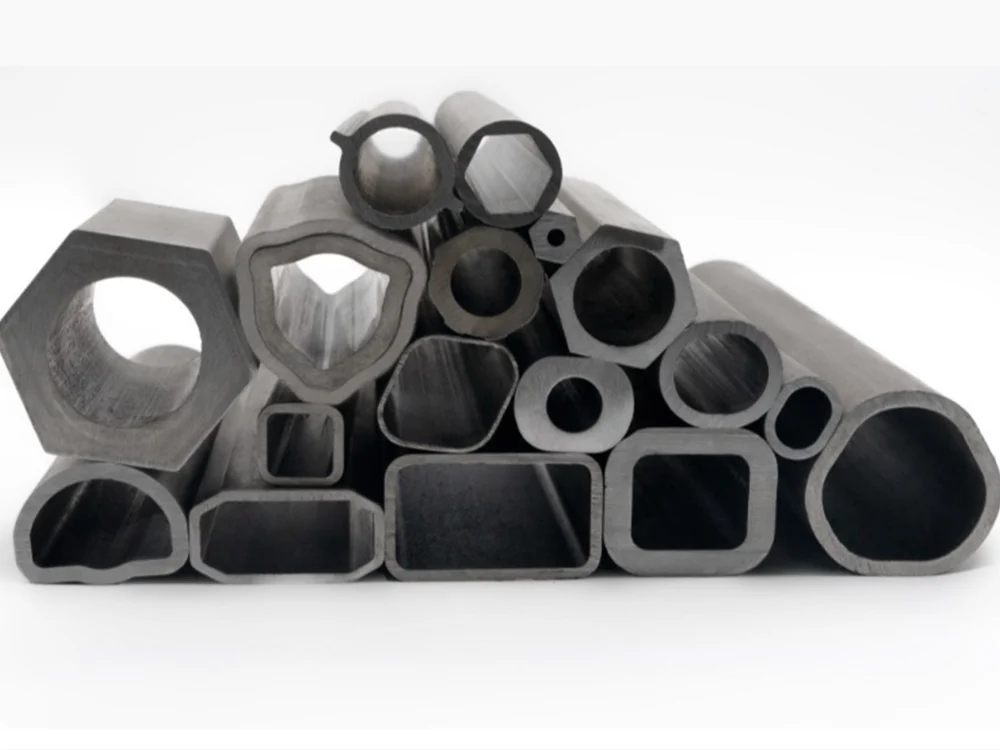
Shaped and custom profiles work the same way. A mill rolls round bar or strip; the hexagonal, square, oval or D-shaped section is created downstream with section rolls and draw benches. A partnership can secure the input for those profiles, but it cannot make a profile that the tooling will not hold.
Small lots run into a different limit. Mills roll heats, not orders. A partner mill may slot you into its programme, yet the minimum heat weight stays where it is. Where a project needs a few hundred kilograms of an unusual grade, the practical route is often a stockist or a mill that already has that grade in inventory, with the origin documented the same way.
For cold-drawn welded tube, the strip source matters but the weld and the bead removal belong to the tube maker, so a strong mill relationship carries less weight there. Price deserves an honest note as well. A partnership buys allocation and predictability; it does not buy immunity from scrap ratios, alloy surcharges or a rolling programme that is full for the quarter.
When a non-partner mill is the better call
Several conditions flip the default. One is a size or grade outside the partner’s rolling programme, where the nearest alternative inside the programme would mean substituting a grade your drawing does not accept. Another is a structural application with generous chemistry tolerance, where cost decides and the extra pedigree buys nothing. A third is a schedule with no slot, when a qualified second source beats a late line stoppage. A fourth is a new grade that needs trial quantity before anyone commits to a programme.
Be clear about what the switch costs. A new heat source introduces a new set of variables: requalification, extra first-article checks, and possibly a different incoming surface condition. A sound compromise is to run a first-article comparison across several heats rather than one, because a single good heat proves that one heat was good.
Send the grade, size and application before you fix the mill
If you are weighing mill sources, the useful starting point is the part, not the certificate. Tell us the grade or the standard it has to meet, the outside diameter and wall thickness, the application, the annual quantity, and whether the tube is machined, welded, bent or pressure tested afterwards. We will tell you which mill source fits the job and where the remaining risk sits. Tenjan Steel Tube, email Sunny@tenjan.com, tel +86 51988789990, phone or WhatsApp +86 13401309791.
FAQ
Does the mill name on a certificate guarantee tube quality?
No. It confirms the origin of a heat. Quality of the delivered tube also depends on drawing practice, heat treatment, straightening and the tests that were agreed. A certificate from a strong mill attached to a poorly drawn tube is still a poorly drawn tube, so check the dimensional and surface records as carefully as the chemistry page.
Can we change mills in the middle of a contract?
It is possible when the grade and standard allow it, but it is a quality decision rather than a purchasing one. If your quality agreement names the mill or the plant, a change needs written approval, and the new source usually warrants a first-article comparison before volume moves. Where the agreement does not name the mill, tell the buyer anyway: hardenability and surface condition can shift between sources.
Which mill is best for 4140 or 42CrMo tube?
There is no single answer, because the deciding factor is the delivered chemistry window rather than the mill name. Ask each source for its hardenability band, its typical residual element levels and its heat size, then compare against what your heat treatment and machining steps can absorb. A mill that holds a narrow window on a small heat is often the better fit for a short run.
How do I check that a heat number is genuine?
Compare the number on the inspection document with the number on the bundle tag, then check the document type: 3.1 carries measured values, 2.2 does not. Where the producing mill offers a certificate verification service, use it. PMI adds a useful cross-check on alloy family, though it cannot confirm which mill rolled the bar.
If you’re interested, check out these related articles:
DIN 1629 Steel Pipe: Grades, Dimensions, and Sourcing
Steel Tube Manufacturing Process: Precision and Quality
How Digital Traceability Tightens Steel Tube Quality Control